The SA Vehicle Industry Thread

Isuzu is number 5 whilst only selling bakkies and one SUV? I just cannot believe how pathetic the other manufacturers are, totally clueless.
 
Im not pessimistic, its the unfortunate Reality
I do Like French cars, just locally, they suffer from all the Better/Tougher cars out there.
Think about it, Honda, Opel and Mazda. Renault went through it's quality issues and bad reputation, rose from the ashes to rebuild the brand and today they are selling more cars than all the established manufacturers I have mentioned above. Those guys know how to run a business.
 
Last edited:
Cape Storm Trashes Cars: How to Protect Your Car From Rust

A huge winter storm raged in Cape Town this week, bringing rain and near-hurricane-force winds to the Mother City. Many cars parked along the Seapoint promenade received a wind-blasted foam wash from the raging Atlantic Ocean nearby. It might have been fun and games for the people witnessing nature’s ferocity, but for the cars covered in seafoam, rusty days lie ahead…

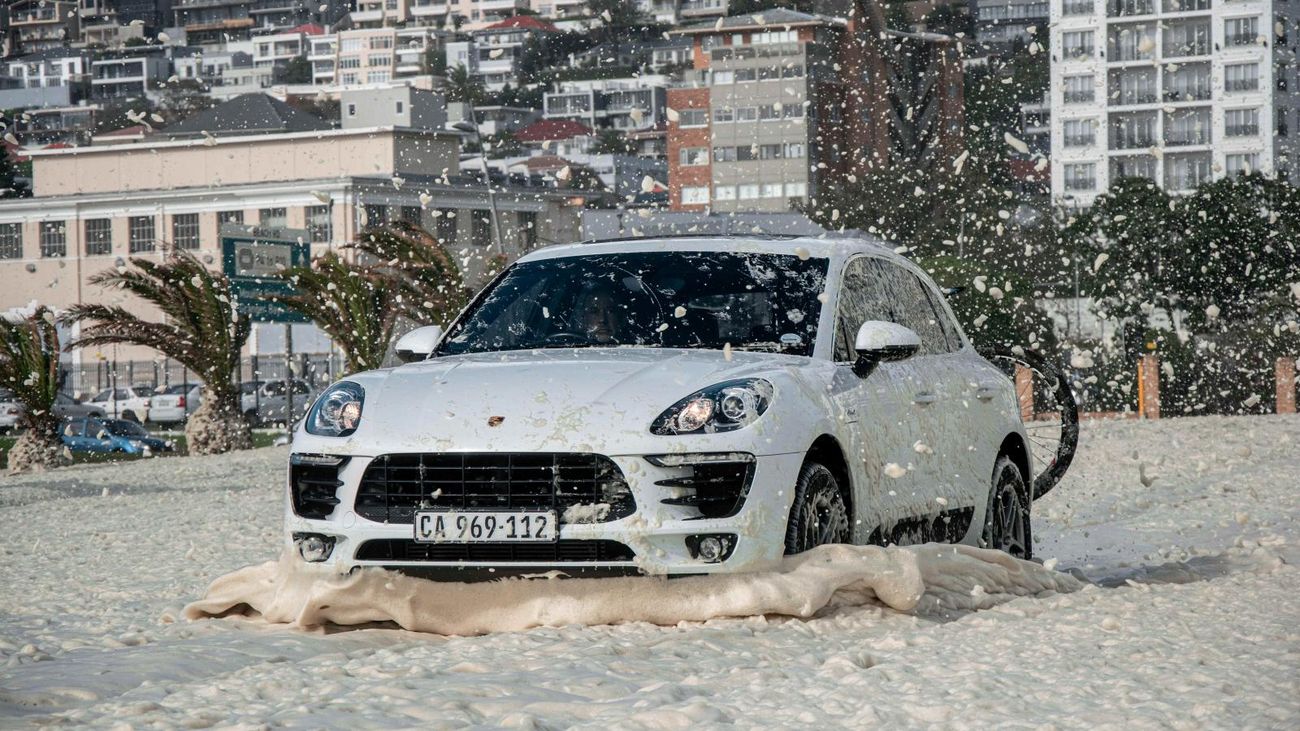
Social media was abuzz on Monday, 13 July 2020, as a wild winter storm made landfall in Cape Town. A tumultuous sea churned seawater into thick foam which was driven over the Seapoint promenade wall by violent waves and high-velocity wind, leaving numerous cars nearby drenched in seawater and seafoam.

Our very own lensman, Dieter Pey, was in Seapoint to watch and capture the mayhem. Some cars were helplessly caught in the throngs of the storm as nearby streets flooded with seawater and foam. Some people even deliberately drove their cars into the quagmire in the hope of scoring a few likes on Instagram. For the cars in the firing line, however, it was a nightmare...

Salt is very corrosive and it can be hugely destructive when it comes into contact with metal. It’s a known fact that cars that spend their life at the coast will inevitably succumb to rust far quicker than cars inland. Sea air and indeed seawater are but one of a car’s worst enemies. It goes without saying then, that bringing your car in direct contact with the ocean is never a good idea and if you care about preserving your car, this situation should be avoided at all cost.

For this reason, let's quickly take a look at what rust is and how you can avoid it...


Snip 1.jpgSnip 2.jpgSnip 3.jpgSnip 4.jpgSnip 5.jpgSnip 6.jpgSnip 7.jpgSnip 8.jpgSnip 9.jpgSnip 10.jpg
 
Cape Storm Trashes Cars: How to Protect Your Car From Rust

A huge winter storm raged in Cape Town this week, bringing rain and near-hurricane-force winds to the Mother City. Many cars parked along the Seapoint promenade received a wind-blasted foam wash from the raging Atlantic Ocean nearby. It might have been fun and games for the people witnessing nature’s ferocity, but for the cars covered in seafoam, rusty days lie ahead…

Social media was abuzz on Monday, 13 July 2020, as a wild winter storm made landfall in Cape Town. A tumultuous sea churned seawater into thick foam which was driven over the Seapoint promenade wall by violent waves and high-velocity wind, leaving numerous cars nearby drenched in seawater and seafoam.

Our very own lensman, Dieter Pey, was in Seapoint to watch and capture the mayhem. Some cars were helplessly caught in the throngs of the storm as nearby streets flooded with seawater and foam. Some people even deliberately drove their cars into the quagmire in the hope of scoring a few likes on Instagram. For the cars in the firing line, however, it was a nightmare...

Salt is very corrosive and it can be hugely destructive when it comes into contact with metal. It’s a known fact that cars that spend their life at the coast will inevitably succumb to rust far quicker than cars inland. Sea air and indeed seawater are but one of a car’s worst enemies. It goes without saying then, that bringing your car in direct contact with the ocean is never a good idea and if you care about preserving your car, this situation should be avoided at all cost.

For this reason, let's quickly take a look at what rust is and how you can avoid it...


View attachment 874447View attachment 874449View attachment 874451View attachment 874453View attachment 874455View attachment 874457View attachment 874459View attachment 874461View attachment 874463View attachment 874465
you cannot heal stupidity, that's what I learnt in life :ROFL:
 
SEE | These are the sole remaining naturally-aspirated V8 vehicles in SA's market

• Three naturally-aspirated V8 engines remaining in SA.

• The below list consists of two SUVs and one sports car.

• All three cars are from Japanese descend.

 
15 fastest selling used cars in June: 'Cautious optimism' in used car market


198CB8D0-C218-4DF8-A9A5-C063036AFE1B.jpeg
 
South Africa's double-cab bakkie sales race: the stats after June 2020

Yes, we’ve again managed to get our hands on double-cab bakkie sales statistics for June 2020, which shows which model is winning the sales race in South Africa half the way through the year.

While Naamsa no longer releases individual model sales figures (though the organisation didn’t provide a breakdown of the various bakkie body styles, anyway), a record is indeed kept. Thanks to our friends over at Lightstone Auto, we’re able to shed some light on the matter.

According to Lightstone Auto, the Toyota Hilux is still leading the double-cab pack in 2020 (a year admittedly ravaged by the COVID-19 pandemic) so far, with 6 070 units registered.

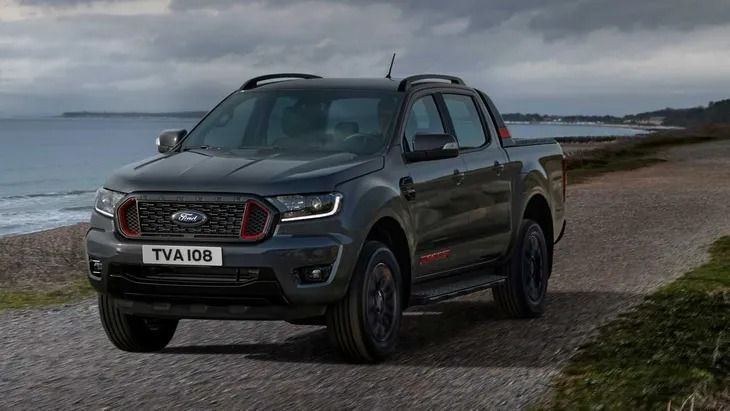
Ford’s Ranger is next with 5 076 double-cab units, while Isuzu’s D-Max (including a handful of KB-badged examples sold before the switch to the aforementioned moniker) completes the podium at the halfway point of the year with 2 304 units.

 
How Covid-19 is changing car-buying trends: Are South Africans more likely to lease cars?

- The global pandemic has altered the way consumers buy vehicles, a report has found.

- Those who have intended to buy a vehicle have not given up plans to do so.

- Financial security is top of mind among consumers.

 
Why are safety features not a priority for SA car buyers?

When buying a car, new or pre-owned, buyers usually want to know they are getting “bang for their buck”.

Richard Green, the national director of the SA Motor Body Repair Association (Sambra), says industry reports indicate local car-buyers’ rank reliability, comfort, a manufacturer’s reputation, warranty, fuel efficiency and purchase price rank higher than safety features.

“The truth is, we buy what we can afford. Several motorists can afford only entry-level cars which come with basic safety features,” says Green.

According to an article based on Statista’s Global Consumer Survey 2018, US car buyers rank safety first, followed by fuel efficiency, high quality, good warranty and customer service, suitability for everyday use, driving comfort, design, low price, spaciousness and whether it is their preferred make.

Sambra answers questions around vehicle safety:

 
SA's new-car prices rise above inflation for first time since Q2 2017

In the second quarter of 2020, South Africa’s new-vehicle pricing rose above inflation for the first time since Q2 2017, according to TransUnion’s Vehicle Pricing Index (VPI).

The VPI for new vehicles “rose sharply” to 6,5 percent in the second quarter of 2020, from 3,1 percent in Q2 2019 (and to 3,1 percent from one percent for used vehicles).

As a reminder, the VPI measures the relationship between the increase in vehicle pricing for new and used vehicles from a basket of passenger vehicles that incorporates 15 top-volume manufacturers. The index is created using vehicle sales data from across the industry.

According to TransUnion, the country’s automotive market experienced “record lows” in Q2 2020, as the combination of minimal trading due to the COVID-19 pandemic and the “depressed economy” saw a whopping 71 percent decline in the number of new and used cars financed over the same period in 2019.

 
Toyota SA boss confirms new locally built model ‘won’t be a sedan

The head of Toyota South Africa Motors has confirmed the new passenger vehicle due to go into production at the Prospecton plant in KwaZulu-Natal late in 2021 will not be a sedan.

While the Japanese firm’s local arm builds the latest Corolla Quest (a prolonged lifecycle version of the previous-generation sedan) at its Durban facility, it imports the latest-generation Corolla saloon and hatchback.

In February 2020, the company announced it would produce a new unspecified "passenger-car model” at Prospecton after a fresh R2,43-billion investment.

Andrew Kirby, the company’s president and CEO, has now suggested the new model will be either a hatchback or (more likely) a crossover.

“Our new Toyota model, including a hybrid version, will replace the Corolla sedan production line at our Durban factory,” Kirby said, according to Engineering News.

 
2020 car sales bring about sobering numbers for European giants VW and Renault

- Renault and Volkswagen saw declines in profits over the first six months of the year.

- Renault recorded a loss of R135-billion.

- Porsche saw half-year sales weaken by only 15%.


Three of Europe's largest car companies have revealed their half-year results, and for two of those, the numbers are predictably horrific.

Facing the worst trading conditions in memory, both Renault and Volkswagen have suffered. Although most industry analysts expected significant losses, what is telling is how differently these two companies are positioned to deal with the issue and to spark a possible recovery.

 
Report: It seems South Africans can't get enough of the humble hatchback

While sports utility vehicles (and bakkies) are amongst the fastest-growing in terms of popularity in the automotive sector both here in South Africa and globally, local motorists remain besotted with hatchbacks.

This is according to the 2020 AutoTrader Car Industry Report, which reveals not only which body types South Africans like most but also which used cars top the rankings of each body type.

According to the report, the hatchback is still the most sold body type in the used car market – and the most searched for too. This is one of many findings in the latest report, which covers the most sold used cars in SA to which car colours are the most popular among South Africans.

The report is based on data gleaned from AutoTrader for the year ending June 2020. As the country’s largest motoring marketplace, AutoTrader's technologies – based on its comprehensive vehicle taxonomy database – provides some interesting insight into the automotive industry and the interactions of in-market car shoppers.

 
New Car Sales in SA: July 2020

The National Association of Automobile Manufacturers of South Africa (NAAMSA) has released new vehicle sales figures for July 2020. Sales remain under pressure.

July 2020 was the second full month of vehicle sales since the mandated local lockdown. While sales are still under pressure from budgetary constraints, there was slight growth over the previous month.

Compared to June 2020, 754 more vehicles were sold in July 2020. A total of 32 396 vehicles were sold in stark contrast to July 2019 where 46 042 vehicles were sold. Aside from a slight decrease in passenger vehicle sales, most sectors were up on June 2020 results, showing there is some (albeit small) positive growth in the market. Exports seem to also be improving, which bodes well for local manufacturers although the numbers are some way off the same point last year.

New Car Sales Summary: June 2020

- Aggregate new vehicle sales at 32 396 units down by 29.6% (-13 646 units) compared with July 2019

- +2.4% (754 units) up on June 2020

- New passenger car sales of 18 905 units down by 35.8% (-10 552 units) compared with July 2019

- -1.2% (-225 units) down on June 2020

- Light Commercial Vehicle (LCV) sales of 11 123 units down by 19.7% (-2 736 units) compared with July 2019

- +8.8% (901 units) up on June 2020

- Exports of 24 706 units down by 29.6% (-11 871 units) compared with July 2019

- +23.8% (5 910 units) up on June 2020

 
SA's new-vehicle sales fall 29,6 percent year-on-year in July 2020

South Africa’s new-vehicle sales for July 2020 dropped nearly 30 percent year-on-year, according to the latest figures from Naamsa.

Naamsa says aggregate domestic sales for the month of 32 396 units reflected a decline of 13 646 units or 29,6 percent from the 46 042 vehicles sold in July in 2019.

It was a trend mirrored by export sales, which likewise fell 29,6 percent year-on-year, to 24 706 units. Still, Naamsa said this export performance at least reflected a “welcome improvement on June 2020”, with more “positive news” to come as the domestic automotive industry’s major export destinations were “starting to ease their lockdown restrictions”.

Out of the total reported industry sales, Naamsa says an estimated 30 325 units or 93,6 percent represented dealer sales, with industry corporate fleets accounting for only 3,1 percent and sales to government just 2,9 percent. The vehicle rental industry, meanwhile, contributed a mere (estimated) 0,4 percent.

 
Car sales: BMW, Golf GTI, and Ford Ranger bakkie remain SA's favourite used vehicles

• Average used car prices have increased by R9 003 in the past year.

• AutoTrader's annual report details trends and insights into the local used car market.

A total of 401 million online searches for used cars took place last year, this is an all-time record and an almost 40% increase year-on-year.

Furthermore, the average selling price of a used car in the last year was R289 312, an increase of R9 003 over the previous year.

These are amongst the key findings contained in the 2020 AutoTrader Car Industry Report, which was released on Monday, 3 August. This annual report details trends and insights into the South African used car market. As the largest digital automotive marketplace in South Africa, AutoTrader provides unparalleled insight into car-buying patterns in the country.


Top
Sign up to the MyBroadband newsletter
X