The SA Vehicle Industry Thread

Peugeot-Citroën turnaround plan reaps rewards

Peugeot Citroën SA (PCSA) has bucked the trend to grow its sales volumes 31% in the first half of the year, against an industry-wide decline of 36% resulting from the Covid-19 crisis.

The growth comes off a low base, with sales of 772 units between January and July this year compared to 591 units in the same period in 2019, but sales would have been much higher if it hadn’t been for the lockdown which saw car dealers closed for several weeks, says Leslie Ramsoomar, who took over from Xavier Gobille as the French importer’s MD in February.

PCSA recently moved its headquarters to Midrand, the new premises incorporating a 7,000m2 warehouse stocking more than R50m worth of parts. Poor sales of PCSA cars were partly due to negative perceptions about after-sales service, and the warehouse will ensure a quicker parts supply, according to Ramsoomar.

“There is a strong focus on after-sales support and restoring our reputation,” he says.

The national dealer footprint has grown to 23 Citroën and 24 Peugeot facilities, with four new dealerships planned to open before year end.

Ramsoomar says there are plans to reintroduce the more niche and upmarket DS brand to SA in about two years’ time.

“But our first priority is to sort out the ability to look after customers,” he says.

Source: https://www.businesslive.co.za/bd/l...peugeot-citron-turnaround-plan-reaps-rewards/
After the merge with FCA, I hope that PSA can insert those customer focus values into the new company. Because currently FCA does not care about the customers.
 
SEE | Nissan remembers 60 years of catering to the unique needs of the SA market

• Nissan has been in South Africa since 1963.

• The automaker is producing several vehicles locally, including the NP200 bakkie.

• The next-generation Navara will also be produced in SA.

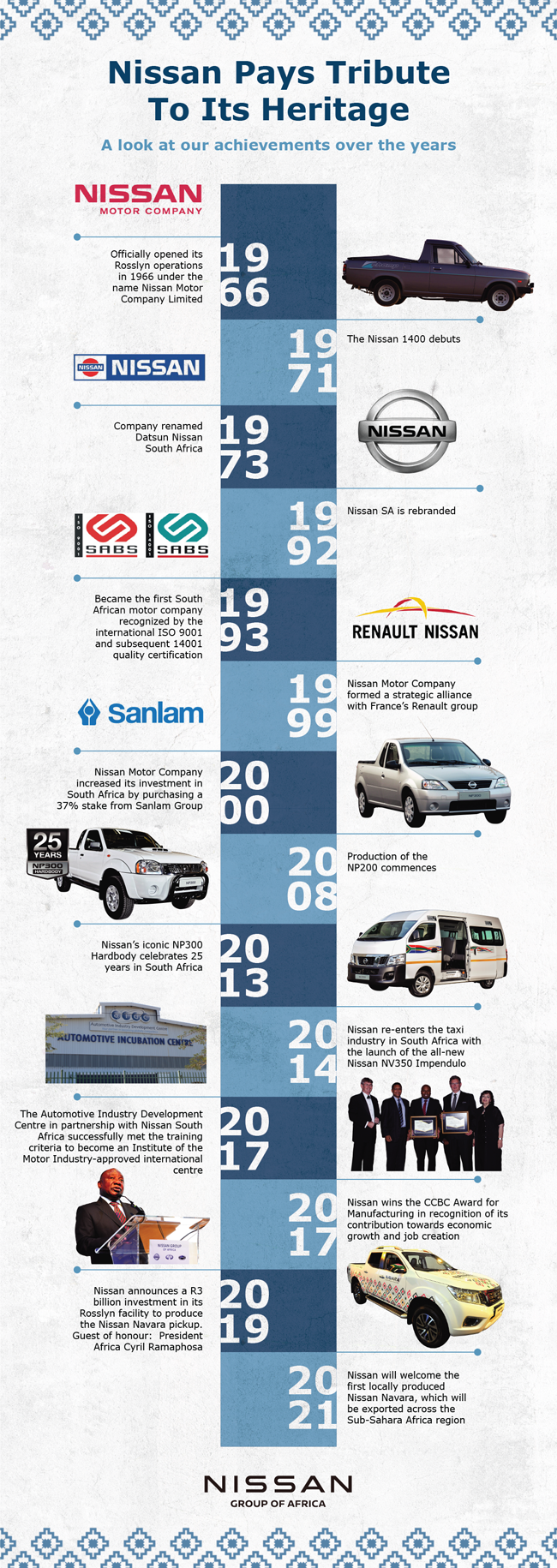
Nissan has quite a rich history in South Africa. Over the last 60 years, the Japanese automaker went out of its way to show its dedication to the needs of the South African market.

Nissan began its South African journey in 1963 through importation and local assembly of completely knocked down (CKD) vehicles (CKD is when an automaker reassembles a car from scratch using kits of loose parts). A decade later, Nissan established its manufacturing plant in Rosslyn, Pretoria - which is still in operation to this day.

There are 24 vehicles under the Nissan and Datsun brands in South Africa today, including the popular NP200 half-ton bakkie. Nissan will also be producing the third-generation Navara at its Rosslyn plant from 2021 onwards. This follows an R3.0-billion investment. Renovations to accommodate the Navara’s production is currently underway.

Nissan can trace its roots back to 1911 when the Kwaishinsha Automotive Company was formed to produce the first Datsun cars in Japan. This company was taken over in the early 1930s, and the Nissan Motor Company was registered. For South Africa, this story started later, in the 1960s.


Nissan.png
 
OPINION | Small victories can only be good for South Africa's struggling auto economy

• Vehicle sales in South Africa are seeing steady improvements.

• 33 000 new vehicles are sold monthly following April's below-1000 slaughter.

• NADA looks at Covid-19 and its impact wholly.

Significant upticks

These numbers are dated, and there have been significant upticks in the economy, with an important one for us being a jump from selling less than 1000 cars in April, to now selling roughly 33000 cars a month consistently. Used vehicles are also selling strongly. Our ongoing commitment to maintaining strict safety and hygiene protocols at our dealerships in our effort to keep the disease at bay goes without question.

Yes, there are ongoing concerns such as rising oil prices, a big budget deficit expected from tax collection, lack of take-up on government bonds, the unreliable power supply from deeply-indebted Eskom, as well as the impact expected from major international events such as the American election and Brexit, but I am still confident we can weather this storm.

We seem to have quickly forgotten the dire state we were in during April, and I am sure we are all glad that we now trade in a far more stable environment. In my role as chairman of NADA and as the person responsible for several dealerships I always look at business in quarters, never months or weeks so that I can see the bigger picture, not blips in isolation.

I don't see vehicle sales volumes growing quickly in the short term. However, I think many of us have taken the opportunity to right-size our businesses. We must now take advantage of our new-found agility to react to changing conditions, which include the welcome lowering of interest rates and banks' loan approval rates holding up and, in fact, being generally better than expected.

 
South Africa’s struggling carmakers ask government to cut new car taxes

South Africa's car manufacturers have asked the government to reduce taxes on new vehicle purchases as part of a proposed stimulus package for the coronavirus-hit sector, according to a presentation from an industry body seen by Reuters.

The proposal, aimed at boosting local sales of new cars as rising coronavirus cases threaten demand in key export markets, was presented to the government on Monday by the National Association of Automobile Manufacturers of South Africa (NAAMSA), its chief executive Mike Mabasa said.

NAAMSA represents global car giants like Nissan and Toyota which produce vehicles in South Africa, with around 64% marked for export.

Automakers want to lower the tax rate for new vehicles from (up to) 42% of the price currently to between 35% and 38%, Mabasa said.

Removing a tax on carbon dioxide emissions imposed at purchase and reducing an ad valorem levy - a value-based tax on items considered a luxury in South Africa - could together boost new sales by almost 28 400, NAAMSA's presentation showed.

 
How lockdown has changed South Africa's car-buying patterns

• South African consumers have changed their car-buying patterns since lockdown earlier in 2020.

• There has been a massive car-preference change.

• An interesting trend was the substantial growth in searches for the Volkswagen Golf.

Lockdown has affected every single South African – on so many levels. One of the most interesting impacts has been the change in car-buying patterns.

This perhaps surprising finding has emerged from an analysis of search and sales data on AutoTrader before and during the various levels of lockdown. AutoTrader is the largest digital automotive marketplace in South Africa. Accordingly, it provides unparalleled insight into car-buying patterns in the country.

According to George Mienie, AutoTrader CEO, it is interesting to see how preferences have changed during the lockdown. "The 2020 AutoTrader Car Industry Report reveals which cars were the most searched for pre- and during-lockdown. When one compares this to search data during Lockdown Level 2 (18 August to date), there are some distinct differences," he points out.

One of the most interesting trends was the substantial growth in searches for the Volkswagen Golf. In contrast, it was the fourth most searched for vehicle before lockdown, it shot up into the first position during Lockdown Level 5 and Level 4.


5F69D5ED-C483-45B2-A817-1843D8004523.png668D3CF0-B854-45B7-A28C-B91F9B339679.png6FC02341-E6D1-49AE-949A-159F86FF5FED.png
 
Naamsa concerned about grey imports impacting new vehicle sales

Naamsa has discovered that, as of the 1st of October 2020, 300 000 of the 12,7 million cars on South African roads have been illegally imported. This is a figure that grows at 30 000 vehicles per annum which, according to Naamsa, displaces the new car sales.

Based on takes applied to new car sales in the local market, it is estimated that this costs the fiscus R3,8 billion every year. Grey imports have a negative impact on the local automotive ecosystem because it takes away from possible tax revenue and hurts job creation.

Putting it into perspective, the monthly average for the new vehicle market for 2020 is 28 500 units. Grey imports represent an additional month of sales per annum, which equates to 7.5 per cent of total market and would be the third largest brand in SA by volume.

New vehicle sales statistics for September 2020, Naamsa confirms aggregate domestic sales at 37 403 units continued to improve in line with lower lockdown levels over recent months but still reflected a decline of 11 737 units, or 23,9 per cent from the 49 140 vehicles sold in September last year. Export sales at 28 704 units also registered a fall of 7 566 units or a decline of 20,9 per cent compared to the 36 270 vehicles exported in September 2019.

 
September sales are encouraging, but 30 000 vehicles for export remain in SA

• 37 403 new vehicles were sold during September 2020.

• Around 30 000 vehicles meant for export remain in South Africa.

• While good, September's sales are down 23.9% compared to September 2019.

The ongoing, albeit slow, improvement in new vehicle sales in South Africa, in line with the decreasing Lockdown levels, is welcomed, but the motor industry needs significant government support to grow sales, thereby increasing the amount of taxation paid to the state.

It follows the distribution of retail new vehicle sales information for September by the National Association of Automobile Manufacturers of South Africa (Naamsa).

Total new vehicle sales in South Africa for September, at 37 403 units, were 12% up on the August figure of 33 515 units, but still reflected a decline of 23.9% from the 49 140 vehicles sold in September 2019.

 
New Car Sales in SA: September 2020

The National Association of Automobile Manufacturers of South Africa (NAAMSA) has released new vehicle sales figures for September 2020.

The SA vehicle market remains under pressure but continues on its steady recovery as lockdown levels have begun to ease.

Compared with August 2020, 4 148 more vehicles were sold in September 2020. A total of 37 403 vehicles were sold in stark contrast to September 2019 where 49 140 vehicles were sold. This is the first real sign since the lockdown was eased 2 months ago that vehicle sales have shown month on month double-digit increase.

Light commercial vehicles appear to be recovering faster than other segments with LCV sales not too far off levels seen in 2019.

New Car Sales Summary: September 2020

* Aggregate new vehicle sales at 37 403 units down by 23.9% (-11 737 units) compared with August 2019

* +11.1% (4 148 units) up on August 2020

* New passenger car sales of 22 798 units down by 31.2% (-10 322 units) compared with August 2019

* +15.2% (+4 148 units) up on August 2020

* Light Commercial Vehicle (LCV) sales of 12 267 units down by 8.9% (-1 202 units) compared with August 2019

* +7.5% (925 units) up on August 2020

* Exports of 28 704 units down by 23.9%% (-7 566 units) compared with August 2019

* +19.8% (+5 676 units) up on August 2020


Snip.jpg
 
Toyota sells over 4000 Hilux bakkies in September, as SA vehicle sales gain momentum

Although there were signs of green shoots in the South African new vehicle market in September, it is still a long way from recovering to pre-Covid levels.

According to figures released by Naamsa, new vehicle sales rose by 11.6 percent month-on-month, with September 2020 seeing a total tally of 37 403 units. While this is clearly a step on the right direction, overall sales are still 23.9 percent down versus the same month last year. Year-to-date, the SA vehicle market is down 33.4 percent, versus 2019.

The passenger car market saw the most worrying year-on-year decline of 31.2 percent, as the rental market continues to be all but dormant, but it was a far more encouraging picture for bakkies and other light commercial vehicles, with this sector declining by just 8.9 percent. The medium and heavy truck segments saw respective declines of 13.9 percent and 5.8 percent.

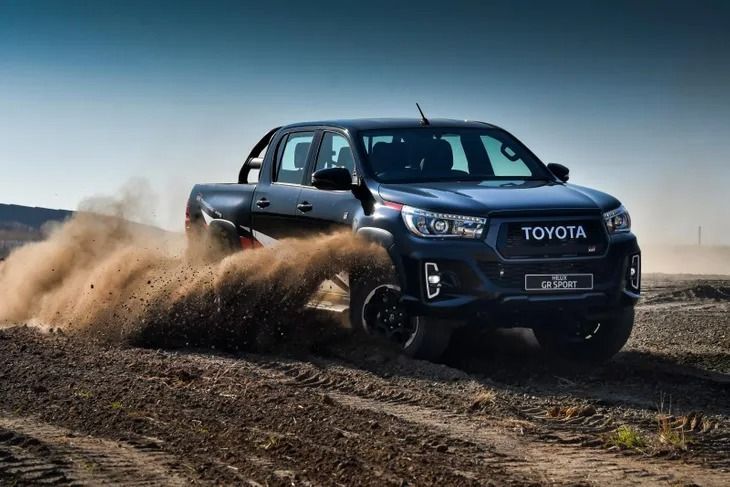
While Naamsa is no longer reporting individual vehicle sales numbers, Toyota did disclose that it sold 4252 Hilux bakkies during September, which is a staggering number considering the economic situation. This comes as Toyota prepares to launch a facelifted Hilux in October, so it’s likely that there were some aggressive deals out there.

 
Suzuki SA sets personal sales record in September 2020

Suzuki South Africa has revealed that it has broken its personal sales record and become the sixth best-selling manufacturer for September 2020. Despite trying economic times, it managed to sell more cars overall and through its dealer network than ever before.

Based on last month’s Naamsa figures, the brand retailed 1 787 unit sales through its passenger and commercial offerings. Its previous record was set in February 2020 where it sold 1 696 units. With this figure, the brand places sixth in the overall sales ranking with a market share record of 7,46 per cent.

This improvement comes despite the collective industry selling 37 403 units in the month; a 23,9 per cent decrease on September 2019’s figure. The passenger car market sees a further decrease of 31,2 per cent with 22 798 vehicles sold.

Suzuki saw success last month partly thanks to purchases by vehicle rental companies which amounted to 320 units.

 
South Africa’s 10 best-selling car and LCV brands for September 2020

Now that Naamsa has released its publicly available industry report for September 2020 (which no longer includes South Africa’s individual model sales figures), we’re going to have a look at the 10 best-selling passenger car and light-commercial vehicle brands for the month.

The report now includes only brand aggregate sales and export numbers.

For the record, Naamsa said new-vehicle sales in September showed a 23,9 percent fall compared with the same month in 2019, ending up on 37 403 units. Export sales, meanwhile, registered a year-on-year decline of 20,9 percent at 28 704 units.

South Africa’s 10 best-selling brands for September 2020

1. Toyota: 9 435 units (with 3 817 exports)
2. Volkswagen Group: 5 458 units (with 6 344 exports)
3. Ford: 3 679 units (with 6 995 exports)
4. Hyundai: 2 623 units
5. Nissan: 2 612 units (with 228 exports)
6. Suzuki: 1 787 units
7. Renault: 1 651 units
8. Mercedes-Benz SA: 1 474 units, estimated (with 6 105 exports)
9. Kia: 1 436 units
10. Isuzu: 1 197 (with 381 exports)

 
SA bakkie sales: Hilux soars, Ranger recovers, D-Max drops in Sept 2020

While Naamsa no longer releases individual model sales figures to the public, we have laid our hands on information confirming South Africa’s best-selling bakkies for September 2020.

As the Japanese brand has already revealed, the Toyota Hilux was again the top-selling bakkie locally during the month, with a whopping 4 252 units registered. After falling to third place in August, the Ford Ranger recovered to second spot in September, with 2 188 examples sold.

The Nissan NP200 (1 118) was up one to third, with the Isuzu D-Max (938) falling two places to fourth. The Nissan NP300 Hardbody (637) held steady in fifth, ahead of the Mahindra Pik Up (316) in sixth.

South Africa’s 10 best-selling bakkies of September 2020

1. Toyota Hilux – 4 252
2. Ford Ranger – 2 188
3. Nissan NP200 – 1 118
4. Isuzu D-Max – 938
5. Nissan NP300 Hardbody – 637
6. Mahindra Pik Up – 316
7. Toyota Land Cruiser Pick-Up – 261
8. GWM Steed – 176
9. Volkswagen Amarok – 120
10. Mahindra Bolero – 36

 
Talk about making waves! Suzuki sells more than 1700 new vehicles in SA during September

• Suzuki sold 1787 new vehicles in South Africa during September 2020.

• This was the sixth highest figure of all automakers in the country.

• The figure is the highest yet registered by Suzuki SA.

Suzuki South Africa is on quite a march these days.

Recently, the automaker announced that it is moving house to bigger premises, and in September 2020, it registered its highest sales figure since entering the South African market.

According to the official sales figures released by Naamsa, Suzuki SA sold 1787 cars, SUVs, and commercial vehicles last month. This is quite an achievement, given that the automaker's previous sales record was set in February this year when 1696 new vehicles were sold. The September result means that Suzuki sold the sixth most cars of all automakers doing duty in South Africa.

Suzuki's sales record includes purchases by vehicle rental companies of 320 Suzuki models, with nearly all other units sold by dealers.

 
Here are BMW's best-selling models in South Africa for September 2020

BMW Group South Africa hasn’t released individual model sales figures in quite some time. But we’ve managed to lay our hands on the German firm’s sales stats for September 2020.

For the record, BMW Group SA (so, including Mini) registered 1 151 passenger vehicle units in September, while exporting 4 773 units (all in the form of the locally built X3, of course).

So, which models performed best for the brand in September? Well, the 3 Series led the pack with 224 units registered, with the aforementioned X3 hot on its heels with 206 units.

Next was the 2 Series range (made up of the 2 Series coupé and 2 Series Gran Coupé line-ups) at 131 units, followed by the X1 (117) and 1 Series (101). The X5 contributed 74 units (compared with the X6’s 17), while the X4 and X7 each chipped in with 20. The 8 Series range contributed 16 registrations.

 
Here’s how many Ranger units Ford SA exported in September 2020

Ford Motor Company of Southern Africa says it was the country’s “top vehicle exporter” for September 2020, with a total of 6 995 units leaving our shores during the month.

This represents an increase of 11,3 percent compared with August 2020 and is the Blue Oval brand’s highest export volume for the year thus far. Some 6 986 export units were in the form of the Ranger bakkie, with the remaining nine accounted for by the likewise locally built Everest.

The Volkswagen Polo was next on 6 344 units, with the Mercedes-Benz C-Class seemingly in third on an estimated 6 100 units, the BMZ X3 in fourth on 4 773 units and the Toyota Hilux in fifth on 3 659 units.

“It’s encouraging to see markets finally recovering to the volumes that were typical pre-COVID-19,” said Neale Hill, managing director of Ford SA.

 
Here's which models sold best for Volkswagen SA in September 2020

While Naamsa no longer releases individual model sales to public, we’ve laid our hands on Volkswagen South Africa’s figures for September 2020.

So, which passenger-vehicle models performed best for the Wolfsburg-based brand in September? Well, predictably, the Polo Vivo (at 1 621 units, again SA’s best-selling passenger car for the month) was at the top of the pile, followed by the likewise locally produced Polo hatchback on 1 299 units.

Next was the Polo Sedan (466), with the T-Cross (446) and Tiguan (428) hot on its heels. The outgoing Golf 7 contributed 276 units, with the Caddy MPV next on 30. The Touareg added 27 units, while the outgoing Kombi (10) and Caravelle (5) brought up the rear, just ahead of the now-discontinued Up (3).

 
Here's which models sold best for Volkswagen SA in September 2020

While Naamsa no longer releases individual model sales to public, we’ve laid our hands on Volkswagen South Africa’s figures for September 2020.

So, which passenger-vehicle models performed best for the Wolfsburg-based brand in September? Well, predictably, the Polo Vivo (at 1 621 units, again SA’s best-selling passenger car for the month) was at the top of the pile, followed by the likewise locally produced Polo hatchback on 1 299 units.

Next was the Polo Sedan (466), with the T-Cross (446) and Tiguan (428) hot on its heels. The outgoing Golf 7 contributed 276 units, with the Caddy MPV next on 30. The Touareg added 27 units, while the outgoing Kombi (10) and Caravelle (5) brought up the rear, just ahead of the now-discontinued Up (3).


The caddy and polo sedan sold a lot more than what I was expecting tbh considering the whole SUV and crossover phase (I was expecting single digits for the caddy incase you were wondering)
 
These models sold best for Hyundai and Kia in South Africa in Sept 2020

While Naamsa no longer releases individual model sales to the public, we’ve laid our hands on figures for both Hyundai Automotive SA and Kia Motors SA for September 2020.

Let’s start with Hyundai. For the record, the Korean firm registered a total of 2 623 units across the passenger-vehicle (2 267), light-commercial (334) and medium-commercial (22) segments for the month.

In the passenger-vehicle space, the outgoing Grand i10 (436) was the brand’s best-seller, followed by the i20 (396), Creta (377) and Venue (362). The Tucson (225), Accent (153), Atos (144) and H1 (107) also made useful contributions.

 
These models sold best for Hyundai and Kia in South Africa in Sept 2020

While Naamsa no longer releases individual model sales to the public, we’ve laid our hands on figures for both Hyundai Automotive SA and Kia Motors SA for September 2020.

Let’s start with Hyundai. For the record, the Korean firm registered a total of 2 623 units across the passenger-vehicle (2 267), light-commercial (334) and medium-commercial (22) segments for the month.

In the passenger-vehicle space, the outgoing Grand i10 (436) was the brand’s best-seller, followed by the i20 (396), Creta (377) and Venue (362). The Tucson (225), Accent (153), Atos (144) and H1 (107) also made useful contributions.


Im surprised the Atos didn't sell better than the grand i10
 
Top
Sign up to the MyBroadband newsletter
X