


-
- News
-
Categories
- 5G
- ADSL
- AI
- Banking
- Black Friday
- Broadband
- Broadcasting
- Business
- Business Telecoms
- Cellular
- Cloud and Hosting
- Columns
- Cryptocurrency
- Energy
- Enterprise
- Fibre
- Gadgets
- Gaming
- Government
- Hardware
- Industry News
- Internet
- Internet of Things
- Investing
- IT Services
- Motoring
- Reviews
- Science
- Security
- Smartphones
- Software
- Technology
- Telecoms
- Trending
- Wireless
- Press Office
- Forum
- Industry News
- What's Next
- Company hub
- Speed Test
- About us
- Advertise with us
- Contact
- Careers
-
Join the MyBroadband community
South Africa’s biggest forum. Discuss, discover, and connect with thousands of members.
-
Question of the Day: Museums you've been to, would recommend, or want to go to?
- Forums
- General discussions
- Motoring and Transportation: Cars, Bikes and Plane
- General Motoring News and Reviews
You are using an out of date browser. It may not display this or other websites correctly.
You should upgrade or use an alternative browser.
You should upgrade or use an alternative browser.
The SA Vehicle Industry Thread
- Thread starter FiestaST
- Start date
FiestaST
Honorary Master
FiestaST
Honorary Master
Jolion takes 4th! SA’s best-selling passenger cars in June 2026
GWM’s Haval Jolion grabbed 4th on the list of SA’s best-selling passenger cars in June 2026, posting its highest tally yet. Meanwhile, the Jetour T2 dropped out of the top 10…
- Passenger-car podium positions unchanged
- Jolion’s sales high sees it grab 4th position
- Ertiga returns as T2 drops out of the top 10
In June 2026, South Africa’s total new-vehicle sales increased 15.3% year on year to 54 482 units, with the local passenger-vehicle market posting even stronger growth, improving 18.1% to 38 393 units. So, which passenger cars led the sales charge in Mzansi last month?
Well, before we drill down into individual-model registration figures, it’s worth noting rental sales accounted for 9.7% (or 3 709 units) of the passenger-vehicle market’s total. A further 525 units were sold to government, while 1 062 units were reported as “single” registrations (vehicles the respective brands kept for their own use).
SA’s 10 best-selling passenger vehicles in June 2026
1. Volkswagen Polo Vivo (excluding LCV) – 2 371 units
2. Chery Tiggo 4 (including Cross) – 2 070 units
3. Hyundai Grand i10 (excluding LCV) – 1 490 units
4. GWM Haval Jolion – 1 424 units
5. Suzuki Swift – 1 388 units
6. Toyota Corolla Cross – 1 356 units
7. Toyota Urban Cruiser – 1 174 units
8. Suzuki Ertiga – 1 150 units
9. Suzuki Fronx – 1 092 units
10. Toyota Starlet – 968 units
GWM’s Haval Jolion grabbed 4th on the list of SA’s best-selling passenger cars in June 2026, posting its highest tally yet. Meanwhile, the Jetour T2 dropped out of the top 10…
- Passenger-car podium positions unchanged
- Jolion’s sales high sees it grab 4th position
- Ertiga returns as T2 drops out of the top 10
In June 2026, South Africa’s total new-vehicle sales increased 15.3% year on year to 54 482 units, with the local passenger-vehicle market posting even stronger growth, improving 18.1% to 38 393 units. So, which passenger cars led the sales charge in Mzansi last month?
Well, before we drill down into individual-model registration figures, it’s worth noting rental sales accounted for 9.7% (or 3 709 units) of the passenger-vehicle market’s total. A further 525 units were sold to government, while 1 062 units were reported as “single” registrations (vehicles the respective brands kept for their own use).
SA’s 10 best-selling passenger vehicles in June 2026
1. Volkswagen Polo Vivo (excluding LCV) – 2 371 units
2. Chery Tiggo 4 (including Cross) – 2 070 units
3. Hyundai Grand i10 (excluding LCV) – 1 490 units
4. GWM Haval Jolion – 1 424 units
5. Suzuki Swift – 1 388 units
6. Toyota Corolla Cross – 1 356 units
7. Toyota Urban Cruiser – 1 174 units
8. Suzuki Ertiga – 1 150 units
9. Suzuki Fronx – 1 092 units
10. Toyota Starlet – 968 units
FiestaST
Honorary Master
Top 5 vehicle exporters in SA – June 2026
We’ve rounded up the top five vehicle exporters in South Africa in June 2026. See the full list below…
Top 5 vehicle exporters in SA in June 2026
Volkswagen Group SA – 10 396 (down 114)
BMW Group – 6 630 (up 330)
Toyota South Africa Motors – 5 407 (up 3 651)
Mercedes-Benz SA – 5 100 (down 500)
Ford Motor Company – 4 752 (up 741)

 www.carmag.co.za
We’ve rounded up the top five vehicle exporters in South Africa in June 2026. See the full list below…
Top 5 vehicle exporters in SA in June 2026
Volkswagen Group SA – 10 396 (down 114)
BMW Group – 6 630 (up 330)
Toyota South Africa Motors – 5 407 (up 3 651)
Mercedes-Benz SA – 5 100 (down 500)
Ford Motor Company – 4 752 (up 741)
Top 5 vehicle exporters in SA – June 2026
We’ve rounded up the top five vehicle exporters in South Africa in June 2026. See the full list below…
www.carmag.co.za
FiestaST
Honorary Master
FiestaST
Honorary Master
Chery Group officially takes over Rosslyn factory
Chinese automotive giant Chery has officially acquired the Rosslyn plant from Nissan and says it aims to create “nearly 3 000” direct and indirect jobs in South Africa…
- Chery Group gets keys to Rosslyn plant
- “Majority” of Nissan employees retained
- Jetour and Jaecoo production confirmed
Fast-growing Chinese automaker the Chery Group has officially acquired the Rosslyn factory from Nissan, a facility in which the Japanese firm had built new vehicles for South Africa and export markets for some 60 years.
In January 2026, Nissan confirmed it had reached an agreement with Chery regarding the sale of the facility, announcing that the Chinese company would purchase the land, buildings and associated assets, including of the nearby stamping plant.
Now that acquisition process is complete. At a ceremony attended by several government officials (including Paul Mashatile, Deputy President of South Africa) and various Chery global executives, the Chinese company announced it had retained the “majority” of the factory’s existing employees.
Aiming to build 50 000 units per annum in “phase one” of the project, the Chery Group furthermore revealed it planned to create “nearly 3 000 direct and indirect jobs, across manufacturing, supply chain and services”. It also announced plans to launch a “localisation programme”, with a target of 40% local vehicle content in the initial phase.
As a reminder, the Chery Group includes not only the core Chery brand but also various sub-brands, such as Omoda & Jaecoo, Jetour, iCaur and Lepas. In April 2026, Jetour confirmed that its T1 and T2 crossovers would start rolling off the line in Rosslyn by mid-2027.
Omoda & Jaecoo has subsequently announced that its Jaecoo J5 would “form part of the core production line-up” at the Chery Group’s newly acquired manufacturing plant. Interestingly, the sub-brand added that the J5 would be produced locally in both internal combustion engine (ICE) form and new-energy vehicle (NEV) guise.

Chinese automotive giant Chery has officially acquired the Rosslyn plant from Nissan and says it aims to create “nearly 3 000” direct and indirect jobs in South Africa…
- Chery Group gets keys to Rosslyn plant
- “Majority” of Nissan employees retained
- Jetour and Jaecoo production confirmed
Fast-growing Chinese automaker the Chery Group has officially acquired the Rosslyn factory from Nissan, a facility in which the Japanese firm had built new vehicles for South Africa and export markets for some 60 years.
In January 2026, Nissan confirmed it had reached an agreement with Chery regarding the sale of the facility, announcing that the Chinese company would purchase the land, buildings and associated assets, including of the nearby stamping plant.
Now that acquisition process is complete. At a ceremony attended by several government officials (including Paul Mashatile, Deputy President of South Africa) and various Chery global executives, the Chinese company announced it had retained the “majority” of the factory’s existing employees.
Aiming to build 50 000 units per annum in “phase one” of the project, the Chery Group furthermore revealed it planned to create “nearly 3 000 direct and indirect jobs, across manufacturing, supply chain and services”. It also announced plans to launch a “localisation programme”, with a target of 40% local vehicle content in the initial phase.
As a reminder, the Chery Group includes not only the core Chery brand but also various sub-brands, such as Omoda & Jaecoo, Jetour, iCaur and Lepas. In April 2026, Jetour confirmed that its T1 and T2 crossovers would start rolling off the line in Rosslyn by mid-2027.
Omoda & Jaecoo has subsequently announced that its Jaecoo J5 would “form part of the core production line-up” at the Chery Group’s newly acquired manufacturing plant. Interestingly, the sub-brand added that the J5 would be produced locally in both internal combustion engine (ICE) form and new-energy vehicle (NEV) guise.
FiestaST
Honorary Master
Chery formally inaugurates new South African assembly plant in Rosslyn - but what will they build?
As a historic chapter closes with Nissan South Africa having ended local manufacturing in May, another begins following Chery Auto’s acquisition of the Japanese carmaker’s assembly plant in Rosslyn, Gauteng.
Friday, July 3, marked a historic moment as the Chinese automaker formally inaugurated its local manufacturing operation, with a view to commencing local production from mid-2027 following a refurbishment of the plant.
In attendance were Deputy President Paul Mashatile, Gauteng Premier Panyaza Lesufi, Tshwane Executive Mayor Dr Nasiphi Moya, Chery Auto Chairman Yin Tongyue, Vice President Charlie Zhang and Chery's South African CEO Tony Liu.
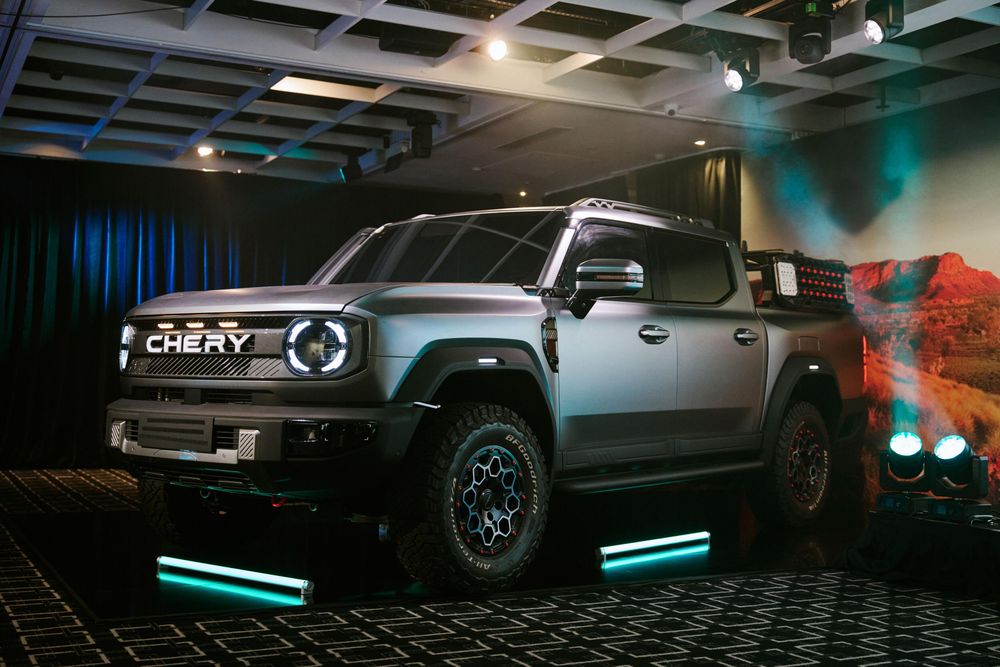
Although the company did not use the occasion to reveal which products it plans to produce locally, there are strong indications of which models are set to cross the Rosslyn assembly plant in 2027. Chery brands Omoda & Jaecoo announced separately on Friday that the Jaecoo J5 will be among the models to be assembled locally. It is also strongly rumoured that the closely related Lepas L4 and Chery Tiggo Cross will be built alongside it.
Furthermore, Jetour announced earlier this year that its T-Series SUV, a larger vehicle than the latter trio, is also in the running for local production.
But that's not all. A Chery representative told IOL on the sidelines that the production version of the new KP31 bakkie was also under strong consideration for local production. This is the world's first bakkie to feature a diesel plug-in hybrid powertrain.
Chery Auto South Africa is aiming to produce 50,000 units per annum by financial year 2028.
The plant’s acquisition recently attained the approval of the Competition Commission.
The plant previously operated at low capacity, producing Nissan Navara bakkies for the local and other African markets. Chery Auto said it plans to upgrade the plant and its equipment with a view to returning it to full production capacity.
 iol.co.za
As a historic chapter closes with Nissan South Africa having ended local manufacturing in May, another begins following Chery Auto’s acquisition of the Japanese carmaker’s assembly plant in Rosslyn, Gauteng.
Friday, July 3, marked a historic moment as the Chinese automaker formally inaugurated its local manufacturing operation, with a view to commencing local production from mid-2027 following a refurbishment of the plant.
In attendance were Deputy President Paul Mashatile, Gauteng Premier Panyaza Lesufi, Tshwane Executive Mayor Dr Nasiphi Moya, Chery Auto Chairman Yin Tongyue, Vice President Charlie Zhang and Chery's South African CEO Tony Liu.
Although the company did not use the occasion to reveal which products it plans to produce locally, there are strong indications of which models are set to cross the Rosslyn assembly plant in 2027. Chery brands Omoda & Jaecoo announced separately on Friday that the Jaecoo J5 will be among the models to be assembled locally. It is also strongly rumoured that the closely related Lepas L4 and Chery Tiggo Cross will be built alongside it.
Furthermore, Jetour announced earlier this year that its T-Series SUV, a larger vehicle than the latter trio, is also in the running for local production.
But that's not all. A Chery representative told IOL on the sidelines that the production version of the new KP31 bakkie was also under strong consideration for local production. This is the world's first bakkie to feature a diesel plug-in hybrid powertrain.
Chery Auto South Africa is aiming to produce 50,000 units per annum by financial year 2028.
The plant’s acquisition recently attained the approval of the Competition Commission.
The plant previously operated at low capacity, producing Nissan Navara bakkies for the local and other African markets. Chery Auto said it plans to upgrade the plant and its equipment with a view to returning it to full production capacity.
Chery formally inaugurates new South African assembly plant in Rosslyn - but what will they build?
As a historic chapter closes with Nissan South Africa ending local manufacturing, another begins following Chery Auto’s acquisition of the Japanese carmaker’s assembly plant in Rosslyn, Gauteng.
FiestaST
Honorary Master
SA’s 10 most popular Chinese vehicles in H1 2026
We’ve tallied up the sales figures and identified South Africa’s 10 best-selling Chinese vehicles in the first half of the year. Here are Mzansi’s H1 2026 favourites from China…
- Chery Group and GWM dominate list
- Jetour T2 rockets up to 4th position
- GWM P-Series the only bakkie here
- Tiggo 7 the only model to shed sales
Which Chinese vehicles are proving particularly popular in South Africa at the moment? Well, we’ve crunched the numbers from the opening half of 2026 to identify the local market’s 10 best-selling vehicles from Chinese brands.
Note we’ve included both the passenger-vehicle segment and the light-commercial vehicle space in this exercise, though just a single bakkie cracked the top 10. Predictably, the remaining 9 models are all unibody crossovers, with the list dominated by contenders from the Chery Group and GWM.
Furthermore, keep in mind that some Chinese brands operating in South Africa – including GAC, Geely, iCaur, JMC and Lepas – unfortunately don’t currently report sales figures to Naamsa. It’s also worth pointing out that BYD Auto SA started reporting sales figures only in March 2026.
Right, let’s dive into the figures. The Chery Tiggo 4 range – which, as a reminder, includes both the Tiggo 4 Pro and the Tiggo Cross – ranked as South Africa’s best-selling Chinese vehicle in H1 2026. Local sales of this crossover increased 39.0% year on year to 11 322 units, enough to see the Tiggo 4 also take 2nd on the list of Mzansi’s most popular passenger cars for H1 2026.
SA’s 10 most popular Chinese vehicles in H1 2026
VEHICLE H1 2026 SALES Y-O-Y CHANGE
1 Chery Tiggo 4 11 322 units +39.0%
2 GWM Haval Jolion 7 588 units +18.8%
3 Omoda C5 5 219 units +62.1%
4 Jetour T2 4 942 units no H1 2025 data
5 GWM P-Series 3 647 units +87.3%
6 Jetour T1 2 471 units no H1 2025 data
7 GWM Haval H6 2 408 units +28.0%
8 Jetour Dashing 2 222 units +16.9%
9 Chery Tiggo 7 2 173 units -12.5%
10 Jaecoo J5 1 568 units no H1 2025 data
We’ve tallied up the sales figures and identified South Africa’s 10 best-selling Chinese vehicles in the first half of the year. Here are Mzansi’s H1 2026 favourites from China…
- Chery Group and GWM dominate list
- Jetour T2 rockets up to 4th position
- GWM P-Series the only bakkie here
- Tiggo 7 the only model to shed sales
Which Chinese vehicles are proving particularly popular in South Africa at the moment? Well, we’ve crunched the numbers from the opening half of 2026 to identify the local market’s 10 best-selling vehicles from Chinese brands.
Note we’ve included both the passenger-vehicle segment and the light-commercial vehicle space in this exercise, though just a single bakkie cracked the top 10. Predictably, the remaining 9 models are all unibody crossovers, with the list dominated by contenders from the Chery Group and GWM.
Furthermore, keep in mind that some Chinese brands operating in South Africa – including GAC, Geely, iCaur, JMC and Lepas – unfortunately don’t currently report sales figures to Naamsa. It’s also worth pointing out that BYD Auto SA started reporting sales figures only in March 2026.
Right, let’s dive into the figures. The Chery Tiggo 4 range – which, as a reminder, includes both the Tiggo 4 Pro and the Tiggo Cross – ranked as South Africa’s best-selling Chinese vehicle in H1 2026. Local sales of this crossover increased 39.0% year on year to 11 322 units, enough to see the Tiggo 4 also take 2nd on the list of Mzansi’s most popular passenger cars for H1 2026.
SA’s 10 most popular Chinese vehicles in H1 2026
VEHICLE H1 2026 SALES Y-O-Y CHANGE
1 Chery Tiggo 4 11 322 units +39.0%
2 GWM Haval Jolion 7 588 units +18.8%
3 Omoda C5 5 219 units +62.1%
4 Jetour T2 4 942 units no H1 2025 data
5 GWM P-Series 3 647 units +87.3%
6 Jetour T1 2 471 units no H1 2025 data
7 GWM Haval H6 2 408 units +28.0%
8 Jetour Dashing 2 222 units +16.9%
9 Chery Tiggo 7 2 173 units -12.5%
10 Jaecoo J5 1 568 units no H1 2025 data
FiestaST
Honorary Master
FiestaST
Honorary Master
FiestaST
Honorary Master
FiestaST
Honorary Master
FiestaST
Honorary Master

Binary_Bark
Forging
naamsa extols auto support programme’s benefits as it hits back at APDP critics
 www.engineeringnews.co.za
Naamsa | The Automotive Business Council has hit back at critics describing the Automotive Production and Development Plan (APDP) as a honeypot, while also questioning the argument in favour of scrapping the government support programme to enable a reduction in the country’s value-added tax (VAT) rate.
The auto industry body says national government supports the domestic automotive industry as “the returns far exceed the incentives”.
naamsa extols auto support programme’s benefits as it hits back at APDP critics
naamsa | The Automotive Business Council has hit back at critics describing the Automotive Production and Development Plan (APDP) as a honeypot, while also questioning the argument in favour of scrapping the government support programme to enable a reduction in the country’s value-added tax...
www.engineeringnews.co.za
FiestaST
Honorary Master
FiestaST
Honorary Master
Volkswagen’s global restructure should be a ‘wake-up call’ for South Africa, Parliamentary chair says
Parliament has expressed concern about the future of Volkswagen South Africa’s Kariega plant, following reports that Volkswagen Group is embarking on a significant global restructure that could involve up to 100,000 job reductions and a reduction in production capacity.
Although the full details of the plans have not been disclosed, reports suggest that Volkswagen Group is looking to streamline its global model range while reducing annual production capacity from around 10 million vehicles to approximately 9 million.
While most of the capacity and cost restructuring is expected to be centred on Europe, with no plant closures outside that region announced, a local parliamentary committee chair has referred to Volkswagen’s global challenges as a “wake-up call” for South Africa.
Chairperson of the Select Committee on Economic Development Sonja Boshoff said the developments served as a stark reminder that South Africa could not afford to become complacent in an increasingly competitive global manufacturing environment.
“The reality is that every country is competing aggressively to retain automotive investment. South Africa cannot simply assume that future production lines and new model allocations will come our way. We have to earn them by creating an environment where manufacturers can compete successfully,” Boshoff said.
She warned that any weakening of South Africa’s automotive manufacturing sector would have consequences extending far beyond factory floors, given that the industry supports hundreds of thousands of direct and indirect jobs.
Parliament has expressed concern about the future of Volkswagen South Africa’s Kariega plant, following reports that Volkswagen Group is embarking on a significant global restructure that could involve up to 100,000 job reductions and a reduction in production capacity.
Although the full details of the plans have not been disclosed, reports suggest that Volkswagen Group is looking to streamline its global model range while reducing annual production capacity from around 10 million vehicles to approximately 9 million.
While most of the capacity and cost restructuring is expected to be centred on Europe, with no plant closures outside that region announced, a local parliamentary committee chair has referred to Volkswagen’s global challenges as a “wake-up call” for South Africa.
Chairperson of the Select Committee on Economic Development Sonja Boshoff said the developments served as a stark reminder that South Africa could not afford to become complacent in an increasingly competitive global manufacturing environment.
“The reality is that every country is competing aggressively to retain automotive investment. South Africa cannot simply assume that future production lines and new model allocations will come our way. We have to earn them by creating an environment where manufacturers can compete successfully,” Boshoff said.
She warned that any weakening of South Africa’s automotive manufacturing sector would have consequences extending far beyond factory floors, given that the industry supports hundreds of thousands of direct and indirect jobs.
FiestaST
Honorary Master
Chery confirms first model to be produced at South African plant in Rosslyn
Chery South Africa has confirmed that the Tiggo 4 Cross will be the first model produced at its newly acquired assembly plant in Rosslyn, near Pretoria.
The plant, which was purchased from Nissan, was officially inaugurated earlier this month and will undergo significant upgrades ahead of production commencing in the second half of 2027.
Chery’s sister brand Jaecoo also previously confirmed that its J5 compact SUV would be built at the Rosslyn plant. The J5 is closely based on Chery’s Tiggo 4 Cross, as is the Lepas L4, which is also reportedly under consideration for local production.
Furthermore, Chery is conducting feasibility studies into a bakkie for local production at “a later stage”, but no final decision has been made yet. The KP31 bakkie is said to be on the radar for local introduction – read more about it here.
Chery has confirmed that both petrol and hybrid versions of the Tiggo 4 Cross will be produced locally, although the full model mix and pricing will only be confirmed closer to launch. Production of the hybrid model will expand South Africa’s expertise in new energy vehicle production. Other hybrids currently in production locally include the Toyota Corolla Cross hybrid, as well as the BMW X3 and Ford Ranger plug-in hybrid models, although the latter is only earmarked for export.
“Producing both ICE and HEV derivatives will allow Chery to serve the continued demand for conventional petrol vehicles while supporting the growing number of South African buyers considering more fuel-efficient, electrified alternatives,” Chery said.
Chery South Africa plans to build 15,000 vehicles as production ramps up in the latter half of 2027, with further growth expected as operations mature.
Chery South Africa has confirmed that the Tiggo 4 Cross will be the first model produced at its newly acquired assembly plant in Rosslyn, near Pretoria.
The plant, which was purchased from Nissan, was officially inaugurated earlier this month and will undergo significant upgrades ahead of production commencing in the second half of 2027.
Chery’s sister brand Jaecoo also previously confirmed that its J5 compact SUV would be built at the Rosslyn plant. The J5 is closely based on Chery’s Tiggo 4 Cross, as is the Lepas L4, which is also reportedly under consideration for local production.
Furthermore, Chery is conducting feasibility studies into a bakkie for local production at “a later stage”, but no final decision has been made yet. The KP31 bakkie is said to be on the radar for local introduction – read more about it here.
Chery has confirmed that both petrol and hybrid versions of the Tiggo 4 Cross will be produced locally, although the full model mix and pricing will only be confirmed closer to launch. Production of the hybrid model will expand South Africa’s expertise in new energy vehicle production. Other hybrids currently in production locally include the Toyota Corolla Cross hybrid, as well as the BMW X3 and Ford Ranger plug-in hybrid models, although the latter is only earmarked for export.
“Producing both ICE and HEV derivatives will allow Chery to serve the continued demand for conventional petrol vehicles while supporting the growing number of South African buyers considering more fuel-efficient, electrified alternatives,” Chery said.
Chery South Africa plans to build 15,000 vehicles as production ramps up in the latter half of 2027, with further growth expected as operations mature.
FiestaST
Honorary Master
Toyota confirms R10.4 billion new investment in SA
Big capital injection is aimed at future-proofing Toyota’s manufacturing operations in South Africa.
Toyota South Africa Motors (TSAM) has confirmed further investment into KwaZulu-Natal by Toyota. The R10.4 billion announcement was pledged earlier this year, but was formalised at a event held at TSAM’s plant in Prospecton in the second week of July 2026.
The reason behind the large investment is to adapt South African vehicle manufacturing to the global market. Most of the brands who assemble cars in South Africa also export to other markets and as other countries shift towards new-energy vehicles, the manufacturing needs to change to support this.
Many of the OEMs have sounded the alarm, warning of being left behind in favour of countries which have already adapted to changing market demands.
Andrew Kirby, President and CEO of Toyota South Africa Motors, said: “The ninth-generation Hilux is not simply the next Hilux. It is the next chapter in South African manufacturing. Every new generation presents an opportunity to elevate our technology, strengthen our supplier base, deepen localisation, develop our people and improve the competitiveness of our operations. The R10.4 billion investment reflects Toyota’s enduring confidence in South Africa, its people and its manufacturing future.”
The Toyota Plant at Prospecton, which is the oldest Toyota facility outside of Japan, currently manufactures the Hilux, Fortuner, Corolla Cross, Hiace/Sesfikile minibus as well as Hino Trucks. It employs between around 8 500 people depending on shifts and demand, with thousands more employed in the surrounding businesses as part of the supply chain and logistics. The plant has the capability to produce over 200 000 vehicles a year.
Big capital injection is aimed at future-proofing Toyota’s manufacturing operations in South Africa.
Toyota South Africa Motors (TSAM) has confirmed further investment into KwaZulu-Natal by Toyota. The R10.4 billion announcement was pledged earlier this year, but was formalised at a event held at TSAM’s plant in Prospecton in the second week of July 2026.
The reason behind the large investment is to adapt South African vehicle manufacturing to the global market. Most of the brands who assemble cars in South Africa also export to other markets and as other countries shift towards new-energy vehicles, the manufacturing needs to change to support this.
Many of the OEMs have sounded the alarm, warning of being left behind in favour of countries which have already adapted to changing market demands.
Andrew Kirby, President and CEO of Toyota South Africa Motors, said: “The ninth-generation Hilux is not simply the next Hilux. It is the next chapter in South African manufacturing. Every new generation presents an opportunity to elevate our technology, strengthen our supplier base, deepen localisation, develop our people and improve the competitiveness of our operations. The R10.4 billion investment reflects Toyota’s enduring confidence in South Africa, its people and its manufacturing future.”
The Toyota Plant at Prospecton, which is the oldest Toyota facility outside of Japan, currently manufactures the Hilux, Fortuner, Corolla Cross, Hiace/Sesfikile minibus as well as Hino Trucks. It employs between around 8 500 people depending on shifts and demand, with thousands more employed in the surrounding businesses as part of the supply chain and logistics. The plant has the capability to produce over 200 000 vehicles a year.
FiestaST
Honorary Master
Toyota SA announces major R10.4 billion investment in new Hilux
Toyota South Africa has announced a R10.4 billion investment in its ninth-generation Hilux programme, the largest single product investment to date.
Toyota South Africa Motors (TSAM) has marked a major milestone in SA’s industrial and manufacturing journey with the ceremonial line-off of the new Hilux at its Prospecton manufacturing plant in Durban – the Japanese automaker’s local arm announcing a R10.4 billion investment in its ninth-generation Hilux programme.
The investment programme includes three infrastructure developments: a new 29 300 m² Logistics Centre, a state-of-the-art Chassis Frame Coating Facility, and a new Chassis Frame Welding Facility, scheduled for completion in June 2027. The R10.4 billion investment is split R3.2 billion towards local supplier development – to support domestic value chains and localisation objectives – and R7.2 billion in production preparation for the Hilux.
Established in 1961, the Prospecton facility is the oldest Toyota factory outside of Japan. Since local Hilux production began 56 years ago, over 2.9 million units have rolled off the assembly line, destined for the local market and export to 74 international markets across Africa and Europe. Other models produced at the plant include the popular Corolla Cross, Fortuner and Hiace.
Said Andrew Kirby, President and CEO of TSAM, “The ninth-generation Hilux is not simply the next Hilux. It is the next chapter in South African manufacturing. Every new generation presents an opportunity to elevate our technology, strengthen our supplier base, deepen localisation, develop our people and improve the competitiveness of our operations. The R10.4 billion investment reflects Toyota’s enduring confidence in South Africa, its people and its manufacturing future.”
 www.carmag.co.za
Toyota South Africa has announced a R10.4 billion investment in its ninth-generation Hilux programme, the largest single product investment to date.
Toyota South Africa Motors (TSAM) has marked a major milestone in SA’s industrial and manufacturing journey with the ceremonial line-off of the new Hilux at its Prospecton manufacturing plant in Durban – the Japanese automaker’s local arm announcing a R10.4 billion investment in its ninth-generation Hilux programme.
The investment programme includes three infrastructure developments: a new 29 300 m² Logistics Centre, a state-of-the-art Chassis Frame Coating Facility, and a new Chassis Frame Welding Facility, scheduled for completion in June 2027. The R10.4 billion investment is split R3.2 billion towards local supplier development – to support domestic value chains and localisation objectives – and R7.2 billion in production preparation for the Hilux.
Established in 1961, the Prospecton facility is the oldest Toyota factory outside of Japan. Since local Hilux production began 56 years ago, over 2.9 million units have rolled off the assembly line, destined for the local market and export to 74 international markets across Africa and Europe. Other models produced at the plant include the popular Corolla Cross, Fortuner and Hiace.
Said Andrew Kirby, President and CEO of TSAM, “The ninth-generation Hilux is not simply the next Hilux. It is the next chapter in South African manufacturing. Every new generation presents an opportunity to elevate our technology, strengthen our supplier base, deepen localisation, develop our people and improve the competitiveness of our operations. The R10.4 billion investment reflects Toyota’s enduring confidence in South Africa, its people and its manufacturing future.”
Toyota SA announces major R10.4 billion investment in new Hilux
Toyota SA has announced a R10.4 billion investment in its new Hilux programme, the largest single product investment to date...
www.carmag.co.za