Your Raspberry Pi Projects

Build yourself, its very easy to do.

Get an ESP32 and some sensors and a solonoid however that is spelt, to control the water flow
Incidentally, where should I start :unsure: Can you recommend a developer kit / supplier / whatever ?

I see that there are a lot of the out there !
 
I am actually busy with this, just struggling to build a greenhouse case, I want to use a linear actuator to open and close a sliding window, no idea how to build it physically.


As for places to buy, Banggood is the go-to, but locally (much more expensive):
 
I am actually busy with this, just struggling to build a greenhouse case, I want to use a linear actuator to open and close a sliding window, no idea how to build it physically.


As for places to buy, Banggood is the go-to, but locally (much more expensive):
You & I are very similar - we live by the keyboard and not by the sword !

Unless somebody has a better suggestion I will probably start with something like this as a means of acquiring the basic tools & prototyping the code Automatic Smart Plant Watering Kit

BTW, for your greenhouse: have you considered a simple eccentric mechanism ?
 
I am actually busy with this, just struggling to build a greenhouse case, I want to use a linear actuator to open and close a sliding window, no idea how to build it physically.


As for places to buy, Banggood is the go-to, but locally (much more expensive):

Have a look on OpenBuilds - they have a few designs for linear actuators - I don't know if there will be something that suits you or that will give you ideas to design your own.

I would suggest some arrangement with a screw thread and a stepper motor or some kind of servo mechanism could work maybe?
 
You & I are very similar - we live by the keyboard and not by the sword !

Unless somebody has a better suggestion I will probably start with something like this as a means of acquiring the basic tools & prototyping the code Automatic Smart Plant Watering Kit

BTW, for your greenhouse: have you considered a simple eccentric mechanism ?

Thats a good kit to start off with, I've used those components the only thing to keep in mind for later is to get a sealed moister sensor, it's a black one you'll instantly recognize it, because that moisture sensor in the kit, the way it works attracts rust as the electrons flow so it so it won't last for years whereas the sealed one with a dialect liquid will last forever especially if you heat shrink and seal the top electronics.

Google, capacitive moisture sensor, it also works with ardiuno so I'd swap out that one in the kit for the capacitive one.
 
Just a heads up for anyone doing a full update.( RPI4 4gb)

If you get a blank screen or a kernel panic error on reboot, it might not be one of the usual suspects ( full sd card, user permissions etc.)it seems that if you have changed your GPU memory to higher than 256 it breaks something, change it back to 256 and reboot.( Either with SSH or in config.txt) to solve the problem.

After 2 hours of struggling I stumbled upon this.


Hope it helps someone.
 
Nah - its too complex, I want on/off for filling the tank, the link I posted will do perfectly.

I want it separate to HA - and completely off the network - so no dependencies other than the hardware involved.
ok.

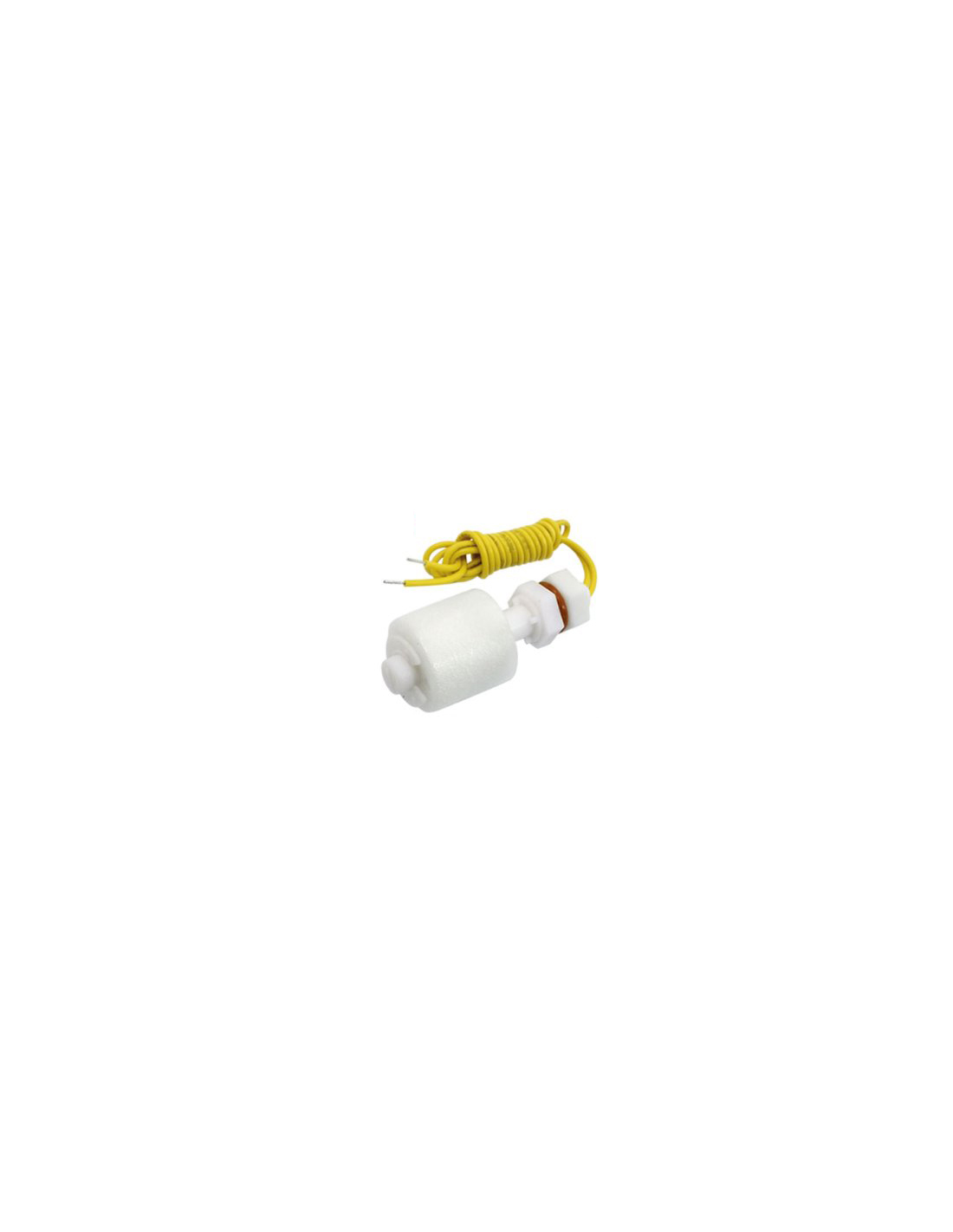
It is just a reed switch from what I can tell and can handle 10w and 100vdc. It works the same as flashing a toilet, except this will be an electronic switch instead of analog valve.

So why hook it up to an arduino at all? Connect that water level switch directly to a contactor that will turn the pump on or off.

Or connect it to a sonoff switch that will power the pump, as in, the level sensor connect as an external switch.
 
ok.

It is just a reed switch from what I can tell and can handle 10w and 100vdc. It works the same as flashing a toilet, except this will be an electronic switch instead of analog valve.

So why hook it up to an arduino at all? Connect that water level switch directly to a contactor that will turn the pump on or off.

Or connect it to a sonoff switch that will power the pump, as in, the level sensor connect as an external switch.
Because the pump and the tank aren't anywhere near each other.... But thanks, I'm good - found what I need.
 
I am investigating garden irrigation control using a Pi.

The forum favourite appears to be OpenSprinkler's OSPi, which - it appears - is no longer imported by SmartKit.
And the OpenIrrigation board is no longer produced locally.

Question: Are there any other alternatives that I should investigate before considering importing an OSPi board ?

I have a brand new unit from OpenIrrigation if you are interested?

IMG_0244 (002).jpg
 
Which valves are you using?
I was just about to ask the same question <sigh>

Since I use low-pressure drip irrigation I am considering the 9 volt Hunter (or similar).

I did come across a suggestion that any inexpensive solenoid valve would be adequate, but a quick Google of the local suppliers of the such left me with the feeling that one might as well go for the quality (and backup) offered by Hunter.

I would love to hear any suggestions by the forumites ...
 
How would I hook this up to an Arduino?

EDIT: https://pijaeducation.com/arduino/sensor/float-switch/

Nevermind

All done - printed an insert to mount the sensor neatly in a PVC pipe.

Still need to sort out the wireless connection to the pump, at the moment its wifi, but will change to 433mhz standalone.

EDIT: Urgh, youtube was supposed to crop to the last 10 seconds of the video.
 
Hi All
I have a few questions about Raspberry Pi 4s and would really appreciate your input.
I work in an environment where, amongst other things, we use Raspberry Pi to run certain devices and instruments. Currently we have more than 200 Raspberry Pi units rolled out across the country and these are mostly made up of Raspberry Pi 3 and 3B's.

At one stage, about 2 years ago, we were looking at moving over to Raspberry Pi 4 units as we were told that the Pi3s were going off the market, and later due to Covid, Pi3 units were more difficult to get. Problem we faced then was that apparently the Pi4 ran much hotter than the Pi3. Thus either a very good fan was needed (Ice fan) if you're using standard plastic case or we had to get a special aluminum case (Flirc) which also acted as a heatsink and no fan was needed.

Our Raspberry Pi 3 units run 24/7/365 and due to the environment, it's not advisable to use fans as it is quite dusty or the Pi units are hidden behind these instruments. We are now revisiting the idea of using the Pi 4 again and need to start development with the Pi 4.

My question for those running Raspberry Pi 4 devices are as follows:
1) Are you experiencing any heat issues running the Pi4?
2) If you have, how have you overcome these issues?
3) Are you running your Pi 4 24/7.
4) Are you using a normal standard Pi case or other plastic case with or without a fan?
5) When I did my research at that time, Flirc cases were not readily availabale in SA so we had to import a few and was limited to 5 per order. Are there any other Flirc type case that you can recommend which dissipates heat easily without the need for a fan?

After a while Pi3/3B stock became more readily available again so we kept using them but due to technical changes we need more powerful units hence the Pi 4.

Your input is very much appreciated.

Thank you.
 
Top
Sign up to the MyBroadband newsletter
X