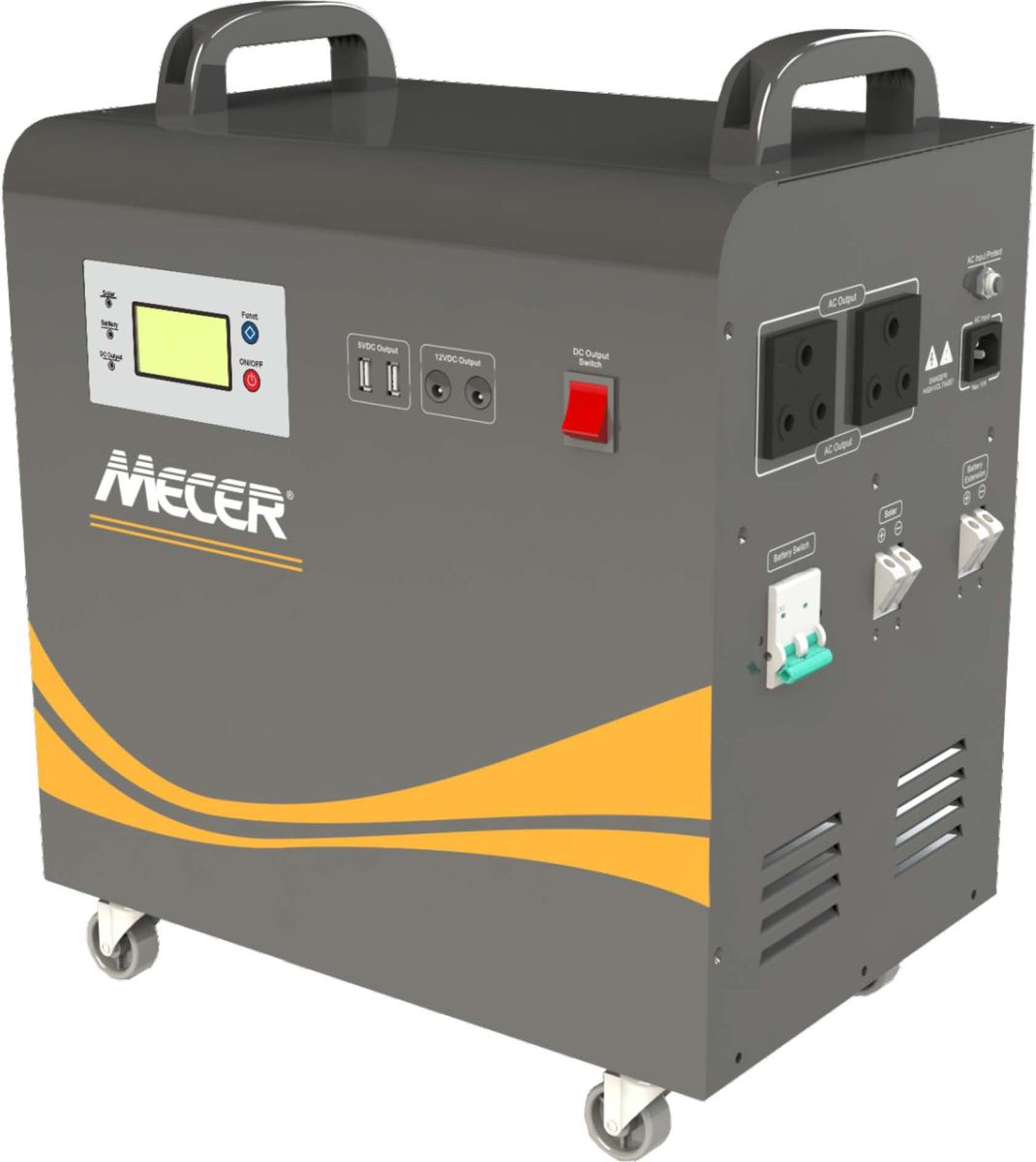
RCT MP-T1000S Inverter trolley

Good day , I just bought RCT mega power T100 yesterday, I wanted to find out if I should leave it always powered on with the equipment (TV, decoder and router? Or is the a time where I must switch it off? The manual that I have is not so descriptive. Is the any other thing that I should be worried about?
You should leave the device itself allways plugged in

so that it keeps the battery full
Lead acid batteries self drain over time so they need to get a charge from time to time this devices floats the batteries ie keeping a voltage on them to keep fully charged


You can leave the items connected to it , or not if you choose too if the leads bother you

Normally these type of devices will still charge the battery even if the device itself is powered off, but still needs eskom power for that float

Switching it off just stops it from supplying power to devices

This isn't device specific just generally how they behave
 

Watched this last night.
Bulk seems to be 14.4v Float seems to be 13.8v
The small slow fan only blows on the inverter heatsink. No direct cooling on the charge unit (at 19min of vid)

Good day , I just bought RCT mega power T100 yesterday, I wanted to find out if I should leave it always powered on with the equipment (TV, decoder and router? Or is the a time where I must switch it off? The manual that I have is not so descriptive. Is the any other thing that I should be worried about?
This post above has a review of the machine giving some info
 
You should leave the device itself allways plugged in

so that it keeps the battery full
Lead acid batteries self drain over time so they need to get a charge from time to time this devices floats the batteries ie keeping a voltage on them to keep fully charged


You can leave the items connected to it , or not if you choose too if the leads bother you

Normally these type of devices will still charge the battery even if the device itself is powered off, but still needs eskom power for that float

Switching it off just stops it from supplying power to devices

This isn't device specific just generally how they behave
Thank
 
Good day , I just bought RCT mega power T100 yesterday, I wanted to find out if I should leave it always powered on with the equipment (TV, decoder and router? Or is the a time where I must switch it off? The manual that I have is not so descriptive. Is the any other thing that I should be worried about?
As a note. As soon as the battery indicator drops one bar from the top, it is time to switch off the tv etc to prolong the battery life. You should get 2hours of tv this way from a 50inch tv.
 
As a note. As soon as the battery indicator drops one bar from the top, it is time to switch off the tv etc to prolong the battery life. You should get 2hours of tv this way from a 50inch tv.
As a side note to your note :) , @NZwane check your TV settings and switch eco mode on. It's really amazing how much one can save on wattage. Only downside is your TV is slightly dimmer.
 
Just got my RCT.

Fully charged it, load shedding hit us at 3 pm-7 pm.
Plugged in my TV and Wifi Router. (Total 90W - Kill A Watt reading)
By 7 pm, the battery was at 80%.

Not bad, seems like a good investment thus far.

Going to do some lithium testing next, but only have 12V 7AH batteries. Any advice on this before I kill myself?

In a nutshell, I was thinking of connecting them in parallel and then connecting them to the battery inputs at the back of the inverter.
 
Last edited:
Just got my RCT.

Fully charged it, load shedding hit us at 3pm-7pm.
Plugged in my TV and Wifi Router. (Total 90W - Kill A Watt reading)
By 7pm, battery was at 80%.

Not bad, seems like a good investment thus far.

Going to do some lithum testing next, but only have 12V 7AH batteries. Any advice with this before I kill myself?

In a nutshell, I was thinking of connecting them in series and then connecting them to the battery inputs at the back of the inverter.
How many 7ah do you have

This device is 12v?

I take your series to mean that you wont remove the internal battery and connect the lithium parralel via external port

And not actually "series"

ie series and "parralel" have definite meanings with batteries and doing that wrong can damage things
 
ie if you device is 12 v you always have to parralel batteries ie negative to negative and positive to positive

And if it is 24v you need like this -+-+

And if adding more batteries to 24 v it has to be done in pairs
 
MECER and RCT are selling the same components with a different package. The 1KW mercer is exactly the same as this RCT in #1
 
Just got my RCT.

Fully charged it, load shedding hit us at 3pm-7pm.
Plugged in my TV and Wifi Router. (Total 90W - Kill A Watt reading)
By 7pm, battery was at 80%.

Not bad, seems like a good investment thus far.

Going to do some lithum testing next, but only have 12V 7AH batteries. Any advice with this before I kill myself?

In a nutshell, I was thinking of connecting them in series and then connecting them to the battery inputs at the back of the inverter.
That back port is connected to the internal gel battery. You can measure voltage of the gel there.
It would be best to disconnect the gel, and to keep a check on the air temp coming out the exit grid on the side.
 
That back port is connected to the internal gel battery. You can measure voltage of the gel there.
It would be best to disconnect the gel, and to keep a check on the air temp coming out the exit grid on the side.
Yea testing with both isn't helpful the 7a of bms may trip
The overcharge current

And disconnect cells from charger the voltage would then spike up real quick to full voltage

To be honest i don't know how the bms will behave with over current if you have two to connect parralel and thus have 14a capacity on charging current
 
Hi, I see everyone has the same big question about the lithium battery with the unit.

I emailed RCT at the beginning of the month asking them the question and the reply I got was " Unfortunately the unit cannot be replaced with lithium ion"

I got my trolly middle of December 2022. Worked like a dream. and what I have on is the following
oled 65"
sound bar
laptop
and a external hard drive
ont plus router
with ps5 on the bar goes to the 250w load. the ps5 drains the battery quickly (I tried once to play through 2 hours loadshedding and before the 2 hours passed the unit moaned and there was 2 battery bars left) so no gaming with loadshedding : (

normal use, 2 hours loadshedding,1 battery line used 4 hours 2-3 lines used.

That was till the end of March 2023. Since then the battery drains quickly (the only thing that changed with the setup middle of March was the laptop) and when the power comes back on it will show less than a minute that the battery is charging, then it shows fully charged. I checked when the main power is on the battery gets
13.(forgot the number after the full stop) v current

So now I have to decide to get 1-2 lead battery's or try a lithium battery and the price for the lithium battery is a bit pricey to learn

I do know someone with the this mecer trolly https://www.takealot.com/mecer-1kw-12v-inverter-power-trolley/PLID90971937

s-zoom.file


and he replaced the batter with the following lithium battery and he is very happy with the replacement without any problems https://www.extremelights.co.za/col...h-1280wh-lithium-battery-lcd-display-100a-bms

12v100AhMainFront_feef158b-7b07-4378-8960-ecdd37ee3bbb_1024x1024@2x.png


This is copied from the web page:
"Using 12v 100Ah sealed lead acid batteries with a small inverter or UPS is not ideal. They are not meant for regularly handling high current and being discharged deeply. Even deep cycle batteries will only cycle 220 times if drained to 80% each time. Only using 50% capacity will increase the cycles to between 400 and 700. But when they are frequently drained (like during load shedding), or placed under high load like a UPS or Inverter places on them, often until the inverter cuts out, then they are basically internally damaged over time, and you will find that you need to replace them very often as they now longer hold charge for long.

This lithium iron phosphate battery on the other hand, has a high cycle rate of 2000 cycles, it can handle high discharge currents (Max 100A), and the internal battery management system (BMS) protects the battery from overcharging, or discharging too low and a short circuit.

This simply means our lithium battery replacement should last 10 times longer than the typical sealed lead acid (SLA) battery it is replacing.

Other advantages of these Lithium batteries are that there are no fumes, the self-discharge rate is only 3.5% per month (SLA will drain itself dead in 12 months), this battery weights 13kg vs the 28kg average weight of a 12v 100Ah SLA battery, and they can be charged and discharged faster (at higher current).

This battery can directly replace a sealed lead acid 12v 100Ah battery in terms of size, charging voltages, and is an upgrade in terms of how many cycles the battery can do (charged and discharged before needs replacing).

Technically the usable capacity of this 12v 100Ah Lithium battery is double that of a traditional 12v 100Ah sealed lead acid battery, if you only drain 12v SLA 100Ah batteries to 50% as recommended to extend it's life expectancy.

Can this battery last long enough for your application? This is complicating for a SLA battery, but simple to calculate for a lithium battery, see the capacity calculation below.

CAPACITY / RUNTIME : To calculate how long this battery can last in your application, lookup or measure the load power of the device(s) it will be powering in Watts, then divide 1280W with that number. Example, a small inverter, with an average 300W load, can run from this battery for 4hrs 15min (1280 / 300 = 4.26).

IMPORTANT : These cannot be used to start or operate a vehicle. The BMS cannot handle the very high instant current requirement.

INVERTER APPLICATION NOTE: Each inverter has it's own efficiency, and charging parameters which are not customizable in most cases, so the full capacity might not be usable. In most cases it means the battery will last even longer, since it is not being fully drained, which is actually a good restriction.
Example of tested inverters:
- Mecer 720W 12v Inverter : The inverter can utilize about 75% of total capacity. Thus less than a 300W load is recommended if you want 3hrs runtime.
- Geewiz 720W 12v Inverter : The inverter can utilize about 75% of total capacity. Thus less than a 300W load is recommended if you want 3hrs runtime.
- Geewiz 1440W 24v Inverter : The inverter can utilize about 75% of total capacity. Thus less than a 640W load is recommended if you want 3hrs runtime. (Note - Requires two batteries in series to get 24v).
- RCT 2.4kw 24v Inverter : The battery parameters can be tweaked, so you able to utilize full 2.4kWh capacity, but it should be set to stop at 70/80% discharge. (Note - Requires two batteries in series to get 24v)."
 
i look at it like this

What is cheaper 10battery changes or one device change

I would cut the casing add additional fan or guide the air over the board to cool components better and flip the dice and see
 
My advice for anybody in this price bracket

Buy an axpert their chargers aren't fragile and they stand up to abuse

I put my stove and oven on it and use both with limitations at times ie oven +1plate plus pc's & lights

You can buy an axpert inverter and a battery for same price as these

Naturally i would recommend going the 24v models to have a bit more charging rate

But that ads the cost of an extra battery

If you are going for this type of setup with the notion of adding lithium later that is

And they come with bigger charge controllers than the pifly 360w

If budget shopping the only spec that matters is charge rate. , Compromise on anything else but not this imo
 
Disappointing test result today.

Tried to run a 1000W microwave off the RCT.

On the Kill A Watt, power draw was 906W, the RCT went into overload immediately.

Points to poorly designed inverter.
I'll rate the actual peak potential output to around 800W just to be safe.
 
Last edited:
Disappointing test result today.

Tried to run a 1000W microwave off the RCT.

On the Kill A Watt, power draw was 906W, the RCT went into overload immediately.

Points to poorly designed inverter.
I'll rate the actual peak potential output to around 800W just to be safe.
my vacuum is 800w, when plugged into a plug that feeds through the Inverter (powered by the grid), it beeps non stop....

Can't wait for my solar to be installed in May.
 
Hi, I see everyone has the same big question about the lithium battery with the unit.

I emailed RCT at the beginning of the month asking them the question and the reply I got was " Unfortunately the unit cannot be replaced with lithium ion"

I got my trolly middle of December 2022. Worked like a dream. and what I have on is the following
oled 65"
sound bar
laptop
and a external hard drive
ont plus router
with ps5 on the bar goes to the 250w load. the ps5 drains the battery quickly (I tried once to play through 2 hours loadshedding and before the 2 hours passed the unit moaned and there was 2 battery bars left) so no gaming with loadshedding : (

normal use, 2 hours loadshedding,1 battery line used 4 hours 2-3 lines used.

That was till the end of March 2023. Since then the battery drains quickly (the only thing that changed with the setup middle of March was the laptop) and when the power comes back on it will show less than a minute that the battery is charging, then it shows fully charged. I checked when the main power is on the battery gets
13.(forgot the number after the full stop) v current

So now I have to decide to get 1-2 lead battery's or try a lithium battery and the price for the lithium battery is a bit pricey to learn

I do know someone with the this mecer trolly https://www.takealot.com/mecer-1kw-12v-inverter-power-trolley/PLID90971937

s-zoom.file


and he replaced the batter with the following lithium battery and he is very happy with the replacement without any problems https://www.extremelights.co.za/col...h-1280wh-lithium-battery-lcd-display-100a-bms

12v100AhMainFront_feef158b-7b07-4378-8960-ecdd37ee3bbb_1024x1024@2x.png


This is copied from the web page:
"Using 12v 100Ah sealed lead acid batteries with a small inverter or UPS is not ideal. They are not meant for regularly handling high current and being discharged deeply. Even deep cycle batteries will only cycle 220 times if drained to 80% each time. Only using 50% capacity will increase the cycles to between 400 and 700. But when they are frequently drained (like during load shedding), or placed under high load like a UPS or Inverter places on them, often until the inverter cuts out, then they are basically internally damaged over time, and you will find that you need to replace them very often as they now longer hold charge for long.

This lithium iron phosphate battery on the other hand, has a high cycle rate of 2000 cycles, it can handle high discharge currents (Max 100A), and the internal battery management system (BMS) protects the battery from overcharging, or discharging too low and a short circuit.

This simply means our lithium battery replacement should last 10 times longer than the typical sealed lead acid (SLA) battery it is replacing.

Other advantages of these Lithium batteries are that there are no fumes, the self-discharge rate is only 3.5% per month (SLA will drain itself dead in 12 months), this battery weights 13kg vs the 28kg average weight of a 12v 100Ah SLA battery, and they can be charged and discharged faster (at higher current).

This battery can directly replace a sealed lead acid 12v 100Ah battery in terms of size, charging voltages, and is an upgrade in terms of how many cycles the battery can do (charged and discharged before needs replacing).

Technically the usable capacity of this 12v 100Ah Lithium battery is double that of a traditional 12v 100Ah sealed lead acid battery, if you only drain 12v SLA 100Ah batteries to 50% as recommended to extend it's life expectancy.

Can this battery last long enough for your application? This is complicating for a SLA battery, but simple to calculate for a lithium battery, see the capacity calculation below.

CAPACITY / RUNTIME : To calculate how long this battery can last in your application, lookup or measure the load power of the device(s) it will be powering in Watts, then divide 1280W with that number. Example, a small inverter, with an average 300W load, can run from this battery for 4hrs 15min (1280 / 300 = 4.26).

IMPORTANT : These cannot be used to start or operate a vehicle. The BMS cannot handle the very high instant current requirement.

INVERTER APPLICATION NOTE: Each inverter has it's own efficiency, and charging parameters which are not customizable in most cases, so the full capacity might not be usable. In most cases it means the battery will last even longer, since it is not being fully drained, which is actually a good restriction.
Example of tested inverters:
- Mecer 720W 12v Inverter : The inverter can utilize about 75% of total capacity. Thus less than a 300W load is recommended if you want 3hrs runtime.
- Geewiz 720W 12v Inverter : The inverter can utilize about 75% of total capacity. Thus less than a 300W load is recommended if you want 3hrs runtime.
- Geewiz 1440W 24v Inverter : The inverter can utilize about 75% of total capacity. Thus less than a 640W load is recommended if you want 3hrs runtime. (Note - Requires two batteries in series to get 24v).
- RCT 2.4kw 24v Inverter : The battery parameters can be tweaked, so you able to utilize full 2.4kWh capacity, but it should be set to stop at 70/80% discharge. (Note - Requires two batteries in series to get 24v)."
IF you should decide to test a lithium... Take the cover off on top to allow for extra cooling. The fan does not blow on to the charging unit in the RCT and Lifepo4 makes a charger nice and toasty :cool:
 
Disappointing test result today.

Tried to run a 1000W microwave off the RCT.

On the Kill A Watt, power draw was 906W, the RCT went into overload immediately.

Points to poorly designed inverter.
I'll rate the actual peak potential output to around 800W just to be safe.
Did it go into overload and shut down, or warn you that you are straining the system?
 
Top
Sign up to the MyBroadband newsletter
X