2019 Jaguar I-Pace

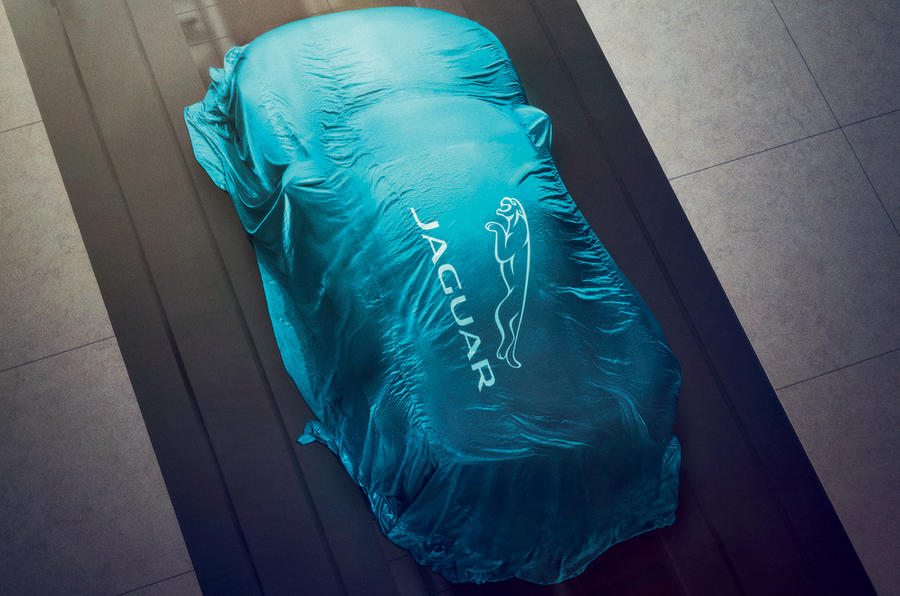
Meaner Jaguar I-PACE SVR Might Still Happen

It was back in 2018 when rumours started to swirl about a potential high-performance ‘SVR’ variant of the all-electric Jaguar I-PACE and in 2019, the boss of Jaguar Special Vehicle Operations (SVO) arm, Michael van der Sande stated that it is a question of “when not if” they build this version.

Fast forward to 2021 and the boss has again confirmed that now is the time for the long-awaited faster variant of the pure-electric Jaguar I-PACE.

Speaking exclusively to Carsales, van der Sande said his department wasn’t an active partner in the early development of the pure-electric Jag, hence the delay.

 
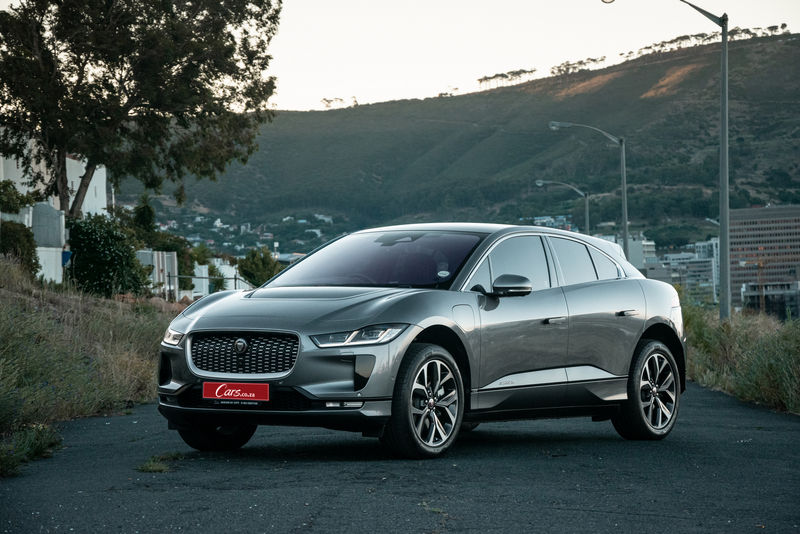
SA-bound Jaguar I-Pace Black revealed with special design trims

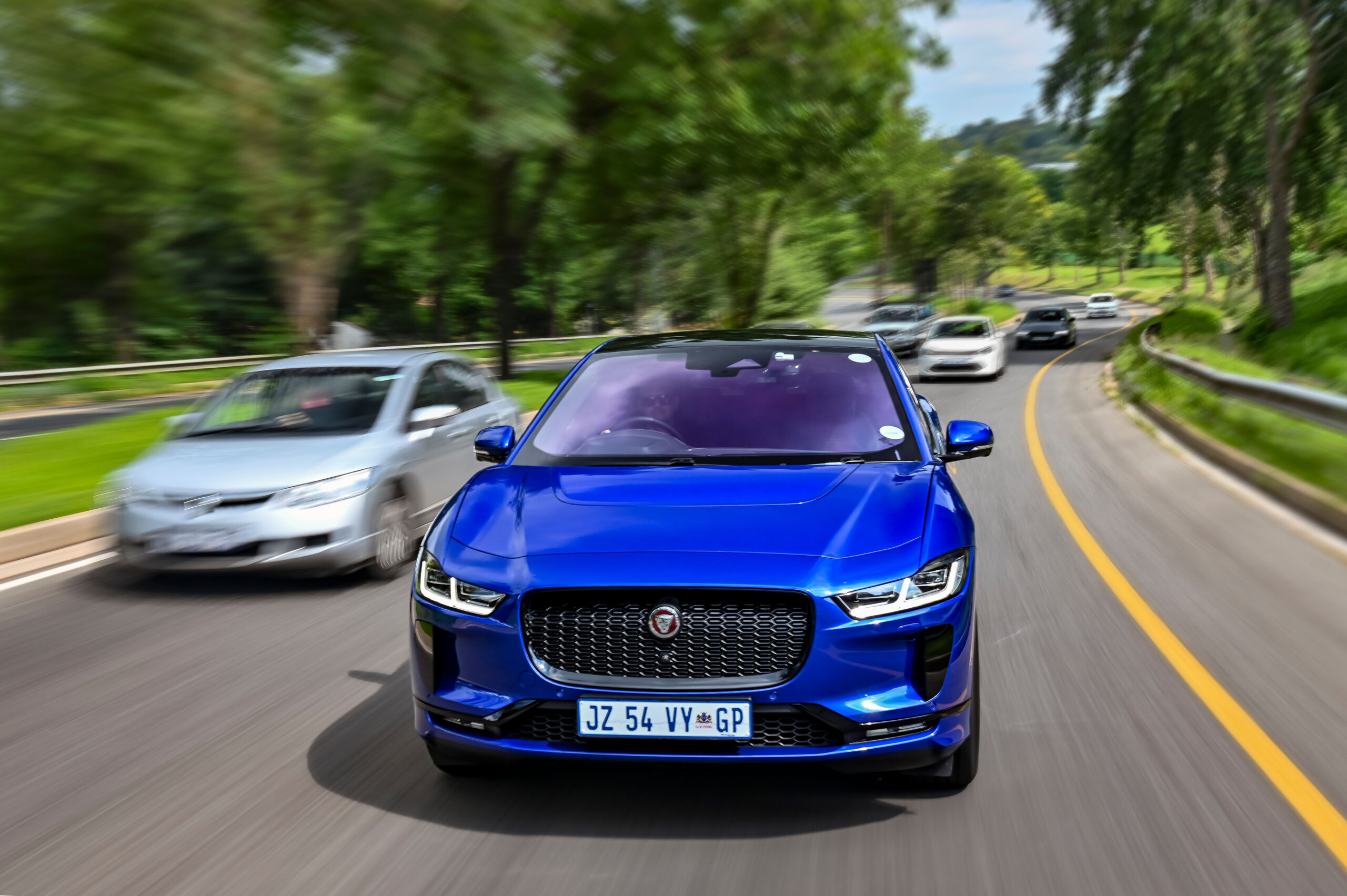
The Jaguar I-Pace Black has been revealed as a more dynamic package for the premium EV that was launched in SA three years ago. Adding to its dynamic presence are some gloss black trimmings and additional standard kit.

As standard, the Jaguar I-Pace Black features a number of extra features as standard such as a panoramic roof, privacy glass and a Black Pack that consists of a gloss black finish applied to the door mirror housings, grille, side window surrounds and rear badges.

Accentuating this image is a gloss black finish for the 20-inch five-spoke rims. Within the cabin, the Jaguar I-Pace Black houses a set of Ebony leather sports seats and headliner with gloss black trim finishers.

As for performance, the I-Pace Black retains its dual-electric motor system which delivers 294 kW and 696 N.m of torque which gives it a 0-100 km/h sprint time of 4,8 seconds (our official test figures came in at 4,79 seconds). Power is sourced from a 90 kWh battery that can keep the EV going for 470 km before running out of juice.


Jag 1.jpgJag 2.jpgJag 3.jpgJag 4.jpg
 
Move over BMW, Jaguar wants to chase Porsche, Bentley

Ever since Jaguar began expanding its line-up two decades ago, from a single XJ model to a more comprehensive line-up of saloons, estates and SUVs, the British carmaker has aimed to be something of a ‘British BMW’. This meant competing with the latter and its Audi and Mercedes foes, while also aiming to emulate the volumes of the big three.

Unfortunately for the British marque that last part simply hasn’t worked out, and with that came the recently announced decision to radically transform Jaguar into an EV brand by 2025.

But Jaguar is not just going all-electric, it’s also aiming a lot higher in terms of its market positioning, according to Automotive News. During a presentation Jaguar’s Chief Creative Officer Gerry McGovern said that the reinvented Jaguar brand would be “lower volume, more exclusive and it will be a true luxury experience”. He also promised that the designs he’s tasked with creating would be nothing short of “jaw-dropping”.

But which brands would Jaguar end up competing with if it were to aim higher than the German ‘Big Three’? Analysts contacted by Automotive News Europe have hinted that the British brand could aim anywhere between Porsche and Bentley, and this would ultimately determine what kind of volumes are achieved. The consensus, however, is that with a more upmarket positioning, Jaguar would be happier with even lower volumes than what it sees today.

 
WATCH: I-Pace joins the ranks of Sir Edmund Hillary and Tenzing Norgay

Jaguar has announced that its I-Pace has shrugged off the steep inclines, twisting tarmac and near freezing temperatures of the UK’s highest paved road to successfully ‘Everest’ at Great Dun Fell, in Cumbria, on a single charge of its 90kWh battery. The South African Car of the Year-winning all-electric performance SUV model was driven by Olympic and World champion cyclist, Elinor Barker (MBE).

The concept of Everesting is simple, yet extreme: complete a series of runs up an incline until achieving an elevation gain of 8848m – equal to an ascent of Mount Everest. The popularity of this endurance challenge boomed among cyclists during the pandemic.

THE LOCATION

Known by cyclists as ‘Britain’s Mont Ventoux’ – a reference to the daunting Alpine mountain stage in the Tour de France – Great Dun Fell is home to the highest surfaced road in the UK. The narrow ribbon of asphalt is defined by a series of sweeping bends and gradients of up to 20 percent as it climbs 547 metres from the start point used for the challenge to a peak of 848 metres.


Jag 1.JPGJag 2.JPGJag 3.JPG
 

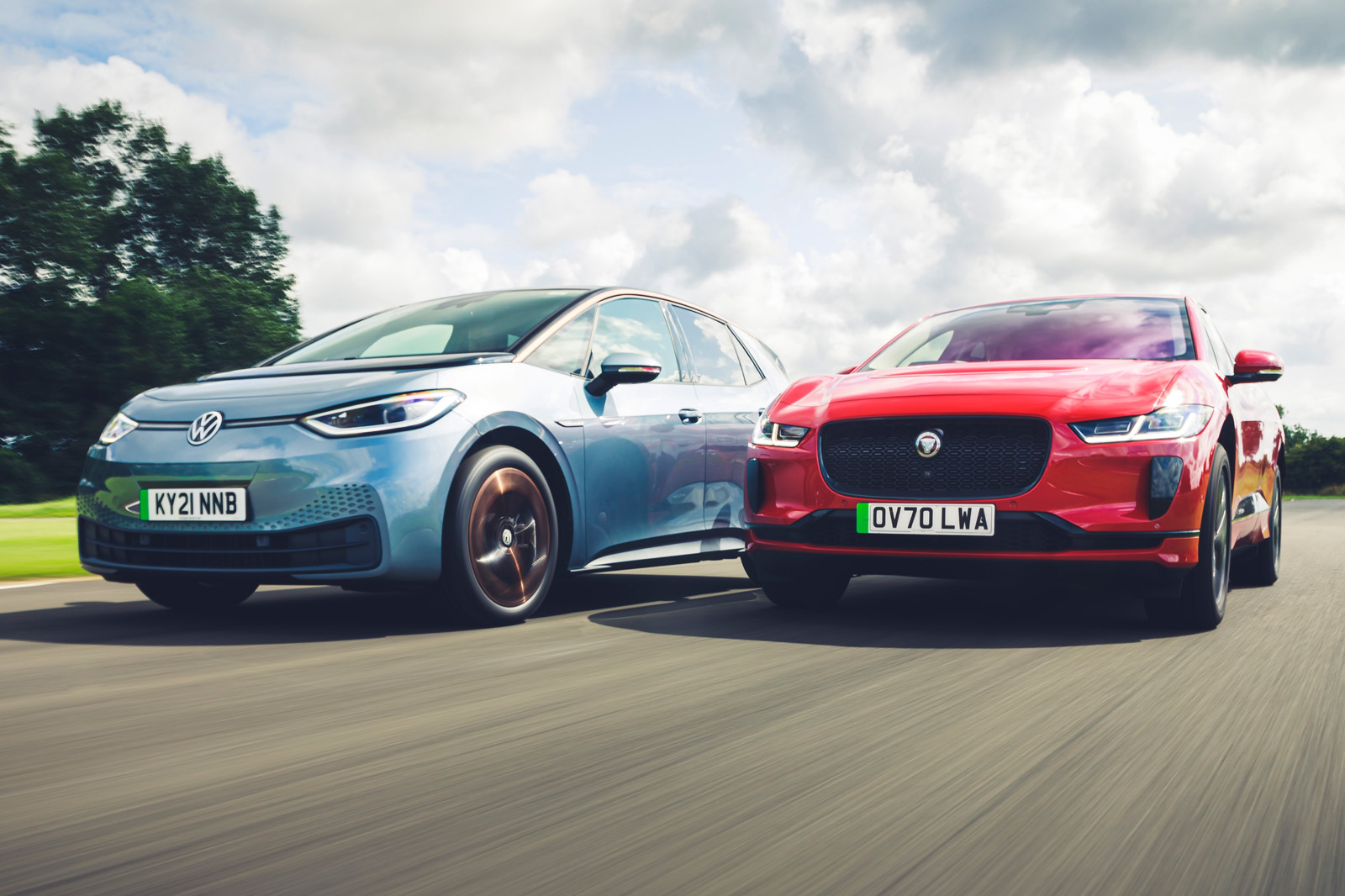
New vs used: Volkswagen ID 3 vs Jaguar I-Pace​

The Jaguar I-Pace was launched in 2018, but can an early model fend off a new Volkswagen ID 3? We run the numbers

The used car scene is never better than when it’s putting temptingly within your reach a car that you had imagined would be unattainable, or bringing viability to a vision for personal or family transport that might otherwise have remained a pipe dream. It’s doing that all the time, of course, right across the full spectrum of the car market – which is why we love it. But right now, and perhaps more significantly than anywhere else, it’s doing it with the electric family cars that, a few years ago, first demonstrated how an EV could be practical, usable, desirable, versatile and uniquely rewarding to own.

The subset of cars we’re talking about here isn’t a big one. The Mercedes-Benz EQC is a member of it, the cheapest two-year-old examples of which are now closing on £50,000. The Audi E-tron is, too – and used examples of that car at a similar age can already be found for less than £45,000. The Tesla Model S has been available second-hand for less than £40,000 at five years old or more for a few years now, and used Tesla Model Xs aren’t too far from cropping up for less than £50,000.

But then there’s the Jaguar I-Pace, which beat its German equivalents to market by nearly a year back in 2018. The all-electric Jag is now set to cross an important threshold as a used car, with the earliest examples about to hit that key three-year life-cycle milestone. And so, as many lease deals and finance terms expire over the next few months, used examples will be brought back into showrooms, and then often traded on, in bigger numbers than they have been so far. Watch the classifieds closely this autumn and, before too long, the sub-£40,000 I-Pace is sure to pop into existence. Once it’s with us, it will be here to stay.


9124F4FD-9822-45BA-A231-529915EA8397.jpeg3AE97C6B-2ED4-47F5-9E24-F4FD879F2874.jpegFA7C7043-A092-47E8-AD3E-8B8F2D64770F.jpeg73C04799-FF78-4EB4-B9A5-04408D09DA33.jpegF350DF5F-8951-45D4-BCAD-D924D8DA2F69.jpegCFF63678-8A58-4707-A4AD-5D7910A1B459.jpeg43410D7C-7179-42D4-9528-C4942518034C.jpeg8FD51F09-DBBB-4D27-9D39-F0C32D54BFC7.jpeg
 
If you visit JLR’s technical training centre, you'll want to be an EV technician

Car technology is evolving at an accelerated pace and we're going to need capable technicians to keep high-tech vehicles on the road.

Jaguar Land Rover, globally and in South Africa, has made it no secret that its product portfolio will evolve over the next few years as the company moves away from traditional big-bore internal combustion engine (ICE) set-ups.

More hybrid models with small-capacity ICE, battery pack and electric motor set-ups will start to take over, and that means new skills will be required across the brands' dealer network, certainly in the workshop area.

New full-electric models will come too, and because these high-voltage cars can be challenging and dangerous to work on if not powered down correctly, Jaguar Land Rover is training its technicians on how to work on all sorts of electrified powertrains in a safe and controlled environment.

Since before the introduction of the award-winning Jaguar I-Pace in South Africa more than two years ago, Jaguar Land Rover has been on an offensive to ensure its technicians are up to speed when it comes to electric and hybridised cars. At the company's local headquarters in Irene, on the outskirts of Pretoria in Gauteng, they have set up a state-of-the-art EV training facility that's set to propel a new age of motor vehicle technicians into the future.


Jag 1.jpegJag 2.jpegJag 3.jpeg
 

Jaguar I-Pace catches fire while charging in Hungary - Motor1.com​

This comes less than a month after a very similar incident in Oregon.

jaguar-i-pace-hungary-fire.jpg


jaguar-i-pace-hungary-fire.jpg


jaguar-i-pace-hungary-fire.jpg


The Jaguar I-Pace is not one of those cars you see catching fire frequently. There have been a few instances in the past where an I-Pace went up in flames, but it is neither a common enough vehicle or particularly prone to it, so whenever we hear about a new one, it’s surprising.

One I-Pace that was charging next to a chemical warehouse in the Hungarian town of Székesfehérvár went up in flames on October 25.

According to a report published by the local fire department, they had some trouble putting the fire out, because as is often the case with EV fires, it kept reigniting after it had apparently been extinguished.

There was another I-Pace fire reported a few weeks ago, this time in Redmond, Oregon. We’re not sure if the vehicle in this instance was plugged in to charge, but the rest of the incident is very similar to what happened in Hungary - firefighters had trouble making sure they put out the battery fire, as it kept coming back, and it took them two hours to ensure it was completely extinguished.

redmond-jaguar-i-pace-fire.jpg


Jaguar I-Pace E400 AWD S Black (2021) Review

Fast Facts
  • Model tested: Jaguar I-Pace E400 AWD S Black
  • Price: R1 999 900 (December 2021, no options)
  • Engine: 2 x electric motors
  • Power/Torque: 294 kW/696 Nm
  • Transmission: Single-Speed Direct Drive
  • Battery: 90 kWh
  • Range: 470 km (claimed)
  • 0-100kph: 4.8 seconds (claimed)
  • Top speed: 200 kph (limited)
  • Load capacity: 656–1 453 litres (claimed)
Price and after-sales support

The Jaguar I-Pace is available in 1 trim level only and is priced at R1 999 900 (December 2021). There are, however, a variety of options to choose from (see some of those under Comfort & Safety features). Included in the price is an 8-year/160 000 km battery warranty and the standard Jaguar Care plan, which includes a 5-year/100 000 km (whichever comes first) warranty and servicing cover.

Verdict

While the changes that Jaguar Land Rover have applied to the I-Pace are subtle (also including advanced cabin-air filtration and enhanced software-over-the-air update functionality), the Coventry-based brand’s BEV remains an interesting option for early-adopters, even in the face of new competition from other premium (German) brands. Its most serious new rival appears to be the e-tron Sportback, which is also a sporty-looking battery-electric SUV. Even though the Jaguar is the older product of the two, it still competes (even trounces, in some respects), its new German rival. So, in summary, the I-Pace is still in the running, and very strongly so. Plus, with the addition of some new competitors, consumers now, finally, have that ultimate of luxuries in this segment… a wealth of choice.


Jag 1.jpegJag 2.jpegJag 3.jpegJag 4.jpegJag 5.jpegJag 6.jpegJag 7.jpegJag 8.jpegJag 9.jpegJag 10.jpeg
 
Jaguar details bespoke Panthera platform for new EV family

First details emerge of the architecture that will underpin Jaguar's all-new, all-electric line-up from 2025

Jaguar’s new electric vehicle platform will be called Panthera and will be built in-house, the company has said, giving new details of its shift to an all-electric line-up from 2025 under Jaguar Land Rover’s Reimagine plan.

JLR CEO Thierry Bolloré initially said the company would look outside the company for a platform suitable enough to underpin a range of upmarket electric Jaguars, but JLR is now working on an internal platform, Bolloré told investors in a call on Monday.

Bollore said that JLR cars, including Jaguars, needed a platform that combined design proportions and capabilities not offered by other car makers, citing both the MLA High platform underpinning the new Range Rover and the future EMA platform for smaller Land Rovers.

“Concerning the new Jaguar, we are making unique proportion a priority, that’s the reason why at the moment we do it by ourselves,” Bollore said.

The new platform will be called Panthera, chief financial officer Adrian Mardell said on the call. Panthera is the scientific name for the genus of big cats that includes jaguars, tigers, lions and leopards.


Jag.jpg
 
Jaguar South Africa Tests EV vs ICE Cost Per Kilometre with I-PACE

South Africa is certainly behind the curve of electric vehicle (EV) adoption and while there is no denying internal combustion engine (ICE) cars provide a more engaging and exciting drive, at some point in time, you will find yourself weighing up the pros and cons of EV vs ICE.

Jaguar South Africa recently sent one of their senior driving instructors on a week-long test to see just how much cheaper an EV is to run per kilometre.

They used the impressive Jaguar I-PACE in a variety of real-world driving environments to record and report the electricity consumption and cost per km (R/km).

“We knew going into this test that ICE cars simply cannot compete with EVs on energy costs and rands per kilometre,” said Andrew Blane, Senior Instructor, Jaguar Land Rover Experience Johannesburg. “The objective here was to work out the costs of driving an I-PACE in the real-world with results as close as possible to what actual customers would achieve. No pre-determined routes to benefit one power source over another. No laboratory test cycles. No nonsense.”

Cost to fill

Of course, the cost to ‘fill’ an EV battery and ICE tank is irrelevant to the R/km comparison, it is worth knowing that the EV is much cheaper to fill up. Charging at home would equate to around R200 less than filling up an SUV of similar size with fuel.

Real-world driving

In heavy traffic, ICE vehicles suffer from slow-moving start-stop commutes while EVS hold an advantage.

“During my week with the I-PACE, I deliberately spent my morning and evening commutes in as much traffic as possible. The car’s trip computer registered an average of 22kWh/100km in heavy congestion, which, given my home electricity rates equates to around 44 cents per kilometre,” said Andrew.

“I had originally expected better results given the I-PACE uses virtually no energy when it’s not moving, but at such low speeds, it’s not able to recuperate much energy through regenerative braking. EVs actually use momentum to put some charge back into their batteries, but in slow-moving traffic there’s not enough kinetic energy to capitalise on.”

 
Jaguar I-Pace

WHAT'S THE VERDICT?

“Jaguar stepped bravely into the unknown and nailed it. A rapid, desirable, good-looking car that happens to be powered by electricity”

Let’s start with the caveats, shall we. The I-Pace isn’t cheap, it’s not an EV for the masses. It remains a premium vehicle that’s priced accordingly. We also can’t deny that there are still issues around the car’s range, despite the fact real-world 200-mile ability will comfortably cover the needs of the vast majority of buyers. And since it’s now been on sale for four years it’s a pity Jaguar hasn’t yet expanded the car’s model range, maybe with an entry-level single motor or high performance version.

Despite that, what won’t put people off is the way the I-Pace drives: acceleration is strong, handling is surprisingly tight, it’s an electric car that you’ll actually want to own and enjoy driving. It’s also comfortable, quiet, spacious, well-built… all the things that, if we’re honest, matter day-to-day. The I-Pace won’t be for everyone, but hats off to Jaguar for making a car that steps boldly into the unknown, and still shows those pesky Germans the way.

 
Top
Sign up to the MyBroadband newsletter
X