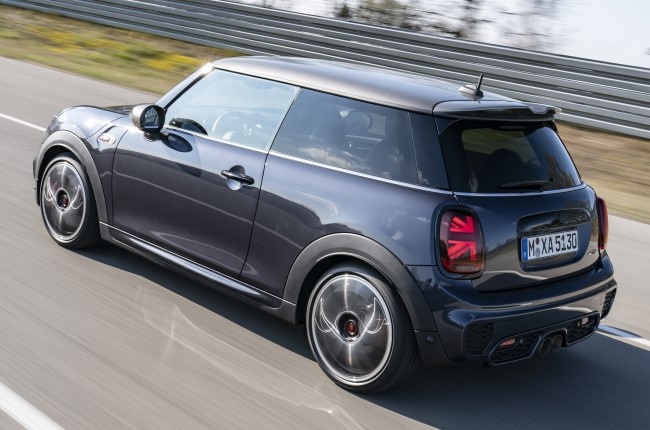
2020 Mini John Cooper Works GP

Batteries to replace JCW's boost

Mini has committed to electrifying its most potent model... That's right, the Mini JCW is going 'E'

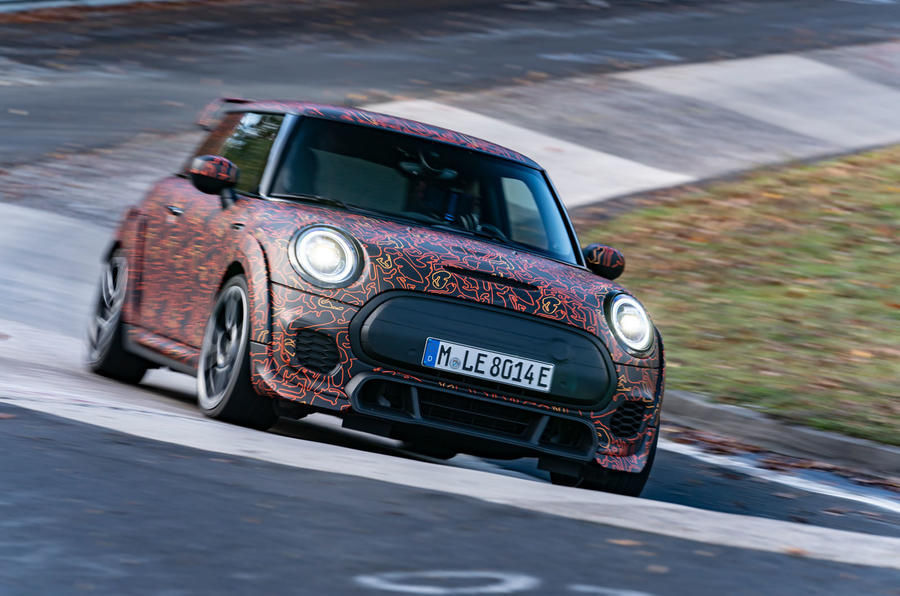
The BMW-owned and Oxford-based brand has confirmed that it is developing a battery-powered version of the JCW. For those followers of all things hot hatch, the JCW will be transitioning from petrol power to batteries.

Although dedicated fans of the JCW nameplate might wonder how much could possibly be lost, in this move from turbopetrol to battery power, there is no issue from Mini’s engineering team.

Mini’s technical staff has confirmed that it is in an advanced stage of development with the electric JCW and the benchmark is the current 2.0-litre petrol version.


Mini 1.jpgMini 2.jpgMini 3.jpg
 
AC Schnitzer Enhances Mini JCW GP

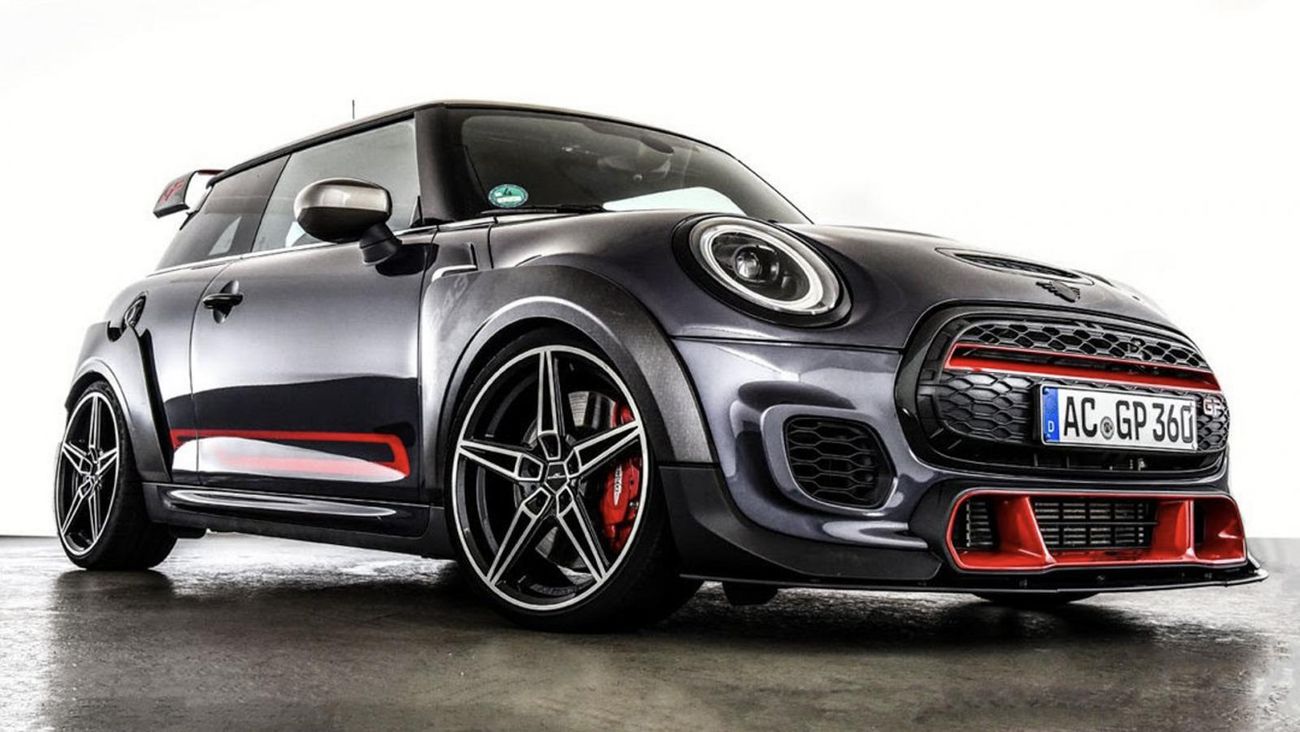
BMW Group tuner AC Schnitzer has released its kit for the Mini JCW GP.

The announcement of a new JCW GP product from Mini was met with much excitement. This is the most-focused iteration of Mini and arguably the one that truly epitomises the go-kart performance. However, when it came to the crux, our international driving report suggested it didn't quite deliver the thrills in abundance. While it certainly looked the part, it's performance abilities weren't as radical as hoped.


AC 1.jpgAC 2.jpgAC 3.jpgAC 4.jpg
 
4 Series, i3 or Mini JCW GP: The best BMW for £40,000

How much choice does £40,000 provide if you stick to one manufacturer’s line-up?

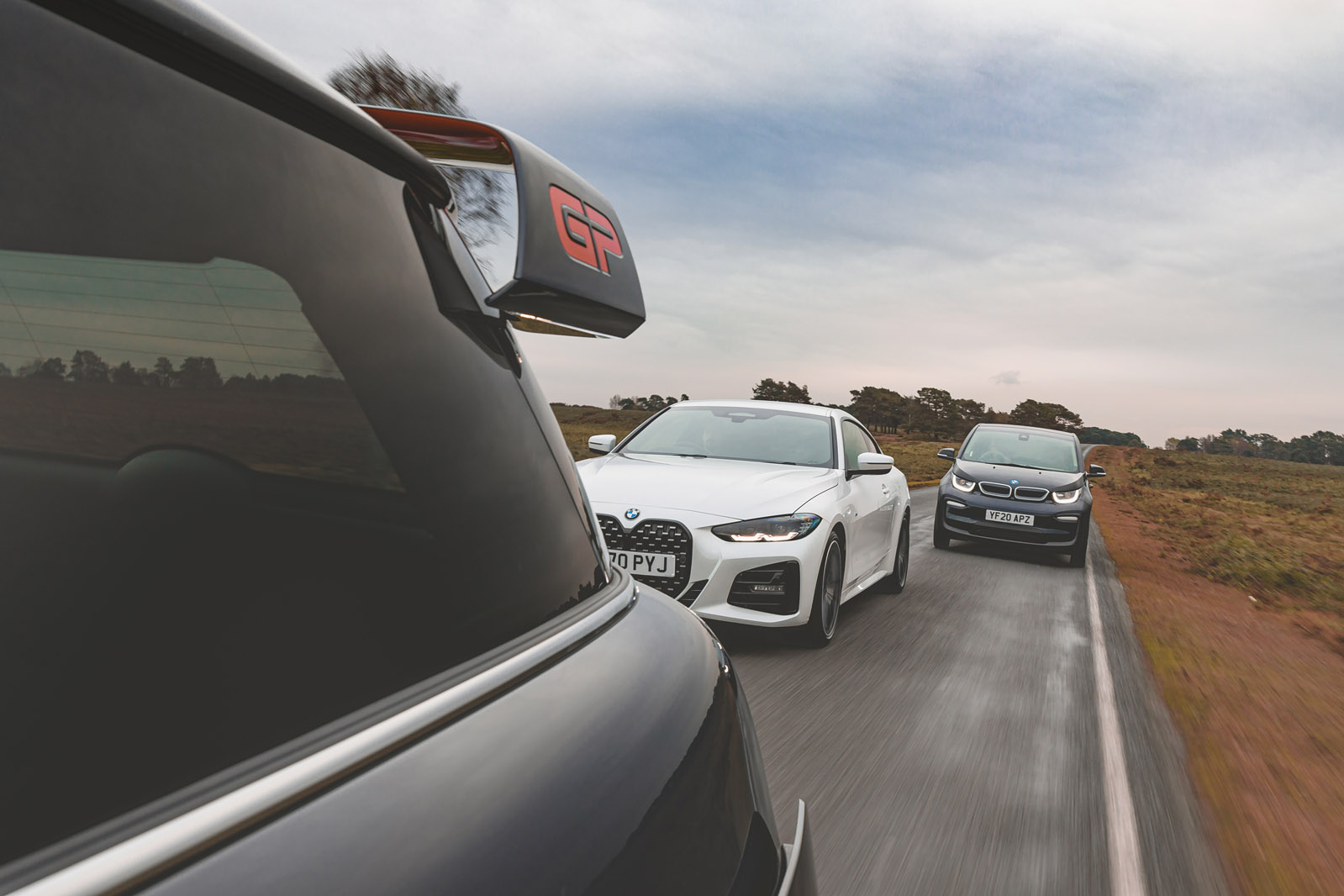
The Mini JCW GP’s wild power eruptions, the crisply sophisticated balance of the finely honed BMW 420i or the unexpected punch of the carbonfibre-rich, concept car-like BMW i3? Each of these experiences can be yours for near enough £40,000, making for quite some variety not only at the price, but also from the same manufacturer.

It’s not just that the characters of these cars are different, but so are their missions and make-up. Disparate selections of vehicles can, of course, be made from other car makers’ portfolios, not least Volkswagen for one, and Stellantis (PSA and FCA, if you’re wondering) for another. But no manufacturer offers three such utterly different cars for near-identical money.

The most mainstream model here is the 420i, a close relative of the 3 Series, if with a usefully reinforced body structure, a lowered centre of gravity, 50:50 weight distribution and a widened track to suit its more sporting ambitions. For a base price of £40,460, you get a 182bhp 2.0-litre turbo petrol driving the rear wheels (no longer a BMW constant) and an eight-speed automatic gearbox. Not an especially scintillating confection, but there’s rather more to this car than its stark spec sheet reveals.

The Mini GP’s driven wheels are at the other end, and it is (very) forcibly propelled by the same 2.0 turbo as used in the 420i, substantially strengthened and boosted here to provide 302bhp and a horizon-compacting 332lb ft. As with the 420i, it’s harnessed to an eight-speed auto – a manual would be mashed by the torque, apparently – but you get some cheap-looking paddle shifts. For the £35,345 list price, a mechanical limited-slip differential is included, and while it never totally tames this Mini’s inner tiger, it at least renders this power-crazed device drivable. The optional £2000 GP Touring Pack includes a navigation upgrade, automatic dual-zone air-con (a useful balm during dynamic workouts) and heated seats – likely to be superfluous once you get rim-wrestling. It all takes this Mini close to £40k.


BMW 1.jpgBMW 2.jpgBMW 3.jpg
 
Dutch tuning company unveils 260 kW MINI GP3

Both the MINI GP1 and GP2 were considered to be the ultimate iterations of their respective MINI generations, the R53 characterised by point and shoot handling and communicative steering with R56 adding a little more suppleness to the suspension, as well as more power from the boosty Prince family of PSA engines. For many, the GP2 was considered the sweet spot, perfectly balancing refinement and driver involvement.

2019 saw the introduction of GP3 and to many, the worst traits of the F56 Generation MINI were carried through, by-products of the car’s increased size and improved refinement. Beek Auto Racing certainly felt this, and as such have turned their hand to the new pocket rocket.

The GP3’s B48 engine has also been uprated, now offering 246 kW and 500 N.m. In order to accommodate this, the exhaust system has been replaced with a Milltek cat-back exhaust – this is a considerable amount of power when one considers that the GP3 weighs just 1 255 kg.

For those who think that the above is still not enough, Beek Auto Racing offer a further upgrade which requires an Airtec intercooler and Milltek downpipe, too. This allows for over 260 kW and more than 530 N.m from the 2,0-litre turbocharged mill.


Mini 1.jpegMini 2.jpegMini 3.jpegMini 4.jpegMini 5.jpeg
 

What do you make of this modified Mini GP?​

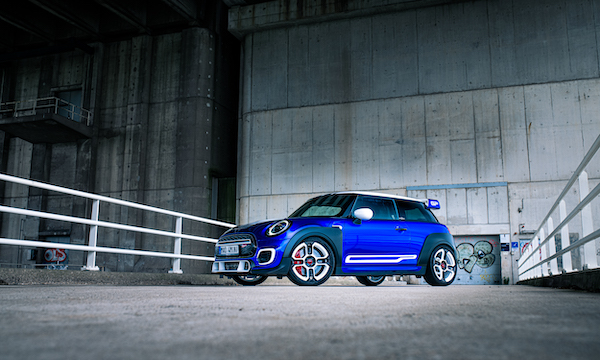
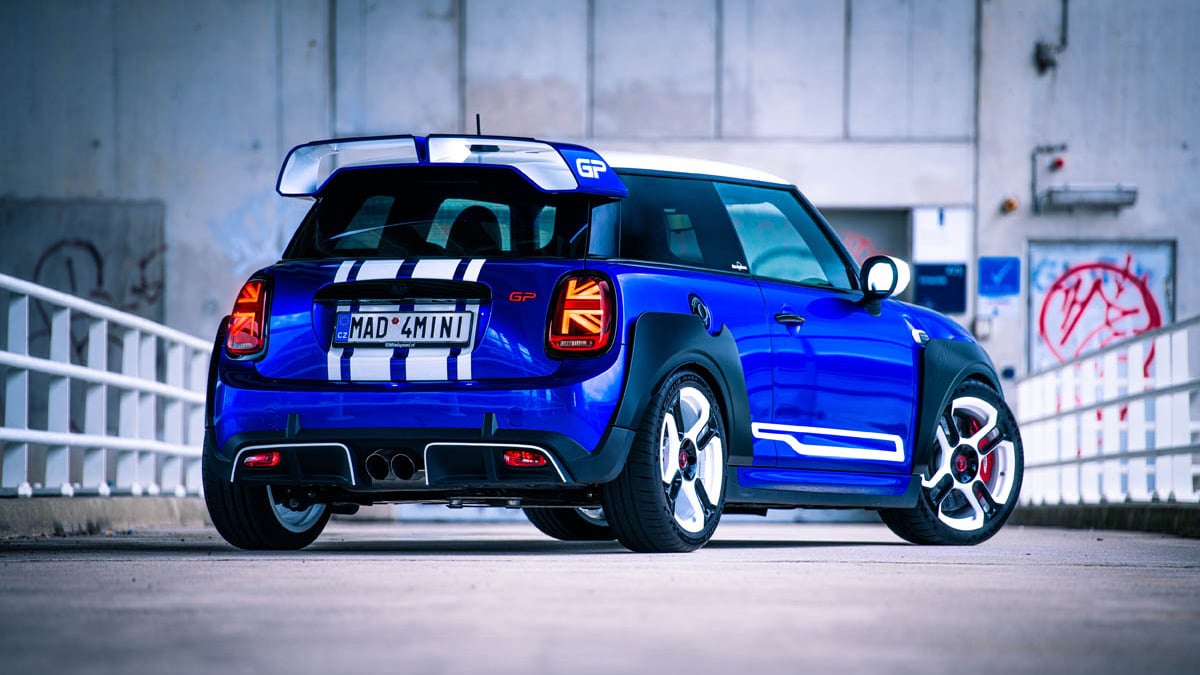
Mini’s limited-edition hot hatch gets a blue wrap and a power hike from Dutch company Beek Auto Racing

Great colour this, isn’t it? What you’re looking at above is one of the 3,000 third-generation Mini GPs, although this one has been fully-customised by Dutch company Beek Auto Racing. Certainly striking.

Through its company MINIspeed.eu, Beek has apparently upgraded the hardcore Mini’s performance, handling and sound – three areas it says “the standard GP3 does not realise its full potential and where the Mini engineers had to take shortcuts to make the project financially viable". Ouch.

Anyway, Dutch specialists AST Suspension have fitted a softer new suspension setup to improve on-road manners, and there’s a Milltek cat-back exhaust to tackle the sound issues.

In terms of performance, this Czech-registered car has had a boost from 302bhp to 325bhp, but Beek says it could get the 2.0-litre four-cylinder unit up to 350bhp+ if desired. There are Michelin Cup 2 tyres and inside a carbon/Alcantara steering wheel. Oh, and a Ferrari-style passenger screen. Nice.

 
Swiss tuner’s dAHLer MINI GP 3 with 250 kW and 510 N.m

Since 1996, Swiss tuners dAHLer BMW Tuning and dAHLer Competition Line have been a leading source of high-performance BMW tuning parts and BMW accessories in Switzerland, offering a broad range of tuning performance kits from BMW Group products.

The basis of its latest creation is the MINI John Cooper Works GP 3, the performance flagship of the Mini portfolio and limited to just 3 000 units. In stock form, it’s B48 2,0-litre four-cylinder turbopetrol motor produced 225 kW and 450 N.m, all sent to the front heels via an eight-speed double-clutch transmission.

The punchy four-pot has been fettled to produce 250 kW and 510 N.m and the factory speed limiter removed, allowing for a top speed of 265 km/h. Modifications include an Eventuri carbon-fiber intake system, a stainless steel twin-exhaust system developed in house, complete with CAN bus-controlled exhaust valves, as well as ceramic-coated 114 mm tailpipes.


Mini 1.jpegMini 2.jpegMini 3.jpeg
 
Top
Sign up to the MyBroadband newsletter
X