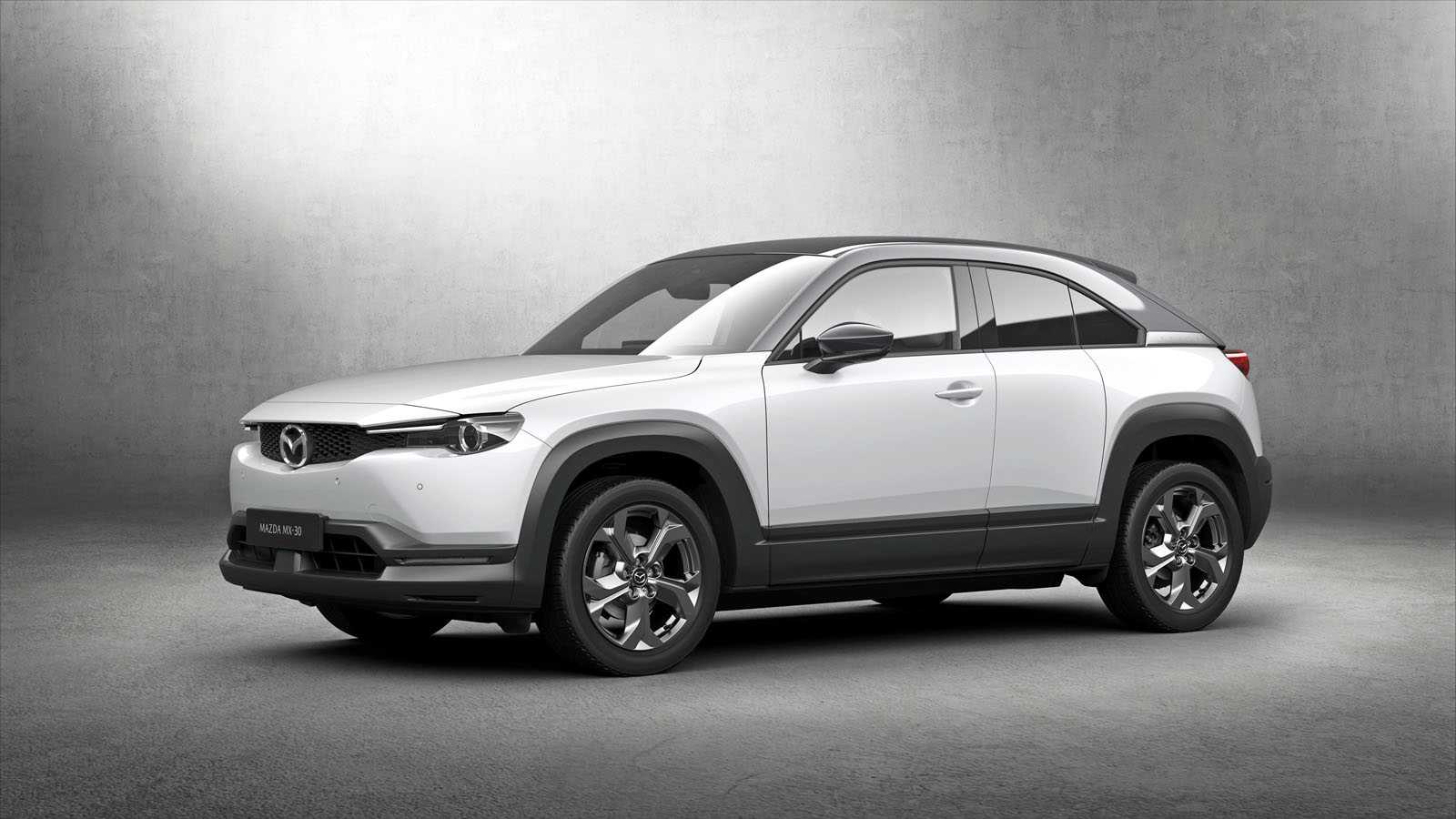
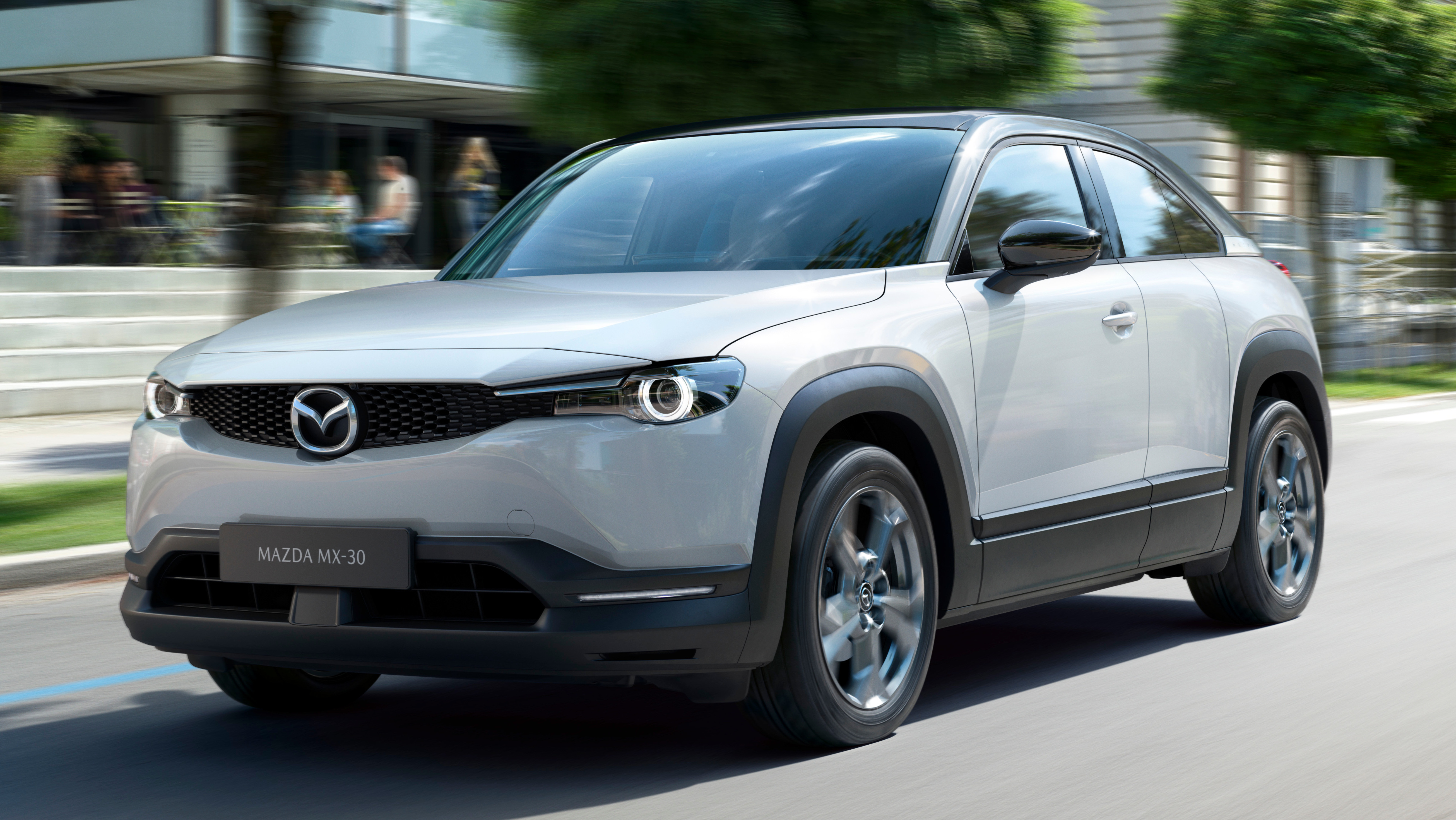
2021 Mazda MX-30 (Mazda's first EV)

FiestaST

Honorary Master
Joined
Aug 9, 2009
Messages
221,073
Reaction score
103,735
Location
CPT~ /\\/¯¯¯\\/\\ ~ZA
All will be shown soon...

Mazda confirms Tokyo show debut for first electric car

Japanese manufacturer's first zero-emissions model is likely to be an SUV with up to 150 miles of range

Mazda has confirmed that its first electric car will be revealed at Tokyo motor show on 23 October.

The model, previewed by the e-TPV prototype, is expected to adopt an SUV bodystyle, which can more easily accommodate an underfloor battery pack.

It will use a similar set-up to the prototype, which has a 35.5kWh battery and a single electric motor delivering 138bhp and 195lb ft of torque to the the front wheels via a single-speed transmission.

The EV is likely to have a range between 120 and 150 miles, similar to the new Mini Electric but significantly less than more obvious rivals, such as the 279-mile Hyundai Kona Electric. It will be able to accept 6.6kW domestic charging and 50kW public rapid charging.
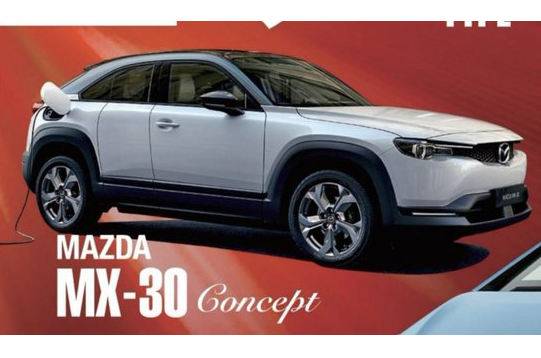

mazdaevdebut.jpeg
 
Last edited:
Mazda gives more details on its first EV

Japanese manufacturer's first zero-emissions model is likely to be an SUV with up to 150 miles of range

The interior of Mazda’s first electric vehicle, to be revealed at Tokyo motor show next week, has been designed to “evoke a sense of openness” through empty spaces, said the maker.

Mazda said the concept uses empty spaces around the centre console to create a closeness between the driver and passenger seats. It added that interior materials were chosen for comfort and “eco-friendliness”, both of which are intended to make the cabin comfortable.

 
First drive: Mazda EV prototype

Just days before Mazda’s first electric model is revealed, we drive a CX-30-bodied prototype

For now, Mazda’s attention is on launching its EV, but a range-extender variant will be added to the model line-up before long. Excitingly, it will be powered by Mazda’s famed rotary engine. The Japanese firm hasn’t offered a rotary-engined road car since the RX-8 went out of production in 2012, but it has remained interested in reintroducing the technology to production since. The RX-Vision concept, which was shown at the Tokyo motor show in 2015, used such a powertrain.

Schultze says: “With the rotary engine range extender, we can recharge during driving and the car becomes long distance. It is a multi-fuel engine, so in the future, we could use with CNG, LPG, hydrogen. We think it’s important to have a global view.” The model could also offer plug-in hybrid and series-hybrid variants.


97-mazda-e-tpv-prototype-2019-fd-hero-rear.jpg96-mazda-e-tpv-prototype-2019-fd-rb-driving.jpg95-mazda-e-tpv-prototype-2019-fd-charging.jpg99-mazda-e-tpv-prototype-2019-fd-hero-front.jpg98-mazda-e-tpv-prototype-2019-fd-hero-side.jpg
 
Mazda releases more details on its first EV

Japanese manufacturer's first zero-emissions model is likely to be an SUV with up to 150 miles of range

Mazda’s first electric vehicle, to be revealed at Tokyo motor show next week, will develop the design language first seen on the recently launched Mazda3 to reflect “futuristic values and changing lifestyles,” said the car maker.

The model, which will go on sale next year, has a coupe-like cabin and “achieves a lightweight look by adopting a unique door concept”. Mazda added that the front face bears a “friendly expression”.

 
Electric Mazda MX-30 concept revealed early by Japanese media

Japanese manufacturer's first zero-emissions model is likely to be an SUV with up to 150 miles of range

Images and details of Mazda’s first electric vehicle have leaked in the Japanese media today ahead of its official reveal at Tokyo motor show tomorrow.

The image, which reveals the zero-emissions model will be called MX-30, was published alongside power figures, which match those of the e-TPV prototype we drove recently. It has a 35.5kWh battery and a single electric motor delivering 138bhp and 195lb ft of torque to the the front wheels via a single-speed transmission.

Mazda's last communication on the upcoming model was last week when it said the car develops the design language first seen on the recently launched Mazda3 to reflect “futuristic values and changing lifestyles”.


mazda-mx-30-leak.jpg
 
Update:

So its called the MX-30;

Mazda MX-30

From the outset, the development team behind the Mazda MX-30 wanted to create a car that would become a partner to its owner. It should beg to be driven daily, and every time customers get behind the wheel, their affection for it should grow and they should feel more and more themselves. Everything about the model, from the styling that breeds a sense of familiarity to the open-feeling cabin that sets the mind free, is uncompromisingly designed around the user.

Human Modern design concept pushes out the boundaries of Kodo design

The introduction of the all-new Mazda3 in 2019 marked the beginning of a new phase for Kodo design. Under the Car-as-Art ethos, Mazda is striving to further expand the design language's expressive range and raise the artistic quality of its designs. With the Mazda MX-30, while retaining the beautiful, handcrafted forms of Kodo as a base, the design team also explored an expressive direction more in touch with emerging new values and lifestyles. That process resulted in the design of MX-30. The Human Modern concept spurred a number of unprecedented approaches. The exterior is uncompromisingly simple to emphasize its beauty as a solid mass. The styling creates a friendly expression, and the cabin design, with its framed top and freestyle doors, embodies an image of lightness. The interior aims to give occupants a sense of being "enveloped in openness," with a floating console and unique materials designed to minimize environmental impact. The MX-30 embodies an expressive direction in car design that helps customers discover their natural selves through the process of living with the car.

A cabin interior that focuses the mind and feelings with fine craftsmanship and environmentally-friendly materials

The team created an open-feeling cabin interior and paid particular attention to the selecting the right materials and showing them in ways that bring out their best. Heritage Cork used in the console tray is designed to emphasize the texture and visual warmth of the material. The door trim features a fibrous material with a texture that seems to contain air, creating a material-based sense of openness within the cabin. Both of these materials are designed to be low-impact and sustainable. The door trim uses fibers made from recycled plastic bottles and the cork is harvested from the bark of trees without felling. The comfortable interior of the Mazda MX-30 is composed of such environmentally friendly materials.

A touch panel heater control is adopted for the first time in a Mazda car, making operation safe and intuitive. This 7-inch touch panel also welcomes drivers getting into the car with a graphic that changes along with the external environment, offering an interactive experience designed to bring people closer to their car. From materials through to functionality and from technology through to design, all elements work together to create a space that encourages mindfulness from the moment customers open the door, while driving, and right up until they exit the vehicle.


MX-30 1.jpgMX-30 2.jpgMX-30 3.jpgMX-30 4.jpgMX-30 5.jpgMX-30 6.jpgMX-30 7.jpgMX-30 8.jpgMX-30 9.jpgMX-30 10.jpg
 
Electric Mazda MX-30 receives RX-8-style doors

Maker's first electric car offers 130 miles of range and is intended to drive like any other Mazda

The electric Mazda MX-30 will shake up the EV market when it launches next year, shunning typical characteristics, such as silent motoring and one-pedal driving, that are found in EVs.

Mazda said the car, launching in early 2021, has been developed for drivers who “don’t want to sacrifice driving pleasure” when buying an electric car.

Mazda’s first electric model will deliver 141bhp and 195lb ft from an electric motor powered by a 35.5kWh battery, offering a range of 130 miles. This is far less than many rivals, such as the 279-mile Hyundai Kona Electric, but Mazda says it exceeds the 31-mile average daily drive of European customers.

Mazda added that it has chosen a smaller battery to achieve better emissions through the entire lifecycle of the car. Its research has found that a 35.5kWH battery produces fewer lifecycle emissions overall than a petrol-powered Mazda3 or an EV using a 95kWh battery (as the Audi E-tron) does.

Christian Schultze, Mazda Europe R&D boss said: “We should not be excessive with battery size. We should consider how much range does a customer really need and how much battery [capacity] can we avoid to reduce CO2 substantially?”

Mazda has chosen to differentiate the MX-30 from other EVs in a number of driving characteristics. For example, it has less regenerative breaking than many EVs - eschewing the popular one-pedal driving style - and also more progressive acceleration.

Schultze says: “For strong deceleration, we think the brake is better because it moves in the direction of our body. It has the same efficiency as the one-pedal of other EVs but has human advantages.”


MX-30 1.jpgMX-30 2.jpgMX-30 3.jpg
 
New Mazda MX-30 has traces of RX-8

Mazda has revealed its first production electric vehicle, the MX-30 crossover.

Similar in size to the CX-30, this new Mazda is a bold venture for the Japanese brand and debuts its e-SkyActiv battery and electric drive technology.

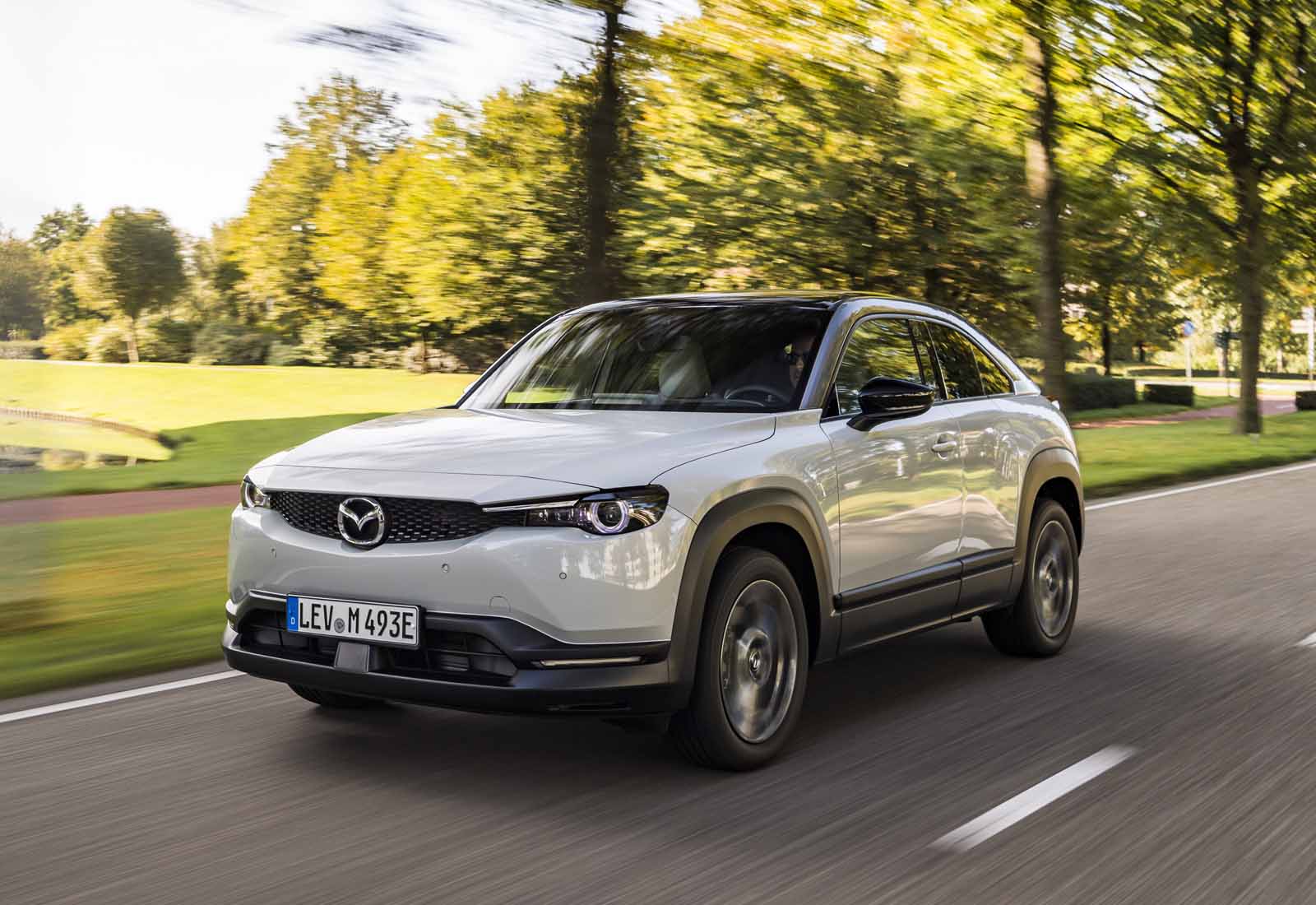
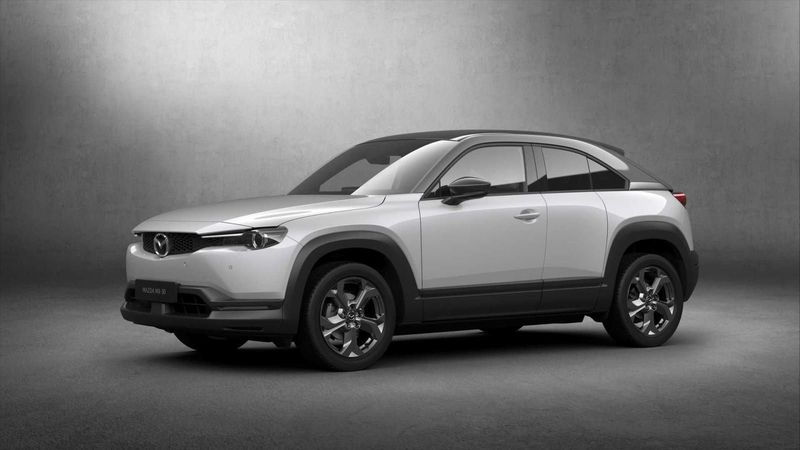
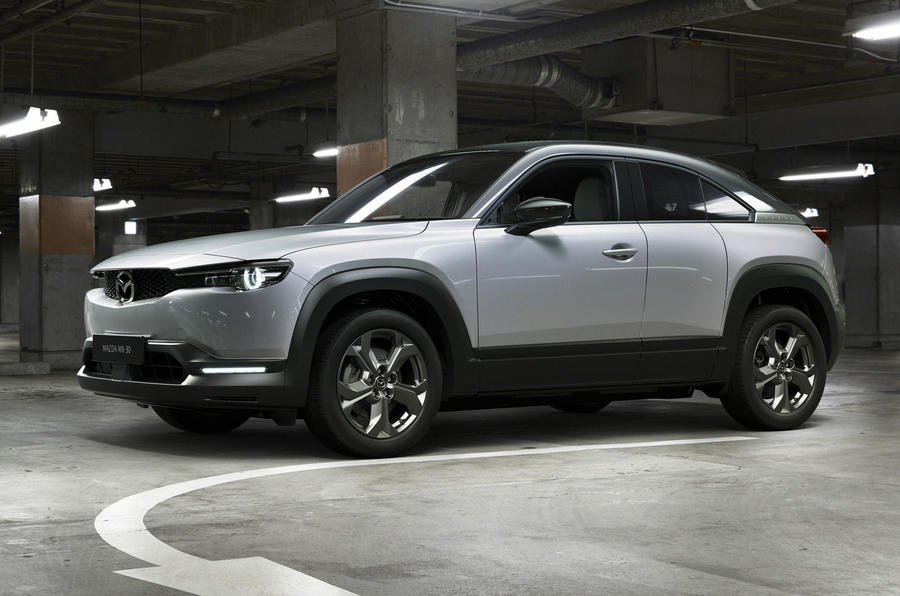
Although the crossover silhouette is instantly recognisable as a Mazda, with recessed head and taillights, the MX-30 features radical door architecture.

Pillarless design and the absence of a conventional centre B-pillar, gifts the MX-30 an extremely generous door opening aperture, to ease ingress and debussing for occupants. By using high strength new-generation steels, Mazda has been able to produce a pillarless cabin that does not sacrifice overall vehicle rigidity.

For loyal followers of the Mazda brand, this is a design feature which will be reminiscent of the RX-8 rotary power sports cars of the early to mid-2000s.

Another interesting aspect of the MX-30’s exterior is the use of black plastic cladding along the door sills, bumpers and fenders – instead of a body colour coding.

Beyond its striking styling and considered door design, the MX-30 also features a sustainable approach to interior materials. The door trim fibres are made from recycled plastic and all upholstery is sustainably sourced.

Powering the MX-30 is a comparatively small 35.5 kWh battery pack, which disperses energy into a 106 kW electric motor, supported by 264 Nm. As such the MX-30 should offer brisk low- to medium-speed performance.

With a range of only 200 km on a charge, this Mazda is very much configured as a city commuting electric vehicle, instead of a touring crossover.

 
New Mazda MX-30 is the brand’s first EV (and gets suicide rear doors!)

Mazda has taken the wraps off its first mass-production electric vehicle, unveiling the new MX-30 at the 2019 Tokyo Motor Show.

The new electric crossover measures 4 395 mm long, 1 795 mm wide and 1 570 mm tall, with a wheelbase of 2 655 mm. Employing what the Japanese firm calls its new "e-Skyactiv" powertrain, the MX-30 makes around 105 kW and offers a claimed range of about 210 km.

According to Mazda’s “provisional figures”, the European-spec model features a 35,5 kWh lithium-ion battery pack, capable of handling a maximum AC charging input of 6,6 kW.

You’ll no doubt have noticed the suicide doors at the rear, made possible by what Mazda calls a “centre-pillar-less” system. Despite this unusual arrangement of the portals, the firm says the MX-30 offers “excellent collision safety performance” thanks to its rigid body (and, of course, careful protection of the high-voltage battery).

 
Mazda reveals quirky MX-30 electric car with RX-8 style doors

Mazda is taking an off-beat approach to its first-ever electric car, the MX-30, which takes the form of a sporty crossover vehicle with ‘suicide’ rear doors, a feature last seen on the RX-8.

In a typically Mazda way, the newcomer aims to offer driver satisfaction rather than outright practicality or driving range. The MX-30 is powered by a single electric motor that reportedly produces 105kW, and it’s fed by a 35.5kWh battery that allows a not-so-hot claimed range of around 210km between charges.

“The MX-30 adopts Mazda’s new electric-drive technology, e–Skyactiv, and combines outstanding response with smooth dynamic behaviour to achieve performance that drivers can enjoy naturally,” Mazda promises.

To achieve that, the car is equipped with a system called G-Vectoring Control Plus, which aims to give the driver a strong sense of what the car is doing through torque control and sound.

The MX-30’s cabin is also green at heart, thanks to a selection of materials described as low-impact and sustainable. The console tray, for instance, makes use of Heritage Cork which is harvested from the bark of trees without felling, while the door trim uses fibers made from recycled plastic bottles.

As for the interfaces, Mazda has adopted a dual-screen design here, where the bottom touchscreen takes care of the climate functions. The screen also welcomes the driver upon entry with a graphic that changes depending on the time of day and the temperature outside.

 
Mazda MX-30 spearheads electrification plans for maker

Following the reveal of Mazda’s first EV, a plug-in hybrid is likely to arrive next

The electric Mazda MX-30 spearheads a new electrification strategy for the Japanese car maker. This will include plug-in hybrids and hybrid variants of existing models plus more EVs, the latter developed as a result of its EV tie-up with Toyota and Denso.

Mazda has not yet confirmed when we’ll see the next electrified model in its line-up, but we expect a plug-in hybrid to arrive in the next 18 months. This is likely to be based on a high-volume model such as the Mazda 3 in order to help achieve new European emissions targets coming in 2021.

While the Mazda MX-30 is a standalone electric vehicle, there are no definitive plans to create a separate range of EVs. Talking at Tokyo motor show, Ikuo Maeda, design and brand boss, said: “Some manufacturers are creating a separate brand for EVs, but we are not doing that. We want to establish EVs in our existing Mazda portfolio.”

 
Mazda favours smaller batteries for upcoming EVs

Japanese firm will use small batteries for less CO2, while developing a rotary-engine range extender

Mazda says it will never build a ‘big-battery’ electric car, because it believes such vehicles are less environmentally friendly than even conventional diesel-powered models, judged over a whole energy life cycle.

Speaking in Portugal at a prototype test drive of the upcoming MX-30 electric car, Joachim Kunz, head of product development and engineering at Mazda Europe, said the firm has studied the CO2 emissions of building a vehicle “from extraction to disposal”.

Citing a study by a Japanese university using the average CO2 output of the European grid, Kunz said an EV with a 95kWh battery has such a disadvantage of embedded CO2 at the point of sale that a new Mazda Skyactiv diesel car will probably be more CO2 efficient across its lifetime, even if the EV’s battery pack is not replaced at 100,000 miles.

Kunz said Mazda has calculated that an EV with a 35kWh battery makes more sense environmentally because, by around 50,000 miles, such an EV starts to show lifetime CO2 savings over a diesel Mazda.


Another claimed advantage of the MX-30 concept is that it has more range per kWh of battery than many rivals, thought to be because the smaller battery weighs much less than a larger unit, reducing the amount of energy needed to move the vehicle.

The production version of the MX-30, due in mainland Europe later this year and the UK in early 2021 priced at €34,000 (£30,000), will have a 35kWh battery. That will drive an electric motor with 141bhp and 195lb ft of torque and give a range of around 130 miles. The lithium ion battery pack is made in Japan by Panasonic.


mx-30.jpgc02_life_cycle22.jpg_dls0455.jpg
 
The Electric Mazda MX-30 Has The Right Amount Of Range And Power

Mazda’s new electric MX-30, targeted for Europe, makes the equivalent of 140 horsepower and has a range of 130 miles, while InsideEVs says it will go from zero-to-60 in nine seconds. “Unimpressive,” you say to yourself from behind the wheel of your 300-HP Camry, somewhat resignedly. But you know what? All three of those numbers are fine.

These numbers first came out shortly after the car debuted, back in October, and I was reminded of the numbers in late December after Mazda explained that they were very much unimpressive for a reason, to help save the environment or some such, since bigger batteries require more environmental resources.

They are again getting some airtime this week, for reasons having to do with online news cycles tending to repeat themselves. And so I am going to take this moment to say that the numbers are just fine.

Now, I’m aware of the concept dubbed “range anxiety,” even if I have I never met a person for whom it actually exists. Instead, it seems to be a general concept we all have agreed on to explain why EVs not named Tesla sell so poorly, when in fact most EVs that aren’t made by Tesla are extremely boring cars, and perhaps that is why they’re selling so poorly. All Ford had to do, for example, was make an EV that looks decent, slap the name Mustang on it, and, what do you know, the first edition of it is now allegedly “sold out.”

 
Top
Sign up to the MyBroadband newsletter
X