


-
- News
-
Categories
- 5G
- ADSL
- AI
- Banking
- Black Friday
- Broadband
- Broadcasting
- Business
- Business Telecoms
- Cellular
- Cloud and Hosting
- Columns
- Cryptocurrency
- Energy
- Enterprise
- Fibre
- Gadgets
- Gaming
- Government
- Hardware
- Industry News
- Internet
- Internet of Things
- Investing
- IT Services
- Motoring
- Reviews
- Science
- Security
- Smartphones
- Software
- Technology
- Telecoms
- Trending
- Wireless
- Press Office
- Forum
- Industry News
- What's Next
- Company hub
- Speed Test
- About us
- Advertise with us
- Contact
- Careers
-
Join the MyBroadband community
South Africa’s biggest forum. Discuss, discover, and connect with thousands of members.
-
Question of the Day: Have you had a bad taxi / ride hailing experience in South Africa?
You are using an out of date browser. It may not display this or other websites correctly.
You should upgrade or use an alternative browser.
You should upgrade or use an alternative browser.
Android Auto (Google Assistant) vs Apple Carplay (Siri)
- Thread starter SauRoNZA
- Start date
FiestaST
Honorary Master
FiestaST
Honorary Master
FiestaST
Honorary Master
FiestaST
Honorary Master

WhatsApp announces an official CarPlay app on the App Store | WABetaInfo
The WhatsApp for iOS 26.13.74 update on the App Store introduces a native CarPlay app for messaging, calls, and quick access to favorites.
 wabetainfo.com
FiestaST
Honorary Master
FiestaST
Honorary Master
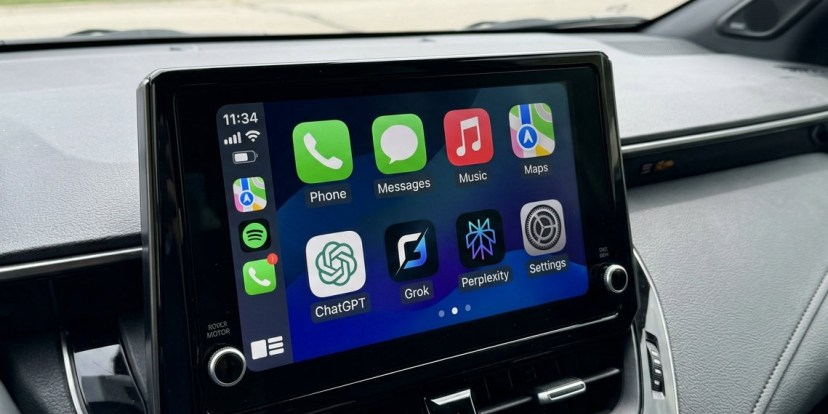
Grok joins ChatGPT and Perplexity on CarPlay
With the release of iOS 26.4 in late March, Apple enabled support for third-party AI chatbots in CarPlay. However, for the integration to work, the developers of those AI chatbots had to update their apps too.
OpenAI was first, making ChatGPT work in CarPlay in early April. Perplexity soon followed suit, and now Grok is the third AI chatbot you can talk to in CarPlay, as the Grok app for iOS has been updated with support for this feature.
 www.arenaev.com

 9to5mac.com
With the release of iOS 26.4 in late March, Apple enabled support for third-party AI chatbots in CarPlay. However, for the integration to work, the developers of those AI chatbots had to update their apps too.
OpenAI was first, making ChatGPT work in CarPlay in early April. Perplexity soon followed suit, and now Grok is the third AI chatbot you can talk to in CarPlay, as the Grok app for iOS has been updated with support for this feature.
Grok joins ChatGPT and Perplexity on CarPlay
You can now talk to the SpaceXAI bot in your car.
www.arenaev.com
CarPlay now works with these three top AI chatbot apps - 9to5Mac
CarPlay continues to give drivers more choice than ever when it comes to which services to use on the road....
9to5mac.com
FiestaST
Honorary Master

Do more and have more fun with the next generation of Android in the car
Android Auto and cars with Google built-in are getting upgrades. Drivers can look forward to a rich new experience, premium entertainment and a more capable Gemini.
FiestaST
Honorary Master

Speedster
Honorary Master
I can't find any roll out dates for these upgrades. Anyone know when we can expect them?
FiestaST
Honorary Master
It's likely going to be a fair few months.I can't find any roll out dates for these upgrades. Anyone know when we can expect them?
FiestaST
Honorary Master
FiestaST
Honorary Master
FiestaST
Honorary Master
FiestaST
Honorary Master
FiestaST
Honorary Master
Gemini starts replacing Google Assistant inside Android Automotive
This move hardly comes as a surprise. Google hinted at it back during an earnings call last year and then demoed it at Google I/O 2025. Also, the online giant has been investing so heavily in its AI system that it only makes sense for it to eventually replace the traditional Google Assistant.
And while the latter has come a long way over the years, it can still be quite rigid in its conversation and understanding, especially when it has to accept user commands and potentially interpret those to control actual car features. To be clear, this is Android Automotive we are talking about as opposed to Android Auto. The latter is the smart assistant you can cast on your car multimedia screen, while the former is actually an interface built into some modern cars.
Gemini should allow for much more natural conversation instead of memorizing specific commands. For instance, instead of saying something like “Set climate control to level 5,” the user might just say “Blast the AC for me!”
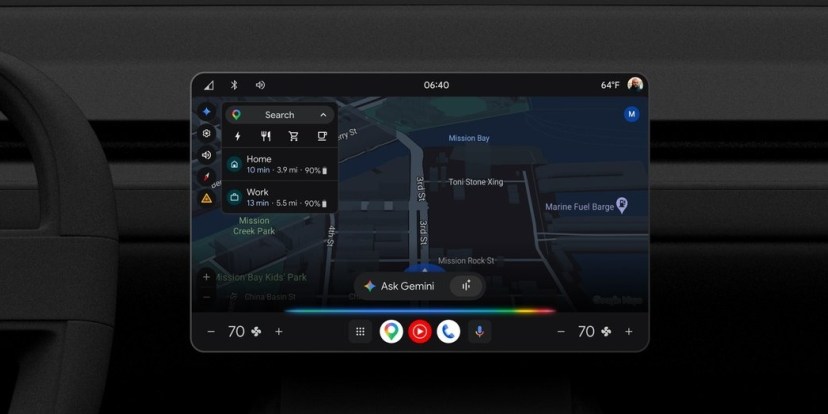
The new switch to Google Gemini seems to be kicking off with OTA updates on certain Volvo cars, like the EX30 electric SUV. Drivers have reported getting a polite pop-up to switch over to Gemini, but only if they want to, which is a nice touch. Also, if they do, Gemini is not super opposing, taking over the entire UI. Instead, it lives inside its own little “interactive pill” in the UI, waiting for a trigger word. There is also a nifty “Live” button that users can press and just have longer conversations with the AI without the need for trigger words.
 www.arenaev.com
This move hardly comes as a surprise. Google hinted at it back during an earnings call last year and then demoed it at Google I/O 2025. Also, the online giant has been investing so heavily in its AI system that it only makes sense for it to eventually replace the traditional Google Assistant.
And while the latter has come a long way over the years, it can still be quite rigid in its conversation and understanding, especially when it has to accept user commands and potentially interpret those to control actual car features. To be clear, this is Android Automotive we are talking about as opposed to Android Auto. The latter is the smart assistant you can cast on your car multimedia screen, while the former is actually an interface built into some modern cars.
Gemini should allow for much more natural conversation instead of memorizing specific commands. For instance, instead of saying something like “Set climate control to level 5,” the user might just say “Blast the AC for me!”
The new switch to Google Gemini seems to be kicking off with OTA updates on certain Volvo cars, like the EX30 electric SUV. Drivers have reported getting a polite pop-up to switch over to Gemini, but only if they want to, which is a nice touch. Also, if they do, Gemini is not super opposing, taking over the entire UI. Instead, it lives inside its own little “interactive pill” in the UI, waiting for a trigger word. There is also a nifty “Live” button that users can press and just have longer conversations with the AI without the need for trigger words.
Gemini starts replacing Google Assistant inside Android Automotive
Your car will probably be smarter for it.
www.arenaev.com
FiestaST
Honorary Master
FiestaST
Honorary Master

HAL 9000
Honorary Master
- Joined
- May 27, 2008
- Messages
- 22,831
- Reaction score
- 26,792
Hackers infect Android car head units with proxy botnet malware - Bleeping Computer

A supply-chain attack targeting Android-based car head units is using a legitimate device-update app to spread malware that enlists compromised devices in a proxy botnet or uses them for ad fraud.
Kaspersky researchers analyzed the malware and attributed the operation to the MoYu group, a threat actor previously associated with the BadBox malware botnet.
The researchers note that this is the first documented case of a malware infection chain specifically created for the targeted car head unit.
MoYu's operation targets systems from DoFun, a Chinese automotive software and hardware provider owned by Shenzhen Driving Control Technology Co., Ltd.
DoFun is an automotive software, cloud services, and hardware provider that sells generic Android-based head units, which act as the command center for a car's infotainment, navigation, and settings systems.
In June, Kaspersky researchers found a rogue APK file being downloaded from a legitimate DoFun system app, TWCore, which receives instructions through an MQTT server hosted at cardoor[.]cn.
The unknown app has no interface and is a piece of malware called JarService. When launched, the malware decrypts and executes a second-stage loader that establishes communication with a command-and-control (C2) server and downloads another encrypted payload.
The final payload periodically reports device information such as the model, display resolution, Wi-Fi SSID, and MAC address, and retrieves commands from the attackers.
The malware supports the following nine commands:
Kaspersky says the malware does not interfere with driving or critical vehicle control systems, and appears designed for advertising fraud and turning internet-connected car head units into residential proxy nodes for monetization purposes.
- return - Retrieves a specified value from Android’s SharedPreferences storage
- copy - Copies stored or downloaded content to the device clipboard
- http - Sends HTTP GET or POST requests and can save part of the response
- web - Opens a URL in a WebView and executes supplied JavaScript
- loadlib - Not fully implemented when Kaspersky published the report
- loadlib2 - Downloads and executes arbitrary code or additional modules
- loadlib3 - Not fully implemented when Kaspersky published the report
- deeplink - Opens a specified resource in the browser
- traceroute - Checks whether specified hosts are reachable using ICMP ping
Researchers discovered that the operator primarily loaded a reverse-proxy module named ‘zhima,’ which turns the head unit into a proxy botnet node, and also made web requests for click-fraud activity.
Kaspersky says it notified DoFun of its findings, and the Chinese firm replied that it resolved the problem.
BleepingComputer has contacted both companies with questions about the initial compromise vector, and we will update the article with the information once received.
Hackers infect Android car head units with proxy botnet malware
A supply-chain attack targeting Android-based car head units is using a legitimate device-update app to spread malware that enlists compromised devices in a proxy botnet or uses them for ad fraud.