leon.davibe
Executive Member
- Joined
- Feb 3, 2009
- Messages
- 5,190
- Reaction score
- 2,215
ok misunderstood now it makes better sense to power some devices directly from battery
yea many people do that for 12 volt devices
South Africa’s biggest forum. Discuss, discover, and connect with thousands of members.
ok misunderstood now it makes better sense to power some devices directly from battery

That isn't a cable between the positive and negative busbars. It's basically a block containing a positive and a negative busbar for easy access to connecting devices.

Dunno.This is what i pictured when he said fuse box which would be a dead short (naturally once the fuse is in)
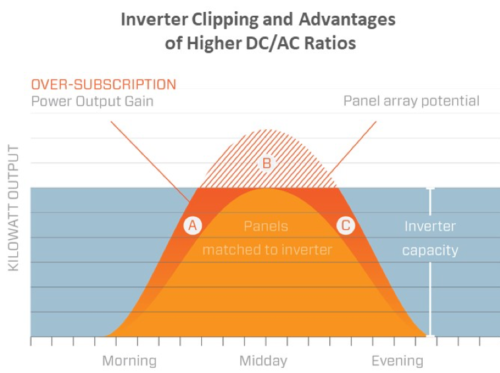
It looks like the space we are looking at for panels is going to be about 7x 550w panels, max. (but as I mentioned the usgae is now coming to less than 450/mnth. They discovered a very thirsty fridge is accounting for the vast majority of the energy they consume as much as 90% or more. So they are going to look to cut that fridge consumption by around 2/3rds i.e. 66%)Ideally you want as much PV as you possibly can fit within budget. Go with 120% of inverter capacity.
So if you have a 5KW inverter, 6KW of panels
Which should be 80% of which?8 no more than 80% of max voc especially on axperts and poly panels
By 'inverter' voltage are you referring to the mppt voltage range?Eg, if you have an inverter that says it likes 350v, with a max voltage of 500v, the max i'd suggest feeding it would be 500 * 0.75 = 375v +-20v

Yes.By 'inverter' voltage are you referring to the mppt voltage range?

bump3 what?3 should work
Panels.lexity said:
Says
Lux Power 5KW SNA Inverter 2 MPPT - With Gen Input
Lux Power 5KW OFFGRID Inverter (SNA5000WPV) Description Applicable for pure off grid/ backup power / self-consumption / on grid situation Integrated with 2 MPPT solar charge controllers, MPPT ranges 120V~385V Rated power 5KW, power factor 1 Be able to run with or without battery in Ongrid and...
www.ptonline.co.za
bump
3 panels in series at 42v each is 126v so that is enough for one mppt, right? If you do 6 panels you could have 126v per mppt.Panels.
If you have 7 50v voc panels it would be 350v as long as this is less than 80% of the max voc of charge controlelr lets say 450v then you have 77.7%Which should be 80% of which?
Is the 20% the device spec or a rule of thumb, some higherCalculating panel output via:
1) Sqm:
width x length = sqm
2.2 x 6.6m = 14.5sqm
sqm * 1kw/sqm x module efficiency
14,500 * 20% = 2,800w
Vs.
2) Panel specs:
number of panels x panel wattage
6x 550w = 3,300w
Where am I going wrong? What accounts for the disparity between the two?
20% is the efficiency of the panel according to its spec.Is the 20% the device spec or a rule of thumb, some higher
Wouldn't really be enough, I'd put 4 in series at least.3 panels in series at 42v each is 126v so that is enough for one mppt, right? If you do 6 panels you could have 126v per mppt.
Slight mods to the pv input install:Wouldn't really be enough, I'd put 4 in series at least.
Otherwise your MPPT side is going to sit there doing nothing for half the day till the panels get enough voltage via the big shiny star thing in the sky to get going.
For the first question, see here: https://mybroadband.co.za/forum/threads/what-are-watts-and-watt-hours.1240325/Slight mods to the pv input install:
Now there will be 2x strings of 4x 550w panels each. (550w is the advertized number on each panel)
2200w per string. So, a total of 4400w.
Is this per hour?
What can I expect in terms of generation from 4400w? The average solar exposure for my area is 5.7kw per day(5.7hrs of sufficient sunshine).
What losses should I factor in?
It's theoretical max you'll see per hour in an ideal world.Slight mods to the pv input install:
Now there will be 2x strings of 4x 550w panels each. (550w is the advertized number on each panel)
2200w per string. So, a total of 4400w.
Is this per hour?
What can I expect in terms of generation from 4400w? The average solar exposure for my area is 5.7kw per day(5.7hrs of sufficient sunshine).
What losses should I factor in?