DIY OG Solar install

leon.davibe

Expert Member
Joined
Feb 3, 2009
Messages
2,417
Some tips others can correct if some can be done better

1 Definitely go 5kw+ inverter not lower as the solar capacity tends to scale with inverter size

2 If any shading try and make sure higher voltage mppt not the 145v voc max models

3 if deciding to parralel strings definitely seperate parralel strings with a fuse if on the same connection

4 definitely use a dc breaker/switch for solar isolater the higher voltage/amps rating exceeding what you have even better

5 don't try and skimp on cost by going lead acid

6 seperate neutral bar for pre and post inverter and ad a earth leakage post inverter naturaly

7 inverters go bypass if its load is exceeded and powers from eskom in that case, so size the cable to inverter and back, on max load that can be pulled not on inverter size

8 no more than 80% of max voc especially on axperts and poly panels

9 grind the bottom of the tile to form a recess where the wire goes into the roof if going in between tiles, the same with the tile that lays over the bracket that bolts to truss to avoid water ingress and looks nicer if tiles still fit flush

10 keep the dc cable to battery as short as possible

11 optional if opting for a cheap inverter do yourself a favour and get a raspberry pi with SMH /solar assistant makes battery management with a small battery bank/solar array much easier

12 since saving money on install
Rather over spec the cable thicknesses

13 with limited battery it is a good idea to get the geyser on the solar (with a reduction in element size if needed) , it is the poor mans cheapest battery, since you only get out of panels whatever you can pull with load or empty battery , if none panels do nothing
 

Speedster

Honorary Master
Joined
May 2, 2006
Messages
23,237
When it says Parallel: ... up to 15 ...

There doesn't appear to be a series configuration mentioned.

Does that mean multiple batteries should not/cannot be configured in series?
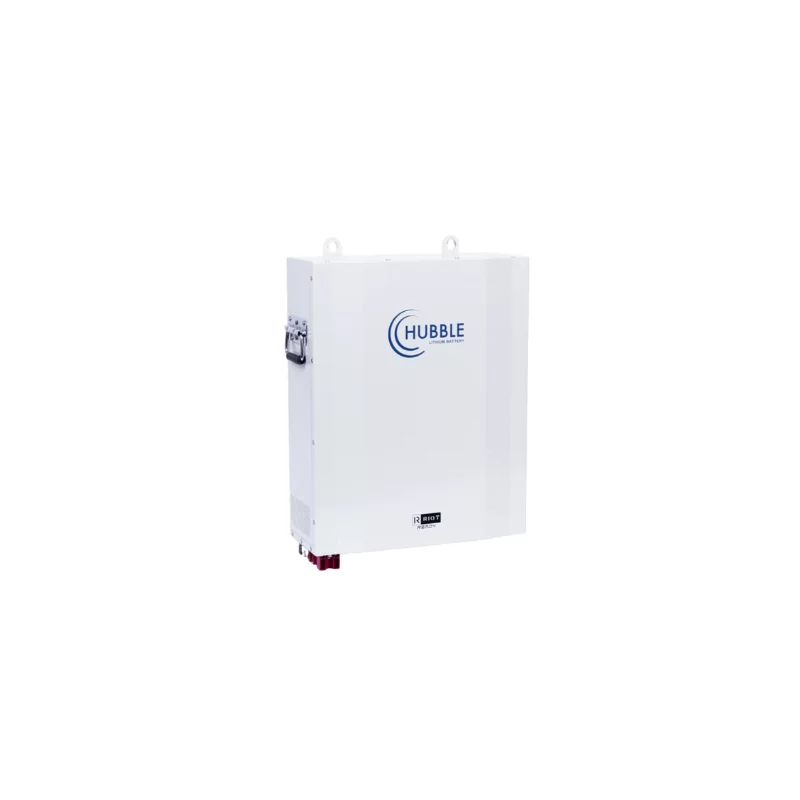
These aren't HV batteries, they should be paired with 48V inverters.
 

lexity

Executive Member
Joined
Jan 31, 2020
Messages
8,518
These aren't HV batteries, they should be paired with 48V inverters.
So, could I use 2 of these Hubble AM2 batteries together with a 5Kw off-grid inverter which says on the datasheet 51.2/48v.

And with that, probably 3 or 4 of those large 550w panels.

The goal is prob 12-15 kWh per day max. (gas will be used for heating water), no stove. They will replace their old fridge with a 360Kw pa fridge-freezer (somewhere in that range i.e. 350l).
 

Speedster

Honorary Master
Joined
May 2, 2006
Messages
23,237
So, could I use 2 of these Hubble AM2 batteries together with a 5Kw off-grid inverter which says on the datasheet 51.2/48v.

And with that, probably 3 or 4 of those large 550w panels.

The goal is prob 12-15 kWh per day max. (gas will be used for heating water), no stove. They will replace their old fridge with a 360Kw pa fridge-freezer (somewhere in that range i.e. 350l).
Yes. You'll want at least 4 panels though as 3 might not be enough to start up the MPPT.
Edit: I was assuming Deye/SunSynk. Different inverters will have different MPPT specs
 
Last edited:

lexity

Executive Member
Joined
Jan 31, 2020
Messages
8,518
Yes. You'll want at least 4 panels though as 3 might not be enough to start up the MPPT.
Edit: I was assuming Deye/SunSynk. Different inverters will have different MPPT specs
Says
  • Integrated with 2 MPPT solar charge controllers, MPPT ranges 120V~385V
That is this one....


Speedster

Honorary Master
Joined
May 2, 2006
Messages
23,237
Says
  • Integrated with 2 MPPT solar charge controllers, MPPT ranges 120V~385V
That is this one....

3 should work
 

lexity

Executive Member
Joined
Jan 31, 2020
Messages
8,518
My 2 cents worth. Don't DIY for friends if you want to keep them. Don't DIY if you aren't an electrician or trained in some way.

You probably didn't really mean off-grid, as totally off grid is very expensive. That being said with that budget it's a bit of a stretch.
Just a quick example
Sunsynk Inverter 5kw
27000​
2 LifePo4 48V 100ah bronze
44000​
450w panels (prices guess) 10
40000​
111000​

That's without and switches, fuses, wiring, COC, earth spikes, SPD's etc.
Is there not a problem with going too high on the solar panel input?
 
Last edited:

soulie

Expert Member
Joined
Aug 27, 2009
Messages
2,760
Is there not a problem with going too high on the solar panel input?
one of the things that the new regulations hammer on is the input from the panels ,the regs are trying to protect the consumer .get a professional installer to do the job instead of listening to the diy'ers that know jack **** about the proper way to do it ,and only know whats on the internet and what they have googled .
 

lexity

Executive Member
Joined
Jan 31, 2020
Messages
8,518
one of the things that the new regulations hammer on is the input from the panels ,the regs are trying to protect the consumer .get a professional installer to do the job instead of listening to the diy'ers that know jack **** about the proper way to do it ,and only know whats on the internet and what they have googled .
It's you, again.

:)
 

RonSwanson

Honorary Master
Joined
May 21, 2018
Messages
16,912
one of the things that the new regulations hammer on is the input from the panels ,the regs are trying to protect the consumer .get a professional installer to do the job instead of listening to the diy'ers that know jack **** about the proper way to do it ,and only know whats on the internet and what they have googled .
Before I did my install, I spent around 18 months of my spare time doing solid research. By research, I mean proper study, studying Victron documentation and Solar Green Card curriculum, vs trying to fast-track the process by asking hundreds of newbie questions. Fortunately I have a technical background, with maths and science, and I have built up some electrical theory and hands-on knowledge over the years prior to doing that, so it while it was intense, it was all understandable for me. Even after that though, I still wasn't comfortable with my own knowledge, and I relied on an expert to do the design and specification, and a qualified artisan to do the install. My research did pay off, because I did some double-checking of some of the sums in the background, and I managed to identify and even throw out some designers' proposals who clearly knew less than me.
I guess that the more you get to know, the more you realise how little you know :cool:. Solar installation involves many engineering disciplines, it's not the same as building a braai or replacing the oil in a car's motor. There's a whole lot that can go wrong right from the start to the finish, and some very expensive mistakes that can be made.
 

leon.davibe

Expert Member
Joined
Feb 3, 2009
Messages
2,417
Says
  • Integrated with 2 MPPT solar charge controllers, MPPT ranges 120V~385V
That is this one....

Panel dependant 3panels of 50v that will operate at 40v vmp very close to the 120v mppt startup

If you have any shading and lose section that causes string voltage to drop you end up with almost nothing

If 41v panels even worse then 3 is essentially useless

Imo if budget constraint you can try and get by with 3 x 50v panels if no shading if some shading half cut can save your bacon if at least one half stays intact

If 41v panels you have to have 4 to have the panels work , or pray for snow storms every day
 

schuits

Expert Member
Joined
Mar 7, 2013
Messages
2,039
Is there not a problem with going too high on the solar panel input?
Not that I saw. Actually I'm now looking at 2x6 600w panels. A string per mmpt.

As the the AM5 Vs AM2 thing I read about it, and it didn't seem such a large difference, but I'll read again, probably missed something.

Edit: "Plus, a longer cycle life means the LiFePO4 batteries will outlast lithium-ion for up to five times longer." Ok so maybe the AM5 is a better choice!
 
Last edited:

soulie

Expert Member
Joined
Aug 27, 2009
Messages
2,760
Before I did my install, I spent around 18 months of my spare time doing solid research. By research, I mean proper study, studying Victron documentation and Solar Green Card curriculum, vs trying to fast-track the process by asking hundreds of newbie questions. Fortunately I have a technical background, with maths and science, and I have built up some electrical theory and hands-on knowledge over the years prior to doing that, so it while it was intense, it was all understandable for me. Even after that though, I still wasn't comfortable with my own knowledge, and I relied on an expert to do the design and specification, and a qualified artisan to do the install. My research did pay off, because I did some double-checking of some of the sums in the background, and I managed to identify and even throw out some designers' proposals who clearly knew less than me.
I guess that the more you get to know, the more you realise how little you know :cool:. Solar installation involves many engineering disciplines, it's not the same as building a braai or replacing the oil in a car's motor. There's a whole lot that can go wrong right from the start to the finish, and some very expensive mistakes that can be made.
very true ,been doing solar for many years now and lots can and do go wrong and then?i carry an allrisks of 5 bar per install , is the know it all on a forum going to compensate you for losses ?how much is his bad info worth ,how high is his allrisks to claim from when it all goes awry ,do your homework sure .get someone with the proper credentials to do it .peace of mind .
 
Last edited:
Top