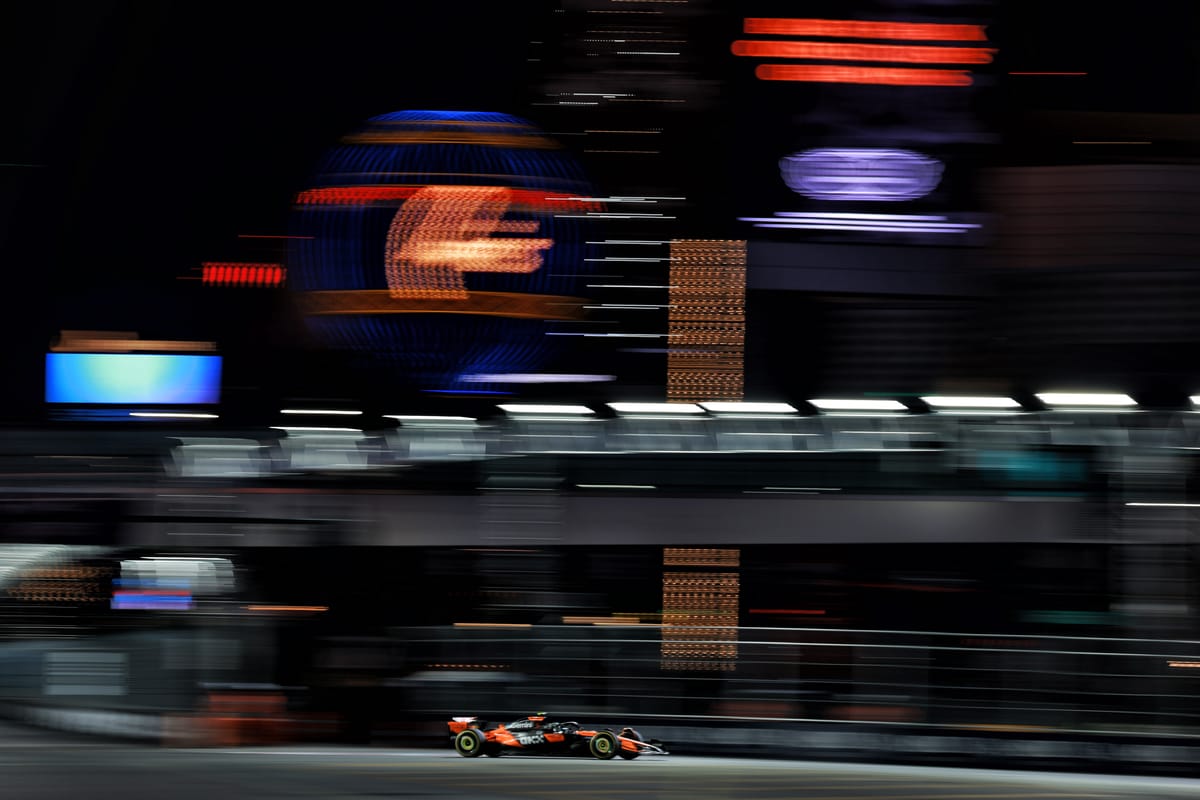
McLaren's known to have been getting closer to the edge with plank wear in recent F1 races. What tipped it over the edge in Las Vegas?

www.the-race.com
"... In May this year, the FIA purchased a new measuring tool to check compliance of the skids. It is known as a Mitutoyo Micrometre and offers accuracy to within 0.001mm.
It probably was not an accident that the measurement released by the FIA about how far the McLarens were out had an extra digit of accuracy compared to when Lewis Hamilton was disqualified at the Chinese Grand Prix for an illegal plank on his Ferrari in March.
At Shanghai, Hamilton’s plank assembly was measured at 8.6mm (LHS), 8.6mm (car centreline) and 8.5mm (RHS). This time, Norris’s right-side block was measured at 8.88mm, and the rear at 8.93mm. In Piastri’s case, his left-hand side front was measured at 8.96mm, the right-hand side front at 8.74mm and the right-hand side rear at 8.90mm.
Naturally if the FIA has got stronger at understanding what teams are doing, and has more accurate tools at its disposal, then the risk of falling foul increases.
There may be two separate factors at play when it comes to what could have impacted McLaren’s situation in Las Vegas. The first may be that Red Bull becoming a bigger threat has pushed McLaren harder to extract more performance. This will have meant running closer to the ground than it perhaps would like if it wanted to play things super safe.
One source revealed that in Brazil a fortnight ago, McLaren’s skid block wear, while fully legal, was measured as being marginal – suggesting that it was pushing things more to the limit in terms of its approach there.
The team openly admitted that it faced ride height concerns at Interlagos, and it had been impacted by the grooves that had been cut into the track at several sections. But the answer to why it went from being on the limit before Las Vegas to being over it in Las Vegas, may come from needing to do things differently.
McLaren had approached the Las Vegas weekend well aware that it needed to do a much better job than it had done 12 months ago when it faced perhaps its most difficult weekend of the 2024 run-in in terms of ultimate pace.
The team had struggled with tyre temperatures and front graining – and then only really got a handle on it during Norris’s final stint of the 2024 race. McLaren reckoned after qualifying this year that a consequent change of set-up approach had been key to Norris’s pole. McLaren team principal Andrea Stella said after qualifying: "We improved the car in several areas that we learned from last year, when it comes to the aerodynamic configuration, somehow utilisation of the tyres, and also from a balance point of view.
"I would say the balance of the car is the main learning from the last stint last year, but there's been special focus on making sure that the car is competitive in Vegas, based on what we've learned in '23 and '24."
The details of what McLaren did are not known, but if the team changed its aero balance to help avoid the front graining that its car so hates, then that would almost certainly have meant a shift towards the rear. Doing that would mean more downforce pushing down at the back of the car – which can have consequences in terms of making the rear sit down on the ground.
The end result is the risk of porpoising (which we know both drivers suffered from), and from that increased plank wear. This phenomenon had not come up in practice, partly because long runs had been disrupted by red flags, and Saturday’s first session had been a damp squib. ..."