


Steamy Tom
Executive Member
- Joined
- Jan 23, 2019
- Messages
- 9,805
- Reaction score
- 6,045
what happens when the 2.4 gets empty before the 3.5?
it doesnt work that way...
South Africa’s biggest forum. Discuss, discover, and connect with thousands of members.
what happens when the 2.4 gets empty before the 3.5?
My apologies, this is what I was referring too in my original post (very unclearly).
I had looked at the pylontech, Dyness, etc systems as an 'all in one' systems, where to increase total capacity, one just has to add another unit to existing battery bank .
The voltage , balancing of bat capacities (internally) was not to be concerned about and a big side benefit of buying one of these over the normal AGM/Gel batteries.
Last question (for now). is it mandatory (electrical compliance, etc) to split the DB into essential and non essential loads? My aim with the system, is that eventually, it will sustain full house incl oven, etc . I can use home automation, to automatically prevent heavy draw items from turning on if running on battery or e.g. 80% of inverter capacity is being reached. I know it can be done.
I am busy investing for example, installing something like this for the stove circuit , I already have Sonoff pow r2 on geysers and pumps, etc (and working well for last two years now)
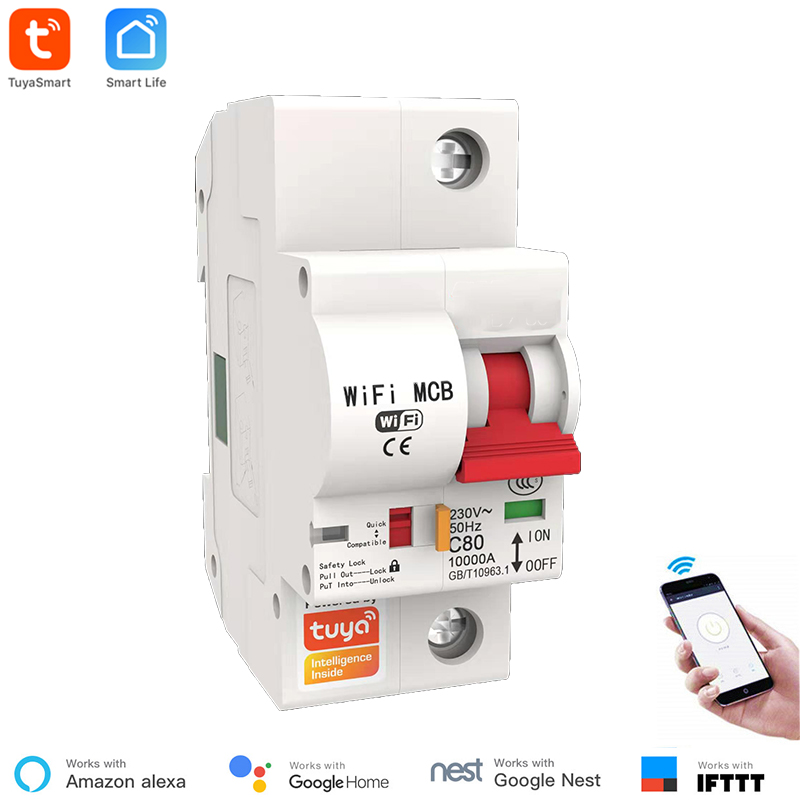
eWelink Tuya Smart Life APP 1P 25A Smart WiFi Switch Circuit Breaker Short Circuit Protection Alexa | bidorbuy.co.za
Buy eWelink Tuya Smart Life APP 1P 25A Smart WiFi Switch Circuit Breaker Short Circuit Protection Alexa for R1,655.00www.bidorbuy.co.za
You have to split the circuits of what you want to have powered by the inverter and what to be powered direct from eskom, but you don't have to split them into seperate boards.
The only requirement as far as I am aware is that you cannot have AC and DC in the same DB board - there must be a clear gap between AC and DC wires (cant even be in the same conduit)

I want the entire house to be powered by inverter (eventually), with the smart switches controlling what turns on/off if running on battery.You have to split the circuits of what you want to have powered by the inverter and what to be powered direct from eskom, but you don't have to split them into seperate boards.
The only requirement as far as I am aware is that you cannot have AC and DC in the same DB board - there must be a clear gap between AC and DC wires (cant even be in the same conduit)
if 1 battery can supply 100A and 2 batteries 200A, and you have 2.4kWh + 3.5kWh = 5.9kWh total capacity. you start drawing from the batteries at 200A, surely the smaller battery will get depleted first, and wlll then try draw 200A from the remaining battery, which then would surely cut out from overload?it doesnt work that way...

I think there's the element of smart battery management systems you are forgetting about that makes working with lithium totally different to working with regular batteries.if 1 battery can supply 100A and 2 batteries 200A, and you have 2.4kWh + 3.5kWh = 5.9kWh total capacity. you start drawing from the batteries at 200A, surely the smaller battery will get depleted first, and wlll then try draw 200A from the remaining battery, which then would surely cut out from overload?
i understand that each battery has a bms, what i don't understand is when combining a small battery with a bigger one, how does it share equally?I think there's the element of smart battery management systems you are forgetting about that makes working with lithium totally different to working with regular batteries.
Inverter will draw from battery with higher voltage, when battery get depleted voltage drop. Means both batteries should get depleted equally.if 1 battery can supply 100A and 2 batteries 200A, and you have 2.4kWh + 3.5kWh = 5.9kWh total capacity. you start drawing from the batteries at 200A, surely the smaller battery will get depleted first, and wlll then try draw 200A from the remaining battery, which then would surely cut out from overload?
I am not really sure and wouldn't want to spread false information but I know you can also have a BMS that manages the whole battery bank besides depending on individual batteries bms, I think the devil is somewhere in that detail.i understand that each battery has a bms, what i don't understand is when combining a small battery with a bigger one, how does it share equally?
so the ability to supply 200A would decrease on a sliding scale as the bank get's depleted? sounds to me one battery would be working harder than the other?Inverter will draw from battery with higher voltage, when battery get depleted voltage drop. Means both batteries should get depleted equally.
Exept if batteries are different technologies.
if 1 battery can supply 100A and 2 batteries 200A, and you have 2.4kWh + 3.5kWh = 5.9kWh total capacity. you start drawing from the batteries at 200A, surely the smaller battery will get depleted first, and wlll then try draw 200A from the remaining battery, which then would surely cut out from overload?
ok thanks, that makes perfect sense.it doesnt work this way at all. you know a battery is made up of many cells right?
when you pull from the batteries it doesn't take from the one then the other etc, it takes from all, current flows through the circuit.


 solarmd.co.za
Hahah no it does not
the way i understand it now, lets say the small lithium battery has 10 cells, and the bigger battery 15 cells, when you join them together the 2 batteries become 1 bigger battery effectively and you'll have 25 cells all being balanced equally.Hahah no it does not
my brain is hurting now.Hi Steamy Tom
You have this completly wrong. And Wingnut is correct in his understanding.
Van die wal af in die sloot

this was my thinking. thank you, this also makes sense. so better to keep you battery sizes in the bank equal.That is correct, but it's my understanding that Wignut wants to run a Pylonech 2000B and 3000B in parallel.
The one having a capacity rating of 2.4 kWh and the other 3.5 kWh.
With both of these LiFePO4 batteries in the fully charged state they will be at 54 V.
Lets assume the load is 4.8 kW and use a nominal voltage of 48 V.
Total current draw will be 100 A with a split of 50 A delivered by each battery.
After 1 hour the 2.4 kWh battery will be depleted. The internal BMS will disconnect this battery from the bank.
The remaining 3.5 kWh battery will now carry the entire load, so the current draw of the 3.5 kWh battery will go up to 100 A.
The 3.5 kWh battery can only deliver 100 A for 15 seconds afterwhich it will also be disconnected by its internal BMS
Hi Steamy Tom
You have this completly wrong. And Wingnut is correct in his understanding.
Van die wal af in die sloot
wouldn't the battery with more cells draw more current? so it wouldn't be a 50/50 split, so for example, the small battery will draw 40A and the bigger 60A for example so they'll be empty at the same time?That is correct, but it's my understanding that Wignut wants to run a Pylonech 2000B and 3000B in parallel.
The one having a capacity rating of 2.4 kWh and the other 3.5 kWh.
With both of these LiFePO4 batteries in the fully charged state they will be at 54 V.
Lets assume the load is 4.8 kW and use a nominal voltage of 48 V.
Total current draw will be 100 A with a split of 50 A delivered by each battery.
After 1 hour the 2.4 kWh battery will be depleted. The internal BMS will disconnect this battery from the bank.
The remaining 3.5 kWh battery will now carry the entire load, so the current draw of the 3.5 kWh battery will go up to 100 A.
The 3.5 kWh battery can only deliver 100 A for 15 seconds afterwhich it will also be disconnected by its internal BMS
 ). is it mandatory (electrical compliance, etc) to split the DB into essential and non essential loads? My aim with the system, is that eventually, it will sustain full house incl oven, etc . I can use home automation, to automatically prevent heavy draw items from turning on if running on battery or e.g. 80% of inverter capacity is being reached. I know it can be done.