Geyser Timer

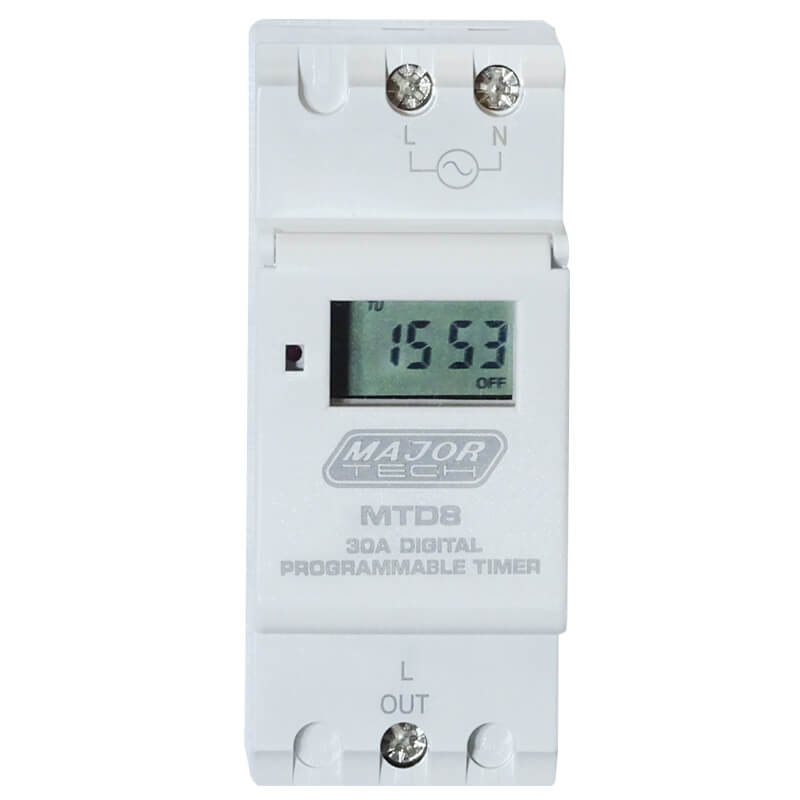
I also have the Major Tech Timer, bought the 20Amp version for my house, moved with the thing to the new house. Still going strong (about 5 years on) had to update the time one or twice, as the internal clock drifts slightly.

Bought a 2nd one for the pool 6 months ago, notice that all the units are now 20A Units. Seems the only 16A Units actually in stock are old stock. I know the original "1st gen" 16A versions had many issues, but the 20A version seems to be decent.

As for savings (2 people household), we saved about a 3rd of our bill at time of install.

It all comes down to timing however - To really save, you need to turn off the geyser before you start to use the water, so in my case, it is on late afternoons, and on weekends it is on early morning as well.

If you turn of the Geyser after you used the water, you are essentially heating the water, just to leave it to cool down again, thus not really saving anything in the process. Maintaining water temperature is relatively low power vs actually heating water up for use.
Interesting point. Will check on the new specs for major tech. Moved away from their rubbish more than 8 years ago. Will give them the benefit of the doubt.
 
Last edited:
thanks Guys, Yea i have taken a lot of thought into this, the problem is I live in a complex, where the Bodycorprate supplies prepaid electricty at a much higher rate than what the house just outside the fence pays. Our Geysers are also mounted in a stupid way with no insulation. I have Been Monitoring the Usage and tracking the consumption. With the Geyser off, i only Use 1.85KW in 8 Hours, just running my Computer (no gaming) and the fridge. Turning the Geyser on Uses 5.8KW in 2 Hours, this is enough to make it warm enough for a shower, and during the day the geyser is still hot enough for normal usage. I left it on overnight, and the usage over 8hours of night was 15.8 KW( i assume heatup and then temperature maintenance). I know its stupid, many people in the complex have Complained to the Body Corporate, and they have done "investigations" and the usage is "normal". There is even claims that the prepaid meters are incorrectly calibrated to count More KW to keep the BC and associated people pockets lined. Its a Normal 150L quickot Geyser. - Its a game and spending R500 or so to save a bit, is worth it.
 
yea, and the element has been replaced twice now in 4 years, Unfortuntly the Developer installed them, for all 1000 units, and I rent, so i cant change the make, and even putting a blanket on is a mission with the permissions you need. I am moving in the next few months, a lot of other complexes in the Helderburg are have been built from the ground up with Solar Geysers. So thats an Option, until Covid has died down , its not a wise choice to packup and go in the next few months.
 
yea, and the element has been replaced twice now in 4 years, Unfortuntly the Developer installed them, for all 1000 units, and I rent, so i cant change the make, and even putting a blanket on is a mission with the permissions you need. I am moving in the next few months, a lot of other complexes in the Helderburg are have been built from the ground up with Solar Geysers. So thats an Option, until Covid has died down , its not a wise choice to packup and go in the next few months.
Thanks for the background info, it helps explain your issue.
Agree with the comments of el cheapo geysers installed by developers. They are the curse of the country, the crap they install and the shortcuts they take.

In the meantime, here is some more info on the choice of a timer.
Here is a link to the new Major tech timers. It would seem that they have learnt their lesson and improved the quality of their timers somewhat.

The important decision parameter is the Wattage rating, and to do that you need to know what the geyser element rating is.

The new Major tech spec attached indicates that the rating is 4.5kW which will cater for higher wattage geysers and the 20A current rating for resistive loads.

Don't go for the el cheapo one unless of course, you do not intend taking the timer with you when you move.

My preference still remains for a high-quality analogue timer (20A resistive). The simpler the better, a 24-hour is all you need for a geyser anyway. The drawback is to reset the timer after power breaks and load shedding.

In the meantime here is the Major tech latest spec. Suggest you avoid sourcing at a Builders etc, unless you are sure they are stocking the latest products -- that online photo is definitely the older pos.

PS if you do look at the Major tech website, do not fall for that analogue single unit 24-hour timer they have. It is a 2 000 Watt timer way below spec for use on a geyser.
 
Last edited:
If you are really serious about this game long term and able to install a proper geyser management system at some time, then the answer is something like a GeyserWise system.
 
From the link in post #4 I've been using this one for over 12 years already (touch wood) ... self installed and does the job :thumbsup: ... make sure to use the right size wire gauge when you do the bridge to the timer from the breaker.

Screenshot_10.jpg
 
Thanks for the background info, it helps explain your issue.
Agree with the comments of el cheapo geysers installed by developers. They are the curse of the country, the crap they install and the shortcuts they take.

In the meantime, here is some more info on the choice of a timer.
Here is a link to the new Major tech timers. It would seem that they have learnt their lesson and improved the quality of their timers somewhat.

The important decision parameter is the Wattage rating, and to do that you need to know what the geyser element rating is.

The new Major tech spec attached indicates that the rating is 4.5kW which will cater for higher wattage geysers and the 20A current rating for resistive loads.

Don't go for the el cheapo one unless of course, you do not intend taking the timer with you when you move.

My preference still remains for a high-quality analogue timer (20A resistive). The simpler the better, a 24-hour is all you need for a geyser anyway. The drawback is to reset the timer after power breaks and load shedding.

In the meantime here is the Major tech latest spec. Suggest you avoid sourcing at a Builders etc, unless you are sure they are stocking the latest products -- that online photo is definitely the older pos.

PS if you do look at the Major tech website, do not fall for that analogue single unit 24-hour timer they have. It is a 2 000 Watt timer way below spec for use on a geyser.
Quickest way to tell, the new ones have three terminals only.

The older one had two on top for AC supply voltage and two to three at the bottom for N/O - Source - N/C
 
I also have the Major Tech Timer, bought the 20Amp version for my house, moved with the thing to the new house. Still going strong (about 5 years on) had to update the time one or twice, as the internal clock drifts slightly.

Bought a 2nd one for the pool 6 months ago, notice that all the units are now 20A Units. Seems the only 16A Units actually in stock are old stock. I know the original "1st gen" 16A versions had many issues, but the 20A version seems to be decent.

As for savings (2 people household), we saved about a 3rd of our bill at time of install.

It all comes down to timing however - To really save, you need to turn off the geyser before you start to use the water, so in my case, it is on late afternoons, and on weekends it is on early morning as well.

If you turn of the Geyser after you used the water, you are essentially heating the water, just to leave it to cool down again, thus not really saving anything in the process. Maintaining water temperature is relatively low power vs actually heating water up for use.
Spot on! The savings come in from not heating the water just to keep it at maximum temperature all the time. the savings are much more noticeable in the winter months.
We do the same, heat the water for the times in the home when people take showers or bath, use a simple inline heater in the kitchen which come on on-demand for dishwashing (in the sink), and then leave the geyser off for the rest of the time. Geyser insulation is critical, the older or cheaper the geyser make, the more important because that is the shortcut taken with the el cheapos. Pipe insulation is also important.
 
Here is another issue I have found with digital timers worth taking note of. The timers do not like being exposed to cycled power on the input to the battery charging circuit. The simple battery charging circuit has virtually no protection built-in against power spikes and frequency fluctuations. So LS is quite detrimental to long life on these things.

Next, IF you also have ECU units installed (peak power balancing devices), then the ECU should be wired in after the timer, so that when it kicks in, it does not cut power to the timer, only to the geyser itself.
 
Last edited:
Hi, can you comment on your monthly cost whilst keeping your geyser on full time? I am also curious about this. We have our geyser on a timer, seems to work. The geyser is in a closed off area so the water is not going totally cold.

However, I am interested to hear from you.
I have been using a KES ISG1201 time switch on a cycle 03:00 - 06:00 and 15:00 - 18:00 . Major saving on electricity. It passed away this week after 6 years. I have monitoring software on my Solar Inverter and I noticed immediately the huge jump in electricity consumption.
 
Key to saving with a timer is to switch it off BEFORE you use the water.
That way your water temperature drops, and the electricity doesn't kick in. More importantly still it stops people taking long showers as it starts getting colder!

If you switch it off AFTER a shower, then you are unlikely to save anything. As the cold water comes in as soon as you start the shower, so the element starts heating it. Then it used up 4kw x 30mins = 2kwh getting the water back up to 60degrees whilst you were showering, drying etc. You then leave for work and it has all day to cool down.

You'll only save substantially from a timer if you:
A. Have times your geyser cools ALL the way down to ambient (say 20-30 degrees) -- in which case, get better insulation, that should take 48 hours!
B. You use colder hot water... i.e. you wash your hands, dishes at 40 degrees rather than burning them at 60 degrees first and waiting for it to cool back down :D
 
Sonoff Pow R2 - Just manages to control a 2.2KW geyser at 16A with WiFi control and power consumption monitoring
I would keep it away from anything flammable as any malfunctioning switch at that current can get very hot
 
I have been using a KES ISG1201 time switch on a cycle 03:00 - 06:00 and 15:00 - 18:00 . Major saving on electricity. It passed away this week after 6 years. I have monitoring software on my Solar Inverter and I noticed immediately the huge jump in electricity consumption.
My geyser never takes longer than 90 minutes to heat the water, so the cycle I have is only one, set for 2 hours in the mornings, OFF before anyone draws any hot water. Lasts the whole day (two people), still hot enough the next morning if need be.

We both shower, and quickly also.
 
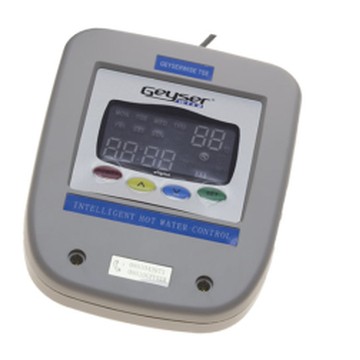
Went out and purchased one this morning on a mates recommendation. Will install this weekend. Nice to be able to control temp and time

Amazing unit and its more than a timer with the intelligent features it offers.
 
Amazing unit and its more than a timer with the intelligent features it offers.

Reckon it will pay for itself over the next three to four months.

Added a geyser blanket and have decided to start using the stove top (gas) kettle to make tea and coffee. Working from home I was using the kettle a good 3 / 4 times a day.
 
thanks Guys, Yea i have taken a lot of thought into this, the problem is I live in a complex, where the Bodycorprate supplies prepaid electricty at a much higher rate than what the house just outside the fence pays. Our Geysers are also mounted in a stupid way with no insulation. I have Been Monitoring the Usage and tracking the consumption. With the Geyser off, i only Use 1.85KW in 8 Hours, just running my Computer (no gaming) and the fridge. Turning the Geyser on Uses 5.8KW in 2 Hours, this is enough to make it warm enough for a shower, and during the day the geyser is still hot enough for normal usage. I left it on overnight, and the usage over 8hours of night was 15.8 KW( i assume heatup and then temperature maintenance). I know its stupid, many people in the complex have Complained to the Body Corporate, and they have done "investigations" and the usage is "normal". There is even claims that the prepaid meters are incorrectly calibrated to count More KW to keep the BC and associated people pockets lined. Its a Normal 150L quickot Geyser. - Its a game and spending R500 or so to save a bit, is worth it.
what temp is it set at?
 
Added a geyser blanket and have decided to start using the stove top (gas) kettle to make tea and coffee. Working from home I was using the kettle a good 3 / 4 times a day.

Depends on your rate, but normally kettles are cheaper than gas.

Quick google gave me: https://hermanusgas.co.za/our-services-hermanus-gas/gas-refill-pricing/
48KG = R1108 = R23.1/KG
.
1 KG of LPG = 12.78 kWh/kg

So 23.1/12.78 = R1.81/kWh for gas heating... that would be if you PERFECTLY burned all the gas, and used the bottle to 100% empty. Let's say you only get 90% of the bottle and 90% efficient then that is R2.23/kWh

I expect that heating on a stove is nowhere NEAR as efficient as a kettle. First of all, the hob gets warm, water boils off... the pan gets warms and it takes longer. A kettle is so quick and doesn't heat much else around, simply more efficient. Also there's the issue of how much water do you heat up for a cup of tea on the stove, vs. electric kettle. Say you always heat up 50% MORE water, then that's DOUBLING the cost per 'effective cup of tea' - aka. your RANDS per ECOT :)

So if you are going to do that, then at least make sure you put the lid on the pot :D
 
Top
Sign up to the MyBroadband newsletter
X