Hyundai Ioniq

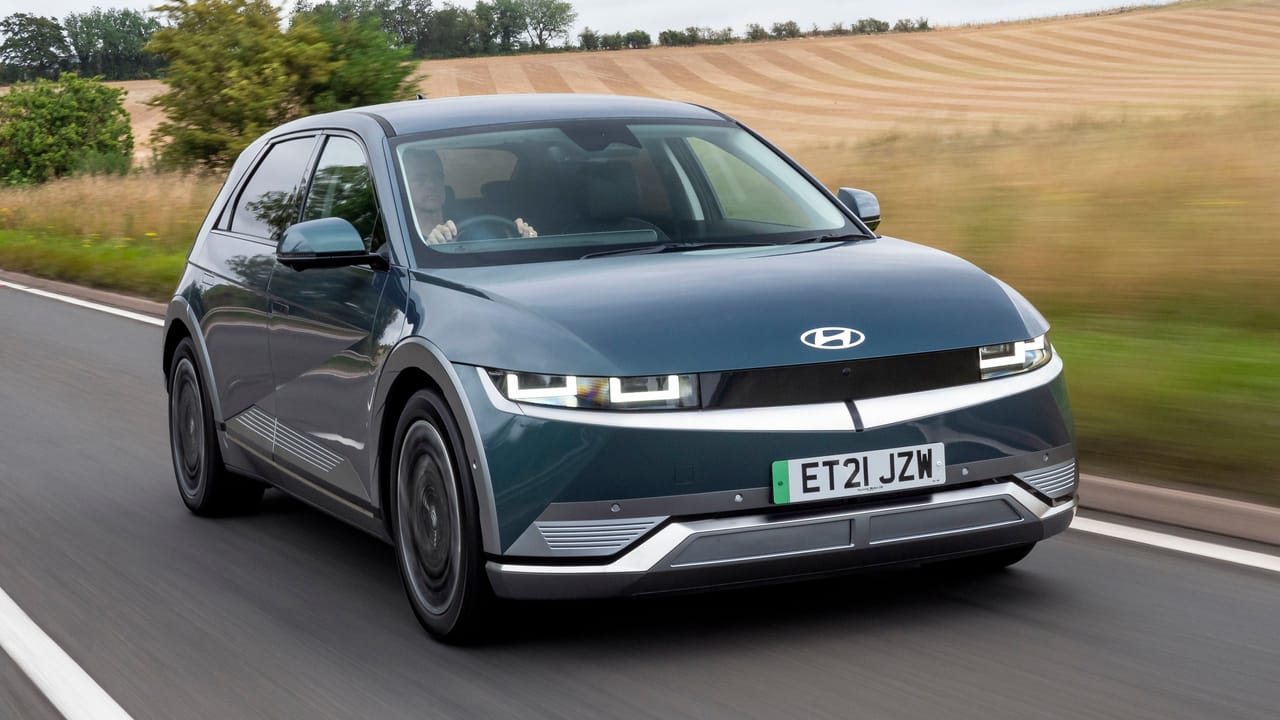
Top Gear's Hyundai Ioniq 5 review: 2021's best new family EV?

Sensational-looking all-electric crossover blurs boundaries, challenges the status quo, and makes us yearn for a Korean hatchback. A great all-round EV

WHAT IS THE VERDICT?

“A sensational-looking all-electric crossover that blurs boundaries, challenges the status quo, and makes us yearn for a Korean hatchback”


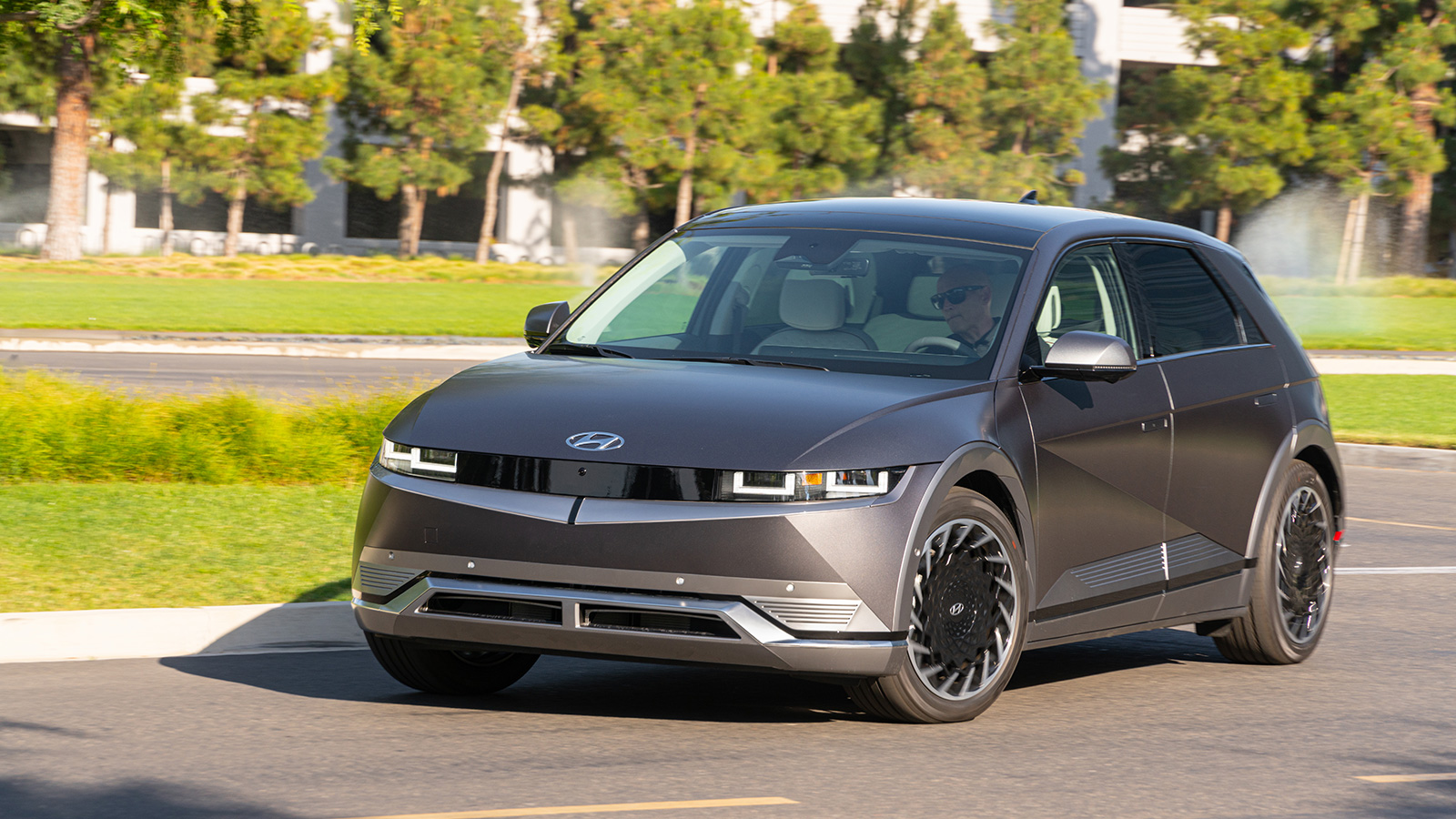
That Hyundai is now confident enough to put a car as bold-looking as the Ioniq 5 on sale is impressive. But the fact this retro XXL hot hatch bodywork conceals one of the most complete family EVs money can buy is downright remarkable.

If Hyundai can maintain this momentum behind the upcoming members of the Ioniq family, then the likes of VW’s ID cars and even Mercedes’s EQ clan ought to be extremely worried.

By taking the punt that people are more likely to be converted to EV ownership if the car is desirable as an object and an experience – and gambling that there’s more to life than the European players’ softly-softly don't-offend-anyone approach, Hyundai has built one of 2021’s exceptional cars.

Course, we said much the same about BMW’s brave i3, and that pretty much sunk as a business case. Whoops. Here’s hoping beyond the pre-order hype, Hyundai’s onto something here. The future of semi-interesting family motoring could depend upon it.


Ioniq 1.jpegIoniq 2.jpegIoniq 3.jpegIoniq 4.jpegIoniq 5.jpegIoniq 6.jpegIoniq 7.jpegIoniq 8.jpegIoniq 9.jpegIoniq 10.jpeg
 
Hyundai offers monthly subscription deal for electrified models

Insurance, maintenance, road tax, repairs and roadside assistance are included in one monthly fee

Hyundai has launched a subscription service for its electrified models that it says covers all motoring costs.

Called Mocean, it wraps the price of subscription, insurance, maintenance, road tax, repairs and roadside assistance into one monthly fee. Contracts last for three to 24 months and start at £339 per month.

The service will be launched in Greater London this month before being rolled out to other cities in the UK later this year.

Any of Hyundai’s hybrid, plug-in hybrid and fully electric models can be selected.

Customers can change their car to a different model every six months or cancel their subscription with only a one-month notice period.


The Hyundai Ioniq 5 is now a ROBOTAXI​

… and there was us thinking the Ioniq 5 couldn’t look any more futuristic if it tried

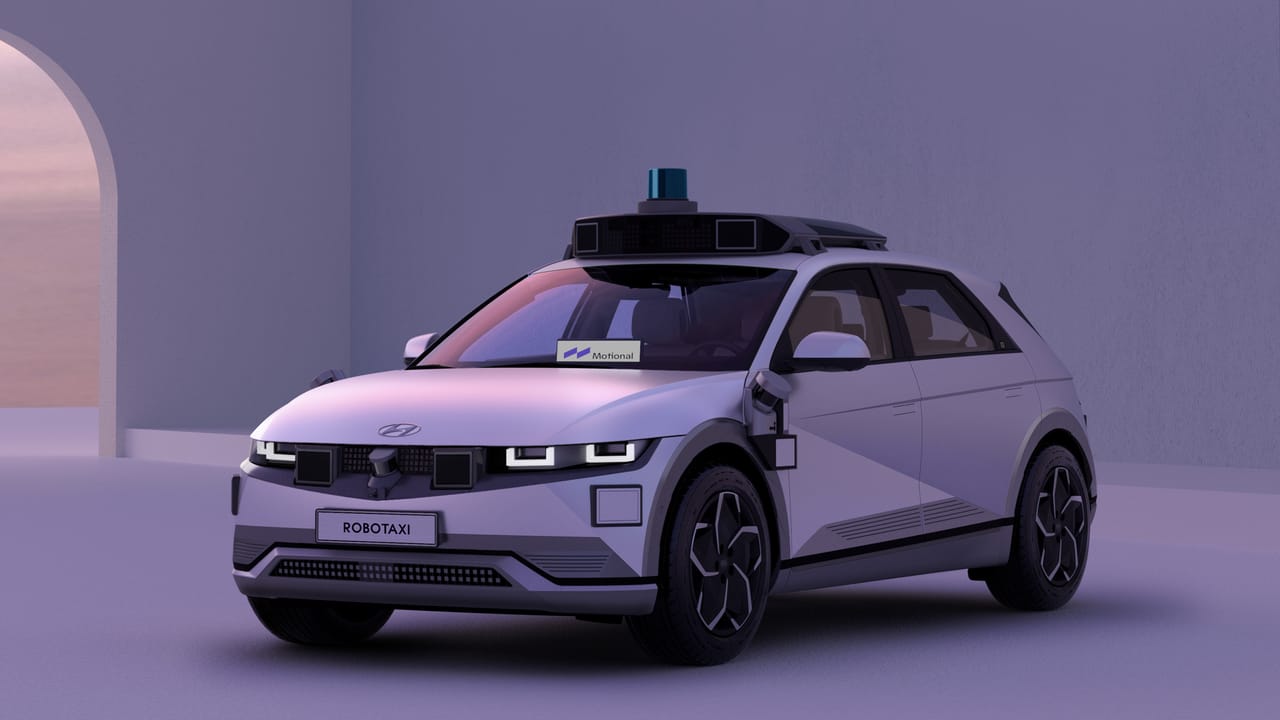
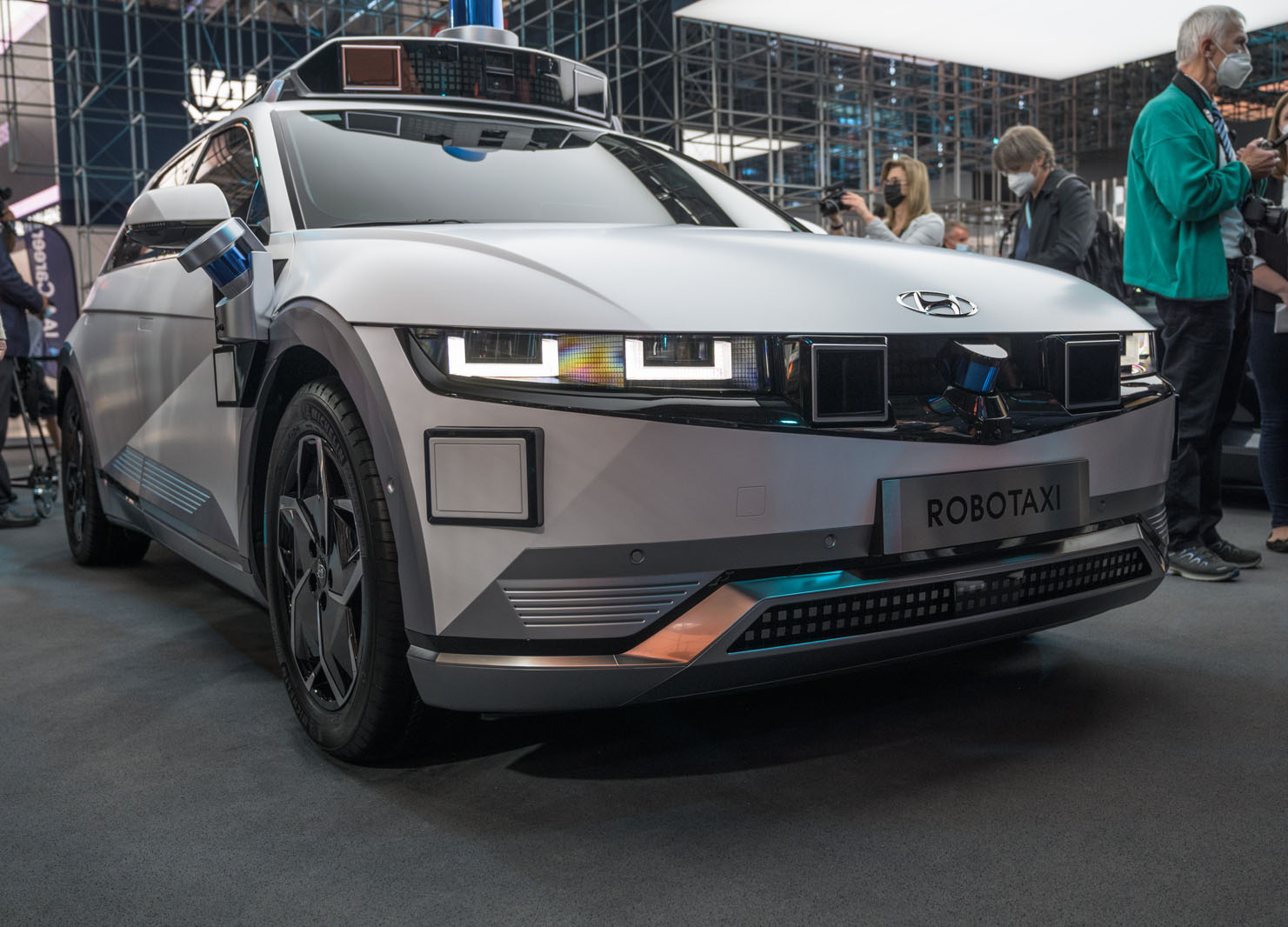
Welcome to the future, Internet. Hyundai has unveiled the brilliantly-named Ioniq 5 ROBOTAXI – a commercial vehicle that’ll be used as a fully driverless ride-hailing taxi from 2023. Not very far away that, is it?

The Robotaxi is the result of a partnership between Hyundai and Boston-based driverless tech company Motional. It’s now a Level 4 autonomous vehicle thanks to the addition of more than 30 sensors – including cameras, radars and lidar.

Motional also has a partnership with Lyft – the US-based ride-hailing and ride-sharing taxi service – who will apparently run a fleet of driverless Ioniq 5s in 2023. Motional says it will be able to provide Remove Vehicle Assistance to the Robotaxis, so if they come across any “unusual road scenarios” they can be remotely rerouted.

The interior of the Ioniq 5 will also get a suite of screens so the passengers can interact with the car during their ride.


21EC1B9F-19D5-4075-88A9-85FC011644D6.jpegD13DE594-1551-4661-9064-42C4A448C361.jpeg25393CBD-25FA-4CE6-A2A4-A4D6473507FE.jpeg8C41E6A6-2E76-48EC-B7DF-27D70F1A2977.jpegABA92AF9-7CF9-45B0-9F01-ACB50771AEF2.jpeg62749637-DEF4-49AF-A4FD-EFC022256B15.jpeg
 

Hyundai reveals self-driving Ioniq 5 'robotaxi'​

Hyundai teams up with Motional for level four autonomous taxi scheduled for public roll-out in 2023

A fully autonomous Hyundai Ioniq 5 robotaxi has been revealed by the South Korean car maker and Motional, a driverless tech firm that was founded in March last year.

The Ioniq 5 robotaxi boasts level four autonomy, which means it can drive itself in all situations unless a driver takes manual control.

The companies say the car is fitted with 30 exterior sensors, comprising cameras, radar and lidar, to give 360deg perception and an ability to detect objects at an "ultra-long-range" while on the move.

Should the car come across "an unusual road scenario, such as road construction or flooding", Motional says an operator can take control of the vehicle remotely and guide it back to safety.

“This robotaxi represents Motional’s vision of a driverless future becoming a reality,” said Karl Iagnemma, president and CEO of Motional. “Through our strategic partnership with Hyundai Motor Group and Aptiv, we have unparalleled automotive and software expertise across our entire vehicle development process.

 
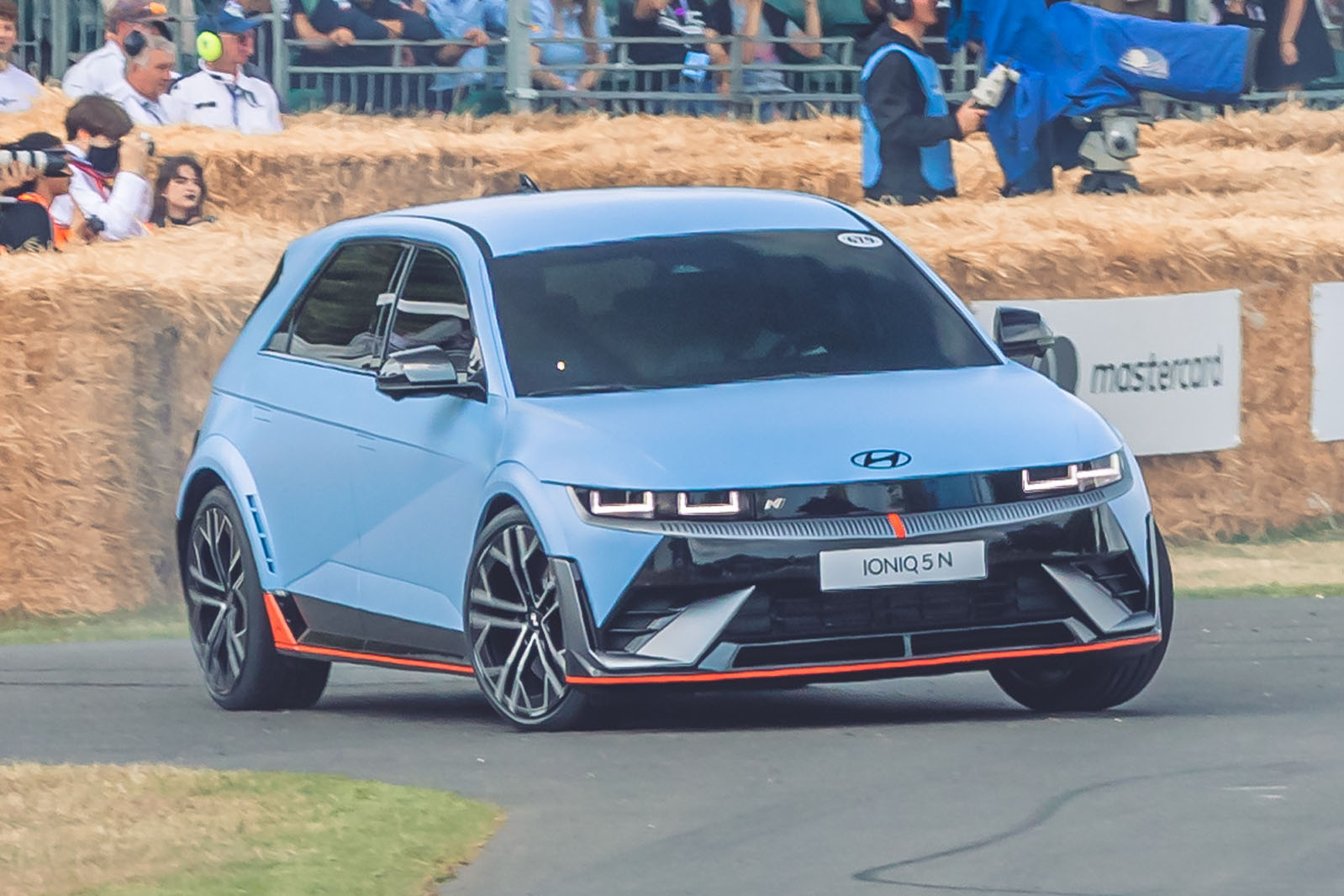
New 2022 Hyundai Ioniq 5 N hot SUV spied testing

Development version of bespoke electric model features lowered suspension and performance tyres

Hyundai has committed to offering electric models under its N performance division in the near-future - and what's understood to be a hot version of the Ioniq 5 has now been spied testing.

A new version of the electric SUV has been snapped in action on public roads near the Nurburgring, where the European arm of the N division is based.

While the EV pictured features relatively standard Ioniq 5 bodywork, it appears to have a lower ground clearance, wider front and rear axles and low-profile sports tyres that sit on new wheels.

Upgraded brake discs and calipers can also be seen. That makes it likely the model is an early mule of an Ioniq 5 N, although an eventual production version would likely gain new bodywork for both aerodynamic and styling reasons.

Hyundai has already launched N-badged versions of the i20, i30, i30 Fastback, Kona and the US-market Veloster and is committed to expanding the line-up of N and N-Line models to 18 by the end of 2022.


Ioniq 1.jpegIoniq 2.jpegIoniq 3.jpeg
 
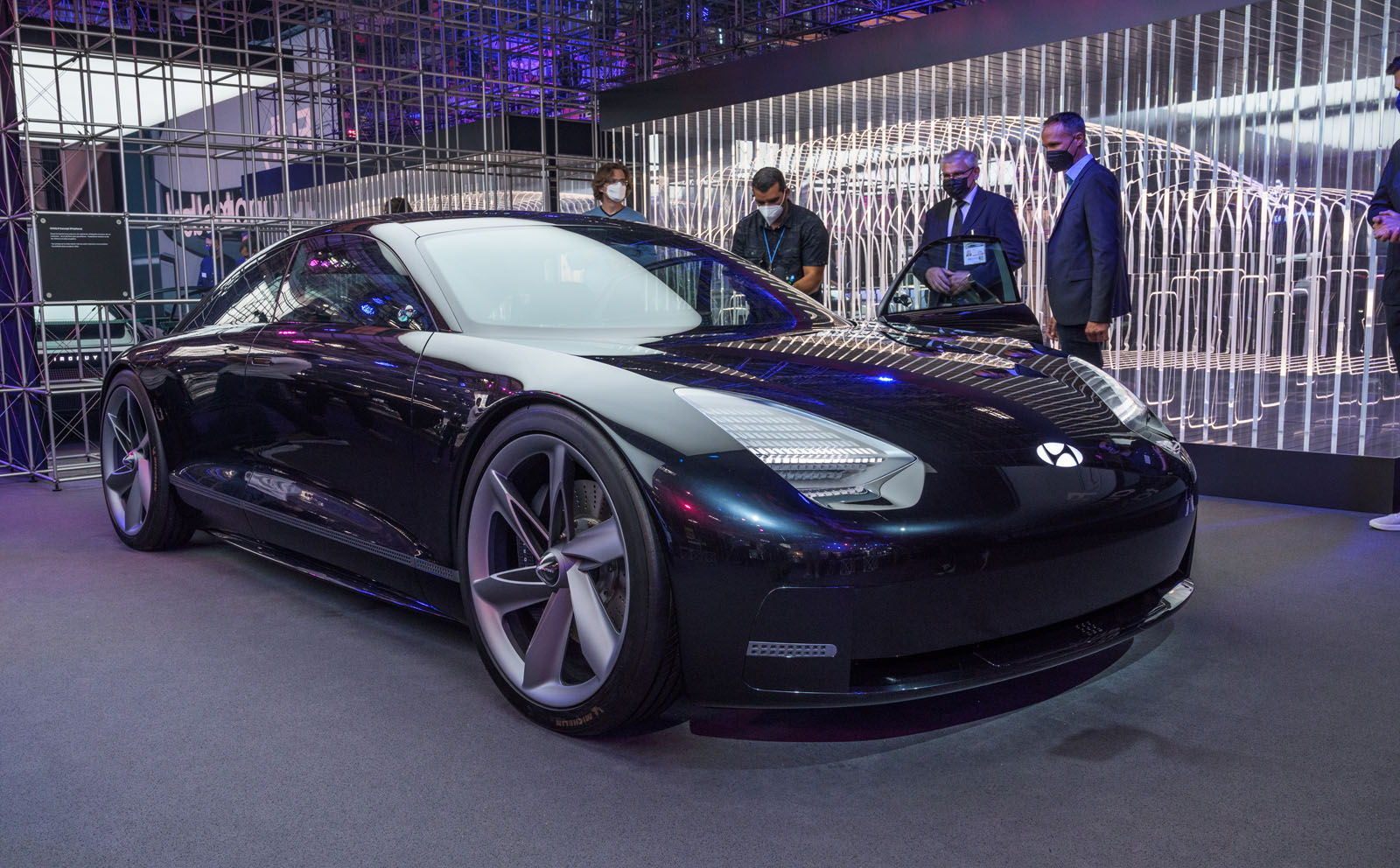
Hyundai Prophecy concept previews Ioniq 6 at Munich

Sleek electric saloon could enter production with 577bhp range-topping variant

The Prophecy performance car concept has made its public debut at the Munich motor show, giving a final hint as to the styling and size of the upcoming Ioniq 6.

The second model in Hyundai's expanding family of bespoke EVs will use the same E-GMP platform as the Ioniq 5, as well as its Kia EV6 and Genesis GV60 siblings. That means 800V charging functionality will be a feature, and paves the way for a four-wheel-drive range-topper with 577bhp and a 0-62mph time that positions it as a bona fide rival to Porsche's Taycan saloon.

Designed with a focus on aerodynamic efficiency, the Prophecy features a heavily raked roofline, minimal bodywork creases and innovative propeller-style wheel designs that help to channel air down the side of the car’s body.

An integrated rear spoiler is fitted for greater stability at high speeds, while short front and rear overhangs hint at the Prophecy’s dynamic potential.


Hyundai 1.jpegHyundai 2.jpeg
 
Ioniq 5 Production Actually Hasn't Been Delayed, Hyundai Says

The brand still expects to start cranking the EV out in October, but availability at "a majority of dealerships" won't happen until after December 21.

Hyundai has a lot riding on the Ioniq 5, the first battery-electric vehicle built on its new E-GMP platform that will underpin a multitude of future models. The retro-styled crossover has been on sale in Europe and South Korea since the second quarter of this year, while Hyundai’s U.S. website initially listed a fall 2021 release. That ETA was updated to winter 2021 this week, triggering concern that production had been delayed.

Why the apparent setback? We reached out to Hyundai for clarification, and PR manager Brandon Ramirez told us that the Ioniq 5's planned October start of production actually hasn’t changed at all. Rather, the language was updated from fall to winter for marketing reasons, because that’s when the majority of dealerships are expected to have cars in stock. Some may get them in earlier. Winter begins December 21, by the way.

At worst, that’s a couple of weeks further out than perhaps some reservation holders may have expected. And in this age of supply chain disruptions up and down the industry, it’s not a stretch to think snags here and there could’ve nudged Hyundai’s schedule to some degree, just over the line into winter. Back in March, for example, newspaper Korea JoongAng Daily reported that the Ioniq 5's production schedule was slashed considerably at the automaker’s Ulsan, South Korea plant from 10,000 to 2,600 units, due to a shortage of electric motors.

Ultimately, Hyundai is still adamant that you’ll see the Ioniq 5 in most showrooms before the year is out. This doesn’t appear to be one of those cases where a vague push to winter means, say, March.

 
Report: new Hyundai Ioniq 6 delayed for redesign, bigger battery

Electric saloon has apparently been pushed back to mid-2022 to allow design and powertrain upgrades

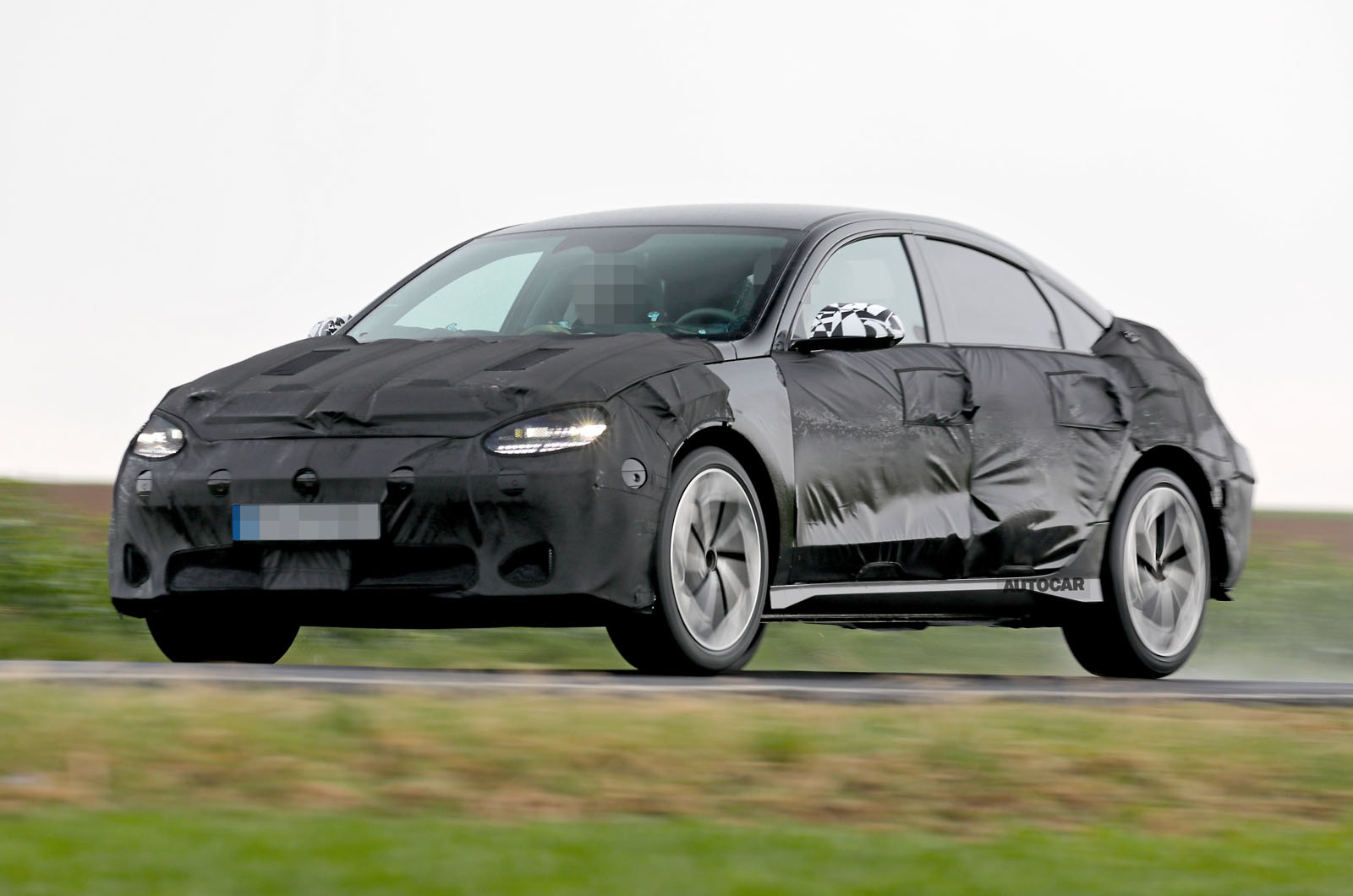
The Ioniq 6, Hyundai's second bespoke electric car, has been spotted out on the road for the first time, but reports from Korea suggest the final design will change substantially.

According to the Korean Economic Daily, the launch of the Ioniq 6 has been pushed back to mid-2022 to allow the body to be lengthened by 20mm, the bumpers and lights to be restyled and the battery to be upsized from 72.6kWh to 77.4kWh.

The design changes should mean the electric saloon more closely resembles the striking Prophecy concept, which made its public debut at the recent Munich motor show. The prototype spotted here has much more conventional headlights and a more upright silhouette than the concept, although gaps in the camouflage show a similar pixel-style rear light bar design.

The EV's belated launch has also been attributed to a delayed overhaul of the Asan factory where it will be produced. That site currently builds the combustion-engined Sonata saloon and needs refitting to build cars based on the E-GMP platform.

Technically, the Ioniq 6 will be broadly identical to the Ioniq 5, with which it shares the new E-GMP architecture. That means 800V charging hardware will feature and the saloon is likely to be offered with a choice of single- and dual-motor powertrains.


Snip 1.jpegSnip 2.jpeg
 
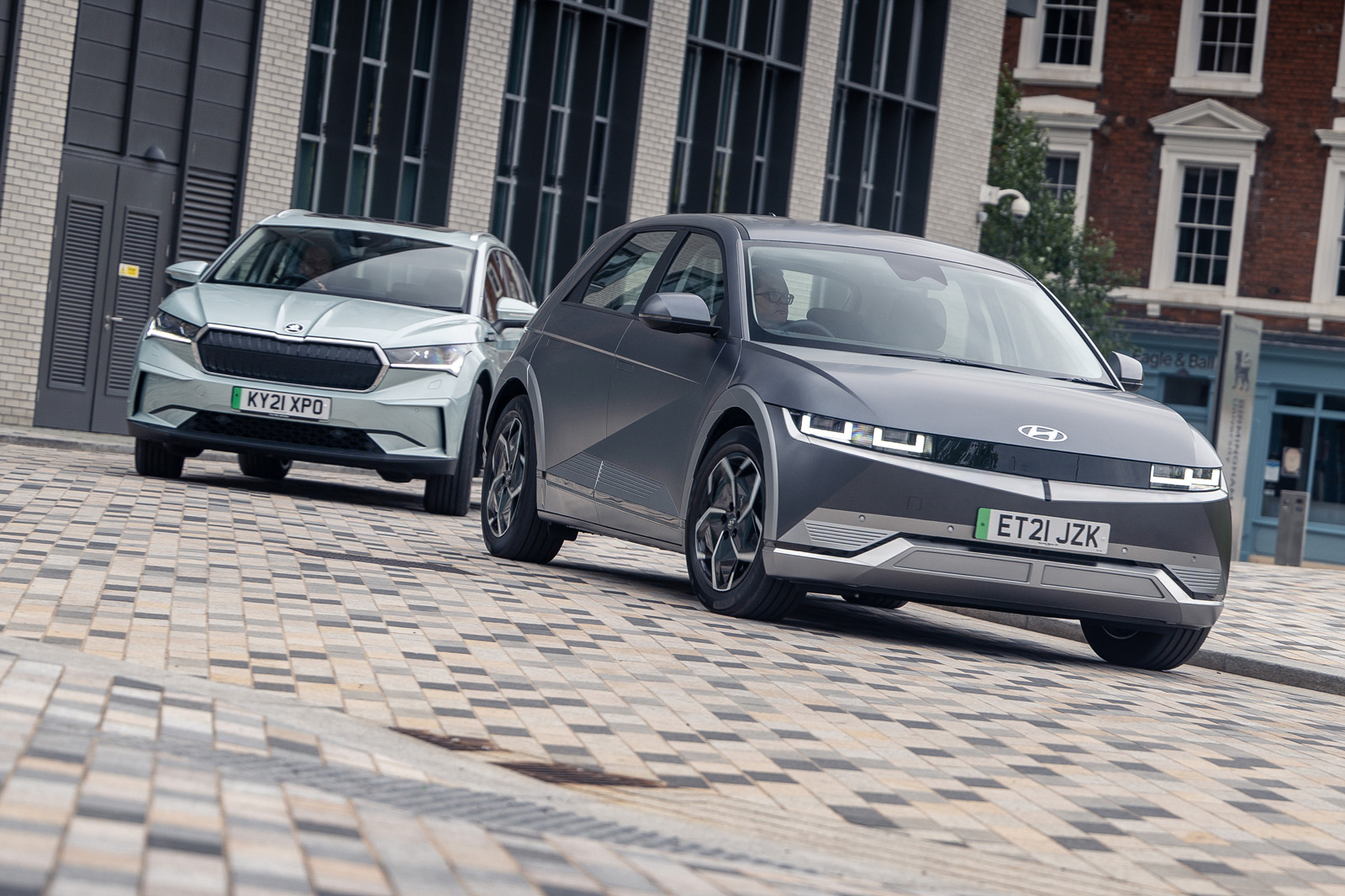
Hyundai Ioniq 5 vs Skoda Enyaq: the best family EV for £40,000?

The new Ioniq 5 and its Skoda rival – spacious family cars with 300 miles of range – both want to bring electric motoring to the masses but, as we discover, in rather different ways

Well, the Enyaq certainly earned our respect and it’s currently the most convincing of the VW MEB siblings. It’s not the most adventurous to look at or sit in, but the reassuring familiarity makes it a less onerous proposition for those still undecided whether to ditch fossil fuels in favour of fast charging. It’s a thoroughly sensible choice and good value on the face of it, but one that does feel rather like the car as a consumer durable.

If you want a little more spark from your EV, then it has to be the Ioniq 5. Not only does it look great, but it sports an interior that’s equally bold and makes brilliant use of the electric car’s packaging possibilities, plus the 800V capability goes a long way to justifying its price premium. The Hyundai also delivers some genuine entertainment behind the wheel. Most importantly, it’s packed with just enough character to reassure those hooked on hydrocarbons that the future isn’t to be feared.

Hyundai Ioniq 5 Premium 73kWh RWD - FOUR STARS

Price
£41,945 Engine Permanent magnet synchronous motor Power 214bhp Torque 258lb ft Gearbox 1-speed automatic Kerb weight 1910kg 0-62mph 7.3sec Top speed 115mph Battery 73/72.6kWh (total/usable) Range 298 miles CO2, tax band 0g/km, 1%

Skoda Enyaq iV 80 - FOUR STARS

Price
£39,365 Engine Permanent magnet synchronous motor Power 215bhp Torque 229lb ft Gearbox 1-speed automatic Kerb weight 2032kg 0-62mph 8.2sec Top speed 99mph Battery 82/77kWh (total/usable) Range 331 miles CO2, tax band 0g/km, 1%


Combo 1.jpegCombo 2.jpegCombo 3.jpegCombo 4.jpegCombo 5.jpeg
 
HYUNDAI IONIQ 5 VS FORD MUSTANG MACH-E VS VOLKSWAGEN ID.3

Hyundai says the all-electric Ioniq 5 is unique: a hatchback with the cabin space of an SUV. Here it faces one of each

For a verdict here, you can’t ignore price. The Hyundai is £45k in Ultimate trim which includes a super fancy HUD and Bose sound system. But an efficiency pack (heat pump and battery heater that’ll both add range in winter) is extra. Like the Ford it has panoplies of effective driver assist.

At the other end, the VW has DIY seat adjustment, no reversing camera and less driver assist. It’s smaller. Obviously an ID.4, or indeed Audi Q4, on the same platform would be a closer rival for the Mustang and Ioniq, but we wanted to put some context around the Ioniq’s hatch-like styling. The ID.3 is well packaged and when you’re driving it the absence of bulk is an asset. It’s cheap enough to get the plug-in grant and ends up at a little over £28k. Sure it’s slow, but you can remedy that with a 204bhp version for £1,320 extra – money fabulously well spent.

The Ford is £42k but misses out on a few gewgaws you get in the Hyundai’s top trim. Still, it’s the quickest, the most engaging and the most useful. It’s not as intriguing or attention-grabbing as the Ioniq. But it’s the one we’d have.

Ford Mustang Mach-E – 8/10
£41,330 otr/£41,330 as tested
e-motor, RWD, 269bhp, 317lb ft
0-62mph in 6.9secs, 111mph
273 miles claimed range/240 miles as tested
1993kg

Hyundai Ioniq 5 – 8/10
£44,945 otr/£48,320 as tested
e-motor, RWD, 217bhp, 258lb ft
0-62mph in 7.4secs, 115mph
298 miles claimed range/250 miles as tested
1990kg

Volkswagen ID.3 – 8/10
£28,435 otr/£31,020 as tested
e-motor, RWD, 145bhp, 229lb ft
0-62mph in 9.6secs, 99mph
264 miles claimed range/230 miles as tested
1812kg


Combo1.jpegCombo2.jpegCombo3.jpegCombo4.jpegCombo5.jpegCombo6.jpegCombo7.jpeg
 
Top
Sign up to the MyBroadband newsletter
X