Inverter + car battery?

Zukat

Expert Member
Joined
Oct 11, 2010
Messages
1,512
Reaction score
693
Location
Pretoria
Im currently using a 2000W inverter that I connect to my car battery to keep the TV and router on during loadshedding and it keeps me going for about 2hrs. Now Im thinking of removing dependency on the car and buying a standard card battery with a 8amp charger that I will connect the inverter to.

Is this a good and cost effective alternative or would you suggest I look at other solutions, keeping cost in mind?
 
You need get inverter unit with charger built in, much easier to manage with a deep cycle battery. As stated above car batteries are not designed for this.
 
you will kill a car battery doing this
get a deep cycle at least
 
Deep cycle batteries seem to be 3x the price of the normal battery... how quickly will the inverter kill the car battery for it to be justifiable to buy a deep cycle for the price of 3 standard ones?
 
Deep cycle batteries seem to be 3x the price of the normal battery... how quickly will the inverter kill the car battery for it to be justifiable to buy a deep cycle for the price of 3 standard ones?
What is the AH rating on your current battery?
 
Deep cycle batteries seem to be 3x the price of the normal battery... how quickly will the inverter kill the car battery for it to be justifiable to buy a deep cycle for the price of 3 standard ones?
The answer is that day in mid winter when your car refuses to start and you are late for your annual performance evaluation.
Forget the cost leave your car out of this equation and go and get at least a separate battery even if it is an ordinary car battery. Yes the deep cycle battery is expensive but it should last you 5 - 10 years.
 
Deep cycle batteries seem to be 3x the price of the normal battery... how quickly will the inverter kill the car battery for it to be justifiable to buy a deep cycle for the price of 3 standard ones?
At least 3x as fast if you are running the battery flat each time we have loadshedding.
 
The answer is that day in mid winter when your car refuses to start and you are late for your annual performance evaluation.
Forget the cost leave your car out of this equation and go and get at least a separate battery even if it is an ordinary car battery. Yes the deep cycle battery is expensive but it should last you 5 - 10 years.
I think he meant exactly that, buying a battery meant for starting a car, not the one in his car.
 
Also keep in mind that you should rarely if ever discharge those deep cycle lead-acid batteries below 50%. If you do you can pretty much by a replacement every 1-2 years. Ideally buy twice the capacity that you need if you can and they'll last much longer.
 
I find it hilarious that people say he must buy a “deep cycle” lead acid battery but then say it must never be discharged below 50%.

Then how the fvck is that even deep cycle?

No lead acid is ever a made for deep cycle , and even 75% dod is not “deep”.
 
I find it hilarious that people say he must buy a “deep cycle” lead acid battery but then say it must never be discharged below 50%.

Then how the fvck is that even deep cycle?

No lead acid is ever a made for deep cycle , and even 75% dod is not “deep”.

I don't think you understand how this stuff really works...

You CAN discharge to 80% on a deep cycle, but it will shorten the lifespan, so it's not recommended.

Starting (sometimes called SLI, for starting, lighting, ignition) batteries are commonly used to start and run engines. Engine starters need a very large starting current for a very short time. Starting batteries have a large number of thin plates for maximum surface area. The plates are composed of a Lead "sponge", similar in appearance to a very fine foam sponge. This gives a very large surface area, but if deep cycled, this sponge will quickly be consumed and fall to the bottom of the cells. Automotive batteries will generally fail after 30-150 deep cycles if deep cycled, while they may last for thousands of cycles in normal starting use (2-5% discharge).

Deep cycle batteries are designed to be discharged down as much as 80% time after time and have much thicker plates. The major difference between a true deep cycle battery and others is that the plates are SOLID Lead plates - not sponge. This gives less surface area, thus less "instant" power like starting batteries need. Although these can be cycled down to 20% charge, the best lifespan vs cost method is to keep the average cycle at about 50% discharge.
 
I don't think you understand how this stuff really works...

You CAN discharge to 80% on a deep cycle, but it will shorten the lifespan, so it's not recommended.

Starting (sometimes called SLI, for starting, lighting, ignition) batteries are commonly used to start and run engines. Engine starters need a very large starting current for a very short time. Starting batteries have a large number of thin plates for maximum surface area. The plates are composed of a Lead "sponge", similar in appearance to a very fine foam sponge. This gives a very large surface area, but if deep cycled, this sponge will quickly be consumed and fall to the bottom of the cells. Automotive batteries will generally fail after 30-150 deep cycles if deep cycled, while they may last for thousands of cycles in normal starting use (2-5% discharge).

Deep cycle batteries are designed to be discharged down as much as 80% time after time and have much thicker plates. The major difference between a true deep cycle battery and others is that the plates are SOLID Lead plates - not sponge. This gives less surface area, thus less "instant" power like starting batteries need. Although these can be cycled down to 20% charge, the best lifespan vs cost method is to keep the average cycle at about 50% discharge.
Oh so you CAN but you shouldn't...lol... that's why people get caught out almost every single time.

Edit: I recall seeing some “deep cycle” batteries with labels saying DO NOT DISCHARGE BELOW 50% OR WARRANTY IS VOID ...
 
Last edited:
Standard 45ah

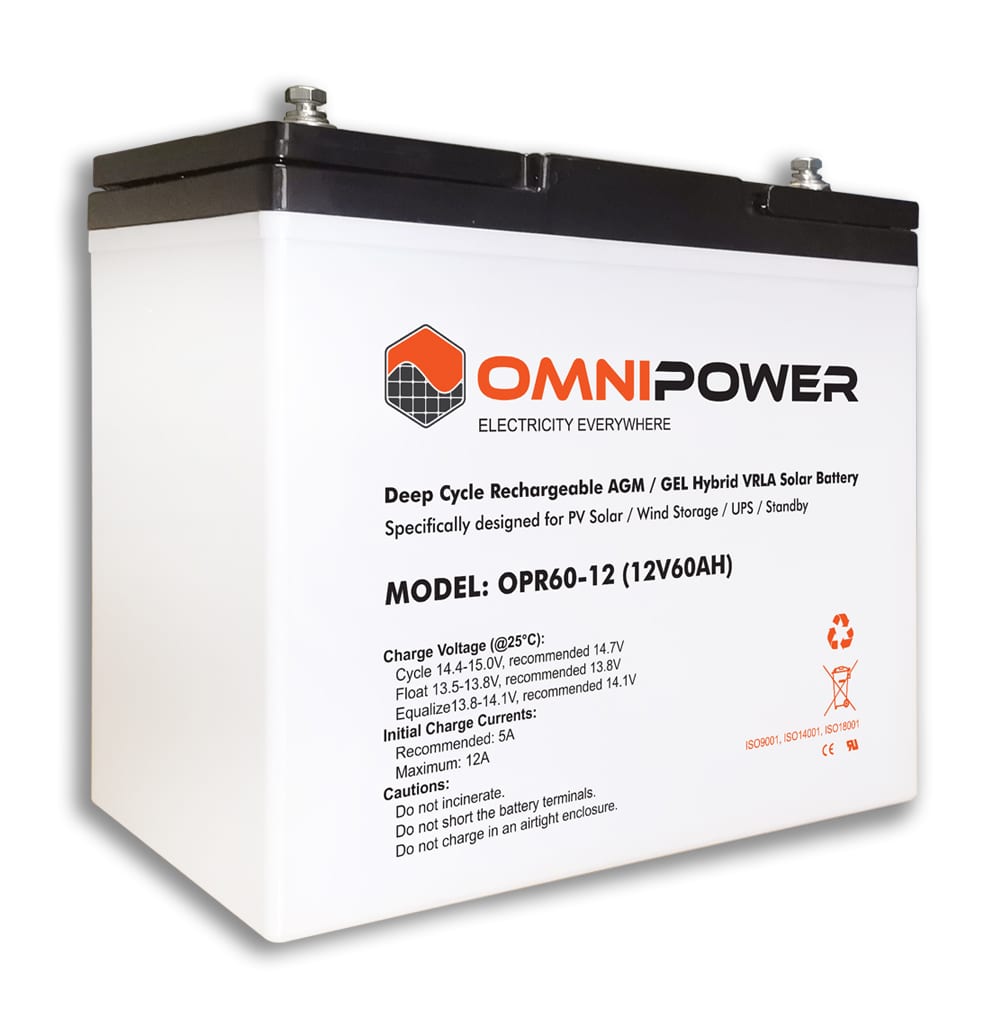
Then something like this would work and is not 3 times the price of a car battery.
 
Oh so you CAN but you shouldn't...lol... that's why people get caught out almost every single time.

Edit: I recall seeing some “deep cycle” batteries with labels saying DO NOT DISCHARGE BELOW 50% OR WARRANTY IS VOID ...
It is industry standard and is the best case for a lead acid battery. You do not want to go over 50% DoD otherwise the drop in cycles is exponential. In other words given 1000 cycles as a simple figure at 50% DoD, does not mean you will get 700 cycles at 80% DoD.

The result will be significantly less cycles. This battery technology is simply not intended for that.

Yes, it does not mean you cannot forget about your battery once in a blue moon and later realise it needs a charge. It is just not recommended and for warranty purposes fully understandable.
 
It is industry standard and is the best case for a lead acid battery. You do not want to go over 50% DoD otherwise the drop in cycles is exponential. In other words given 1000 cycles as a simple figure at 50% DoD, does not mean you will get 700 cycles at 80% DoD.

The result will be significantly less cycles. This battery technology is simply not intended for that.

Yes, it does not mean you cannot forget about your battery once in a blue moon and later realise it needs a charge. It is just not recommended and for warranty purposes fully understandable.
I have been using Lead Acid for a very very long time, and in fact even promote it at times.

I don't need any education on this subject, I was just merely saying it is not a "deep cycle"" battery tech as many of you label it.

You get guys who know 0 on the subject, and then tell them half the story, you think it will be a happy ending for them ? heck no !
 
Top
Sign up to the MyBroadband newsletter
X