Loadshedding affordable battery setup?

Francisco2580

New Member
Joined
Feb 20, 2023
Messages
5
Reaction score
0
Good afternoon.
With the current state of affairs relating to loadshedding, I have lost all patience with just powering through loadshedding. I want to acquire an affordable battery and inverter combo. I have checked takealot for ease of use and found the following:
Inverter: JRY Power Inverter 500w - R690.00
Battery: BT 120AH 12v Deep Cycle Acid Battery @2 - R5'998

The inverter is listed as providing >90% effiency (i still bargain at 80% to be safe), as well as being able to charge the battery. The inverter provides a car port charging cable. My thought is to just convert it to a house plug socket.

My power usage that I want to make provisions for is for 150w/200w usage. A sloadshedding is at stage 6 intervals of 4 hours, i want to be able to either watch tv (150w) for the 4 hours, or use my fans (2 @65w) for the 4hours. I calculate this usage as 150w x 4 = 600w / 12 v = 50ah. The batteries provide 2 x 120ah = 240 ah / 50% (not using more than 50%) = 120ah / 80% efficiency = 96ah.

My questions are as follows:
1. Will this be sufficient to use for my setup, or are there other component needed or factors to consider?
2. Will it be possible to convert the cable to a house socket adapter, or are there complication with that?
3. Is my calculation accurate regarding the power requirements?
4. Will the inverter be able to fully recharge the batteries in between the 4 hour invervals of no loadshedding, or do I need an additional battery chargers? If so what charger would be recommended?
 

Attachments

  • cb1e1da5-783d-4903-8d8d-e4a3f274837e.jpg
    cb1e1da5-783d-4903-8d8d-e4a3f274837e.jpg
    124.8 KB · Views: 115
Even dropping those batteries to 50% capacity will only give you 100 to 300 cycles
Then throw batteries away and start again

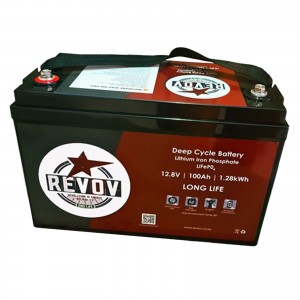
Rather go lithium
You can go down to 0% and have +/-2000 life cycles
 
Good afternoon.
With the current state of affairs relating to loadshedding, I have lost all patience with just powering through loadshedding. I want to acquire an affordable battery and inverter combo. I have checked takealot for ease of use and found the following:
Inverter: JRY Power Inverter 500w - R690.00
Battery: BT 120AH 12v Deep Cycle Acid Battery @2 - R5'998

The inverter is listed as providing >90% effiency (i still bargain at 80% to be safe), as well as being able to charge the battery. The inverter provides a car port charging cable. My thought is to just convert it to a house plug socket.

My power usage that I want to make provisions for is for 150w/200w usage. A sloadshedding is at stage 6 intervals of 4 hours, i want to be able to either watch tv (150w) for the 4 hours, or use my fans (2 @65w) for the 4hours. I calculate this usage as 150w x 4 = 600w / 12 v = 50ah. The batteries provide 2 x 120ah = 240 ah / 50% (not using more than 50%) = 120ah / 80% efficiency = 96ah.

My questions are as follows:
1. Will this be sufficient to use for my setup, or are there other component needed or factors to consider?
2. Will it be possible to convert the cable to a house socket adapter, or are there complication with that?
3. Is my calculation accurate regarding the power requirements?
4. Will the inverter be able to fully recharge the batteries in between the 4 hour invervals of no loadshedding, or do I need an additional battery chargers? If so what charger would be recommended?
You are probably better off doing the below instead, and is also far safer than plonking a 3 point plug on this inverter which accepts 12v input and not 240v....

Is way better for similar price
 
Good afternoon.
With the current state of affairs relating to loadshedding, I have lost all patience with just powering through loadshedding. I want to acquire an affordable battery and inverter combo. I have checked takealot for ease of use and found the following:
Inverter: JRY Power Inverter 500w - R690.00
Battery: BT 120AH 12v Deep Cycle Acid Battery @2 - R5'998

The inverter is listed as providing >90% effiency (i still bargain at 80% to be safe), as well as being able to charge the battery. The inverter provides a car port charging cable. My thought is to just convert it to a house plug socket.

My power usage that I want to make provisions for is for 150w/200w usage. A sloadshedding is at stage 6 intervals of 4 hours, i want to be able to either watch tv (150w) for the 4 hours, or use my fans (2 @65w) for the 4hours. I calculate this usage as 150w x 4 = 600w / 12 v = 50ah. The batteries provide 2 x 120ah = 240 ah / 50% (not using more than 50%) = 120ah / 80% efficiency = 96ah.

My questions are as follows:
1. Will this be sufficient to use for my setup, or are there other component needed or factors to consider?
2. Will it be possible to convert the cable to a house socket adapter, or are there complication with that?
3. Is my calculation accurate regarding the power requirements?
4. Will the inverter be able to fully recharge the batteries in between the 4 hour invervals of no loadshedding, or do I need an additional battery chargers? If so what charger would be recommended?
I Think you are mistaken about the inverter, that car plug is so that you can plug your inverter into a car socket, so effectively the car becomes the battery supplying 12v that the inverter turns into 220 AC. Also the inverter does not have a charger, you would need to buy one separately.

I had the same inverter and it came with two sets of cables, the one set has the "car plug" so you can use it in your car, the other set has clamps so you can clamp it on a battery. It's easy t switch between the two.
 
Also square-wave inverters tend to make Fans go wibbly wabbly and get hot(overheated) so rather go USB-Fans if cheap (square-sine) inverters are the only way
 
Also square-wave inverters tend to make Fans go wibbly wabbly and get hot(overheated) so rather go USB-Fans if cheap (square-sine) inverters are the only way
they also make gu10 downlights go flishy flashy ,for a while .then no more gu10
 
I Think you are mistaken about the inverter, that car plug is so that you can plug your inverter into a car socket, so effectively the car becomes the battery supplying 12v that the inverter turns into 220 AC. Also the inverter does not have a charger, you would need to buy on
You are probably better off doing the below instead, and is also far safer than plonking a 3 point plug on this inverter which accepts 12v input and not 240v....

e separately.

I had the same inverter and it came with two sets of cables, the one set has the "car plug" so you can use it in your car, the other set has clamps so you can clamp it on a battery. It's easy t switch between the two.
Thank you for the help, do you have a suggestion for a setup that would last 4.5 hours to accommodate stage 6 loadshedding @150w power draw?
 
Good afternoon.
With the current state of affairs relating to loadshedding, I have lost all patience with just powering through loadshedding. I want to acquire an affordable battery and inverter combo. I have checked takealot for ease of use and found the following:
Inverter: JRY Power Inverter 500w - R690.00
Battery: BT 120AH 12v Deep Cycle Acid Battery @2 - R5'998

The inverter is listed as providing >90% effiency (i still bargain at 80% to be safe), as well as being able to charge the battery. The inverter provides a car port charging cable. My thought is to just convert it to a house plug socket.

My power usage that I want to make provisions for is for 150w/200w usage. A sloadshedding is at stage 6 intervals of 4 hours, i want to be able to either watch tv (150w) for the 4 hours, or use my fans (2 @65w) for the 4hours. I calculate this usage as 150w x 4 = 600w / 12 v = 50ah. The batteries provide 2 x 120ah = 240 ah / 50% (not using more than 50%) = 120ah / 80% efficiency = 96ah.

My questions are as follows:
1. Will this be sufficient to use for my setup, or are there other component needed or factors to consider?
2. Will it be possible to convert the cable to a house socket adapter, or are there complication with that?
3. Is my calculation accurate regarding the power requirements?
4. Will the inverter be able to fully recharge the batteries in between the 4 hour invervals of no loadshedding, or do I need an additional battery chargers? If so what charger would be recommended?
that 500 watt unit will give you around 200w continuous with a draw of around 3 to 5 amp off the battery .
 
Thank you for the help, do you have a suggestion for a setup that would last 4.5 hours to accommodate stage 6 loadshedding @150w power draw?
a 500 watt pure sine wave inverter at 24v will work .you should get 250 w out of it , maybe
 
What's your budget?
This, I remember when I asked what can I get for R3000. Answer: nothing worthwile.

If it was just me:
Micro Ups for Router
Laptop which have a 8 hour lifespan
Some rechargeable lights.

Methinks his budget is way to low and he is hoping someone will suggest something that matches his low budget.
 
Can you please explain this, I do not understand?
on real life testing its rating is not what you get out continuous ,its usually a peak for a few milliseconds then it settles back to the max load which is usually around 50 % less than rated.and a 2000watt portable unit can suck 9 amps just idling away on 12v
 
Last edited:
R7000 by the looks of it
Around R9000, but yes not a very high budget, I dont want to power a lot of utilities, so if i cant get anything worthwhile for my budget, then i'll rather just stick to laptop and peaceful sleep for the flying politicians in the evenings.
 
on real life testing its rating is not what you get out continuous ,its usually a peak for a few milliseconds then it settles back to the max load which is usually around 50 % less than rated.and a 2000watt portable unit can suck 9 amps just idling away on 12v
They usually stipulate the peak an continuous current.
 
Around R9000, but yes not a very high budget, I dont want to power a lot of utilities, so if i cant get anything worthwhile for my budget, then i'll rather just stick to laptop and peaceful sleep for the flying politicians in the evenings.
Okay cool budget then
Future proof it by ensuring the inverter is Pure Sine Wave (like what ESKOM is) and not the cheaper Modified Sine Wave
Reason is worst-case scenario you can hook up your fridge during the day with a small solar panel later. The AC compressors on fridges do not generally like a modified sine wave power source.

Fridges use anywhere from 100 - 200 watts depending on their size
My small standup 2-door uses 110 Watts
But a fridge needs tons of juice to start up each time the compressor kicks in
This can be up to 1000 Watts for 2 or 3 seconds
So make sure you get a 1000 Watt Pure Sine Wave inverter
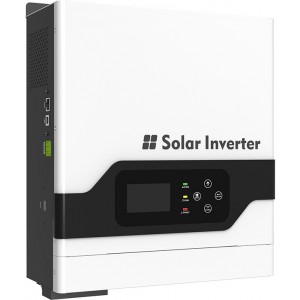
Something like this is a good start
You can add additional batteries later, and this one already has the solar charge controller built in so add panels later if you want to. Up to 700 Watts

and battery


But if the budget is tight or you know you're not going to plug the fridge in then get the Mecer 720W as many many of us started on here. I still use mine
 
Top
Sign up to the MyBroadband newsletter
X