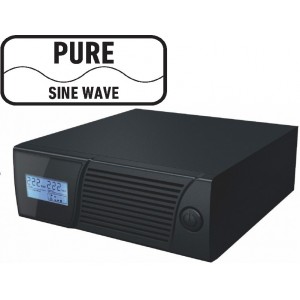
Loadshedding affordable battery setup?

One of the cells is faulty. Nothing to do with balancing. Now sit down.
Sorry in this regard you should sit down anybody saying you don't have to care for balancing in a series string is seriously misinformed
 
Sorry in this regard you should sit down anybody saying you don't have to care for balancing in a series string is seriously misinformed
And this is the same guy flogging the balancer

Decide which it is ****
it matters or it doesn't
 
quarantine-crazy-mirror.gif
 
Oh cool they sell em lose as well:


Def gonna pick one up on payday, and sell my 800W

Just for my information, isn't that inverter very inefficient if one looks at VA and W values?
Sorry for that noob question?
 
Just for my information, isn't that inverter very inefficient if one looks at VA and W values?
Sorry for that noob question?
Yes, you are correct.

Maybe better to get something like this:
1677161355673.png
 
Yes, you are correct.

Maybe better to get something like this:
View attachment 1481411

I actually just asked to confirm the correctness of my thinking. I really do not need another inverter at the moment as I have the trolley with the Mercer 3000VA/3000W inverter.
 
Last edited:
Just for my information, isn't that inverter very inefficient if one looks at VA and W values?
Sorry for that noob question?

Thanx for the heads up, did not even look at it properly yet.

Lucky this month I was planning on getting an extra 9KG gas bottle so wasn't even bothered on what to do with my fridge. I do know I need to size it 1st with a Kill-a-watt, before I spend anything.

I just know its something on my Todo list :D

Rest of my house is covered but sadly with a MSW. <--- fridge no like MSW.
 
What does it mean if you have a 1000VA inverter that outputs 600W? In what way is it inefficient? Does it waste power somehow?

This was brought to my attention today as well:

Apparently this is a way better option:

 
This was brought to my attention today as well:

Apparently this is a way better option:

No I am trying to understand the practical implications of having a 1000VA inverter that outputs 600W. I don't know what are the drawbacks of this? Can someone explain please?
 
What does it mean if you have a 1000VA inverter that outputs 600W? In what way is it inefficient? Does it waste power somehow?
It's like taking 1000W out the battery to make 600W is the way I understand it. I think they call it "power factor".

So, whatever your Wh reading you measured when you're doing your calculations, divide it by the power factor (W/VA) 0.6.

Example, I measured 300Wh with my killawatt, take 300 / 0.6 = 500Wh battery needed.
 
It's like taking 1000W out the battery to make 600W is the way I understand it. I think they call it "power factor".

So, whatever your Wh reading you measured when you're doing your calculations, divide it by the power factor (W/VA) 0.6.

Example, I measured 300Wh with my killawatt, take 300 / 0.6 = 500Wh battery needed.
Thank you. So it basically efficiency.

Chatgpt spit this out:

Power factor is calculated as the ratio of real power to apparent power. Real power is the power that is actually being used to perform useful work, while apparent power is the total power supplied to the system, which includes both real power and reactive power.
The formula for power factor is:
Power Factor = Real Power / Apparent Power
Real power is measured in watts (W) and can be measured using a wattmeter. Apparent power is measured in volt-amperes (VA) and can be measured using a voltmeter and an ammeter.
To calculate power factor, you will need to measure both real power and apparent power using the appropriate instruments. Then, simply divide the real power by the apparent power to obtain the power factor.
For example, if the real power is 1000 watts and the apparent power is 1200 volt-amperes, the power factor would be:
Power Factor = 1000 W / 1200 VA = 0.83
This means that the system has a power factor of 0.83, indicating that a portion of the energy supplied is being lost due to reactive power. A higher power factor, closer to 1, would indicate that the system is using energy more efficiently.
 
@wingnut771 I am still a bit confused about the implications of this.

Does this mean that if you draw 600w for 1 hour it would have used 1000W from the battery?

Can we take the power factor and multiply it with the Wh of the battery to get to the capacity that you can get from it?

So when looking at their trolley with this inverter: https://www.geewiz.co.za/long-run-u...life-kit-600w-with-lithium-battery-640wh.html

and you take the power factor of .6 x 640Wh = 384Wh. (not sure if it works this way)

Why does Geewiz then claim that you can get 3 hours of use with a 150W load? (450Wh)
 
Top
Sign up to the MyBroadband newsletter
X