Microsoft Windows 8 Release Preview

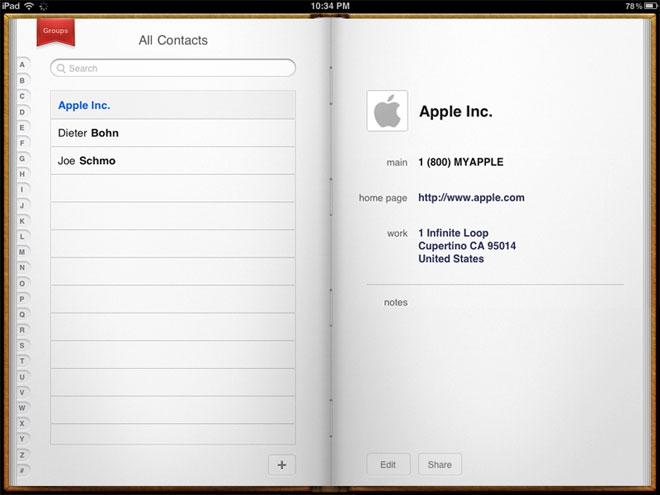
I totally disagree about the text-emphasis of Metro being ugly. Personally it's about time design moved away from ridiculous skeuomorphic textures and towards elegance and typography as the driving principles of mobile UI. Apple still uses Helvetica and leather-grain for goodness sake, while Android is riding the garish-neon-coloured-icon horse into the sunset (although Roboto is an admirable piece of work).

Oh well, beauty are in the I of the beholder they say.

I'll be staying as far away from Metro as I can for as long as I can.
 
Oh well, beauty are in the I of the beholder they say.

I'll be staying as far away from Metro as I can for as long as I can.


windows-phone-7-series.jpg

vs
ios-3-2contacts.jpg

or
Android-Ice-Cream-Sandwich_2.jpg


I prefer the Metro look out of those choices personally. But it is personal.
 
Personally I hope it falls flat, to force MS to rethink from the ground up, rather than bolting their crappy cellphone-OS onto Win32 to get into "apps" and "stores" chop-chop. I can't help thinking how well Apple transitioned from 68000 to PPC ( fat binaries and all LOL ) to Intel, from OS8/9 to OS X, with plenty backwards-compatibility at every step. Took time and care though - MS seem to miss out on that.
What you're not seeing is that RT is actually "rethinking from the ground up". It's mostly under the covers, in the "engine" under the hood. WinRT is not Metro. Architecturally and technically, Win32 is the problem, and there's no possible technical way of getting away from that - it comes from obsolete PC architectures in the 80s, and it's still here 30 years later for one reason only: app compatibility. Win32 lies at the root of all the snarky "Windows is crap" comments that are universal today ... instability, security vulnerabilities, etc, etc. Microsoft saw all this decades ago and has wanted to get way from Win32 since the late 80s (it was the whole reason for OS/2), but we users kept it alive because our first requirement was compatibility - just like you are doing today. What's different now to then is the hardware is much more capable, to hide the underlying complexities and problems, and so this time the transition is much easier for users and developers.

This is about the only and last opportunity there is bring in the new ... businesses are stabilising on Win7 and so won't do Win8 in quantity no matter what MS does, mobile/tablet is burgeoning, and new hardware and comms capabilities are enabling amazing things across the board. Let Win8 handle the transition in the consumer space, learn from the experience and build a really compelling 'business' Win9 in 2015/16 leveraging the apps and experiences from Win8, when corporates are ready to make that shift.

It's now or never. If never, then not just Microsoft but the whole industry will stagnate.

Now the only responsible way to transition from Win32 to RT is to do a mainstream system that can handle both - Win 8 "Pro". In the mobile/tab space, because it's relatively new, MS can gamble on doing RT-only. It's share is so small there's not much to lose from starting clean. WP7 is a placeholder - on mobile/tab platforms the real war starts with Windows RT (ie the tablet OS) and WP8.
 
Last edited:
So what is RT doing to solve the problem of Win32?

Reset the API's and phase out the dated x86 umbilical cord.

2 things that I am a bit weary about is:
The fact that Microsoft will be moving closer to an iOS like eco system where software will only come from a Microsoft run Application store. and
There will be a push for certified software/hardware.
 
Is it possible to use pinch to zoom and swipe through the tiles on a laptops touch pad?
 
What you're not seeing is that RT is actually "rethinking from the ground up". It's mostly under the covers, in the "engine" under the hood. WinRT is not Metro.

Well then, that is what they should be selling and informing us of. If they said "listen folks, we need to build a new foundation, this is how we are thinking about it, cut us a bit of slack" instead of "Ooooh! look at this amazing fast-and-furious Metro, too beautiful for words, you're gonna love it", one might be more amenable to giving Win8 a chance. As it is, all they feed us is bs.

I would also say they want to get into the whole "store" bit as soon as they can: I would prefer them to go make Win9, and make it proper, before coming to market. And, stuff proprietary "stores" from MS.

All I can see of Metro apps is trivial kiddie-level programs, ones that the OS can just shut down at will if it needs resources, nogal. If there is something good under that hood, they'd better pop it open, as it sure does not look like anything "engineered from the ground up" - it looks like a complete kludge to try to get to market ASAP.
 
Does anyone have any advice for me?

For some reason when I attempt to install the Release Preview, it loads and reboots my PC with a quick message to say Something went wrong on my system and it is restarting, then it restarts, repeat.

Googling shows a common error with VM's, but nothing else I could find.

I'm redownloading the ISO now, I'm using the 64 Bit version and my system is a Core 2 Duo with 2GB Ram.

Any tips would be appreciated :)
 
So what is RT doing to solve the problem of Win32?

Short answer: WinRT replaces Win32. Totally, wholly and completely. It cannot happen overnight in one release, for many obvious and not-so-obvious reasons.
Medium answer: WinRT cannot be compatible with Win32, for insurmountable but very complex reasons ultimately rooted in CPU architectures outside of MS control. To bring out a new but totally incompatible version of Windows would not only be daft, it would be suicide - and not just for Microsoft but for millions of users, developers, companies, and industry professionals. So the transition has to be careful, meticulous and gradual, without losing everyone along the way. So, in the transition from Win32 to WinRT, Windows has to do both, or it will die - and that unavoidably makes it a 'dual' system, because Win32 and WinRT cannot possibly call the same GUI. The only question is: will the transitional 'dual' system have one or two windowing GUIs - one for Win32 and one for WinRT? The two can never meet in one, and to know why you need to grasp arcane technical details about historical and current CPU and memory architectures. So, the introductory interim transitional choice is to keep Desktop/Win32 and expose WinRT initially only in a "full-screen Start screen replacement" - it's easier to explain than to justify two separate windowing GUIs were a windowing WinRT GUI to also ship (Help Desk would be tied up with "why can't I run my new (WinRT) program on the same screen as my (old Win32) desktop, huh Microsoft???!!" - the explanation is just too complex and so ends up sounding like bulldust. Of course it isn't, as system people know, but how do you explain it to 1.3 billion users?

Cerebus, the whole discussion is not helped by Microsoft's equivocal use of "RT".

Excuse another long post, but there's just so much one has to explain by way of background ... it's hard to know where to begin. In the final analysis there is no way of understanding why Windows 8 is like it is without understanding the whole history of why we are where we are. So apols if I say too much - it's hard to know what people already know.

First it needs to be said that Microsoft's strategy for many years has been to position the name "Windows" as a franchise in its own right and not tied to any particular technology. Look under the covers and Windows 3.x, Windows 95/98/ME, Windows NT/2000/XP, Windows CE/Mobile, etc are very different. The particular GUI visual design and even the interaction elements are pretty superficial and easily changed ... it'll take a junior programmer only an afternoon to make anything look like a particular Windows. The "engines" are very different under the hood even though they're all called "Windows".

At its highest level (the visual bits), the GUI is just the "dashboard" and "steering wheel" that the operator uses to interact with the system, and changing the appearance and interaction method it only a design challenge not a technical one.

Basically, the word "RT" refers to two totally distinct things: WinRT and Windows RT. They are not the same, though related in certain ways.

a) WinRT is the new API set and framework for "future" applications on Windows. All Windows, on every platform, from server through desktop to mobile. This is the bit that's strategically significant. It is architecturally elegant, modularised and layered in a way that can serve not just current but also future and yet-undeveloped hardware architectures, comms systems, file systems, structured and unstructured data, etc, etc. And because it's not tied to specific hardware architectures, and carries none of the baggage of the past, it can be implemented across systems. This is what supersedes Win32.

b) Windows RT is also the marketing name for the first version of Windows on ARM, using a Metro full-screen GUI specifically designed for tablet/mobile because those platforms are suited to fullscreen "immersive" apps.

Important points:

1) WinRT is utterly GUI agnostic. It so happens that the initial way it's exposed is in full-screen Metro, but that's just a marketing decision, mainly to take advantage of the tablet/mobile opportunity to get the framework to developers and apps kickstarted.

2) As I said before, Win32 is hangover from antique hardware architectures and is instantiated in successive Window releases for one reason only: app compatibility. It cannot be dispensed with overnight. This necessarily means our mainstream desktop/office/productivity systems must support both Wi32 for legacy, and also WinRT is WinRT is to ever get to enable the new capabilities required in the future (where Win32 cannot go).

3) Because of the elegance and flexibility of the new WinRT API set, it can support any GUI type, even 3D holographic GUIs (in the lab already). But part of the problem with Win32 is the way it's tied to the current Desktop. To make WinRT call the same Desktop as current Win32 apps do (ie all our Windows apps today) would cripple or hobble WinRT from the get-go, and bring forward many of the problems of Win32 and defeat thus defeat the whole point and purpose of the new architecture.

4) Because any new version of Windows today must also run Win32 apps (anything else would be unthinkable and certain suicide for Microsoft), there is only once possible choice: the new Windows must support both Win32 in its own environment (the Desktop metaphor/GUI as we know it till now), and also WinRT apps. There is no way on earth to make a common UI for both - this limitation lies in Win32, old processor architectures, and basic CPU physics. Whichever way you look at it, the new release of Windows has to have two utterly discrete and separate 'desktops/GUIs/interfaces' - that is a given unalterable fact. The next choice is: so what do these two 'desktops' look like, and how does the user interact with two separate 'worlds', for separate they must unavoidably be? In this first release of WinRT, Microsoft decided to not expose the windowing/3D/holographic GUI calls but to make it full-screen, because its first large-scale use would be on tablet and mobiles, so you can bring WinRT to market quickly, educate developers in WinRT dev, and drive app development initially for tablet and mobile. But even though the first version's target platform is tablets and mobiles (which are by nature fullscreen for obvious reasons), the REAL and MUCH MORE STRATEGIC OBJECTIVE is to inject WinRT APIs into the ecosystem, and then leverage it backwards onto real power desktops and servers. When/if it goes mainstream on those platforms, and legacy Win32 apps are no longer so important, then you can make the WinRT GUI anything you want it to be, including multi-windowing, multi-monitor, 3D, holographic, whatever.

All of this is too complex to explain to the market in any coherent way. There's just too much scope for confusion.

Does this give you an inkling?
 
Last edited:
Well then, that is what they should be selling and informing us of. If they said "listen folks, we need to build a new foundation, this is how we are thinking about it, cut us a bit of slack" instead of "Ooooh! look at this amazing fast-and-furious Metro, too beautiful for words, you're gonna love it", one might be more amenable to giving Win8 a chance. As it is, all they feed us is bs.

I would also say they want to get into the whole "store" bit as soon as they can: I would prefer them to go make Win9, and make it proper, before coming to market. And, stuff proprietary "stores" from MS.

All I can see of Metro apps is trivial kiddie-level programs, ones that the OS can just shut down at will if it needs resources, nogal. If there is something good under that hood, they'd better pop it open, as it sure does not look like anything "engineered from the ground up" - it looks like a complete kludge to try to get to market ASAP.
In a way you're right. The only way WinRT (or anything else in a system) is visually exposed to the user is on the display. But for reasons explained elsewhere, the reason why we have a full-screen "kiddie-level" touch Metro interface is because Microsoft knows the quickest way of getting WinRT out there and into dev shops is to target tablet/mobile developers, and the GUI on those platform is kiddie-level full-screen. Though Metro is now 1.0, a lot of attention has been paid to design, fonts, the user experience, and human factors on those platforms. That's just an implementation choice, not the architecture or even the intended goal. But WinRT is a very much larger beast than Metro 1.0 and full-screen apps. It's the future of development and applications on servers, desktops, tablets, mobiles and whatever else emerges in the future.

As I said before, do not confuse Metro 1.0 with WinRT or even Windows RT. They are related in certain ways, of course. But WinRT makes things possible in the future that are not possible with Win32 or indeed many of today's APIs on even other systems and platforms.
 
Well then, that is what they should be selling and informing us of. If they said "listen folks, we need to build a new foundation, this is how we are thinking about it, cut us a bit of slack".
I didn't address your very valid question.

Because 99% of the market doesn't care a lost interrupt for "new foundations" and isn't interested in cutting Microsoft or anyone else any slack (unless you're Apple, because you have a fanboi Press to help you ;) ).

Because that would cue your competitors (and maybe even governments) to do everything they can to sabotage the "new foundation" so as to avoid another three decades of Microsoft being the 900lb gorilla.

Lastly, users aren't really interested. They just want things that work.

By the way, Microsoft has been here before. It's staked the whole company on a new direction that was fundamentally incompatible with the previous generation. It lost. Which is why we still have Win32 today. It's a millstone that simply cannot hang around forever, for the longer it does the more it makes future decline and failure inevitable. Very hard and painful lessons were learned back then. The future of Microsoft very much depends on getting WinRT out there, because Win32 can't deliver what users and Microsoft will expect in 2020 and 2030. WinRT can. Which is another reason why they're doing hardware that competes with IHVs: to get WinRT out there in a (reasonably) compelling way, and tablets/mobile are an excellent first target because they're unencumbered by the need for Win32/legacy apps ... a software company can't trust its entire future to others who are only interested in shifting boxes, so sometimes it means doing some hardware to set the tone and bar. This is such a time. I am probably saying too much.
 
Last edited:
a lot of attention has been paid to design, fonts, the user experience

In my view they have cocked that up bigtime. The design is hideous, and this typography trip is a bummer of note.


They are related in certain ways, of course. But WinRT makes things possible in the future that are not possible with Win32 or indeed many of today's APIs on even other systems and platforms.

I'll be the first to admit the MS Win APIs are a shambles. There are just hordes of them, hordes of frameworks, runtimes, dlls, in addition to the basic stuff, and more appear all the time it seems. Some are as touchy as hell too, and difficult to implement in a stable way. So perhaps doing something like Apple's Carbon ( only now being phased out for compulsory Cocoa ) would be too much for MS to chew. But I am certainly not dumping programs I have grown to use over many years, nor do I want to redevelop my own programs that I have spent many moons writing. Stuff that. So they had better come up with some kind of compatibility within the new OS ( not this Win8 crap attempt though ), or they should rename their shiny new OS to something other than "Windows" - "Doors" maybe, or "Exits".

That said, I curse MS software daily for being stupid and lazily-written, and I am not sure I trust them to get this new OS right. Very sad, since I depend on them.

Way back in the 80s MS were my heroes - they broke the total dominance of IBM. But they have become like IBM were then - uber-arrogant and in many ways stupid. What we really need is something to break their own dominance, some really workable desktop alternative that is not proprietary ( and Linux is still not cutting it ).
 
This thread has become a lecture. I was following it but can't stand it anymore.
 
Because 99% of the market doesn't care a lost interrupt for "new foundations" and isn't interested in cutting Microsoft or anyone else any slack (unless you're Apple, because you have a fanboi Press to help you ;) ).

Lastly, users aren't really interested. They just want things that work.

That is because of the way they treat their users - with some hostility and a lot of greed. They do not have the goodwill of most of their users - high pricing, licensing maximally complicated, funding the BSA, DRM, phoning home to validate everything, Genuine Advantage crap. Fork dit, as they say in Benoni. They don't listen, and a lot of their software is shabby.

I remember the transition to OS X. Apple were quite open admitting that much more had to be done, that that first release was a bit flaky. But one knew what they were trying to achieve, what they were aiming for, and so one cut some slack.

Not all users are sheep. They should add proper explanations for those who are interested, not make them have to pick up the info on an obscure SA forum from an ex-MS employee. They don't have to provide only the rah-rah ain't Metro lovely marketing bs - they can add a tincture of the real story, or face losing more goodwill.

Because that would cue your competitors (and maybe even governments) to do everything they can to sabotage the "new foundation" so as to avoid another three decades of Microsoft being the 900lb gorilla.

Sounds partly like FUD. There are alternatives? Where? ( Apart from Apple ).

By the way, Microsoft has been here before. It's staked the whole company on a new direction that was fundamentally incompatible with the previous generation. It lost. Which is why we still have Win32 today.

Of that I am aware.

Deja vu?
 
As I said before, do not confuse Metro 1.0 with WinRT or even Windows RT. They are related in certain ways, of course. But WinRT makes things possible in the future that are not possible with Win32 or indeed many of today's APIs on even other systems and platforms.

Great. Give me this RT stuff, not the Metro garbage then.
 
This thread has become a lecture. I was following it but can't stand it anymore.

haha I'm enjoying it. Keep it up :D.

@tera does it boot in safe mode? (assuming safemode still exists)
 
Last edited:
I just want the Start menu as well. Then I'll accept Metro. Simple really.
 
Top
Sign up to the MyBroadband newsletter
X