Polo 1.2 TDI Bluemotion

So all in all there's about a R15,000 difference between a Polo 1.4 & a Polo 1.2BlueMotion, that's a lot of diesel to justify the cost.
Not really. The difference in price is ~R7000. Assuming an average of R1500 on petrol per month for petrol cars, and R750 on diesel for diesel cars - after 10 months the owner of the petrol car would have spent R15 000 and the owner of the diesel car R7500. The difference of R7500 means that the diesel owner would have made up the difference in 10 months, and start saving from that point forward.
 
Not really. The difference in price is ~R7000. Assuming an average of R1500 on petrol per month for petrol cars, and R750 on diesel for diesel cars - after 10 months the owner of the petrol car would have spent R15 000 and the owner of the diesel car R7500. The difference of R7500 means that the diesel owner would have made up the difference in 10 months, and start saving from that point forward.

and the R7500 difference ( in this example) could be used for the more expensive services. Although, I honestly don't see why people say diesel services are more expensive, but then again I service all my cars myself so I only pay for parts. The only real difference is that I use higher quality oil on the diesels which cost about 2x the oil I use on the petrol engines. But, since I don't buy spark plugs every time I service the diesel engine, it doesn't matter to pay more for the oil
 
So all in all there's about a R15,000 difference between a Polo 1.4 & a Polo 1.2BlueMotion, that's a lot of diesel to justify the cost.

Also what are the service intervals on the BlueMotion? The tech specs on the site do not mention them.

Maintenance
15,000km service intervals - it's just hidden under 'Optional features' for some reason. :wtf:

The difference in cost is a lot less than that - the BlueMotion is at Comfortline spec level, with the further addition of ESP (cannot overstate how big an advantage this is) and cruise control... I suspect you're looking at the 1.4 Trendline's price?
 
Sure, you need to replace the oil more often, generally on 7500KM, but some TD cars now can handle 15000KM as well. I can tell you many "horror stories" of petrol engines as well :)

BUT, I've never actually seen a diesel engine seize-up 2KM after the 7500KM service interval. In fact, I often drive my 2.8TD Colt a bit further than the 7500KM interval, simply cause it doesn't have a new electronic dash like my merc that reminds me when to service it.


A well kept Diesel engine will outlast a petrol engine by miles (or KM's if you want) any day. An petrol engines which don't get taken care off also spell disaster in their own way.

Why do you think big trucks use diesel engines and not petrol? That transport company relies on their trucks to run without breakdowns far more than you do.

Absolutely nothing wrong with diesel cars. I for one love them. Just sold my Golf TDi and really loved that car. But it was starting to shows signs, dollar signs :p

I am no mechanic, but after getting some opinions it seemed my injectors were going which would have been a pricey exercise. A mate of mines Fortuna just had its injectors replaced, a whopping R30 000 later and he only had 100 000 KM on the clock.

That been said, I do agree, diesel engines on a whole can easily outlast a petrol. In fact if maintained well they will definitely outlast a petrol. The only issue with a TDi which I never really took into consideration was that its all fair and well it going for thousands of KM's, but wear and tear items like the turbo and injectors can make it a very expensive exercise in the long run. So unless you can fix it yourself and import your own turbo / injectors, you are in for some heavy expenses.
 
, but wear and tear items like the turbo and injectors can make it a very expensive exercise in the long run. So unless you can fix it yourself and import your own turbo / injectors, you are in for some heavy expenses.

You're going to have this problem on Petrol Turbo's as well. They generally need to be replaced on 100,000KM, depending on your drive style. And, generally, guys who drive Petrol Turbo's drive them for the speed and power so the Turbo's often don't last much longer than 80,000KM to 100,000KM. Then you still have the electronic computer which manages everything, and can cost a small fortune on most cars to replace if it breaks.

As matter of interest, I replaced the diesel injector pump, serviced the injectors and turbo, and dyno-tuned the engine (standard practice) for about R14K last year on my 2.8TD Colt bakkie. I still get about 10L/100KM out of it though which is not bad for a double cab, and my driving habits are on the faster end of the scale. I simply can't drive 60, or even 80 in town ;)
 
You're going to have this problem on Petrol Turbo's as well.

However we're not comparing turbo charged petrol engines to turbo charged diesel engines.

A N/A petrol engine is going to be a lot cheaper to maintain than a turbo diesel over the longer term.
No high pressure injectors and no turbo.
 
However we're not comparing turbo charged petrol engines to turbo charged diesel engines.

A N/A petrol engine is going to be a lot cheaper to maintain than a turbo diesel over the longer term.
No high pressure injectors and no turbo.
Yes, but Turbo petrol engines are becoming more and more popular as well. Remember, the turbo helps with the lower fuel consumption on a smaller engine so more and more smaller cars are going to get them and more and more people will guy them. Look how many Audi A3's there are on the roads right now, as an example and last time I checked it cost R25K to replace the turbo on the A3
 
Yes, but Turbo petrol engines are becoming more and more popular as well. Remember, the turbo helps with the lower fuel consumption on a smaller engine so more and more smaller cars are going to get them and more and more people will guy them. Look how many Audi A3's there are on the roads right now, as an example and last time I checked it cost R25K to replace the turbo on the A3

Well if we're going to compare turbo pretol vs turbo diesel then yes, the maintenance will probably be comparable.
However the turbo petrol is going to spank the diesel with regards to performance.
The only advantage the diesel will have is lower fuel consumption.
 
Well if we're going to compare turbo pretol vs turbo diesel then yes, the maintenance will probably be comparable.
However the turbo petrol is going to spank the diesel with regards to performance.
The only advantage the diesel will have is lower fuel consumption.

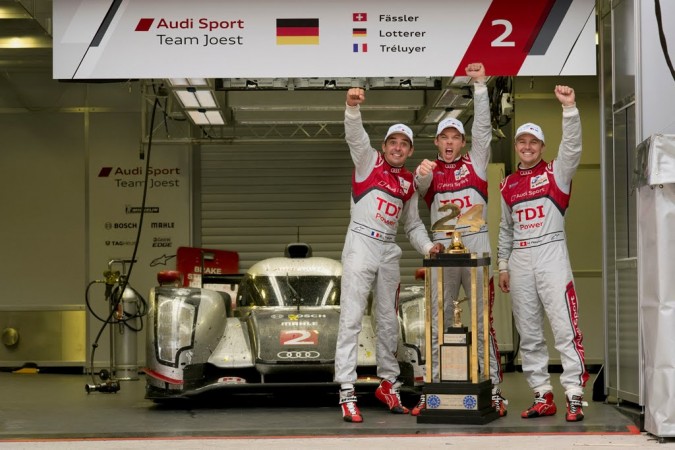
Audi-2011-24-Hours-of-Le-Mans-3-e1307958497945.jpg


That gap is growing ever smaller though. With the old SEAT Ibiza Cupras there was less than half a second difference in their lap times around the Hockenheim short track. 1.9TDI vs 1.8T.

Petrol engines have matured over more than a century of being used in everyday normal cars. It's only recently that diesels have started shaking the stigma of being noisy, smoky, smelly, clunky, slow tractor engines. The pace of development with diesel has just been so much higher than petrol over the last 10 or 20 years.

Personally I just prefer the surge that a modern turbo diesel engine gives you. It's addictive. The only way to match that with a petrol engine is to go big, and 5.7l V8s tend to guzzle. :o
 
Audi-2011-24-Hours-of-Le-Mans-3-e1307958497945.jpg


That gap is growing ever smaller though. With the old SEAT Ibiza Cupras there was less than half a second difference in their lap times around the Hockenheim short track. 1.9TDI vs 1.8T.

Petrol engines have matured over more than a century of being used in everyday normal cars. It's only recently that diesels have started shaking the stigma of being noisy, smoky, smelly, clunky, slow tractor engines. The pace of development with diesel has just been so much higher than petrol over the last 10 or 20 years.

Personally I just prefer the surge that a modern turbo diesel engine gives you. It's addictive. The only way to match that with a petrol engine is to go big, and 5.7l V8s tend to guzzle. :o

I must admit, I don't miss that on my TDi one little bit :p
 
That gap is growing ever smaller though. With the old SEAT Ibiza Cupras there was less than half a second difference in their lap times around the Hockenheim short track. 1.9TDI vs 1.8T.

That's not very impressive considering that the diesel engine has 100cc more capacity and is still slower.

The gap is quite large and not much progress has been made in the last 5 years IMO:
A3 2.0 TDI : 103kW and 320Nm (0-100 8.9 secs)
A3 2.0 TFSI : 147kW and 280Nm (0-100 7.0 secs)
Golf 2.0 TDI : 103kW
Golf GTI 2.0: 155kW

If you want performance go turbo petrol - if you want low fuel consumption use a diesel or turbo diesel.
 
To asnswer the original question - the only way to know whether a car has enough grunt for you is to take it on a long test drive up and down hills and laden with a few mates. Keep in mind that the maintenance costs on a TDI are a lot higher than a petrol engined one unless you have a service plan.
 
What about the i10? At 3.7L/100 or am I wrong?

Eish, that thing is far uglier than the back of a donkey. Hyundai's are good but u might wan drive something with a little more swag as well, why not get the i20 far sexier and the consumption is jus about the same at 4.2l/100 (or is it) and a slightly bigger tank
 
If it's a choice between 1.2TDI and 1.4 petrol, wait... at least until you've driven one. Once you've gone diesel you won't want to go back. ;)

true and VW know their stuff when it comes to this, although it was a bit finicky at first cos their diesel turbo chargers just went dead at every 40000kms but i believe they have changed that. used to to 1200kms with my 1.9tdi and at 77kw it wasnt bad, could go to limpopo at a homely speed come back then go to limpopo again on one tank, aint that something.
 
That's not very impressive considering that the diesel engine has 100cc more capacity and is still slower.

Yes, because 100cc makes the world of difference. Let's try keeping things on *this* side of the ridiculous. :p That's roughly .3% difference in lap time, whilst using considerably less fuel. I'd call that impressive, at least moderately so.

The gap is quite large and not much progress has been made in the last 5 years IMO:
A3 2.0 TDI : 103kW and 320Nm (0-100 8.9 secs)
A3 2.0 TFSI : 147kW and 280Nm (0-100 7.0 secs)
Golf 2.0 TDI : 103kW and 320Nm
Golf GTI 2.0: 155kW and 280Nm

You're looking at the wrong Golf...

volkswagen-golf_gtd_2010-0f.jpg

Golf GTD - 125kW/350Nm

It'd be quite interesting to compare in-gear acceleration figures, which is after all where a diesel gets its grin factor.

If you want performance go turbo petrol - if you want low fuel consumption use a diesel or turbo diesel.
This is where our opinions differ fundamentally. It ultimately depends on one's own priorities but I'd word it something more like "if you want 80 - 90% of the performance of petrol with 60 - 70% of the consumption, or if you enjoy the driving characteristics of an oil-burner, go diesel". There is no question that the higher-end of performance motoring - I'm thinking BMW M3 and up - is the arena of the petrol engine, but for slightly more sedate motoring diesel is making an ever better case for itself.
 
Last edited:
I enjoy driving both types - they both have their pros and cons which have been discussed ad infinitum.

Petrol still rules when it comes to spirited driving IMO, especially around a track. Diesels are horrible around a track, trust me. The rev range is too small, so by the time you accelerate out of a corner it's already time to change down.

However on a straight road, nothing beats that punch in the back you get from a diesel when it comes to overtaking.
 
@OP, the Blue Motion is going to be a better buy if you do a lot of city driving. Didn't look at the specsheet, but I recon the 1.2 Bluemotion feature start stop tech as well? The price diff between 1.2 and 1.4 is justified with lots of tech, and not just spoilers and side skirts.

If you want performance go turbo petrol - if you want low fuel consumption use a diesel or turbo diesel.

For the past +- 10 years Audi and Peugeot didn't think like that when it comes to the Le Mans.
 
For the past +- 10 years Audi and Peugeot didn't think like that when it comes to the Le Mans.
There's a difference between a road car and a purpose-built track car. The track car is likely to rev much higher, as it doesn't have to last for many years.
 
Top
Sign up to the MyBroadband newsletter
X