


Neuk_
Honorary Master
China Mall my charna. 70 bux for the 50m one, I bought for my CCTV system last year
I presume you aren't running PoE or HD?
South Africa’s biggest forum. Discuss, discover, and connect with thousands of members.
China Mall my charna. 70 bux for the 50m one, I bought for my CCTV system last year

I presume you aren't running PoE or HD?
No, el-cheapo AHD one. 4 channel.

I will be honest, I did not consider the specs and brand name, I was more worried with the aesthetics. By taking my time, I was able to keep the cable flat against the bottom lip of the cornice as well as the top of my skirting. The only place it is really visible is in the corner of the room (from the cornice to skirting), but when I paint the room it will not be as noticeable.The Ugreen lan cable actually seems to be worth the price and it's an ok brand.

I was also looking at this cable and the reviews didn't look to good. Is this cable weak and can break easily like some reviews say?
While were talking about Ethernet cables, can they be lengthened?
We have one that's about 2m too short but it runs through the ceiling so would love to add a bit on the end. If it's a mission we'll just pull a new cable through.
order online from scoop , www.scoop.co.za , and as mentioned get full copper and not CCA cable.So I need to run a 30m ethernet cable from the ONT. Any recommendations on a good cable or where I can get the cable for a fairly decent price?
The ones on Takealot have ok reviews but some complaints that the cable quality is not good

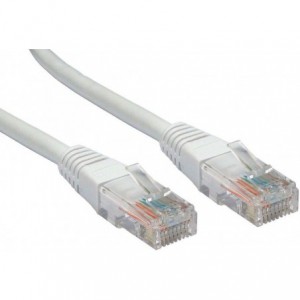
 www.geewiz.co.za
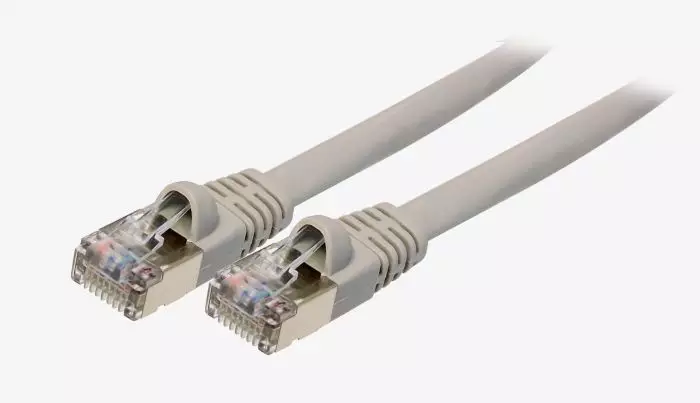
 www.hdcabling.co.za

The R172 will do, but the stp one technically will be betterI am looking to buy about 30+M of Ethernet cable CAT6 to connect my router to my inverter, running it in conduit under the eaves. I will connect to the router and install the cable to the inverter. I am then going to get the guy who installed my solar to make the connection to the inverter, after trimming the cord to length and attaching a RJ45 plug.
The local IT company charges R12/m for CAT6 and will add to RJ45 Plugs at R3/each. So R366 for 30m with 2 plugs. No other info on the cable but it is the one they use for their installations so it has to be good, or at least adequate.
Having read this thread and checking online I see this:
Microworld 30m CAT6 Network Flylead - Light Grey R172 incl. VAT BEST BUY But is it the right one?
Microworld 30m CAT6 Network Flylead - Light Grey
Microworld CAT6 Network Flylead Length - 30m Colour - Light Grey
30 Meter STP CAT6E Network Cable up to 1Gbit/s LAN Cable – Precrimped and tested R329.00
30 Meter STP / Screened CAT6E Network Cable Up To 1Gbit/s LAN Cable – Precrimped And Tested
30 Meter STP / Screened CAT6E Network Cable up to 1Gbit/s LAN Cable – Precrimped and tested 30 Meter STP / Screened CAT6E Network Cable up to 1Gbit/s LAN
I don't want to buy some inferior product as I want to do the job once and have a hasslefree connection I can forget about. But why is one cable about half the price of the other 2? What am I missing? What do I need?
Please advise me. Thank you.

Yeah2021, A simpler time when @Pineapple Smurf still contributed.


The second cable is encapsulated in foil, polyester and mesh shielding (the STP part), which is why it is more expensive. It helps to prevent electrical interference from affecting data that is in transit.I am looking to buy about 30+M of Ethernet cable CAT6 to connect my router to my inverter, running it in conduit under the eaves. I will connect to the router and install the cable to the inverter. I am then going to get the guy who installed my solar to make the connection to the inverter, after trimming the cord to length and attaching a RJ45 plug.
The local IT company charges R12/m for CAT6 and will add to RJ45 Plugs at R3/each. So R366 for 30m with 2 plugs. No other info on the cable but it is the one they use for their installations so it has to be good, or at least adequate.
Having read this thread and checking online I see this:
Microworld 30m CAT6 Network Flylead - Light Grey R172 incl. VAT BEST BUY But is it the right one?
Microworld 30m CAT6 Network Flylead - Light Grey
Microworld CAT6 Network Flylead Length - 30m Colour - Light Grey
30 Meter STP CAT6E Network Cable up to 1Gbit/s LAN Cable – Precrimped and tested R329.00
30 Meter STP / Screened CAT6E Network Cable Up To 1Gbit/s LAN Cable – Precrimped And Tested
30 Meter STP / Screened CAT6E Network Cable up to 1Gbit/s LAN Cable – Precrimped and tested 30 Meter STP / Screened CAT6E Network Cable up to 1Gbit/s LAN
I don't want to buy some inferior product as I want to do the job once and have a hasslefree connection I can forget about. But why is one cable about half the price of the other 2? What am I missing? What do I need?
Please advise me. Thank you.
Thank you for the informative reply. The cable will be some distance below the roof so excessive heat won't be an issue.The second cable is encapsulated in foil, polyester and mesh shielding (the STP part), which is why it is more expensive. It helps to prevent electrical interference from affecting data that is in transit.
If you look at the pictures you will see that the first cable's connectors are normal see-though plastic. The second cable has metal plating around the connector.
It greatly depends on the environment where the cable is located.
For example, in a factory with heavy machinery you definitely need STP cable, but inside a home's roof you can get away with just normal cable placed in conduit.
I see that you want to place the cable under the eaves, keep in mind that excessive heat can also degrade the performance of the cable, regardless of the surrounding protection.
I would advise against cutting the prefab cable.Thank you for the informative reply. The cable will be some distance below the roof so excessive heat won't be an issue.
If I went with the more expensive STP cable what would be the result of trimming it for length and replacing the one connector with a basic cheap one at the inverter end? Or is it better not to trim the length?
I would advise against cutting the prefab cable.
Some slack in the cable is always good, in case things change or relocate in the future.
Although there is a colour standard for the internal cabling, companies making prefab network cables don't always adhere to this standard. Since the cables in the connectors are mostly obscured by shielding it might be difficult or impossible to see which cable must go where when refitting a connector. Not worth the effort or risk to be honest.
The STP cable needs to be grounded for the shield to be 100% effective, as electrical build up in the foil/mesh needs to discharge somewhere. That is another reason the connectors also has metal plating, apart from shielding the last bit of wire at the ends. So replacing one of the shielded connectors with a normal unshielded one will negate the effectiveness of the shield around the cable.
Since this cable is located outside I would also advise that you look into getting a lightning arrestor (or two, for both ends), something like this. Cheaper to replace than the expensive equipment that the cable is attached to.
 www.geewiz.co.za
The standard for Cat5e is that the bend radius should be 4x the cable diameter for UTP and 8x the diameter for STP.Caveat in the reviews on Geewiz: "if you want to make tight 90 degree bends, this doesn't flex easily. (not a soft cable)"
QUESTION: I will be running the cable in trunking conduit (rectangular). I assume that 90 degree turns of the conduit will allow sufficient space for the cable to turn a "loose" 90 degrees?
It's a bit difficult to give a proper recommendation without seeing the route that the cable will travel. So regard the below advice as more of a "general" type.Here's the plan (with questions):
30M Outdoor Cat5e Flylead
Flyleads
Buy Flyleads online at the Best Prices! Door to Door and Overnight Delivery. Voted the best online store in SA. View Here
Caveat in the reviews on Geewiz: "if you want to make tight 90 degree bends, this doesn't flex easily. (not a soft cable)"
QUESTION: I will be running the cable in trunking conduit (rectangular). I assume that 90 degree turns of the conduit will allow sufficient space for the cable to turn a "loose" 90 degrees?
Yes, you are correct.QUESTION: Am I correct about Non-POE?
Yes, that is the correct setup.Router>0.5m cable>Surge suppressor>30m cable>Surge suppressor>0.5m cable>Inverter
