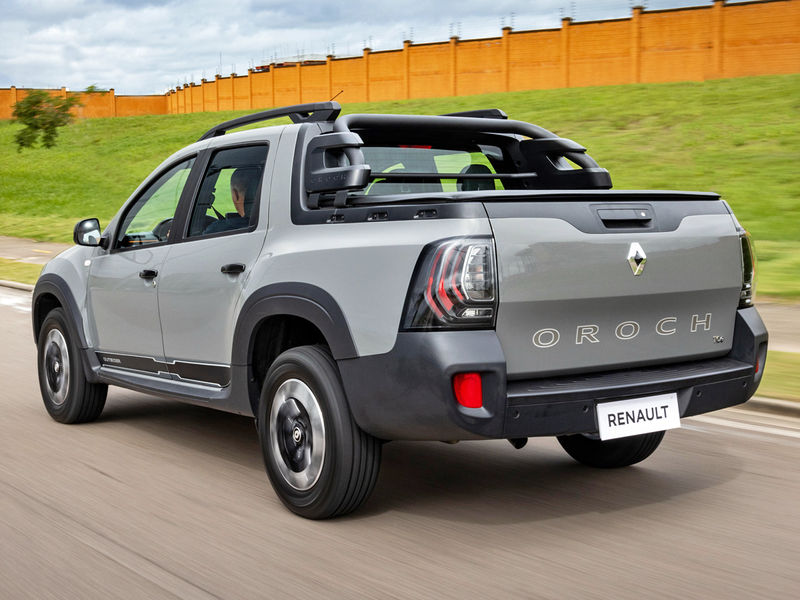
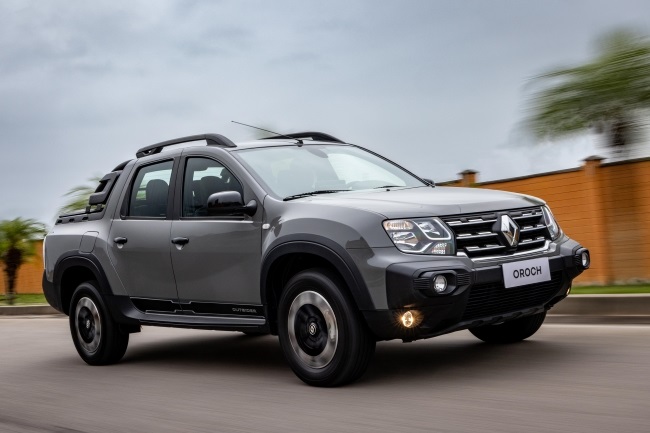
Renault Duster Oroch bakkie

Renault South Africa boss confirms all-new Clio, Captur, and Trafic are coming in 2022

3. Renault has been teasing South Africans with the idea of a pick-up (bakkie) for some years. Is this going to happen in 2022?


"Accurate prediction of the arrival of Oroch has proved challenging. Since joining the brand in 2017, our forecast has always been "next year", but in all honestly, Oroch is manufactured as a left-hand drive vehicle in Brazil and will have to be converted to a right-hand drive vehicle and homologated for the SA market."
 
Renault aiming to bring compact single cab bakkie to South Africa in 2023

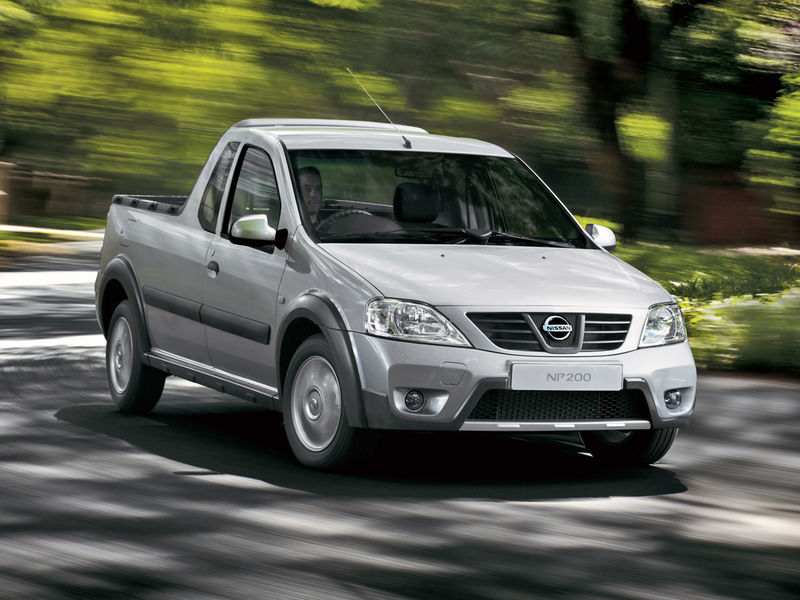
With unibody half-tonne bakkies like the Chevrolet Utility, Ford Bantam and Fiat Strada all having departed in the last decade, the segment is currently left with just one player in the form of the Nissan NP200.

But that’s set to change in 2023 as Renault South Africa is planning to launch a single cab version of the Oroch.

Renault has wanted to bring the Oroch to local shores for some time now, but it’s currently only built in left-hand drive format for Brazil. The latter is based on the previous-generation Duster, but we suspect the model coming to South Africa is based on the newer-generation Dacia/Renault Duster. Of course, we can only speculate for now as Renault SA has yet to confirm any of the details surrounding its new bakkie offering.

But we suspect it could be something similar to the Dacia Duster single cab that was launched in Romania in 2017, albeit in limited numbers and produced in conjunction with coachbuilder Romturingia.

That vehicle had a 500kg payload and was powered by the familiar 1.5-litre dCi turbodiesel motor and was offered in 4WD guise with a 224mm ground clearance. It’s almost a given that most of the SA derivatives would be front-wheel driven in order to cater for cost conscious consumers.

If there was ever an inclination to build it in South Africa through Renault’s Alliance ties, then the Duster bakkie could also make a neat replacement for Nissan’s ageing NP200, which is in fact based on the older-generation Dacia Logan pick-up that the new Duster model supersedes.


Renault 1.jpegRenault 2.jpeg
 
Renault SA’s plan for 2022, what can we expect?

The real exciting news from the stalwart French brand will only arrive in 2023 when the Duster based Oroch single cab is expected to be launched into our market and into the hotly contested compact bakkie segment.

 
Seven new bakkies to look forward to in 2022 and 2023

Renault Oroch single cab

With just one entrant in the form of Nissan’s ageing NP200, the unibody bakkie market is sorely under represented in South Africa, but that could slowly change from 2023 onwards.

Renault South Africa says it’s aiming to launch a single cab version of the Oroch pick-up in 2023. The Oroch is currently sold in Brazil as a double cab version of the previous-generation Renault Duster, but it’s likely that the single cab that’s destined for South Africa will be based on the latest Dacia Duster, meaning it should look very similar to the single cab bakkie in the pictures.

 
Refreshed Renault Oroch: Duster Bakkie Finally Coming to SA?

Renault is set to reveal an updated Oroch bakkie in Brazil in the coming weeks. Is this the version of the Duster-based utility vehicle that will finally be launched here in South Africa?

Renault South Africa has been endeavouring to bring the Duster Oroch bakkie to local shores since at least 2016. Now that a refreshed version of the little double cab is due to be unveiled in South America, we asked the French firm’s local division whether the long-awaited unibody bakkie was still on the table for South Africa.

According to Renault SA, the latest information is that the Oroch is still “in the planning” for a local introduction in the first quarter of 2023. While that’s by no means a confirmation – and it’s a line we’ve heard a number of times over the past few years – it at least suggests the company remains committed to the Oroch despite having earlier thrown in the towel on the larger (Navara-based) Alaskan.

When pushed for a little more detail, Renault SA told Cars.co.za it was aiming to bring in the double-cab version. The four-door Duster Oroch has been in production since 2015, offered with naturally aspirated 1.6- and 2.0-litre petrol engines as well as a 1.5-litre turbodiesel (though various reports out of Brazil suggest the updated model will upgrade to the option of a 1.3-litre turbopetrol unit). In 2020, the single-cab Dacia Duster Pick-Up 4×4 was launched in Romania, based on the current-generation Duster.


E8576276-FC85-487A-BD20-32E5C721A753.jpeg8BBFEE8F-D004-4236-9673-E7BA4C6DE3A0.jpeg
 
Refreshed Renault Oroch Bakkie Debuts with Turbo Power

An updated version of the Renault Oroch baby bakkie has been revealed in South America, complete with the option of a turbocharged petrol engine. Here’s what we know…

Renault has unwrapped a refreshed version of its Oroch in Brazil, handing its Duster-based bakkie – which has long been in the planning for a South African introduction – updated exterior styling, more interior technology and the option of a turbocharged engine.

As before, the baby double-cab bakkie is unibody in construction, featuring MacPherson struts up front and a multilink suspension arrangement at the rear. The wheelbase is unchanged at 2 829 mm, while the load bay measures 1 175 mm wide and 1 350 mm deep. The Oroch’s load capacity is 680 kg.

The 89 kW/159 Nm naturally aspirated 1.6-litre petrol is carried over to the base and mid-tier models, though gains a new six-speed manual transmission which Renault claims improves acceleration.

The flagship derivative, meanwhile, upgrades to a turbocharged 1.3-litre petrol engine, here generating 125 kW and 270 Nm (the latter between 1 600 and 3 750 rpm). This Spanish-built powerplant is, of course, the unit developed by the Renault-Nissan-Mitsubishi Alliance in partnership with Daimler and here drives the front axle through a continuously variable transmission (CVT). Thanks to forced induction, the top-spec version of the updated Oroch is able to complete the 0-100 km/h sprint in a claimed 9.8 seconds before running out of puff at 189 km/h.

Renault describes the cabin as “completely new”, featuring a redesigned dashboard (boasting “greater perceived quality”) and upgraded seat finishes. The instrument panel gains a centrally sited digital speedometer, while the steering wheel is also new, with a brushed finish and backlit buttons.


1.png2.png3.png4.png5.png6.png7.png
 
Renault Oroch compact bakkie on the radar for South Africa in 2023

The Renault Oroch has been on the radar for quite some time, with the local importer having originally intended to introduce it in 2020.

However, delays in the production of a right-hand drive version have put those plans on ice, but now it appears that the Renault Oroch could be heading our way next year if all goes according to plan.

Renault South Africa sent us a statement outlining its “anticipated product planning” for 2023, with the Oroch double cab being pencilled in for the period between second quarter and fourth quarter.

Furthermore, Renault is hoping to launch the Arkana in the second half of next year, although the coupe-inspired compact SUV is still listed as “TBC”. On the subject of SUVs, the importer is also planning to introduce the new Captur during the first quarter, while the Duster and Koleos will get minor refreshes during the year.

 
The long awaited Renault Oroch Bakkie could still be coming to SA

The first Renault Oroch concept car was presented at the 2014 São Paulo Motor Show and was later released officially at the 2015 Buenos Aires Motor Show and has been on sale since September 2015 in South America. But now, it seems like we could be finally receiving the long-awaited bakkie for our own roads!

The Oroch bakkie, which is based on the popular Duster crossover, was confirmed for the South African Market in 2021 and was delayed, or rather rescheduled for the end of 2022. It has not hit our shores as of yet but when it does it could be available in its single-cab guise. The 89 kW and 159 N.m naturally aspirated 1,6-litre petrol engine is carried over to the base and mid-tier models but they will now be paired to a new six-speed manual transmission which Renault claims improves acceleration. The flagship derivative upgrades to a turbocharged 1,3-litre petrol engine, that is capable of producing 125 kW of power and 270 N.m of torque. Thanks to forced induction, the top-spec version of the updated Oroch can complete the 0-100 km/h sprint in a claimed 9,8 seconds with a top speed of 189 km/h.

 
Refreshed Renault Oroch Bakkie Debuts with Turbo Power

An updated version of the Renault Oroch baby bakkie has been revealed in South America, complete with the option of a turbocharged petrol engine. Here’s what we know…

Renault has unwrapped a refreshed version of its Oroch in Brazil, handing its Duster-based bakkie – which has long been in the planning for a South African introduction – updated exterior styling, more interior technology and the option of a turbocharged engine.

As before, the baby double-cab bakkie is unibody in construction, featuring MacPherson struts up front and a multilink suspension arrangement at the rear. The wheelbase is unchanged at 2 829 mm, while the load bay measures 1 175 mm wide and 1 350 mm deep. The Oroch’s load capacity is 680 kg.

The 89 kW/159 Nm naturally aspirated 1.6-litre petrol is carried over to the base and mid-tier models, though gains a new six-speed manual transmission which Renault claims improves acceleration.

The flagship derivative, meanwhile, upgrades to a turbocharged 1.3-litre petrol engine, here generating 125 kW and 270 Nm (the latter between 1 600 and 3 750 rpm). This Spanish-built powerplant is, of course, the unit developed by the Renault-Nissan-Mitsubishi Alliance in partnership with Daimler and here drives the front axle through a continuously variable transmission (CVT). Thanks to forced induction, the top-spec version of the updated Oroch is able to complete the 0-100 km/h sprint in a claimed 9.8 seconds before running out of puff at 189 km/h.

Renault describes the cabin as “completely new”, featuring a redesigned dashboard (boasting “greater perceived quality”) and upgraded seat finishes. The instrument panel gains a centrally sited digital speedometer, while the steering wheel is also new, with a brushed finish and backlit buttons.


View attachment 1291388View attachment 1291390View attachment 1291392View attachment 1291394View attachment 1291396View attachment 1291398View attachment 1291402
The front bumper for some reason reminds me of kids with orthodontic braces.
 
NP200 successor? Nissan and Renault confirm they’re working on new half-tonne bakkie

Nissan and Renault, which are in the process of renewing their Alliance, have announced a series of new global projects and one of these is a half-tonne bakkie that could potentially serve as a replacement for the ageing Nissan NP200.

Currently four new projects are being considered for the Latin America region, including a new half-tonne bakkie range, which would be “developed by Renault and shared with Nissan in Argentina,” according to a statement released on Monday.

Of course, logic dictates that this will be a new version of the SA-bound Renault Oroch bakkie, which is based on the first-generation Duster SUV, and thus ideally in need of replacement in the not-too-distant future.
However, the fact that there’s going to be a Nissan version begs the question - could this potentially serve as a replacement for the ageing Nissan NP200 in South Africa?
This is very much up to speculation for now as Nissan has made no mention of Africa in its list of future product projects released this week, and we will update the story once we’ve spoken to a local representative.


Nissan South Africa ‘Evaluating’ NP200 Replacement

Nissan South Africa says it is “evaluating” a replacement for the NP200 after the Renault-Nissan-Mitsubishi Alliance confirmed plans to develop a new half-tonne bakkie…

Nissan South Africa has confirmed to Cars.co.za it is in the process of conducting a “product feasibility study” on a possible replacement for the locally built but long-in-the-tooth NP200 half-tonne bakkie.

The news comes after the Renault-Nissan-Mitsubishi Alliance – which is in the process of completing a global restructuring – confirmed it has plans to develop a new half-tonne bakkie.

In a broad statement issued by its global press office, the Alliance references various plans for Latin America, including an intention to launch a “new half-tonne pick-up, developed by [the] Renault Group and shared with Nissan in Argentina”. Of course, Renault already offers the Oroch – which has long been in the planning for a South African introduction, with the latest information suggesting a 2023 launch – in certain South American markets.

Whether the new (likely unibody) model will serve as a direct replacement to the Oroch remains to be seen, with the statement not including any information on the project’s timeline (nor the planned body styles, for that matter). Regardless, the new Renault and Nissan bakkie twins will surely be pitched against the likes of the Fiat Strada and Volkswagen Saveiro sold in that part of the world.

While the statement makes absolutely no mention of Africa, it’s certainly not inconceivable the Nissan-badged version of the new bakkie could serve as a replacement for the NP200, which is produced at Nissan’s Rosslyn factory here in South Africa and has been on the local market for a whopping 15 years. That is, of course, if Nissan South Africa gets the green light to produce a successor. So, we asked the firm’s local division for a statement on the future of the NP200.

 
Here’s what Renault South Africa is launching in 2024. But sorry, no Oroch

Renault has been aiming to enter South Africa’s half-tonne bakkie market for quite some time with its Oroch, but now those plans have been put on ice.

When we reached out to Renault about its 2024 product plans, a spokesperson told IOL that the bakkie was no longer in the planning.

“Due to unfavourable economic market factors, in particular the degradation of the exchange rate, the Oroch project is not feasible at this stage,” the spokesperson said.

Renault has been aiming to enter South Africa’s half-tonne bakkie market for quite some time with its Oroch, but now those plans have been put on ice.

When we reached out to Renault about its 2024 product plans, a spokesperson told IOL that the bakkie was no longer in the planning.

“Due to unfavourable economic market factors, in particular the degradation of the exchange rate, the Oroch project is not feasible at this stage,” the spokesperson said.

 
Top
Sign up to the MyBroadband newsletter
X