Skoda Peaq

FiestaST

Honorary Master
Joined
Aug 9, 2009
Messages
219,995
Reaction score
102,714
Location
CPT~ /\\/¯¯¯\\/\\ ~ZA
Skoda's new flagship.

Meet the biggest ever Skoda: the new seven-seat, 400-mile Peaq SUV

Big battery. Big range. Many seats. Welcome to Skoda’s Big Boi

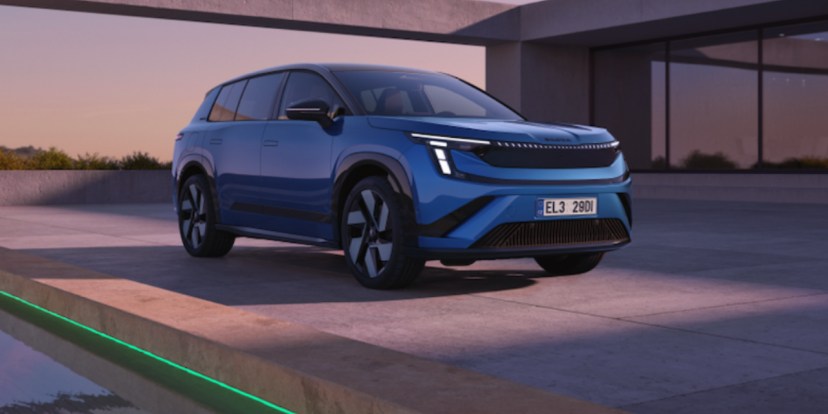
This is the Skoda Peaq. No, we do not know what it means – ‘peak’ but misspelt because Sqoda? – but we know what it means. It’s the biggest, most spacious Skoda ever built, designed to accommodate several human beings, a massive battery and many other important SUV things.

“This is the ultimate Peaq!” said Skoda. As befits the biggest thing it’s ever created, the Peaq’s MEB-platform crests 4.87m long, which puts it just shy of stuff like the Disco and XC90. Heck, it’s bigger even than the superb Superb in wheelbase. That means it’ll “comfortably” fit up to seven human adults, and – in this guise – up to 299 litres of boot space.

Bin the third row and opt for the five-seat car, and you get 935 litres of boot, “more than any other Skoda model”. And because it’s an electric Skoda model, there’s a bit of space in the nose of the car too, because the power source sits underneath the five or seven humans sitting inside.

Lots of power, too: no less than “the largest-capacity unit of any Skoda electric vehicle” if you opt for the big 91kWh version. That’s available as a 282bhp/402lb ft ‘Peaq 90’ or ‘Peaq 90x’, the former a rear-wheel-drive SUV with a single rear motor, while the latter gets an additional motor on the front axle for “short term overload capability”.


1782234551640.png

1782234582157.png

1782234616307.png

1782234637304.png

1782234660538.png
 
Skoda’s new flagship electric Peaq unveiled

Skoda has officially unveiled its largest electric vehicle, the Skoda Peaq. This large vehicle is the brand's new flagship model. It applies everything the Czech automaker learned from its traditional gas-powered Kodiaq SUV and transfers those lessons into the world of electric cars. The new SUV targets families who need plenty of space and the latest technology without paying luxury prices. As the international market for seven-seat electric cars expands, this model enters a highly competitive field.

The vehicle measures 4,874 mm long and has a wheelbase of 2,965 mm, creating more room for passengers inside. The exterior design introduces what the company calls a minimalist style with clean lines. Designers managed to lower the drag coefficient to 0.249 - the rival Hyundai Ioniq 9 has a drag coefficient of 0.259, even when buyers pay extra for digital side mirrors - lower aerodynamic resistance helps EVs to travel farther.

Peaq stands out with T-shaped headlights and taillights, alongside a glossy black panel on the nose instead of a traditional grille. It is also the first time a Skoda vehicle uses flush door handles that sit flat against the body panels. Some car buyers worry about those handles sticking during freezing winter weather, but the company added a backup system. The handles have an electrical charge capacitor that keeps them operational during an emergency, and users can press the front part to open them manually.


Skoda hypermiles the new Peaq to claim 936-km record-breaking range

Hypermiling is very much like competitive meditation - it demands a monk-like discipline, bordering on clinical obsession. Tires pumped to granite firmness, every comfort accessory banished, climate systems powered down, and a right foot operating with the featherlight delicacy of a watchmaker. Nobody actually drives like this in the real world, yet car companies simply cannot resist the siren song of a massive distance record.

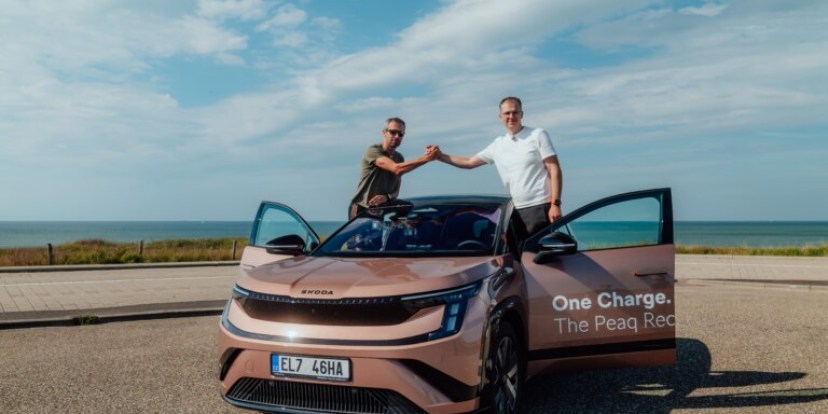
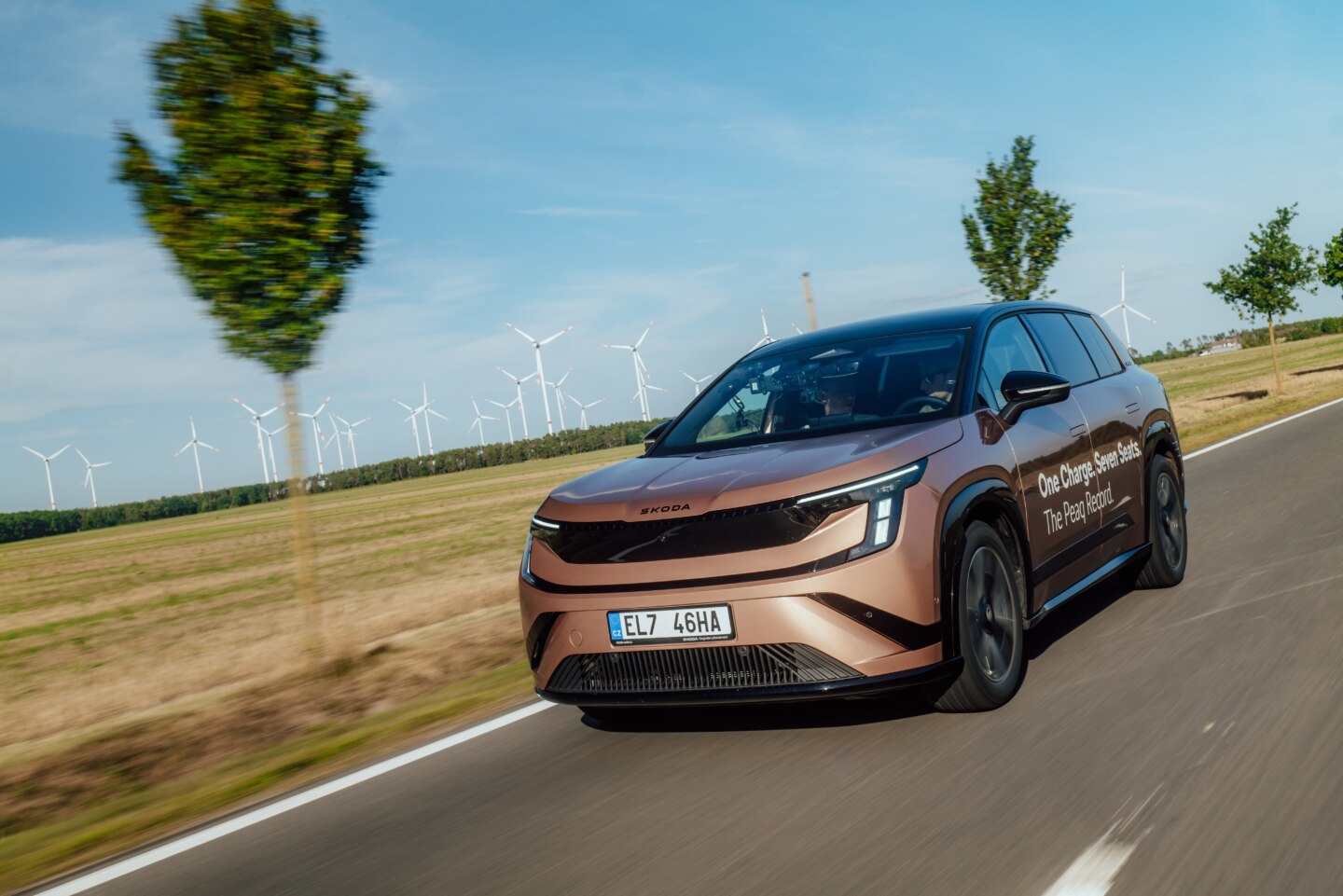
Skoda Peaq, a seven-seat electric flagship, rolled all the way from its birthplace in Mladá Boleslav to the sand dunes of Zandvoort on a single charge. As expected, the headline figures land with theatrical flair: Skoda's engineering squad squeezed an astonishing 936-km out of the production Peaq 90, drawing juice from a 91 kWh lithium-ion battery pack with an 86 kWh usable capacity.

With TÜV SÜD certifiers slapping stickers on to keep everyone honest, the crew breezed straight past the car's official WLTP figure of 647 km by almost 45%. Along the way, the big family hauler reportedly logged an average energy consumption of just 9.2 kWh per 100 km. On paper, it sounds like a world's greatest technical triumph, the kind that corporate marketeers love plastering across glossy billboards.

Then you ask Google Maps if it's possible, and the glorious illusion begins to crack into a rather comedic reality. Mladá Boleslav to the Dutch coast is a trek of roughly 936 km (945 according to Google when avoiding highways) across the spine of Germany. Even if you explicitly order your navigation software to shun high-speed Autobahns and meander exclusively along secondary roads, the drive ought to swallow roughly 16 hours.

Skoda's brave marathoners, however, took somewhere around 26.5 hours to reach the seaside resort. If you scrutinize the official media photos, an awkward timestamp on the dashboard shows an odometer roll-out at 7:31 AM rather than the press release's claimed "midday" departure. Should the camera clock speak the truth, that jaunt stretched to a painful 31 hours.

That means our intrepid crew drifted across Western Europe at an average moving pace between 30 km/h and 38 km/h, depending on which time you trust. Honestly - an amateur cyclist on a carbon-frame road bike could have done it quicker. I am fairly confident I could nurse an absurd four-figure range out of an electric golf cart if I spent an entire working week drafting the slipstream of a tractor and getting all the regen I could downhill. Sluggish crawls across backroads reveal plenty about aerodynamics, but they tell everyday drivers absolutely nothing about surviving a wet Friday afternoon sprint down the motorway with screaming kids in the third row.


Top
Sign up to the MyBroadband newsletter
X