


Arthur
Honorary Master
Don't forget to diarise the next supermoon and total eclipse on 27-28 September 2015.
On 28 Sept 2015 at 03h46 our moon will be at perigee (nearest earth) at a distance of 356 877km. The exact distance, measured to an accuracy of approx 2mm, will be measured using the Laser Ranging retroreflectors left on the moon by Apollo 11, 14 and 15 astronauts.
The penumbra (outside lighter part of our planet's shadow) begins creeping over the moon at 02h11 on 28 Sept. The umbra (darker inner shadow) hits the moon's face at 03h07.
The total eclipse begins at 04h47.
This is the last of the current cycle (known as a lunar tetrad). The next lunar tetrad is in 2032-2033.
A "supermoon", more correctly known as a perigee moon, is when the moon is within 90% of its closest approach to earth, ie 361.8 Mm (thousand kilometres) or closer to earth. This happens when the moon is new or full. Full supermoons take place roughly every 14 full moons. So far in 2015 we've had three new supermoons (20 Jan, 18 Feb, 20 Mar). August had the first full supermoon; the next is 28 Sept, and the last for 2015 is on 27 Oct.
This September's supermoon is the closest of the year. October's will be a few hundred kilometres further away. The next closest will be on 14 Nov 2016, and then again on 2 Jan 2018. 2017 doesn't have a perigee full moon (also known as a blood moon) because the full moon and perigee don't align that year. After that, the next best perigee full moon is on 25 Nov 2034. The closest full moon of this century will be on 6 Dec 2052.
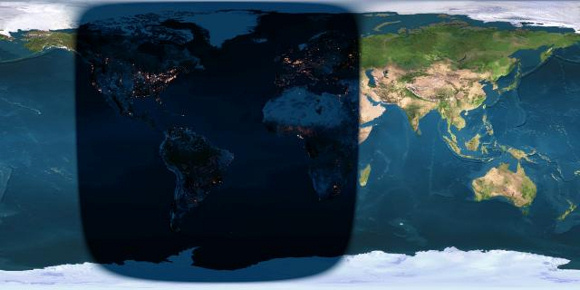
See some cool animations on Larry Koehn's website.
On 28 Sept 2015 at 03h46 our moon will be at perigee (nearest earth) at a distance of 356 877km. The exact distance, measured to an accuracy of approx 2mm, will be measured using the Laser Ranging retroreflectors left on the moon by Apollo 11, 14 and 15 astronauts.
The penumbra (outside lighter part of our planet's shadow) begins creeping over the moon at 02h11 on 28 Sept. The umbra (darker inner shadow) hits the moon's face at 03h07.
The total eclipse begins at 04h47.
This is the last of the current cycle (known as a lunar tetrad). The next lunar tetrad is in 2032-2033.
A "supermoon", more correctly known as a perigee moon, is when the moon is within 90% of its closest approach to earth, ie 361.8 Mm (thousand kilometres) or closer to earth. This happens when the moon is new or full. Full supermoons take place roughly every 14 full moons. So far in 2015 we've had three new supermoons (20 Jan, 18 Feb, 20 Mar). August had the first full supermoon; the next is 28 Sept, and the last for 2015 is on 27 Oct.
This September's supermoon is the closest of the year. October's will be a few hundred kilometres further away. The next closest will be on 14 Nov 2016, and then again on 2 Jan 2018. 2017 doesn't have a perigee full moon (also known as a blood moon) because the full moon and perigee don't align that year. After that, the next best perigee full moon is on 25 Nov 2034. The closest full moon of this century will be on 6 Dec 2052.
See some cool animations on Larry Koehn's website.
Last edited:


 from my side, Century City.

