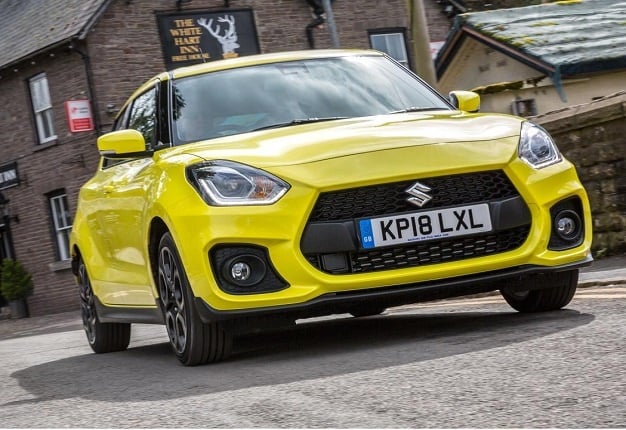
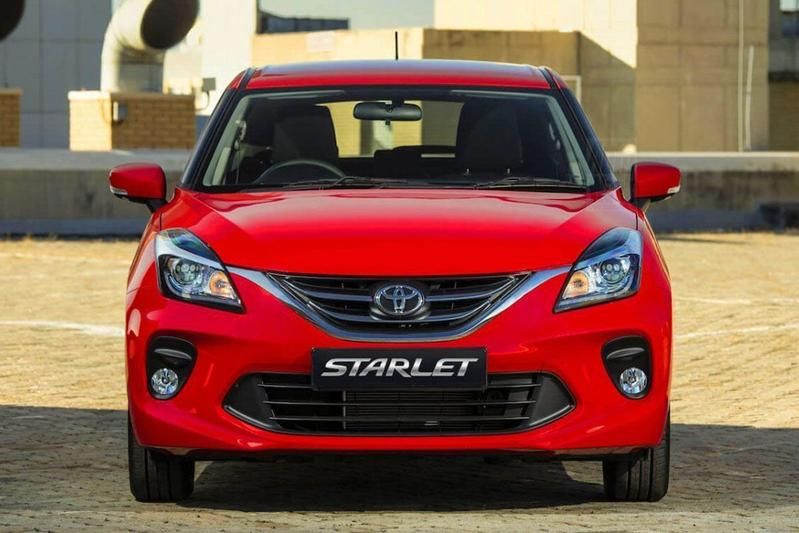
Suzuki and Toyota sharing some love.

Toyota and Suzuki confirm details of new 'Alliance'

Each plans to acquire shares in the other, but remain competitors, to achieve sustainable growth

Toyota and Suzuki have announced plans to acquire a financial stake in eachother's operations, as part of a move towards a collaborative development programme.

Toyota plans to take a 4.94% stake in Suzuki at a cost of £743.3 million for 24 million shares of common stock. Suzuki, meanwhile, will invest roughly £372 million in Toyota. The deal is awaiting approval from the foreign competition authorities.

The difference in investment amounts reflects Toyota's inflated value; in 2018, the company became the first Japanese firm to achieve annual sales of 30 trillion yen (£232 billion), while Suzuki achieved roughly a tenth of that, at 3,871.5 billion yen (£28 billion).

A statement from Toyota read: "The two companies intend to achieve sustainable growth, by overcoming new challenges surrounding the automobile sector by building and deepening cooperative relationships in new fields while continuing to be competitors, in addition to strengthening the technologies and products in which each company specializes and their existing business foundations.

"Specifically, to take up challenges together in this transitional era, the two companies plan to establish and promote a long-term partnership between themselves, for promoting collaboration in new fields, including the field of autonomous driving."

In March, the two companies announced the first details of a new wide-ranging collaboration, which will involve Toyota producing Suzuki-badged hybrid vehicles based on the RAV4 and Corolla estate for the European market. The deal will include Suzuki vehicles being built at Toyota's Derbyshire plant.
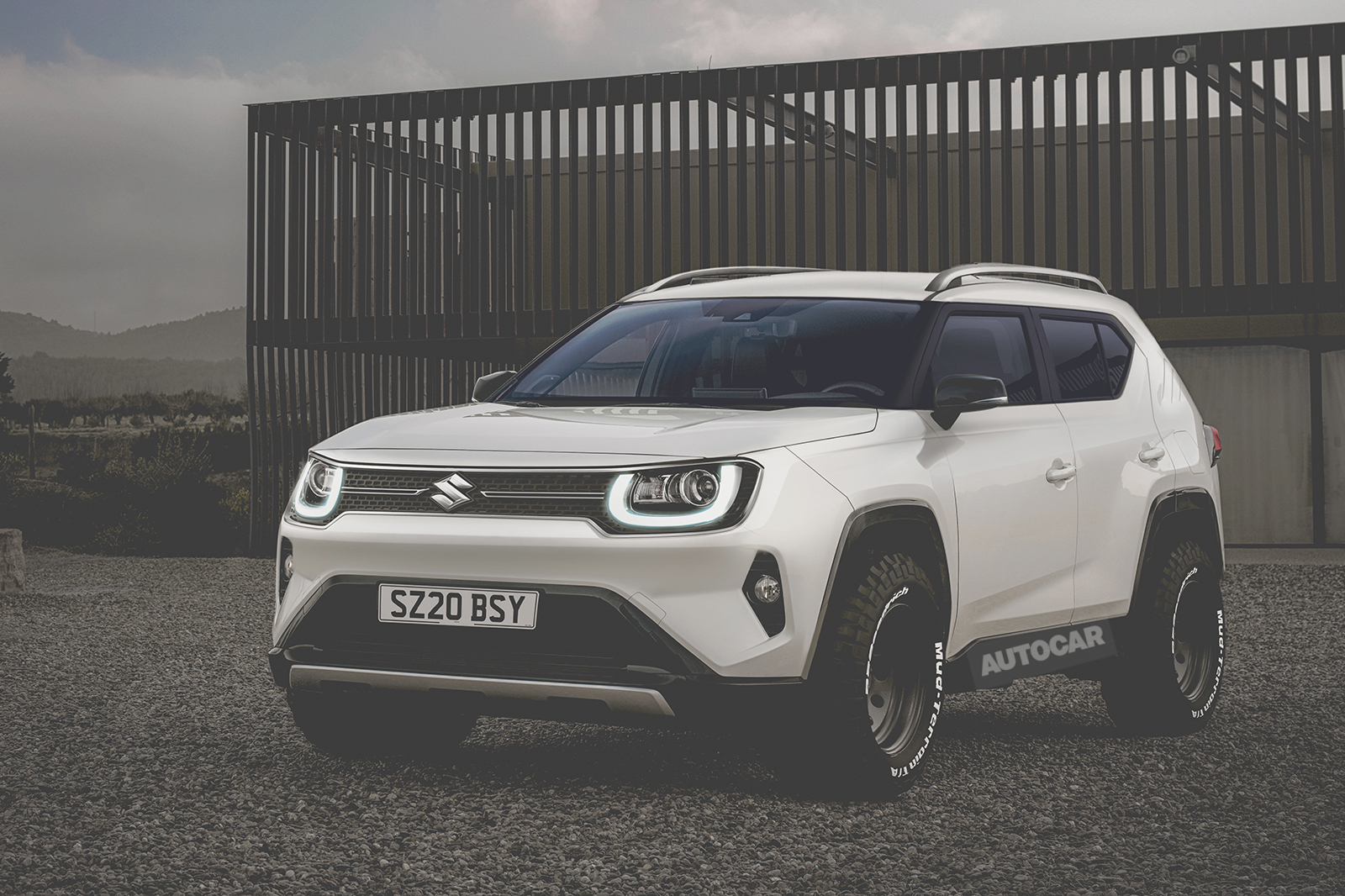

 
Industry pressures draw Toyota, Suzuki closer in new partnership

Toyota said on Wednesday it will take a nearly 5% stake in small-car specialist Suzuki Motor, the latest tie-up in the rapidly changing global auto industry.

The Japanese auto giant, maker of the Prius and Camry models, will pay some $907-million for 4.94% of Suzuki. The smaller partner in turn will buy Toyota shares worth 48 billion yen through the market, which amounts to roughly 0.2% of the firm.

Toyota and Suzuki had in 2017 signed a memorandum of understanding to discuss an operational tie-up.

The announcement comes as the global auto business undergoes dynamic changes, brought on by tougher environmental regulations, and new market entrants such as tech firms developing driverless vehicles.

These new factors posed "a turning point unprecedented in both scope and scale" for the business, the two firms said in a joint statement.

By teaming up, they will tackle "this transitional era" to promote tie-ups in new fields like autonomous vehicles.

Toyota offered engineering prowess, such as hybrid technology, while Suzuki, which enjoys enormous successes in India, has voiced concerns about staying competitive on its own.

Toyota is among the world's biggest automakers, boasting brands like Lexus, but also small-car producer Daihatsu and truck maker Hino.

In 2017, Toyota signed a capital alliance with smaller rival Mazda. Toyota is also the biggest shareholder of automaker Subaru.

 
Toyota to revive 'Urban Cruiser' badge for Vitara-based crossover?

A fresh report out of India claims Toyota will revive its “Urban Cruiser” nameplate for use on a new crossover set to be based on Suzuki’s Vitara Brezza.

In 2018, the two Japanese firms announced broad plans for new “joint projects”. A year later, Toyota revealed the Glanza, which is effectively a rebadged Suzuki Baleno.

Now, Toyota looks set to add a rebadged Vitara Brezza to its Indian range, and it’s expected to be named the Urban Cruiser, according to Autocar India. In 2018, Toyota successfully trademarked the nameplate in India.

The Urban Cruiser badge isn’t new, having been used in Europe on a boxy subcompact car built between 2007 and 2016. Of course, the "Cruiser" part of the name also lines up neatly with Toyota’s wide range of fully fledged off-roaders, such as the Land Cruiser Prado, Land Cruiser 200, Land Cruiser 70 Series and FJ Cruiser.


Screenshot_20200428_090341.jpg
 
New Toyota Starlet to hit Africa as rebadged (Suzuki-based) Glanza?

A fresh report out of India claims Toyota plans to market its Suzuki-based Glanza hatchback as the Starlet in certain African countries.

As a reminder, the Glanza – which is effectively a rebadged Suzuki Baleno – was revealed in June 2019 as one of a number of “joint projects” between the two Japanese automakers. Since then, the new Toyota Urban Cruiser (based on Maruti Suzuki’s Vitara Brezza) has been revealed in India, while the new Suzuki Across (which is actually a Toyota RAV4 in disguise) has been unveiled for Europe.

Now, according to GaadiWaadi.com, Maruti Suzuki in India has started production of the Glanza (but wearing the Starlet badge) for export.

So, will the Suzuki-built Starlet make it to South Africa? Well, Toyota Motors SA has yet to announce any plans although there’s at least a chance it could be offered as an eventual replacement for the Etios budget hatchback (which itself has gone out of production in India).

 
Toyota Starlet returns to Africa

Toyota revives an iconic compact car model name.

The Japanese automotive giant announced a new Starlet hatchback, targeted at Toyota’s ambitious African expansion plans.

Although the Toyota badge takes pride of place in the middle of its grille, this Starlet is a true example of badge engineering. There is virtually no trace of Toyota in its components or mechanical engineering.

This new Starlet is the result of Toyota’s agreement with Suzuki and is, in fact, a Baleno underneath. As more automotive companies seek economies of scale and cost benefits from cooperation, badge engineering is a reality that will become commonplace.

For Toyota to develop a new compact hatchback for African markets and their robust conditions, it would not be cost-effective. Suzuki’s Baleno is a proven vehicle, with its design strongly influenced by Indian road conditions, which are broadly similar to most African markets.

The cooperation between Toyota and Suzuki is, therefore, a logical conclusion and gives African consumers, a tidy new hatchback choice – with a legendary name.


Starlet 1.jpgStarlet 2.jpgStarlet 3.jpgStarlet 4.jpgStarlet 5.jpg
 
I wonder how many times manufacturers should be told that chrome does not work on cheap cars, it just makes the car even more cheaperer.
 
Toyota Starlet returns to Africa

Toyota revives an iconic compact car model name.

The Japanese automotive giant announced a new Starlet hatchback, targeted at Toyota’s ambitious African expansion plans.

Although the Toyota badge takes pride of place in the middle of its grille, this Starlet is a true example of badge engineering. There is virtually no trace of Toyota in its components or mechanical engineering.

This new Starlet is the result of Toyota’s agreement with Suzuki and is, in fact, a Baleno underneath. As more automotive companies seek economies of scale and cost benefits from cooperation, badge engineering is a reality that will become commonplace.

For Toyota to develop a new compact hatchback for African markets and their robust conditions, it would not be cost-effective. Suzuki’s Baleno is a proven vehicle, with its design strongly influenced by Indian road conditions, which are broadly similar to most African markets.

The cooperation between Toyota and Suzuki is, therefore, a logical conclusion and gives African consumers, a tidy new hatchback choice – with a legendary name.


View attachment 904330View attachment 904332View attachment 904334View attachment 904336View attachment 904338
Confirmed! New Toyota Starlet (a rebadged Suzuki) to launch in SA soon

The new Toyota Starlet – which is actually a rebadged Suzuki Baleno – is scheduled to launch in South Africa from mid-September 2020.

As we reported in August, Toyota plans to market its Suzuki-built hatchback as the Starlet in certain African countries; as a reminder, the model is known as the Toyota Glanza in India. The Glanza was revealed in June 2019 as a rebadged Baleno and one of a number of “joint projects” between the two Japanese automakers. It is produced by Maruti Suzuki in India.

Now, Toyota Tsusho has announced sales of the Starlet “will be initiated in South Africa from mid-September” before being “successively expanded to 47 countries in Africa”. Toyota South Africa Motors confirmed to CARmag.co.za the new Starlet would launch locally soon.

Like the Baleno, the Starlet measures 3 995 mm long, with a width of 1 745 mm and a wheelbase of 2 520 mm. The most obvious differences between it and the Baleno on which it’s based are the tweaked grille design and slightly different front bumper.

 
Toyota’s new Starlet compact hatch to launch in South Africa this month

Likely to replace the Etios

On that note it is looking likely that the Starlet will replace the Etios in South Africa, given that Toyota recently ended production of the latter at its Indian plant.

We don’t have the pricing information yet, but the Starlet could be a bit more expensive than the Etios, given that the Suzuki Baleno starts at R221 900 in South Africa, while the Etios currently retails from R191 800. Bear in mind though that the Starlet is somewhat bigger than the Etios, measuring 3999mm in length versus 3775. In fact it’s not a lot smaller than the 4145mm Yaris, which potentially opens up another can of worms for Toyota South Africa - is there really space for both the Starlet and Yaris in Toyota’s line-up? Only time will tell.

 
This means just one thing, VW is still going to reign supreme in that hatch segment, the Toyota Baleno is not good enough to compete with the Polo but will be more expensive than the Vivo.
 
New (Suzuki-built) Toyota Starlet: prices for South Africa revealed!

The new Suzuki-built Toyota Starlet is set to launch in South Africa very soon (we broke the news at the start of the month) and we’ve laid our hands on local pricing.

Interestingly, our sources suggest the Starlet will replace both the Etios hatchback (which has gone out of production in India) and the XP150-generation Yaris in South Africa.

Scheduled to hit the market on 21 September 2020, the new Starlet will arrive as a rebadged Suzuki Baleno, imported from India where it’s built by Maruti Suzuki and known as the Glanza. The Baleno-based model is one of a number of “joint projects” between the two Japanese automakers.

So, how much are you looking at here? Well, the Starlet range will comprise five variants at launch. The base Xi model (with steel wheels) will start at R204 900, offered exclusively in five-speed manual form.

The mid-tier Xs (riding on 16-inch alloys), meanwhile, will be priced at R215 200 when fitted with a manual gearbox and R235 700 when specified in four-speed automatic guise.

Pricing:

Toyota Starlet 1,4 Xi: R204 900
Toyota Starlet 1,4 Xs: R215 200
Toyota Starlet 1,4 Xs AT:R235 700
Toyota Starlet 1,4 Xr: R258 500
Toyota Starlet 1,4 Xr AT: R272 500

 
Toyota SA were going to keep it badged as the 'Glanza' for the South African market, as it was also sold under that badge over in India, until someone (perhaps it was James May) reminded them that, when you ran the word 'Glanza' through Google Translate, it somehow became a word that could have had a 'slightly negative effect' on sales in certain overseas markets...

The Toyota 'Bell-End'....

1436013739735181861.jpg
 
Top
Sign up to the MyBroadband newsletter
X