The BMW-Mini Thread

Mini to ditch leather from its future interiors

Removing leather is one of a range of sustainability changes to come from British brand

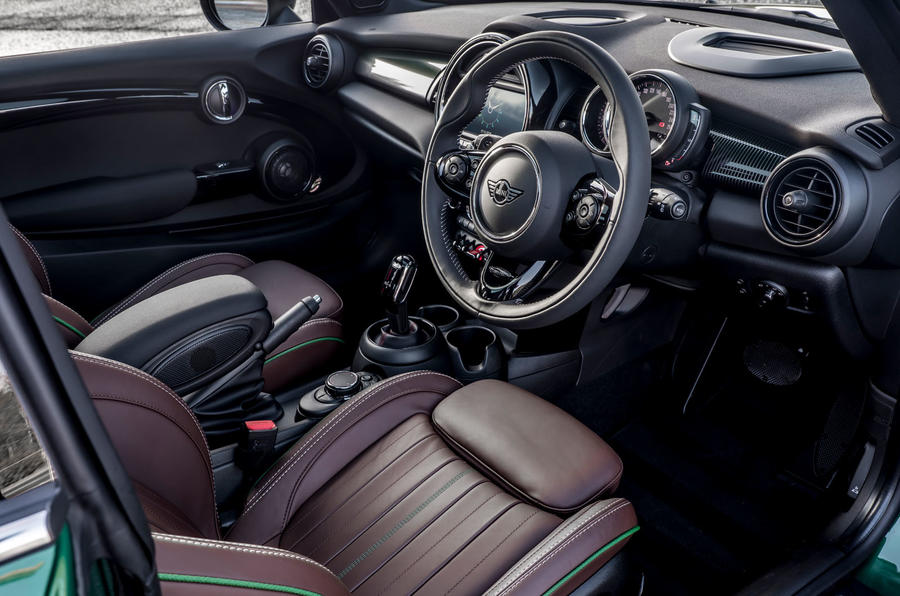
Leather trim won't be offered on future Minis, according to design boss Oliver Heilmer.

It’s part of a raft of changes that Mini is looking at as it moves towards the next generation of cars. Responsibility forms a key part of the strategy, along with three other values: curiosity, heartbeat and daredevil.

Last year, 54% of new Minis ordered in the UK featured real leather. According to Heilmer, the lack of leather is a key consideration in making Minis as sustainable as possible.

“We don’t need leather any more in the future, because we don’t believe it’s sustainable," he said. "We're totally convinced that we will have modern and high-value products without leather.”

An absence of hide isn’t the only area that Mini has been working on.

 
Mini design boss explains why the brand is ditching leather trim

Mini’s head of design has confirmed the brand plans to ditch leather trim from its interiors, saying the use of the material is not “sustainable”.

Oliver Heilmer, who heads up design at the BMW-backed brand, suggested to Autocar cabin leather would be replaced by recycled materials in next-generation Mini models.

“We don’t need leather any more in the future, because we don’t believe it’s sustainable," he said.

"We're totally convinced that we will have modern and high-value products without leather,” Heilmer added.

He furthermore revealed the fabric used in the production seats would be “100 percent recycled”.


Mini.JPG
 
Mini design boss ‘fighting hard’ to make next-gen models smaller

The head of design at Mini says he is “fighting hard” to make the brand’s next-generation models smaller than those in the current line-up.

Oliver Heilmer told Autocar both the vehicle’s size and its proportions had to stay true to the firm’s heritage, which stretches all the way back to the debut of the original in 1959.

“We have to be careful in keeping it reduced and keeping the proportions as we want to have them,” he said.

“Proportions are the key. It’s getting bigger and we know that. It’s something we’re fighting hard for in the next generation,” Heilmer said.

 
Mini John Cooper Works Convertible

With fresh design accents and the expressive Zesty Yellow body colour, the new edition of the open-top four-seater now brings even more typical MINI style to the premium small car segment. New trims and equipment packages allow for particularly targeted individualisation.

Spring will not be long in coming. A particularly attractive harbinger of the warm season is already on the roads these days. With the market launch of the new MINI Convertible, the brand-typical driving pleasure and extroverted style in a small car reach an even higher level. The open four-seater of the British premium brand now underlines its unmistakable charisma with a clear and reduced design. The fresh accents on the exterior are expressed particularly intensively in conjunction with the exterior paint in the new Zesty Yellow variant available exclusively for the MINI Convertible.

The powerful bright yellow colour emphasises the lively appearance of the MINI Convertible. At the front of the vehicle, it also adorns the bumper strip, which serves as the number plate holder and is now no longer painted in black but always in the same colour as the car. The minimalist design language also brings the design features characteristic of the brand even more into focus. The hexagonal radiator grille has gained in size and presence, while black inner housings now make the round headlights look even more expressive. With LED units as standard, they provide bright and even illumination of the road. Vertical air inlets for the air curtains have replaced the fog lights.


Mini 1.jpgMini 2.jpgMini 3.jpgMini 4.jpgMini 5.jpgMini 6.jpgMini 7.jpgMini 8.jpgMini 9.jpg
 
Report: Mini to go all-electric from 2030

BMW CEO Oliver Zipse is expected to officially detail the British brand's electric reinvention later this week

BMW CEO Oliver Zipse will this week unveil a plan for the Mini brand to go all-electric from 2030, according to a report from Automotive News Europe.

Citing an unnamed source "familiar with the matter", the site claims Mini will introduce its final combustion-engined model in 2025, and is aiming for half of its global sales to be electric by 2027.

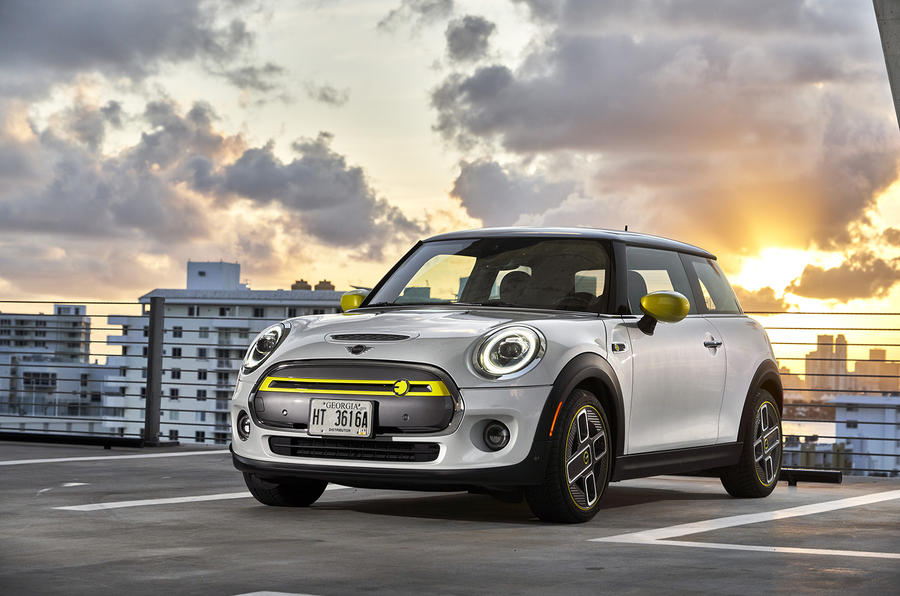
From 2030, the point at which combustion car sales will be banned in the UK, the marque will sell exclusively electric vehicles.

The firm has not officially announced the strategy, but it is expected that Zipse will give further details in the BMW Group's annual report on Wednesday 17 March.

 
Official: Mini to launch final combustion model in 2025

British firm to go all-electric by "the early 2030s" but will remain a global brand

Mini will become an electric-only brand "by the early 2030s", with the brand's final combustion engined model due to launch in 2025.

The plan to reinvent the long-running British marque, first reported last week, was confirmed by the BMW Group as part of a major acceleration of its electrification plans.

BMW says that Mini will play a "pioneering role" in the Group's electrification programme, claiming that "the urban brand is absolutely ideal for electric mobility." BMW says that Mini will remain a "global brand with a footprint in every region of the world", including markets it currently operates in which would still allow ICE cars to be sold after 2030.

The firm's last combustion-engined model, the next-generation Mini hatch, will launch in 2025. From that point on the firm will only launch fully electric models, with the goal for half of its global sales to be EVs by 2027.


It’s official: Mini to launch last new combustion-engined model in 2025

Another week, another major automaker announcing plans to go fully electric. The latest is the BMW Group's Mini brand, which will introduce its “very last new combustion engine model” in 2025.

Oliver Zipse, chairman of the board of management at the BMW Group, made the announcement at the German firm’s annual conference.


“Mini will be the first BMW Group brand to go fully electric. Mini is perfect for the city – and for e-mobility. We will be releasing the last model with a combustion-engine variant in 2025. By the early 2030s, Mini will be exclusively fully electric,” Zipse said.

From 2025, only fully electric models will be added to Mini’s range. By 2027, all-electric vehicles are expected to account for “at least 50 percent” of all Mini deliveries worldwide. By the “early 2030s”, the entire Mini range will be battery powered, while “still remaining a global brand with a footprint in every region of the world”.

 
Mini Electric Pacesetter

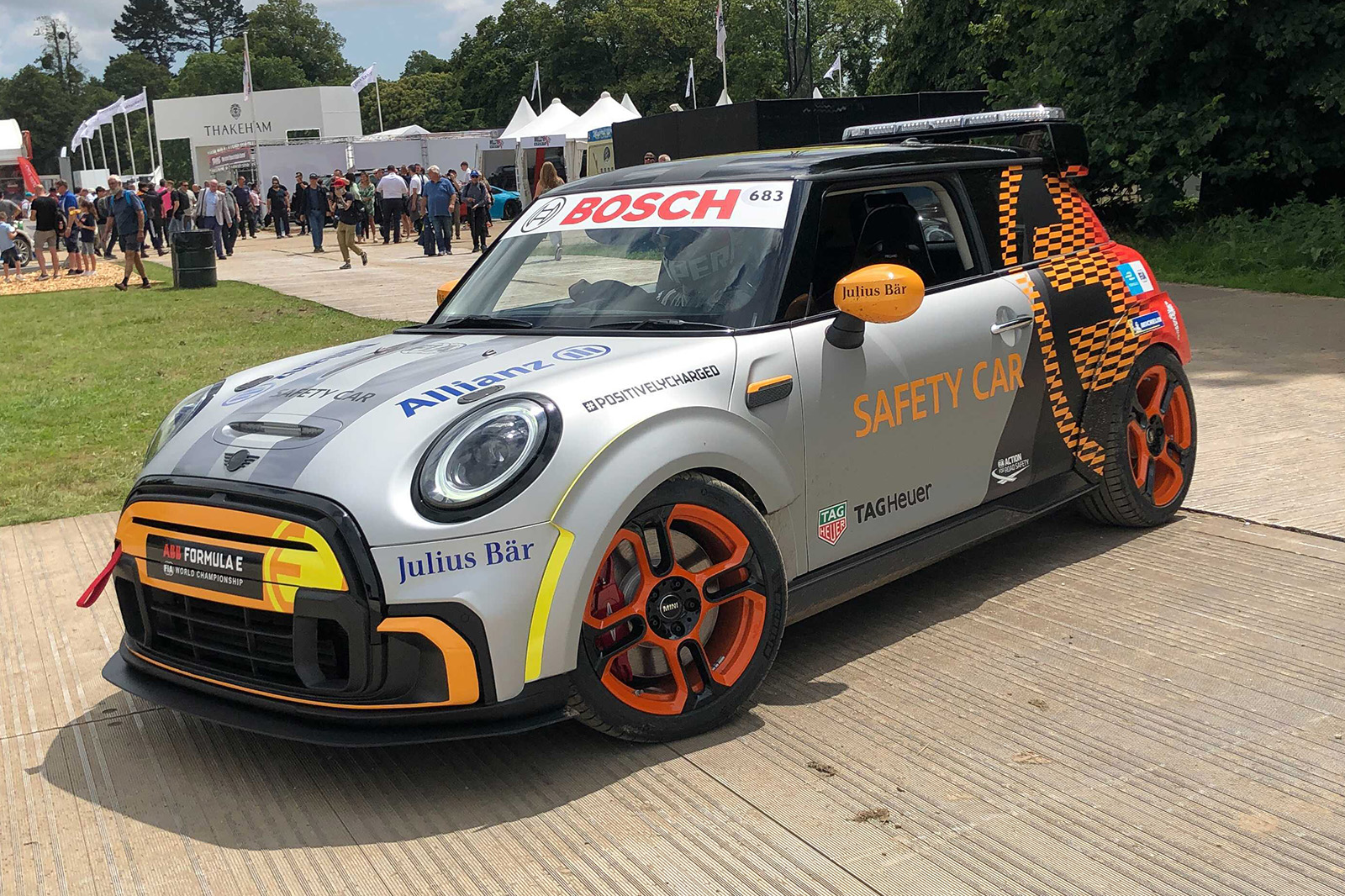
The MINI Electric Pacesetter inspired by JCW is the new Safety Car for the ABB FIA Formula E World Championship race series. As such, it connects the brand's electrified future with the rich racing history of John Cooper Works. The car was created out of the new MINI Cooper SE as part of an unprecedented collaboration between MINI Design, BMW Motorsport, the FIA and the Formula E.


Mini 1.jpgMini 2.jpgMini 3.jpgMini 4.jpgMini 5.jpgMini 6.jpgMini 7.jpgMini 8.jpg
 
New Mini Pacesetter Formula E safety car points to all-electric JCW

Mini has whipped the wraps off its new Electric Pacesetter, which arrives as a JCW-inspired safety car for the FIA’s Formula E series.

Based on the all-electric Cooper SE, Mini says the safety car connects the brand’s “electrified future with the rich racing history of John Cooper Works”. Earlier in March 2021, of course, the automaker confirmed it planned to introduce its “very last new combustion engine model” in 2025, before going fully electric by the early 2030s.

So, back to the safety car. The wheel arches have been adapted to the vehicle’s track width, while the deep front apron gains additional splitters. The car’s flashing white lights are integrated into the bonnet, with the latter also gaining the brand’s signature stripes.

In profile, you’ll notice the chunky side skirts and 18-inch orange-and-black wheels. Interestingly, the spats and spoilers are 3D-printed from recycled carbon-fibre, with some featuring yellow accent lines. The main body colour, meanwhile, is matte silver, though a high-gloss wrap (with a two-stage colour gradient, from “Highspeed Orange” to “Curbside Red”) is also used.

 
Mini Pacesetter: Formula E safety car hints at electric JCW GP

Radical styling and "rigorous" weight-saving measures gives clues to the electrification of hot Mini models

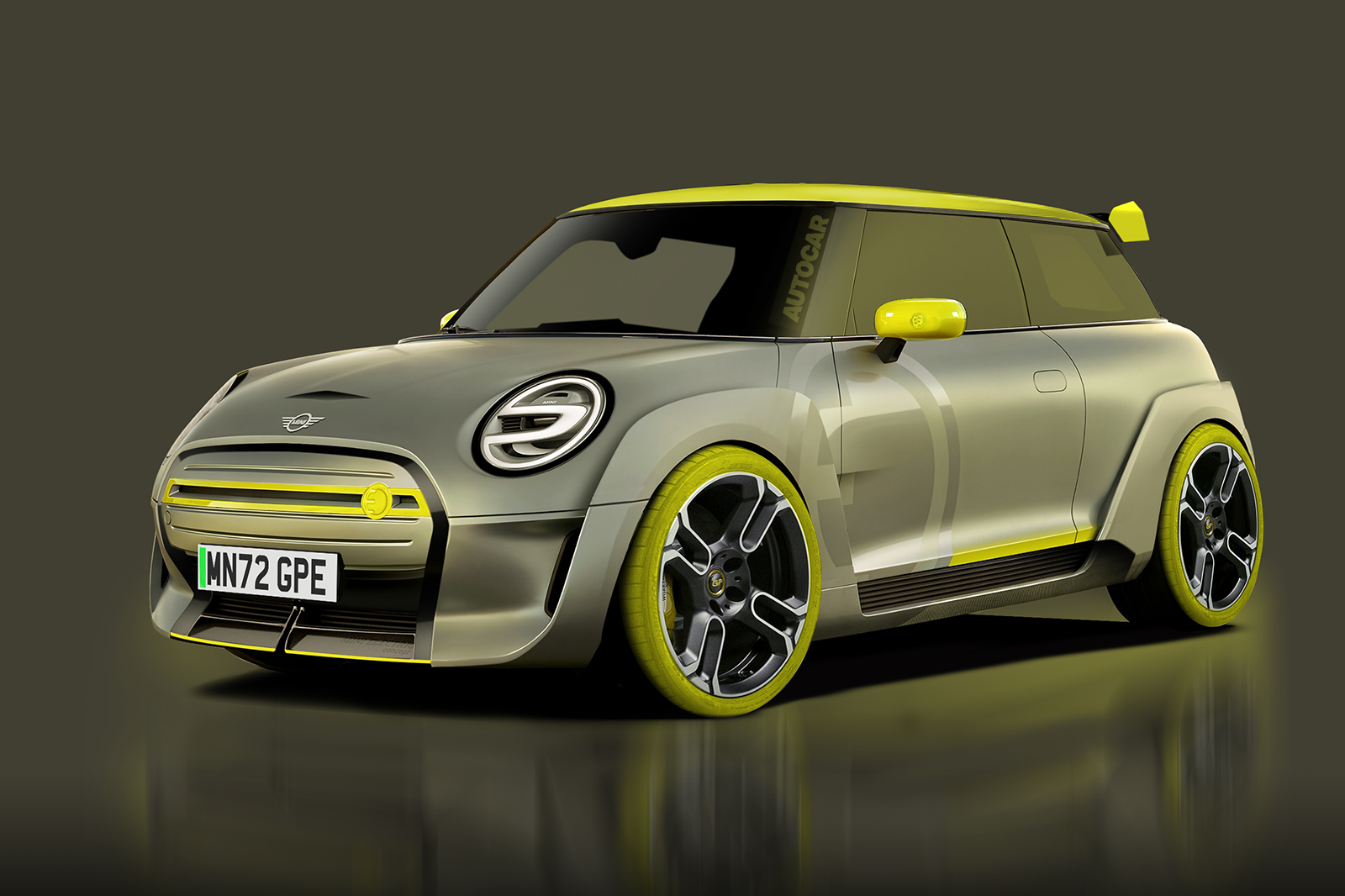
Mini has combined elements of its electric future “with the rich racing history of John Cooper Works” to create the Pacesetter: a radical one-off reworking of the Mini Electric, which will be used as a pace car in the 2021 Formula E championship.

Giving clues as to the model’s potential to influence future production cars, Mini boss Bernd Körber said the car shows that “the message is clear: electrification and John Cooper Works are a good fit”.

The influence of Mini’s JCW GP performance flagship is clear: prominent air scoops at the side, a sizeable rear wing and an aerodynamic-enhancing front splitter point to its performance focus, while the road car’s 18in sports alloy wheels have been carried over and finished in a unique two-tone livery.

The drivetrain is carried over wholesale from the Mini Electric, so the Pacesetter makes 181bhp and 206lb ft, but “rigorous” lightweighting measures have resulted in a tangible performance boost, cutting the 0-62mph sprint time by 0.6sec to 6.7sec.

 
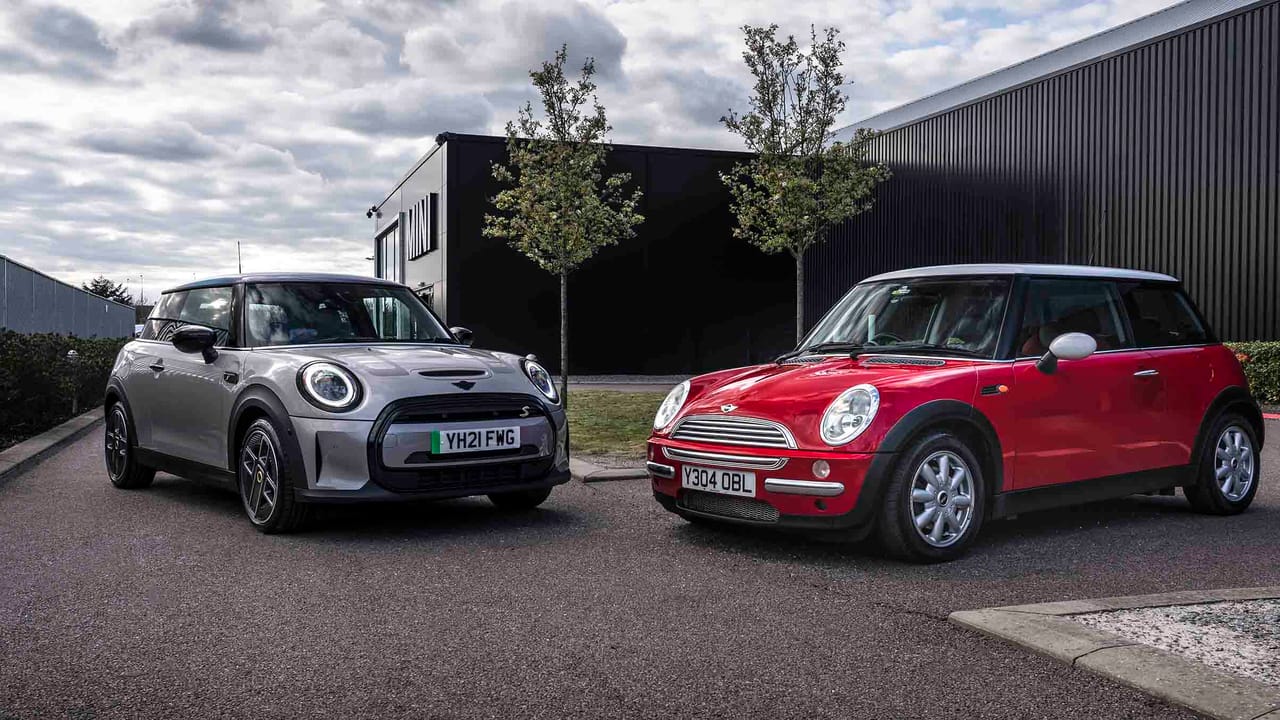
Celebrating 20 years of the BMW Mini

In 1959, BMC launched what became the most iconic of all British cars: the Mini. In 2001, BMW did it all over again. We look back on the past two decades of the brand


Mini.jpg
 
Mini plans Minor revival, new EV hot hatch and larger SUV

Brand’s EV reinvention includes a smaller hatch, larger Countryman and new MPV, as brand turns electric only

Mini is about to undergo a major shake-up as its BMW parent executes plans to dramatically extend the British brand’s line-up and transform it into an electric-only maker by 2030.

Between late 2022 and 2025, Autocar understands, Mini will launch a super-compact three-door electric city car just 3.5m long, before capping the new range with a bigger Countryman crossover and a spacious, long-range electric MPV. These last two models are expected to be at least 4.5m long, making them the biggest Minis yet. Today’s 3-Door Hatch and 5-Door Hatch will be replaced, as will be the Convertible and Clubman, Autocar understands.

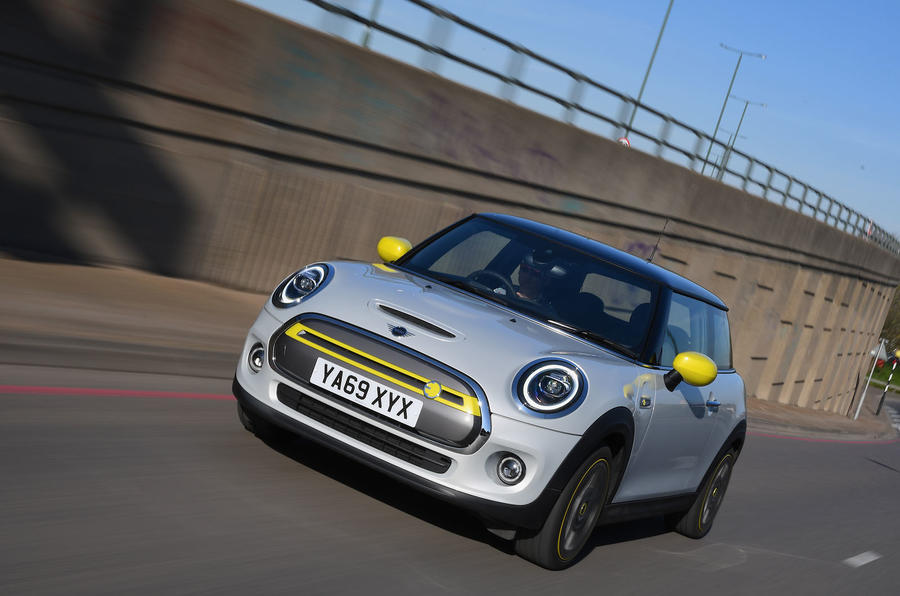
A step towards becoming a fully electrified brand has been taken with the unveiling of the one-off electric Mini JCW Pacesetter, which will be used as a pace car for Formula E.

According to BMW insiders, a less dramatically styled version of the electric JCW will be launched later this year or in early 2022. The JCW EV will be aimed at establishing the credibility of pure-electric Minis by showcasing the pace and sharp handling that have been a hallmark of the brand’s performance cars for decades, before the all-new fourth-generation Mini hatchback arrives eight to 12 months later.

Another all-electric Mini model has been spotted undergoing winter testing recently, and is likely to revive the Minor nameplate.

 
Mini to revive the Minor badge for future EV project?

Last month we revealed that Mini, under the BMW Group, confirmed its plans to go fully EV by 2030 with it announcing that its last new internal combustion engine would be launched in 2025. It was also noted that Mini would be working together with GWM to create a new vehicle architecture for battery-powered models. It’s now been rumoured that for this project, Mini will be reviving the Minor moniker.

As reported by Autocar, the Minor is rumoured to be the first model to come from this joint venture which will be assembled at the new Spotlight factory in Jiangsu. Construction for this new R11 billion plant began last year.

 
Mini John Cooper Works

Long straights awaken its tracking ability, in tight bends it shows its unmistakable talent. In the MINI John Cooper Works, every kilometre becomes an experience - not only on the race track, but also on the road. The fascination exuded by the top sports car in the premium small car segment has grown once again with the latest model update. With fresh design accents and extended standard equipment, the MINI John Cooper Works presents itself more than ever in top form. A new operating system and attractive equipment packages also offer optimised options for enjoying extreme driving pleasure in an individual way.

The character of the MINI John Cooper Works, which is consistently tailored to inspiring performance, is staged even more authentically by the British brand's new, particularly clear and purist design language. At the front of the vehicle, the round LED headlights and the hexagonal radiator grille, which features a red crossbar and now extends far downwards, are particularly prominent. Enlarged cooling air openings ensure optimum temperature control of the drive and brake systems in extremely sporty driving situations. The model-specific side scuttles on the front side panels and the rear apron, which now features a distinctive diffuser to optimise airflow in the rear area of the underbody, have also been redesigned.

The expressive appearance reflects the impressive temperament of the MINI John Cooper Works. Its power source is the four-cylinder engine with MINI TwinPower Turbo technology, developed with the racing expertise of John Cooper Works, which develops a maximum output of 170 kW/231 hp and a maximum torque of 320 Nm from a displacement of 2.0 litres. After the start signal given at a standstill, it takes just 6.3 seconds for the MINI John Cooper Works with standard 6-speed manual transmission to accelerate to 100 km/h. In conjunction with the optional 8-speed Steptronic Sport transmission, the 100 km/h mark is even reached after just 6.1 seconds.


JCW 1.jpgJCW 2.jpgJCW 3.jpgJCW 4.jpgJCW 5.jpgJCW 6.jpgJCW 7.jpgJCW 8.jpg
 
Mini John Cooper Works facelift revealed with updated features

The Mini John Cooper Works has been unveiled, following the reveal of the hatch and cabriolet earlier this year. The updated hot hatch remains mechanically unchanged but some revisions have been made to the appearance and the list of standard features.

Where appearances are concerned, the Mini John Cooper Works has been fitted with the brand’s new design language which gives it a more advanced appearance most particularly at the front. The new LED headlamps and the hexagonal radiator grille, which boasts a red crossbar and now extends far downwards, are particularly prominent.

The Mini John Cooper Works features a redesigned centre instrument with an 8,8-inch touchscreen display in black as standard within the cockpit. A new operating system with a modern graphic display further uplifts the advanced cabin experience with live widgets, which can be selected by means of a swiping motion on the touch display.

 
Mini Cooper S 3-door hatch 2021 UK review

Should I buy one?

The rest of the car is much the same as before. It remains a little smaller on the outside than most superminis and that’s reflected in the cramped back seats and small boot, but the trade-off is that the car is still packed with character, has a cabin that oozes premium appeal and now comes with a decent list of standard kit - although, as ever with Mini, you can customise it until your credit limit cries enough.

A Fiesta ST still delivers more speed and chassis sophistication for less cash, but as an engaging driver’s tool that doubles as a classy runabout, the Cooper S still has a fair amount of appeal.

In many respects, these changes are mere window dressing because the Mini feels much the same as before - although the dampers are a worthwhile addition. It’s still not as accomplished or quick as some, and it costs a little more to buy, but it remains an endearing and entertaining choice.


Mini 1.jpgMini 2.jpgMini 3.jpgMini 4.jpgMini 5.jpgMini 6.jpgMini 7.jpgMini 8.jpgMini 9.jpgMini 10.jpg
 
Top
Sign up to the MyBroadband newsletter
X