


-
- News
-
Categories
- 5G
- ADSL
- AI
- Banking
- Black Friday
- Broadband
- Broadcasting
- Business
- Business Telecoms
- Cellular
- Cloud and Hosting
- Columns
- Cryptocurrency
- Energy
- Enterprise
- Fibre
- Gadgets
- Gaming
- Government
- Hardware
- Industry News
- Internet
- Internet of Things
- Investing
- IT Services
- Motoring
- Reviews
- Science
- Security
- Smartphones
- Software
- Technology
- Telecoms
- Trending
- Wireless
- Press Office
- Forum
- Industry News
- What's Next
- Company hub
- Speed Test
- About us
- Advertise with us
- Contact
- Careers
-
Join the MyBroadband community
South Africa’s biggest forum. Discuss, discover, and connect with thousands of members.
-
Question of the Day: Do you get motion sick?
- Forums
- General discussions
- Motoring and Transportation: Cars, Bikes and Plane
- General Motoring News and Reviews
You are using an out of date browser. It may not display this or other websites correctly.
You should upgrade or use an alternative browser.
You should upgrade or use an alternative browser.
The BMW X3 Thread
- Thread starter FiestaST
- Start date
FiestaST
Honorary Master
Everything Electric Cars review of the new iX3
FiestaST
Honorary Master
FiestaST
Honorary Master
Joe Achilles review of the new iX3
FiestaST
Honorary Master
Auto Social UK review of the new iX3

Jefferson D'Arcy
Expert Member
- Joined
- Feb 7, 2018
- Messages
- 2,244
- Reaction score
- 2,853
Very annoying that the battery version looks pretty good but the combustion version is the vehicular embodiment of a fat tender bro.Joe Achilles review of the new iX3
FiestaST
Honorary Master
FiestaST
Honorary Master
Driven+ review of the new iX3
FiestaST
Honorary Master
Autotrader review of the new iX3
FiestaST
Honorary Master
100 000th fourth-gen BMW X3 produced in SA
Local BMW X3 production has reached a new milestone, with the 100 000th example rolling off the German marque’s Rosslyn assembly line.
BMW South Africa has announced the 100 000th locally-built fourth-generation X3 has rolled off its Rosslyn assembly line.
Finished in Fire Red paintwork, the 100 000th X3 built at Plant Rosslyn is destined for export, to Australia. The 100 000th fourth-generation X3 produced locally is a 30e xDrive variant (in M Sport specification), which is exclusively built in South Africa for the domestic and international markets. The X3 30e, which we sampled at the local launch in 2025, employs a plug-in hybrid (PHEV) powertrain comprising a 140 kW/310 N.m 2.0-litre, four-cylinder turbocharged petrol engine and a 135 kW/250 N.m electric motor – the latter fed by a 19.7 kWh (net) battery pack. The PHEV arrangement produces a combined system output of 220 kW and 450 N.m of torque – good for a claimed 0-100 km/h sprint time of 6.2 seconds and a 215 km/h top speed. BMW claims an electric-only operating range of up to 90 km.
Since production of the fourth-generation BMW X3 kicked off at the German marque’s Pretoria-based facility in October 2024, local and global demand has been high. The Rosslyn plant initially had two production shifts for the X3, but then introduced a third shift in January 2025 to keep up with demand.
“Producing 100 000 fourth-generation BMW X3 vehicles is a significant milestone for BMW Group Plant Rosslyn and a testament to the dedication and professionalism of our associates,” said Danny Bester, Director of BMW Group Plant Rosslyn. “Every vehicle that leaves this plant represents the skill, commitment and pride of the people who build it. It also reflects the trust that customers place in the BMW brand and in the quality delivered here in South Africa.”


Local BMW X3 production has reached a new milestone, with the 100 000th example rolling off the German marque’s Rosslyn assembly line.
BMW South Africa has announced the 100 000th locally-built fourth-generation X3 has rolled off its Rosslyn assembly line.
Finished in Fire Red paintwork, the 100 000th X3 built at Plant Rosslyn is destined for export, to Australia. The 100 000th fourth-generation X3 produced locally is a 30e xDrive variant (in M Sport specification), which is exclusively built in South Africa for the domestic and international markets. The X3 30e, which we sampled at the local launch in 2025, employs a plug-in hybrid (PHEV) powertrain comprising a 140 kW/310 N.m 2.0-litre, four-cylinder turbocharged petrol engine and a 135 kW/250 N.m electric motor – the latter fed by a 19.7 kWh (net) battery pack. The PHEV arrangement produces a combined system output of 220 kW and 450 N.m of torque – good for a claimed 0-100 km/h sprint time of 6.2 seconds and a 215 km/h top speed. BMW claims an electric-only operating range of up to 90 km.
Since production of the fourth-generation BMW X3 kicked off at the German marque’s Pretoria-based facility in October 2024, local and global demand has been high. The Rosslyn plant initially had two production shifts for the X3, but then introduced a third shift in January 2025 to keep up with demand.
“Producing 100 000 fourth-generation BMW X3 vehicles is a significant milestone for BMW Group Plant Rosslyn and a testament to the dedication and professionalism of our associates,” said Danny Bester, Director of BMW Group Plant Rosslyn. “Every vehicle that leaves this plant represents the skill, commitment and pride of the people who build it. It also reflects the trust that customers place in the BMW brand and in the quality delivered here in South Africa.”
FiestaST
Honorary Master
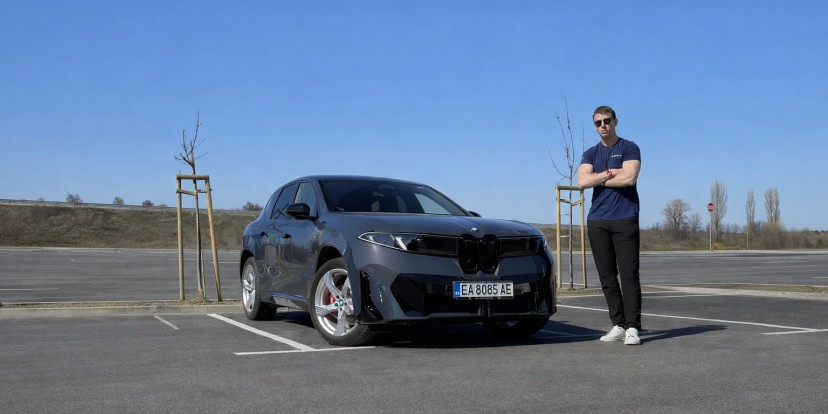
BMW iX3 50 xDrive real life range test with 20-inch rims
BMW wants to open the next chapter in electric mobility with its new generation of models. First of the lot is the new BMW iX3, which for now comes only in the 50 xDrive variant.
All of the parameters of the BMW iX3 50 xDrive are impressive and judging by the initial demand, the model will likely become a huge success for the company. Outputting 469 hp and torque of 645 Nm is certinaly impressive, but today we'll focus on its efficiency and range.
Range anxiety must remain a thing of the past according to BMW officials and we are here to test how true that claim is. The huge battery pack offers 108.7 kWh usable capacity and is a great start, but will the iX3 be efficient enough to stretch it far?
We drove our usual test routes, doing the same track both ways at constant speeds at the same place as with every other car we test. The ambient temperature while testing the BMW iX3 50 xDrive was 11°C. That is good testing weather for an EV, although slightly below the optimal values. Further improvements can be made by equipping more efficient summer tires and having more aerodynamic wheels, although smaller ones are not available.
At our lowest testing speed of 60 km/h, the BMW iX3 50 xDrive performs as great as expected. Aerodynamics don’t really come into play at that speed and the powertrain proves its efficiency. The theoretical distance one can travel at that speed is much higher than even the WLTP figure, which is not that uncommon.
 www.arenaev.com


BMW wants to open the next chapter in electric mobility with its new generation of models. First of the lot is the new BMW iX3, which for now comes only in the 50 xDrive variant.
All of the parameters of the BMW iX3 50 xDrive are impressive and judging by the initial demand, the model will likely become a huge success for the company. Outputting 469 hp and torque of 645 Nm is certinaly impressive, but today we'll focus on its efficiency and range.
Range anxiety must remain a thing of the past according to BMW officials and we are here to test how true that claim is. The huge battery pack offers 108.7 kWh usable capacity and is a great start, but will the iX3 be efficient enough to stretch it far?
We drove our usual test routes, doing the same track both ways at constant speeds at the same place as with every other car we test. The ambient temperature while testing the BMW iX3 50 xDrive was 11°C. That is good testing weather for an EV, although slightly below the optimal values. Further improvements can be made by equipping more efficient summer tires and having more aerodynamic wheels, although smaller ones are not available.
At our lowest testing speed of 60 km/h, the BMW iX3 50 xDrive performs as great as expected. Aerodynamics don’t really come into play at that speed and the powertrain proves its efficiency. The theoretical distance one can travel at that speed is much higher than even the WLTP figure, which is not that uncommon.
BMW iX3 50 xDrive real life range test with 20-inch rims
We test how efficient the BMW iX3 50 xDrive is in the real world and compare it with rivals!
www.arenaev.com
FiestaST
Honorary Master
Autogefuhl review of the new iX3
FiestaST
Honorary Master
FiestaST
Honorary Master
FiestaST
Honorary Master
Speed, heat, and high stakes: testing the new BMW iX3
The whole world can't get enough of the new BMW iX3 - it's a runaway success for the German automaker, so much so that the company had to double shifts in its factory to try and keep up with the demand. We tested the iX3 already and learned that there's way more to it than just marketing - you can find the results of our test right here.
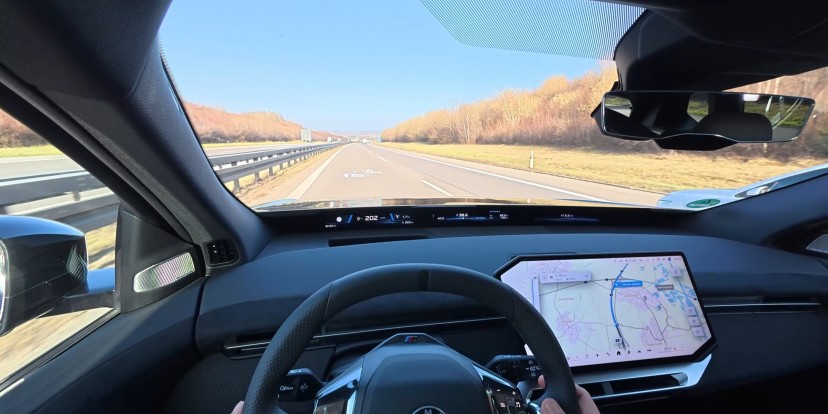
Many people are still looking at the glossy photos and thinking about buying the iX3, while some drivers are already pushing this electric SUV to its absolute limits. A popular German car reviewer spent an entire weekend driving over 1,000 km in a brand-new iX3 to see if the hype matches reality. And this wasn't a slow crawl through city streets - the test involved high-speed runs on the German Autobahn to find out how this electric car handles extreme conditions.
Performance is a major selling point for BMW, and the iX3 does not disappoint on paper. It can sprint from 0 to 100 km/h in 4.9 seconds. For a vehicle that weighs nearly 2.8 metric tons, that is a very quick launch. The top speed is electronically capped at 210 km/h. During high-speed testing, the car remained impressively quiet. Even at 200 km/h, the cabin noise measured only 72 decibels. This makes it almost as quiet as the much more expensive BMW iX. But the test did reveal one strange flaw: the hood begins to vibrate and flutter once the car passes 140 km/h. It is a small detail, but a bit annoying for a luxury vehicle.
When it comes to electric cars, speed usually kills the range. The iX3 shows exactly how much power you lose when you step on it - at a steady 120 km/h, the car uses 23 kWh of electricity for every 100 km, allowing for a total range of about 473 km. If you increase your speed to 140 km/h, consumption jumps to 29 kWh, and your range drops to 375 km. At 160 km/h energy use goes up to 36 kWh, and if you stay pinned at the 200 km/h mark, the car devours 50 kWh every 100 km. At that rate, you would need to find a charger after only 200 km of driving.
 www.arenaev.com
The whole world can't get enough of the new BMW iX3 - it's a runaway success for the German automaker, so much so that the company had to double shifts in its factory to try and keep up with the demand. We tested the iX3 already and learned that there's way more to it than just marketing - you can find the results of our test right here.
Many people are still looking at the glossy photos and thinking about buying the iX3, while some drivers are already pushing this electric SUV to its absolute limits. A popular German car reviewer spent an entire weekend driving over 1,000 km in a brand-new iX3 to see if the hype matches reality. And this wasn't a slow crawl through city streets - the test involved high-speed runs on the German Autobahn to find out how this electric car handles extreme conditions.
Performance is a major selling point for BMW, and the iX3 does not disappoint on paper. It can sprint from 0 to 100 km/h in 4.9 seconds. For a vehicle that weighs nearly 2.8 metric tons, that is a very quick launch. The top speed is electronically capped at 210 km/h. During high-speed testing, the car remained impressively quiet. Even at 200 km/h, the cabin noise measured only 72 decibels. This makes it almost as quiet as the much more expensive BMW iX. But the test did reveal one strange flaw: the hood begins to vibrate and flutter once the car passes 140 km/h. It is a small detail, but a bit annoying for a luxury vehicle.
When it comes to electric cars, speed usually kills the range. The iX3 shows exactly how much power you lose when you step on it - at a steady 120 km/h, the car uses 23 kWh of electricity for every 100 km, allowing for a total range of about 473 km. If you increase your speed to 140 km/h, consumption jumps to 29 kWh, and your range drops to 375 km. At 160 km/h energy use goes up to 36 kWh, and if you stay pinned at the 200 km/h mark, the car devours 50 kWh every 100 km. At that rate, you would need to find a charger after only 200 km of driving.
Speed, heat, and high stakes: testing the new BMW iX3
The new BMW iX3 proves to be a quiet and efficient high-speed cruiser, though its record-breaking charging speeds are occasionally hampered by battery heat.
www.arenaev.com
FiestaST
Honorary Master


FiestaST
Honorary Master
FiestaST
Honorary Master

BMW Turns The New iX3 Into A Safety Car For Real Madrid Team
Replacing the M5 Touring used last year, the second-generation BMW iX3 takes the role of a Safety Car for the Real Madrid football team.
FiestaST
Honorary Master
FiestaST
Honorary Master
Remove Before Race review of the new iX3