-
- News
-
Categories
- 5G
- ADSL
- AI
- Banking
- Black Friday
- Broadband
- Broadcasting
- Business
- Business Telecoms
- Cellular
- Cloud and Hosting
- Columns
- Cryptocurrency
- Energy
- Enterprise
- Fibre
- Gadgets
- Gaming
- Government
- Hardware
- Industry News
- Internet
- Internet of Things
- Investing
- IT Services
- Motoring
- Reviews
- Science
- Security
- Smartphones
- Software
- Technology
- Telecoms
- Trending
- Wireless
- Press Office
- Forum
- Industry News
- What's Next
- Company hub
- Speed Test
- About us
- Advertise with us
- Contact
- Careers


-
Join the MyBroadband community
South Africa’s biggest forum. Discuss, discover, and connect with thousands of members.
-
Question of the Day: Have you had a bad taxi / ride hailing experience in South Africa?

You are using an out of date browser. It may not display this or other websites correctly.
You should upgrade or use an alternative browser.
You should upgrade or use an alternative browser.
The BYD (EV) Thread
- Thread starter FiestaST
- Start date

FiestaST
Honorary Master
CarExpert insert of the BYD Shark
FiestaST
Honorary Master
FiestaST
Honorary Master
CarSauce insert of the BYD Shark
FiestaST
Honorary Master
CarExpert review of the Sealion 6
FiestaST
Honorary Master
wingnut771
Honorary Master
FiestaST
Honorary Master
Uber partners BYD to offer drivers discount EVs
Ride-hailing provider incentivises employees to go electric as it nears 2025 deadline for EV-only fleet in London

 www.autocar.co.uk
Ride-hailing provider incentivises employees to go electric as it nears 2025 deadline for EV-only fleet in London
Uber partners BYD to offer drivers discount EVs | Autocar
Ride-hailing provider incentivises employees to go electric as it nears 2025 deadline for EV-only fleet in London
FiestaST
Honorary Master
Move over Prius: is your next Uber a... BYD?
And it probably *will* go south of the river this time of night
With a heavy heart, it's possibly time to say goodbye to the Uber Prius. BYD has gone into partnership with the ridehailing company, enabling existing and wannabe Uber drivers to get behind the wheel of a new all-electric BYD.
Starting in Europe, BYD is putting 100,000 fully electric cars into Uber's ridehailing fleet, spelling the rapid demise of the equally rapid 2am Uber hybrid drunken human door deliveries.
According to BYD, Uber drivers are opting for EVs five times quicker than private owners. The initial outlay of EVs and availability of financing have been cited as the main reasons for putting off drivers switching to electric. But for commercial ridehailing folk, the affordability of BYD and lower costs of maintenance and repair for EVs more generally holds a lot of understandable appeal.
It’s a global deal which will see BYD models expand into other markets, including Latin America, the Middle East, Canada, Australia and New Zealand, for the first time. There’s talk of finance deals on buying and leasing and even discounts on charging (and other carrot-y type incentives), depending on the market.

And it probably *will* go south of the river this time of night
With a heavy heart, it's possibly time to say goodbye to the Uber Prius. BYD has gone into partnership with the ridehailing company, enabling existing and wannabe Uber drivers to get behind the wheel of a new all-electric BYD.
Starting in Europe, BYD is putting 100,000 fully electric cars into Uber's ridehailing fleet, spelling the rapid demise of the equally rapid 2am Uber hybrid drunken human door deliveries.
According to BYD, Uber drivers are opting for EVs five times quicker than private owners. The initial outlay of EVs and availability of financing have been cited as the main reasons for putting off drivers switching to electric. But for commercial ridehailing folk, the affordability of BYD and lower costs of maintenance and repair for EVs more generally holds a lot of understandable appeal.
It’s a global deal which will see BYD models expand into other markets, including Latin America, the Middle East, Canada, Australia and New Zealand, for the first time. There’s talk of finance deals on buying and leasing and even discounts on charging (and other carrot-y type incentives), depending on the market.
FiestaST
Honorary Master
BYD Dolphin vs Ora 03 - Electrifying
FiestaST
Honorary Master
BYD Seal vs VW ID.7 - CarsIreland.ie
FiestaST
Honorary Master
BYD sets new sales record of 342,000 NEVs, despite slower EV sales
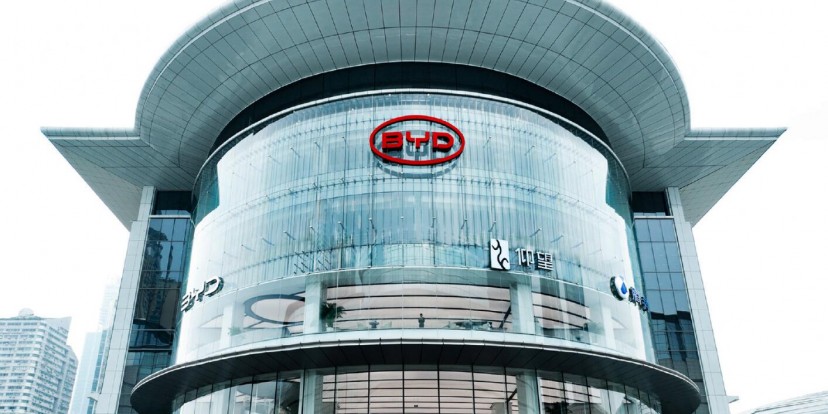
BYD's July sales report is out and the company was able to beat its previous record of 341,658 of sold NEVs in June. July shipments amount to 342,383 NEVs. New Energy Vehicle is an umbrella term for BEV, PHEV and EREV, so 130,000 of those are pure EVs. That's a 10% drop compared to June.
On the other hand, hybrids continue to gain momentum. In July, the company sold 210,799 plug-in hybrids. That's a 67% increase year-over-year and 8% up from June. Overall, BYD's NEVs recorded a 30% increase year-on-year.
For the first seven months of 2024, BYD sold 1,955,366 NEVs, a 29% increase compared to the same period last year. However, BEVs slipped 14% compared to 2024, so it's mostly thanks to the tremendous PHEV growth that BYD maintains a positive sales trend. The automaker shipped 1,091,791 PHEVs this year alone.
 www.arenaev.com
BYD's July sales report is out and the company was able to beat its previous record of 341,658 of sold NEVs in June. July shipments amount to 342,383 NEVs. New Energy Vehicle is an umbrella term for BEV, PHEV and EREV, so 130,000 of those are pure EVs. That's a 10% drop compared to June.
On the other hand, hybrids continue to gain momentum. In July, the company sold 210,799 plug-in hybrids. That's a 67% increase year-over-year and 8% up from June. Overall, BYD's NEVs recorded a 30% increase year-on-year.
For the first seven months of 2024, BYD sold 1,955,366 NEVs, a 29% increase compared to the same period last year. However, BEVs slipped 14% compared to 2024, so it's mostly thanks to the tremendous PHEV growth that BYD maintains a positive sales trend. The automaker shipped 1,091,791 PHEVs this year alone.
BYD sets new sales record of 342,000 NEVs, despite slower EV sales
PHEVs are on the rise.
www.arenaev.com
FiestaST
Honorary Master
FiestaST
Honorary Master
BYD unveils 2025 Seal with LiDAR, based on the e-Platform 3.0 Evo
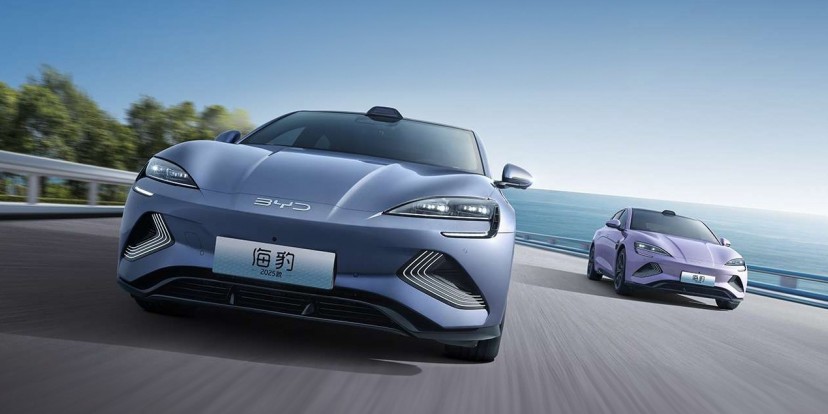
The 2025 BYD Seal is official, and it's the first BYD sedan to use the e-Platform 3.0 Evo architecture and the first BYD model to feature LiDAR.
The e-Platform 3.0 Evo is an 800V architecture with better performance and faster charging than the e-Platform 3.0.
The 2025 Seal is 4,800 mm long, 1,875 mm wide, 1,460 mm tall, and has a 2,920 mm wheelbase. It will come in four versions with the first three featuring single-motor rear-wheel drive. The top-of-the-line model offers dual-motor all-wheel drive.
The entry-level model uses a 61.44 kWh battery pack and offers a CLTC range of up to 510 km. The other three models move up to an 80.64 kWh battery with a CLTC range of up to 650 km on the single-motor models, and up to 600 km on the dual-motor version. The batteries are BYD's blade units based on lithium iron phosphate chemistry.
The single-motor 2025 Seal sprints to 100 km/h in 5.9 seconds, while the highest-powered dual-motor unit does it in 3.8 seconds.
 www.arenaev.com


The 2025 BYD Seal is official, and it's the first BYD sedan to use the e-Platform 3.0 Evo architecture and the first BYD model to feature LiDAR.
The e-Platform 3.0 Evo is an 800V architecture with better performance and faster charging than the e-Platform 3.0.
The 2025 Seal is 4,800 mm long, 1,875 mm wide, 1,460 mm tall, and has a 2,920 mm wheelbase. It will come in four versions with the first three featuring single-motor rear-wheel drive. The top-of-the-line model offers dual-motor all-wheel drive.
The entry-level model uses a 61.44 kWh battery pack and offers a CLTC range of up to 510 km. The other three models move up to an 80.64 kWh battery with a CLTC range of up to 650 km on the single-motor models, and up to 600 km on the dual-motor version. The batteries are BYD's blade units based on lithium iron phosphate chemistry.
The single-motor 2025 Seal sprints to 100 km/h in 5.9 seconds, while the highest-powered dual-motor unit does it in 3.8 seconds.
BYD unveils 2025 Seal with LiDAR, based on the e-Platform 3.0 Evo
The Seal 2025 has either a 61.44 kWh or 80.64 kWh battery, four models.
www.arenaev.com
FiestaST
Honorary Master
FiestaST
Honorary Master
FiestaST
Honorary Master
BYD's Yangwang U9 electric supercar hits 375 km/h in latest test
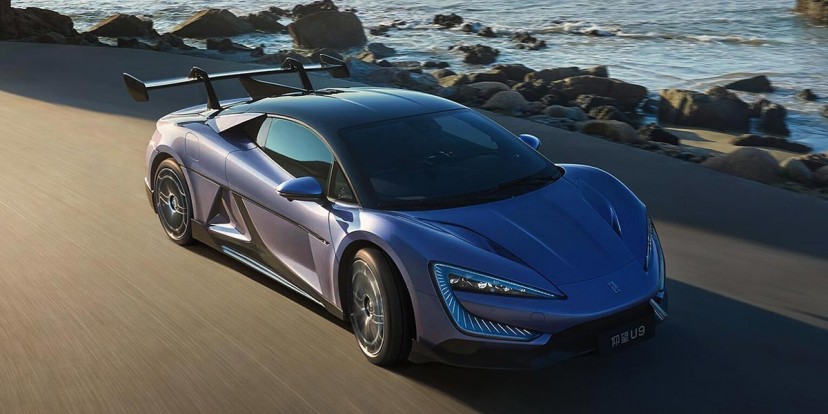
BYD's premium sub-brand Yangwang posted a cool new video of its U9 fully electric supercar. The vehicle was announced back in January 2023, but pre-sales began in February this year. To promote the U9, Yangwang tested on a race track and topped 375.12 km/h.
The test was carried out in May this year, but the company is releasing the video now. With a top speed of 375 km/h, the Yangwang U9 easily becomes one of the fastest electric cars on the planet. In fact, it's one of the fastest cars, period. Anything that gets close to 400 km/h top speed is quite impressive even for a supercar ICE vehicle. And the test shows the U9 can go way beyond its officially listed top speed of 300 km/h.
 www.arenaev.com
BYD's premium sub-brand Yangwang posted a cool new video of its U9 fully electric supercar. The vehicle was announced back in January 2023, but pre-sales began in February this year. To promote the U9, Yangwang tested on a race track and topped 375.12 km/h.
The test was carried out in May this year, but the company is releasing the video now. With a top speed of 375 km/h, the Yangwang U9 easily becomes one of the fastest electric cars on the planet. In fact, it's one of the fastest cars, period. Anything that gets close to 400 km/h top speed is quite impressive even for a supercar ICE vehicle. And the test shows the U9 can go way beyond its officially listed top speed of 300 km/h.
BYD's Yangwang U9 electric supercar hits 375 km/h in latest test
One of the fastest EVs on Earth.
www.arenaev.com
FiestaST
Honorary Master
The Yangwang U9 has just hit 233mph to become the world’s third-fastest EV
BYD’s subsidiary marque has proven China’s latest hypercar means business
Watch out, Aspark Owl: the Yangwang U9 wants your crown. In a recent test, the U9 topped out at 233mph, which means only the Rimac Nevera (258mph) and the Owl (272mph) stand in its route to the throne.
That means it’s already snuck into the electric car world’s top three, putting it way past the likes of the Pininfarina Battista (222mph) and the Lotus Evija (218mph). The Tesla Roadster might be in with a shot someday too, if it ever goes from hopes and dreams to an actual production car.
What makes the U9’s feat even more impressive is that Yangwang claimed its top speed was ‘only’ 186mph back when it was first revealed. Talk about underestimating your shiny new car’s potential, right? Anyway, we should’ve seen this coming given that it's powered by a quartet of electric motors, with the all-important figures being 1,288bhp and 1,240lb ft.
It certainly looks the part, no? From the tightly profiled C-shaped headlights to the LMP-racer-like rear wing and the generous touches of carbon across the exterior, you’d be forgiven for thinking this is a two-something-million-quid hypercar. It’s not: Yangwang says the U9 will cost the equivalent of £183,000 when it goes on sale later this year. Woah.
BYD’s subsidiary marque has proven China’s latest hypercar means business
Watch out, Aspark Owl: the Yangwang U9 wants your crown. In a recent test, the U9 topped out at 233mph, which means only the Rimac Nevera (258mph) and the Owl (272mph) stand in its route to the throne.
That means it’s already snuck into the electric car world’s top three, putting it way past the likes of the Pininfarina Battista (222mph) and the Lotus Evija (218mph). The Tesla Roadster might be in with a shot someday too, if it ever goes from hopes and dreams to an actual production car.
What makes the U9’s feat even more impressive is that Yangwang claimed its top speed was ‘only’ 186mph back when it was first revealed. Talk about underestimating your shiny new car’s potential, right? Anyway, we should’ve seen this coming given that it's powered by a quartet of electric motors, with the all-important figures being 1,288bhp and 1,240lb ft.
It certainly looks the part, no? From the tightly profiled C-shaped headlights to the LMP-racer-like rear wing and the generous touches of carbon across the exterior, you’d be forgiven for thinking this is a two-something-million-quid hypercar. It’s not: Yangwang says the U9 will cost the equivalent of £183,000 when it goes on sale later this year. Woah.