The BYD (EV) Thread

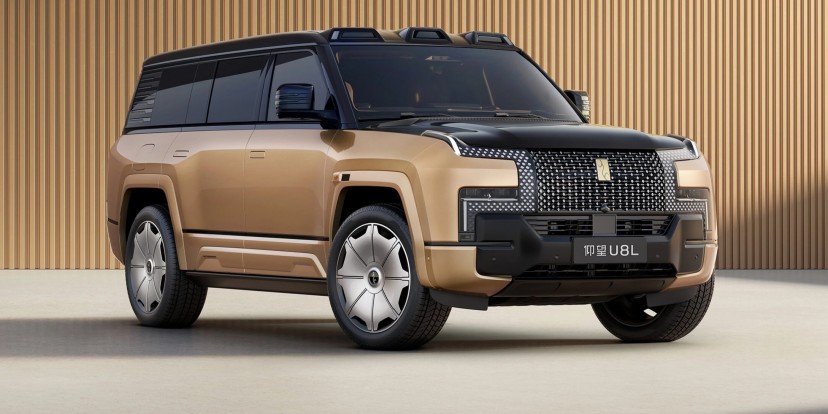
BYD Yangwang U8L proves its mettle by shrugging off a two-ton tree drop

The fierce competition in the high-end EV market forces manufacturers to get creative, and China’s automotive giant, BYD, just proved a point in the most dramatic way possible. To prove the durability of its ultra-lux Yangwang U8L, the company staged a test that would make most drivers cringe: dropping a massive two-ton tree onto the vehicle. Not once, but three times.

The result? According to the company, the colossal long-wheelbase SUV barely registered the event, driving away without a hiccup. This extreme demonstration makes the Yangwang U8L a bit more than just a luxurious ride. It suggests this SUV is ready for some seriously tough treatment. The need for a car to survive an actual two-ton tree drop may seem like overkill, but the underlying message is clear: this EV has a body structure built to withstand incredible force.

During the third and final drop, BYD engineers measured the maximum impact energy at 50.4 kilojoules (or about 37,200 pound-feet). After receiving the full force of the wooden onslaught, the luxury EV maintained its integrity. The pillars supporting the roof remained straight, the body structure stayed whole, and, perhaps most importantly for anyone who might actually be inside, the door still opened.

For buyers interested in exactly how much vehicle they are getting for their money, the U8L is an imposing machine. It is larger than some of the most famous luxury SUVs in the world, including the Rolls-Royce Cullinan and the Range Rover Long Wheelbase. The BYD model measures 5.4 m in length, 2.05 m in width, and 1.92 m in height. As for its price tag, it starts at RMB 1.28 million, which converts to approximately €154,000, making it one of the most expensive models to come from a Chinese automaker.

 
BYD Sealion 5 launching this week as SA’s most affordable plug-in hybrid

Plug-in hybrids (PHEVs) are seen as an ideal bridge between internal combustion and electric motoring, particularly for countries such as South Africa, where long-distance driving is the norm and range-anxiety is a real concern.

Although they do have smaller and cheaper batteries than traditional electric vehicles, the cost of incorporating electric and petrol engines means they aren’t necessarily cheap to produce and, at this stage, all PHEVs cost more than R600,000 in South Africa.

That’s set to change with the BYD Sealion 5, which is launching in South Africa this week. Pricing, which will be confirmed later today, is rumoured to start around the R500,000 mark, significantly undercutting the larger Sealion 6, which costs from R639,900.

It is also expected to undercut the newly introduced Geely E5 EM-A, which costs R599,999, and the Chery Tiggo 7 CSH PHEV, which retails at R619,900.

In overseas markets, the Sealion 5 is offered in two battery variants, with the 12.9 kWh battery option allowing an electric-only range of up to 71km on the NEDC cycle and the 18.3 kWh version covering up to 100km, according to official claims. Official combined fuel consumption is as low as 1.3 litres per 100km, but that would of course depend on owners charging their batteries regularly.

The vehicle’s Dual-Mode Intelligent hybrid system pairs a 1.5-litre normally aspirated petrol engine with an electric motor for a combined output of 156kW.

 
BYD Sealion 5: SA Price & Specs

Launched as the most affordable plug-in hybrid in South Africa, here’s how much two-strong BYD Sealion 5 lineup costs in SA.

In September 2025, BYD introduced the Dolphin Surf all-electric city hatchback, which is one of the most affordable EVs in South Africa, to our market. Now, BYD has launched the Sealion 5 plug-in hybrid (PHEV) to our shores. The Sealion 5 is available in two flavours: entry-level Comfort and range-topping Dynamic.

The Sealion 5 is built on BYD’s ‘Dual-Mode intelligent’ (DM-i) hybrid platform. The compact SUV’s PHEV powertrain pairs a permanent magnet synchronous electric motor with a 1.5-litre, four-cylinder petrol engine for a combined system output of 156 kW and 300 N.m of torque. Power is delivered to the front wheels via a CVT transmission. BYD claims an average fuel consumption of 5.2 L/100 km, or 1.4 L/100 km when the 13 kWh battery is fully charged.

Standard equipment includes a 12.8-inch infotainment screen, wireless smartphone charging, and keyless entry. Dynamic spec further gains heated/ventilated electrically operated front seats, a 360-degree camera and parking sensors, a panoramic sunroof, and multiple USB-A and -C ports. The Sealion 5 includes BYD’s vehicle-to-load (V2L) capability, allowing the car to be used as an external charging source.

BYD Sealion 5 Price in SA

Priced from R499 900, the Sealion 5 launched as the most affordable PHEV in SA. Included in the price is a five-year/100 000 km vehicle warranty, eight-year/150 000 km battery warranty and a four-year/60 000 km service plan.

Sealion 5 Comfort: R499 900
Sealion 5 Dynamic: R569 900

 
BYD Sealion 5 (2025) Launch Review

What does the BYD Sealion 5 cost in SA?

Derivative Price
BYD Sealion 5 DM-i Comfort R499 900
BYD Sealion 5 DM-i Dynamic R569 900

Pricing correct as of December 2025.

All models boast a 5-year/100 000 km warranty, an 8-year/200 000 km power battery warranty, a 4-year/60 000 km service plan and roadside assistance for 5 years/100 000 km.

Summary

Considering the strong performance, comfortable ride quality and space on offer, we would say the BYD Sealion 5 is definitely worthy of buyers’ consideration when shopping for a compact family SUV. What’s more, BYD South Africa is making all the right noises about its plans for the local market, which bodes well for aftersales care and resale value.

 
BYD Sealion 5 (2025) Launch Review

What does the BYD Sealion 5 cost in SA?

Derivative Price
BYD Sealion 5 DM-i Comfort R499 900
BYD Sealion 5 DM-i Dynamic R569 900

Pricing correct as of December 2025.

All models boast a 5-year/100 000 km warranty, an 8-year/200 000 km power battery warranty, a 4-year/60 000 km service plan and roadside assistance for 5 years/100 000 km.

Summary

Considering the strong performance, comfortable ride quality and space on offer, we would say the BYD Sealion 5 is definitely worthy of buyers’ consideration when shopping for a compact family SUV. What’s more, BYD South Africa is making all the right noises about its plans for the local market, which bodes well for aftersales care and resale value.

Checking some videos now. Under 500k for a PHEV with 50KM range is too good not to look at.
 
BYD dominates China’s electric car race while Tesla struggles

The world’s largest and fastest-moving EV market is China, and the latest sales figures confirm a clear trend: local champions are pulling ahead, leaving international players to fight for smaller slices of the pie. November data from the China Passenger Car Association (CPCA) shows that BYD is setting a pace that few can match. The data presents a story of massive growth for some, but it also reveals a sobering reality for Tesla as it closes out the year.

BYD, which sells both pure electric and plug-in hybrid models, took the top spot in November with 306,561 passenger new energy vehicles (NEVs) sold at retail. This huge number gave the automaker a 23.2 percent market share for the month. This share was only slightly higher than its 23.1 percent in October, but it shows a steady hold on the leadership position.

Just behind the leader, Geely Auto cemented its strong second-place finish, selling 172,169 NEV units. Geely’s performance was remarkably strong, posting a 4.8 percent increase from the previous month and an eye-popping 42.4 percent surge compared to the same month last year.

Tesla made a dramatic return to the top 10 ranking after an unusually rough October. In November, Tesla delivered 73,145 vehicles to Chinese buyers. This sales volume represents an incredible 181.3 percent jump from the 26,006 units sold in October, which was the lowest total for the company since November 2022. Tesla’s comeback landed the company in fifth place with a 5.5 percent share of the NEV market. Unfortunately, even with the big monthly jump, the total number was down 5 percent compared to November of last year.


1765368933544.png


1765368941996.png
 
BYD dominates China’s electric car race while Tesla struggles

The world’s largest and fastest-moving EV market is China, and the latest sales figures confirm a clear trend: local champions are pulling ahead, leaving international players to fight for smaller slices of the pie. November data from the China Passenger Car Association (CPCA) shows that BYD is setting a pace that few can match. The data presents a story of massive growth for some, but it also reveals a sobering reality for Tesla as it closes out the year.

BYD, which sells both pure electric and plug-in hybrid models, took the top spot in November with 306,561 passenger new energy vehicles (NEVs) sold at retail. This huge number gave the automaker a 23.2 percent market share for the month. This share was only slightly higher than its 23.1 percent in October, but it shows a steady hold on the leadership position.

Just behind the leader, Geely Auto cemented its strong second-place finish, selling 172,169 NEV units. Geely’s performance was remarkably strong, posting a 4.8 percent increase from the previous month and an eye-popping 42.4 percent surge compared to the same month last year.

Tesla made a dramatic return to the top 10 ranking after an unusually rough October. In November, Tesla delivered 73,145 vehicles to Chinese buyers. This sales volume represents an incredible 181.3 percent jump from the 26,006 units sold in October, which was the lowest total for the company since November 2022. Tesla’s comeback landed the company in fifth place with a 5.5 percent share of the NEV market. Unfortunately, even with the big monthly jump, the total number was down 5 percent compared to November of last year.


View attachment 1870185


View attachment 1870186
Is that because CCP forces the sheeple to buy chinese brands?
 
Top
Sign up to the MyBroadband newsletter
X