


-
- News
-
Categories
- 5G
- ADSL
- AI
- Banking
- Black Friday
- Broadband
- Broadcasting
- Business
- Business Telecoms
- Cellular
- Cloud and Hosting
- Columns
- Cryptocurrency
- Energy
- Enterprise
- Fibre
- Gadgets
- Gaming
- Government
- Hardware
- Industry News
- Internet
- Internet of Things
- Investing
- IT Services
- Motoring
- Reviews
- Science
- Security
- Smartphones
- Software
- Technology
- Telecoms
- Trending
- Wireless
- Press Office
- Forum
- Industry News
- What's Next
- Company hub
- Speed Test
- About us
- Advertise with us
- Contact
- Careers
-
Join the MyBroadband community
South Africa’s biggest forum. Discuss, discover, and connect with thousands of members.
-
Question of the Day: Museums you've been to, would recommend, or want to go to?
You are using an out of date browser. It may not display this or other websites correctly.
You should upgrade or use an alternative browser.
You should upgrade or use an alternative browser.
The BYD (EV) Thread
- Thread starter FiestaST
- Start date
FiestaST
Honorary Master
BYD Shark 6 bakkie beefed-up with off-road upgrades
An Australian off-road accessories and tuning company has beefed-up BYD’s Shark 6 double-cab bakkie with a selection of off-road upgrades.
In a bid to enhance the BYD Shark 6 plug-in hybrid (PHEV) bakkie, Australian off-road accessories and tuning company Hamer 4×4 has handed the Chinese marque’s new-energy double-cab a selection of off-road niceties.
The selection of upgrades made to BYD Shark 6, which we evaluated for a road test in 2025, includes the fitment of front and rear steel bumpers to improve the bakkie’s standard approach and departure angles – the former and latter being 31 and 19.3 degrees, respectively. A duo of LED spotlights is fitted to the front bumper, while customers have the option of specifying a front winch. The front recovery hooks and bash plate are finished in red. A towing kit is included with the upgrades.
Further included in the catalogue of upgrades are additional underbody protection plates, steel side steps, and a retractable load bay cover. Chunky all-terrain and mud-terrain tyres are available, as well as a variety of wheel options.

An Australian off-road accessories and tuning company has beefed-up BYD’s Shark 6 double-cab bakkie with a selection of off-road upgrades.
In a bid to enhance the BYD Shark 6 plug-in hybrid (PHEV) bakkie, Australian off-road accessories and tuning company Hamer 4×4 has handed the Chinese marque’s new-energy double-cab a selection of off-road niceties.
The selection of upgrades made to BYD Shark 6, which we evaluated for a road test in 2025, includes the fitment of front and rear steel bumpers to improve the bakkie’s standard approach and departure angles – the former and latter being 31 and 19.3 degrees, respectively. A duo of LED spotlights is fitted to the front bumper, while customers have the option of specifying a front winch. The front recovery hooks and bash plate are finished in red. A towing kit is included with the upgrades.
Further included in the catalogue of upgrades are additional underbody protection plates, steel side steps, and a retractable load bay cover. Chunky all-terrain and mud-terrain tyres are available, as well as a variety of wheel options.
FiestaST
Honorary Master
FiestaST
Honorary Master
BYD starts rollout of 1MW charging network
The race to make electric cars as easy to refuel as gas-powered ones took a giant leap forward. BYD has officially started installing its new "megawatt flash charging" stations across China, shifting the company from talking about fast charging to actually putting the tools in the ground for drivers to use. Industry experts at Deutsche Bank believe this rollout will help the company sell 4.9 million vehicles in 2026 - a 6% increase from the year before.
The new charging stations look very different from the ones you might be used to. They feature a bright cyan exterior and a unique T-shaped design. Instead of heavy cables lying on the dirty ground, the cables hang down from the top of the structure. This design uses a special pulley system that makes the heavy cords feel light. It prevents people from tripping and keeps the equipment clean. BYD wants these eye-catching blue stations to become a famous symbol of their brand - much like a certain fast-food chain's golden arches.
The technology itself is impressive. These stations are the first in the world designed specifically for passenger EVs to use a full megawatt of power - that's 1,000 kW going into your car. The system uses three "thousand" markers to set records: 1,000V, 1,000A, and 1,000 kW of power. Some versions can even reach a peak output of 1,360 kW. This allows a car to add about 2 km of driving range for every single second it is plugged in. In just five minutes, a driver could add 400 km of range to their battery.
To keep things from getting too hot while moving all that electricity, the system uses liquid cooling. This works like a radiator in a car, pumping fluid through the cables and the charging gun to prevent overheating. BYD also uses "dual-gun" technology. This means one car can plug into two hoses at the same time to get power even faster. This hardware is part of what BYD calls its "Super e-Platform," which includes BYD's latest blade batteries and high-tech computer chips made of silicon carbide.
The race to make electric cars as easy to refuel as gas-powered ones took a giant leap forward. BYD has officially started installing its new "megawatt flash charging" stations across China, shifting the company from talking about fast charging to actually putting the tools in the ground for drivers to use. Industry experts at Deutsche Bank believe this rollout will help the company sell 4.9 million vehicles in 2026 - a 6% increase from the year before.
The new charging stations look very different from the ones you might be used to. They feature a bright cyan exterior and a unique T-shaped design. Instead of heavy cables lying on the dirty ground, the cables hang down from the top of the structure. This design uses a special pulley system that makes the heavy cords feel light. It prevents people from tripping and keeps the equipment clean. BYD wants these eye-catching blue stations to become a famous symbol of their brand - much like a certain fast-food chain's golden arches.
The technology itself is impressive. These stations are the first in the world designed specifically for passenger EVs to use a full megawatt of power - that's 1,000 kW going into your car. The system uses three "thousand" markers to set records: 1,000V, 1,000A, and 1,000 kW of power. Some versions can even reach a peak output of 1,360 kW. This allows a car to add about 2 km of driving range for every single second it is plugged in. In just five minutes, a driver could add 400 km of range to their battery.
To keep things from getting too hot while moving all that electricity, the system uses liquid cooling. This works like a radiator in a car, pumping fluid through the cables and the charging gun to prevent overheating. BYD also uses "dual-gun" technology. This means one car can plug into two hoses at the same time to get power even faster. This hardware is part of what BYD calls its "Super e-Platform," which includes BYD's latest blade batteries and high-tech computer chips made of silicon carbide.
What Car? review of the Atto 3 Evo
Bit of a sad review...
FiestaST
Honorary Master
FiestaST
Honorary Master
FiestaST
Honorary Master
SA-bound Denza B8 SUV scores five stars for safety at ANCAP
The Denza B8 has been awarded the full complement of five stars at an ANCAP safety test.
Scheduled to arrive in South Africa in 2026, the Denza B8 has achieved a full five-star rating by the Australasian New Car Assessment Program (ANCAP). Watch the test below…
The B8 delivered positive results across all four key areas of the assessment, with some omissions to note. The vehicle was tested against the then-latest 2023-2025 ANCAP criteria, where it achieved its highest score (95%) in the Child Occupant Protection category. The B8 lost some points in this category for not offering third-row seats with top tethers. The B8 received 86% for adult occupant protection. Driver neck and chest protection were deemed “adequate” in the full-width frontal impact test.
The B8 scored 75% in the Vulnerable Road Users category, with ANCAP noting “mostly poor” pelvis protection. In the Safety Assist category, where it scored received 78%, the B8 was penalised for the lack of ADAS intervention when the driver is distracted or unresponsive, while the lane departure warning system also failed during testing.
The Denza B8 has been awarded the full complement of five stars at an ANCAP safety test.
Scheduled to arrive in South Africa in 2026, the Denza B8 has achieved a full five-star rating by the Australasian New Car Assessment Program (ANCAP). Watch the test below…
The B8 delivered positive results across all four key areas of the assessment, with some omissions to note. The vehicle was tested against the then-latest 2023-2025 ANCAP criteria, where it achieved its highest score (95%) in the Child Occupant Protection category. The B8 lost some points in this category for not offering third-row seats with top tethers. The B8 received 86% for adult occupant protection. Driver neck and chest protection were deemed “adequate” in the full-width frontal impact test.
The B8 scored 75% in the Vulnerable Road Users category, with ANCAP noting “mostly poor” pelvis protection. In the Safety Assist category, where it scored received 78%, the B8 was penalised for the lack of ADAS intervention when the driver is distracted or unresponsive, while the lane departure warning system also failed during testing.
FiestaST
Honorary Master

BYD hit by steepest sales drop since pandemic
Chinese EV maker BYD experienced a significant global sales drop of 41.1% in February, marking its steepest decline since the pandemic in 2020 and continuing a six-month downtrend due to fierce competition in the automotive market
 www.timeslive.co.za

Lawnchairman
Expert Member
FiestaST
Honorary Master
FiestaST
Honorary Master
Electrifying review of the Atto 3 Evo
FiestaST
Honorary Master
Test figures: BYD Dolphin Surf
BYD Dolphin Surf acceleration
On our test strip, the Dolphin Surf Dynamic completed the 0-100 km/h dash in 15.23 seconds; besting BYD’s 15.5-second claim by 0.27 seconds. The most compact EV in BYD’s portfolio recorded 0-60 and 0-80 km/h sprint times of 6.28 and 10.75 seconds, respectively. The Dolphin Surf covered the quarter mile in 19.93 seconds. In the in-gear acceleration stakes, the Dolphin Surf accelerated from 60-80 and 80-100 km/h in 3.89 and 5.48 seconds, respectively.
BYD Dolphin Surf braking times
In our stringent 10-stop 100-0 km/h emergency braking test, the Dolphin Surf’s ventilated front/solid rear discs brought it to a halt in an average time of 2.85 seconds, garnering it an ‘excellent’ rating by our standards, over a distance of 38.65 metres. The 1 291 kg (tested) city hatch recorded best and worst stopping times of 2.73 and 2.85 seconds, respectively.
BYD Dolphin Surf specifications
Model tested: BYD Dolphin Surf Dynamic
Price: R393 900
Powertrain: single electric motor
Battery capacity: 38.9 kWh
Transmission: single-speed automatic
Driven wheels: front
Power: 55 kW
Torque: 135 N.m
0-100 km/h: 15.5 seconds (claimed)/15.23 seconds (tested)
Top speed: 130 km/h (claimed)
Electric range: 295 km (claimed)


BYD Dolphin Surf acceleration
On our test strip, the Dolphin Surf Dynamic completed the 0-100 km/h dash in 15.23 seconds; besting BYD’s 15.5-second claim by 0.27 seconds. The most compact EV in BYD’s portfolio recorded 0-60 and 0-80 km/h sprint times of 6.28 and 10.75 seconds, respectively. The Dolphin Surf covered the quarter mile in 19.93 seconds. In the in-gear acceleration stakes, the Dolphin Surf accelerated from 60-80 and 80-100 km/h in 3.89 and 5.48 seconds, respectively.
BYD Dolphin Surf braking times
In our stringent 10-stop 100-0 km/h emergency braking test, the Dolphin Surf’s ventilated front/solid rear discs brought it to a halt in an average time of 2.85 seconds, garnering it an ‘excellent’ rating by our standards, over a distance of 38.65 metres. The 1 291 kg (tested) city hatch recorded best and worst stopping times of 2.73 and 2.85 seconds, respectively.
BYD Dolphin Surf specifications
Model tested: BYD Dolphin Surf Dynamic
Price: R393 900
Powertrain: single electric motor
Battery capacity: 38.9 kWh
Transmission: single-speed automatic
Driven wheels: front
Power: 55 kW
Torque: 135 N.m
0-100 km/h: 15.5 seconds (claimed)/15.23 seconds (tested)
Top speed: 130 km/h (claimed)
Electric range: 295 km (claimed)
FiestaST
Honorary Master
FiestaST
Honorary Master
FiestaST
Honorary Master
FiestaST
Honorary Master
The BYD Song Ultra arrives with laser eyes and a folding bed
BYD finally revealed the production version of the Song Ultra EV. We have seen drawings and camouflaged test cars for months, and now the real thing is finally here. This new SUV is a big step forward for the brand, especially when it comes to technology that helps the car drive itself.
One of the first things people noticed during the reveal was a missing small bump on the roof. That is a LiDAR sensor - the first time a vehicle in the Song family has used this technology. The laser sensor is essentially the car's high-tech eyes. This hardware runs on the "God's Eye" B system, which uses a computer that can perform 300 trillion operations per second - that's a lot of math just to make sure you stay in your lane. This system helps the BYD Song Ultra EV navigate through busy city streets and long highways with very little help from the driver.
To make sure the car sees everything, BYD added high-definition cameras to the front fenders and the side mirrors. This gives the vehicle a full 360-degree view of its surroundings. Since the car now watches the road, the people inside get plenty of toys to play with. The cabin features a massive 15.6-inch central screen. If you do not like the way it looks, you can rotate it. There is also a 10.25-inch screen right in front of the driver to show speed and battery levels.
The BYD Song Ultra EV is quite large, sitting on a 2,840 mm wheelbase. BYD decided to use all that space for "Big Bed Mode" - if you are tired after a long day of letting the car drive you around, you can fold the front seats all the way back. They line up perfectly with the rear seat cushions to create a flat surface - basically a bedroom on wheels. As you relax, you can charge two phones at the same time on the 50W wireless charging pads. The center console also features a crystal-textured shifter and real buttons for the music, which is a nice touch for people who hate clicking through menus just to turn down the volume.
The new Song Ultra uses the latest e-Platform 3.0 Evo. Power comes from a single motor sitting over the rear axle. The 270 kW output (362 horsepower) is enough to push this SUV to a top speed of 210 km/h. You probably shouldn't try to go that fast while in "Big Bed Mode," but the power is there if you need it.
The battery comes from FinDreams, BYD's own power storage division. The LFP Blade battery offers two choices: the first version has a 75.616 kWh capacity. Together with this battery, the car tips the scales at 1,990 kg and can travel about 620 km on a full charge. If you need to go further, there is a larger 82.732 kWh pack. This version is heavier and it boosts the car's weight to 2,050 kg, but it increases the driving range to 710 km.
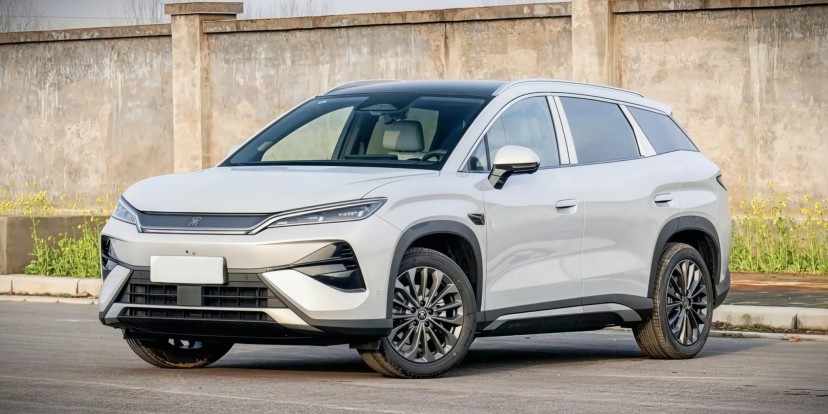
 www.arenaev.com


BYD finally revealed the production version of the Song Ultra EV. We have seen drawings and camouflaged test cars for months, and now the real thing is finally here. This new SUV is a big step forward for the brand, especially when it comes to technology that helps the car drive itself.
One of the first things people noticed during the reveal was a missing small bump on the roof. That is a LiDAR sensor - the first time a vehicle in the Song family has used this technology. The laser sensor is essentially the car's high-tech eyes. This hardware runs on the "God's Eye" B system, which uses a computer that can perform 300 trillion operations per second - that's a lot of math just to make sure you stay in your lane. This system helps the BYD Song Ultra EV navigate through busy city streets and long highways with very little help from the driver.
To make sure the car sees everything, BYD added high-definition cameras to the front fenders and the side mirrors. This gives the vehicle a full 360-degree view of its surroundings. Since the car now watches the road, the people inside get plenty of toys to play with. The cabin features a massive 15.6-inch central screen. If you do not like the way it looks, you can rotate it. There is also a 10.25-inch screen right in front of the driver to show speed and battery levels.
The BYD Song Ultra EV is quite large, sitting on a 2,840 mm wheelbase. BYD decided to use all that space for "Big Bed Mode" - if you are tired after a long day of letting the car drive you around, you can fold the front seats all the way back. They line up perfectly with the rear seat cushions to create a flat surface - basically a bedroom on wheels. As you relax, you can charge two phones at the same time on the 50W wireless charging pads. The center console also features a crystal-textured shifter and real buttons for the music, which is a nice touch for people who hate clicking through menus just to turn down the volume.
The new Song Ultra uses the latest e-Platform 3.0 Evo. Power comes from a single motor sitting over the rear axle. The 270 kW output (362 horsepower) is enough to push this SUV to a top speed of 210 km/h. You probably shouldn't try to go that fast while in "Big Bed Mode," but the power is there if you need it.
The battery comes from FinDreams, BYD's own power storage division. The LFP Blade battery offers two choices: the first version has a 75.616 kWh capacity. Together with this battery, the car tips the scales at 1,990 kg and can travel about 620 km on a full charge. If you need to go further, there is a larger 82.732 kWh pack. This version is heavier and it boosts the car's weight to 2,050 kg, but it increases the driving range to 710 km.
The BYD Song Ultra arrives with laser eyes and a folding bed
The BYD Song Ultra EV debuts with advanced LiDAR technology and a unique interior design that allows the seats to transform into a bed.
www.arenaev.com
FiestaST
Honorary Master
I need this in my phone
https://carnewschina.com/2026/03/05...ns-and-20000-flash-charging-stations-in-2026/
BYD unveils Blade Battery 2.0: 10-70% in 5 mins, 10-97% in 9 mins
https://carnewschina.com/2026/03/05...ns-and-20000-flash-charging-stations-in-2026/