


-
- News
-
Categories
- 5G
- ADSL
- AI
- Banking
- Black Friday
- Broadband
- Broadcasting
- Business
- Business Telecoms
- Cellular
- Cloud and Hosting
- Columns
- Cryptocurrency
- Energy
- Enterprise
- Fibre
- Gadgets
- Gaming
- Government
- Hardware
- Industry News
- Internet
- Internet of Things
- Investing
- IT Services
- Motoring
- Reviews
- Science
- Security
- Smartphones
- Software
- Technology
- Telecoms
- Trending
- Wireless
- Press Office
- Forum
- Industry News
- What's Next
- Company hub
- Speed Test
- About us
- Advertise with us
- Contact
- Careers
-
Join the MyBroadband community
South Africa’s biggest forum. Discuss, discover, and connect with thousands of members.
-
Question of the Day: Did Rassie deserve his six-match ban?
You are using an out of date browser. It may not display this or other websites correctly.
You should upgrade or use an alternative browser.
You should upgrade or use an alternative browser.
The BYD (EV) Thread
- Thread starter FiestaST
- Start date
FiestaST
Honorary Master

HAL 9000
Honorary Master
- Joined
- May 27, 2008
- Messages
- 23,417
- Reaction score
- 27,618
If going half the speed of sound in the U9 Extreme is not for you, then you can always 'Yang your Wang' whilst lounging in opulent splendour in the Altior...Huge new Yangwang Altior is BYD's answer to Rolls-Royce Phantom
Chinese mega-limo is all about big stats and craftsmanship: 5.6m long, 621-mile range, 21.4in screen, two fridges
BYD-owned Yangwang is going after the Rolls-Royce Phantom with a huge electric 'ultra-luxury' limousine that promises extensive personalisation options and private-jet-style refinement.
It's called the Altior (meaning 'higher' in Latin) and is one of the largest and most opulent cars yet to come from China - or indeed any manufacturer globally.
Measuring a colossal 5.6m from bumper to bumper (400mm longer than even the extended-wheelbase Mercedes S-Class), it has a wheelbase of 3500mm, which allows the four-seat cabin to be as cavernous as possible.
Yangwang said the imposing new flagship – which will sit above the U7 saloon, U8 SUV and U9 hypercar – is designed to "bring the depth of Chinese culture into a contemporary vision of ultra-luxury".
The brand places a heavy emphasis on the craftsmanship on display throughout the car, which builds on "millennia of aesthetic traditions" from Chinese culture.
One example is the intricately decorated front grille, which Yangwang described as "a masterpiece of high jewellery" and appears to change pattern in different lights.
That ceremonial sense of occasion carries over to the headlights, which feature 12 individually rotating elements that perform a routine when the owner approaches.
There are also bespoke patterned umbrellas stored in the back doors, which open backwards like on the Phantom to create "an elegant transition into the cabin".
Inside, the air vents are detailed with a special Chinese variety of jade stone, while the seats have been decorated in minute detail using a traditional method of splitting silk spreads.
https://www.autocar.co.uk/car-news/new-cars/huge-new-yangwang-altior-byds-answer-rolls-royce-phantom
View attachment 1952098
View attachment 1952099
View attachment 1952100
View attachment 1952101
View attachment 1952102
View attachment 1952103
View attachment 1952104
View attachment 1952105
View attachment 1952106

FiestaST
Honorary Master
FiestaST
Honorary Master
Yangwang Altior breaks cover as China’s Rolls-Royce-rivalling luxury sedan
The flagship luxury automotive brand of BYD has revealed its all-electric Yangwang Altior sedan at a global premiere in Abu Dhabi, United Arab Emirates.
The Yangwang Altior has been revealed as the BYD premium sub-brand’s ultimate luxury vehicle. The newcomer incorporates traditional Chinese design elements into a contemporary executive sedan that takes aim at the likes of Rolls-Royce and Bentley. Its name derives from the Latin word for “higher”, while its Chinese name, Dingyao, connects the significance of the ‘ding’ from an ancient ceremonial bronze vessel. Developed over three years, the vehicle’s architectural proportions and grounded stance draw direct inspiration from these historical vessels.
The front end features a short overhang, a near-vertical profile, and a large grille framed like high jewellery around the signature oracle-bone-script emblem. Twelve lighting elements rotate and illuminate sequentially upon approach, while coach-style doors open up to 80 degrees at the front and 90 degrees at the rear. Integrated door compartments house bespoke umbrellas inspired by the Hall of Prayer for Good Harvests at the Temple of Heaven in Beijing.
Exterior dimensions and interior specifications
Measuring 5 600 mm in length, 2 030 mm in width, and 1 590 mm in height, the Altior rides on a 3 500 mm wheelbase. The distance between the front-wheel centre and the driver’s pedals is 740 mm. Three 21-inch wheel options are available, including multi-spoke, polished disc, and fully enclosed cover designs, fitted with 275/45-size low-noise tyres.
The four-seat interior layout employs axial symmetry along a central line extending from the front display to the rear executive console. Materials include full-grain semi-aniline leather, pure-wool floor mats, natural wood, and hand-polished yellow Hetian jade embedded within the air vents. Upholstery stitching integrates traditional Suzhou embroidery featuring flowing cloud motifs alongside laser-perforated pattern details.

 www.carmag.co.za
The flagship luxury automotive brand of BYD has revealed its all-electric Yangwang Altior sedan at a global premiere in Abu Dhabi, United Arab Emirates.
The Yangwang Altior has been revealed as the BYD premium sub-brand’s ultimate luxury vehicle. The newcomer incorporates traditional Chinese design elements into a contemporary executive sedan that takes aim at the likes of Rolls-Royce and Bentley. Its name derives from the Latin word for “higher”, while its Chinese name, Dingyao, connects the significance of the ‘ding’ from an ancient ceremonial bronze vessel. Developed over three years, the vehicle’s architectural proportions and grounded stance draw direct inspiration from these historical vessels.
The front end features a short overhang, a near-vertical profile, and a large grille framed like high jewellery around the signature oracle-bone-script emblem. Twelve lighting elements rotate and illuminate sequentially upon approach, while coach-style doors open up to 80 degrees at the front and 90 degrees at the rear. Integrated door compartments house bespoke umbrellas inspired by the Hall of Prayer for Good Harvests at the Temple of Heaven in Beijing.
Exterior dimensions and interior specifications
Measuring 5 600 mm in length, 2 030 mm in width, and 1 590 mm in height, the Altior rides on a 3 500 mm wheelbase. The distance between the front-wheel centre and the driver’s pedals is 740 mm. Three 21-inch wheel options are available, including multi-spoke, polished disc, and fully enclosed cover designs, fitted with 275/45-size low-noise tyres.
The four-seat interior layout employs axial symmetry along a central line extending from the front display to the rear executive console. Materials include full-grain semi-aniline leather, pure-wool floor mats, natural wood, and hand-polished yellow Hetian jade embedded within the air vents. Upholstery stitching integrates traditional Suzhou embroidery featuring flowing cloud motifs alongside laser-perforated pattern details.
Yangwang Altior breaks cover as China's Rolls-Royce-rivalling luxury sedan
The flagship luxury automotive brand of BYD has revealed its all-electric Yangwang Altior sedan at a global premiere in Abu Dhabi...
www.carmag.co.za
FiestaST
Honorary Master
Copycat Defender? JLR has raided BYD’s offices over the boxy Ti7 SUV
Reports claim that JLR suspects BYD of stripping down a Defender to reverse engineer its tech
Court-ordered bailiffs operating on behalf of JLR have raided BYD’s offices in The Netherlands in an ongoing legal row over the similarity of the new BYD Ti7 and the Land Rover Defender 110.
According to The Times the raid was conducted in August, with JLR looking to find documents relating to the stripping down and reverse engineering of a Defender in the seven-seat Ti7’s development.
BYD’s boxy SUV – which we labelled a “Chinese Defender clone” back in August (oops) – is set to go on sale in the UK in January 2027, with prices starting at just £47,995 complete with a plug-in hybrid powertrain. A seven-seat Defender 110 is over £20,000 more, and you can only have the PHEV with a maximum of six seats. See why JLR is worried?
“JLR does not comment on ongoing legal proceedings,” said a spokesperson from JLR, which also happens to have a joint venture with BYD’s Chinese rival Chery. That tie-up originally allowed Chery to build Jaguars, the Range Rover Evoque and the Land Rover Discovery Sport in China, but it’s now giving the Chinese megacorp the rights to revive the Freelander as its own brand, with the 8 SUV set to be sold in Europe and the UK further down the line.
FiestaST
Honorary Master
FiestaST
Honorary Master
BYD offices raided in Europe over alleged Land Rover Defender copycat claims
BYD offices in the Netherlands have been raided following a court order secured by Jaguar Land Rover over allegations that the Chinese automaker copied elements of the Land Rover Defender.
According to a report by The Times, Jaguar Land Rover secured a court order in the Netherlands against BYD. Court bailiffs raided the Chinese automaker’s Dutch offices in Schiedam and Hoofddorp. Officials seized vital digital records during the unexpected operation. JLR requested the seizure to secure evidence before legal proceedings begin. A preliminary hearing will take place at The Hague shortly.
The legal dispute focuses on allegations of intellectual property theft. JLR claims that BYD copied key elements of the Land Rover Defender. The investigation centres on the newly developed BYD Ti7 SUV. British executives suspect that BYD secretly copied proprietary vehicle technology. Therefore, JLR took swift legal measures to safeguard its commercial designs.
 www.carmag.co.za
BYD offices in the Netherlands have been raided following a court order secured by Jaguar Land Rover over allegations that the Chinese automaker copied elements of the Land Rover Defender.
According to a report by The Times, Jaguar Land Rover secured a court order in the Netherlands against BYD. Court bailiffs raided the Chinese automaker’s Dutch offices in Schiedam and Hoofddorp. Officials seized vital digital records during the unexpected operation. JLR requested the seizure to secure evidence before legal proceedings begin. A preliminary hearing will take place at The Hague shortly.
The legal dispute focuses on allegations of intellectual property theft. JLR claims that BYD copied key elements of the Land Rover Defender. The investigation centres on the newly developed BYD Ti7 SUV. British executives suspect that BYD secretly copied proprietary vehicle technology. Therefore, JLR took swift legal measures to safeguard its commercial designs.
BYD offices raided in Europe over alleged Land Rover Defender copycat claims
BYD offices in the Netherlands have been raided following a court order secured by Jaguar Land Rover over Defender copycat allegations...
www.carmag.co.za
FiestaST
Honorary Master
Meet the Yangwang Altior: BYD's answer to the Rolls-Royce Phantom
BYD's flagship luxury saloon blends Chinese craftsmanship, tech and a smidge of Rolls-Royce
Yangwang, BYD's flagship luxury sub-brand, has unveiled the Altior: an all-electric, 5.6-metre luxury barge representing China's latest challenge to the Rolls-Royce Phantom.
Yangwang says the Altior showcases a distinctly Chinese take on the ultra-luxury automotive world, drawing together Chinese culture with the firm's latest technology. Its design apparently takes inspiration from the 'ding', an ancient Chinese ceremonial bronze vessel.
However, there's no doubt Rolls-Royce's legal department will now be sitting upright in their leather armchairs. The Altior looks eerily similar to the Phantom, with its grand proportions, plenty of chrome and even the iconic complimentary umbrellas hidden in the doors. Around the back, there's perhaps a touch of Mercedes-Maybach, too.
Inside, the Altior is modelled on a 'private lounge', featuring fancy Hetian jade trim, Suzhou silk embroidery, and natural wood finishes. There's also no ignoring that whopping 21.4in display paired with the 39-speaker audio system and zero-gravity massaging rear seats. Somebody should let Yangwang know IMAX called and it wants its cinema back.
FiestaST
Honorary Master
FiestaST
Honorary Master
BYD Yangwang Altior debuts at $311,500 as China challenges Rolls-Royce and Maybach
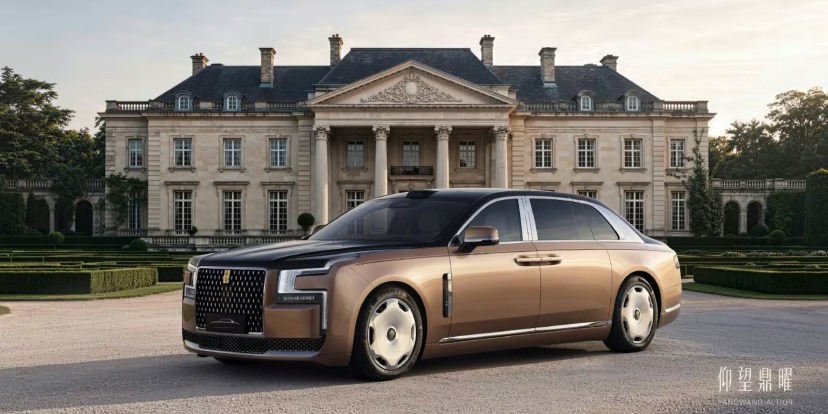
When it comes to proper luxury cars, that badge on a hood usually does half the work before you even open the door. When you are buying a Rolls-Royce or a Mercedes-Maybach, you are paying for a century of social agreement that says this object is special. The global car industry used to operate for decades on a simple (unspoken) rule - Western Europe builds the ultra-luxury flagships for heads of state and billionaires, and Asian manufacturers stick to high-volume commuters or sensible SUVs. That old industry comfort blanket is looking increasingly thin and worn out now, because BYD pulled the covers off a (€265,900) ultra-luxury flagship that does not care a slightest bit about European heritage.
Known internationally as the Yangwang Altior - with Chinese name Dingyao - this new four-door executive saloon is a definition of a corporate ambition. Nobody looks at a €265,900 price tag on a BYD product without raising an eyebrow (or two), especially when the brand made its name selling affordable electric hatchbacks and taxi fleets. BYD sells its own top-trim Da Tang SUV at home for RMB 309,900 (€39,620), making the RMB 300,000 (€38,400) reservation deposit to get on the list for the Altior roughly the same as a brand-new family seven-seater. The first Altior units are the four-seat Shanhe Dingyun Limited Edition, capped at 399 units globally, with a slightly more conventional five-seat variant to follow later on.
The Altior stretches an immense 5,600 mm from bumper to bumper, stands 1,590 mm tall, spans 2,030 mm wide, and rides on a 3,500 mm wheelbase. Park it next to a first-generation Rolls-Royce Ghost at 5,399 mm long (the second-generation Ghost is 5,546 mm long) and the Chinese newcomer makes the British aristocrat look surprisingly compact. It also easily clears the Mercedes-Maybach S-Class (5,469 mm in length), and completely dwarfs the 5,316 mm Bentley Flying Spur. Even against its domestic tech rival, the Huawei-backed Maextro S800 (5,480 mm long with a 3,370 mm wheelbase), the Altior claims an extra 120 mm of overall length and 130 mm between the axles.
According to Yangwang Sales Division General Manager Hu Xiaoqing, the design team spent three years burning through more than 100 front-end proposals before locking in the final shape. The result leans heavily into traditional Chinese cultural motifs rather than copying European minimalism. Up front, the fascia draws inspiration from an ancient Chinese Ding ritual bronze vessel, framing a grille packed with no less than 137 gemstone-cut elements and flanked by diamond-cut crystal headlights. A 4.8 m hand-painted dual coachline runs along the shoulder over two-tone brown and gold paintwork, and the nose badge is cast from 24K pure gold.
 www.arenaev.com
When it comes to proper luxury cars, that badge on a hood usually does half the work before you even open the door. When you are buying a Rolls-Royce or a Mercedes-Maybach, you are paying for a century of social agreement that says this object is special. The global car industry used to operate for decades on a simple (unspoken) rule - Western Europe builds the ultra-luxury flagships for heads of state and billionaires, and Asian manufacturers stick to high-volume commuters or sensible SUVs. That old industry comfort blanket is looking increasingly thin and worn out now, because BYD pulled the covers off a (€265,900) ultra-luxury flagship that does not care a slightest bit about European heritage.
Known internationally as the Yangwang Altior - with Chinese name Dingyao - this new four-door executive saloon is a definition of a corporate ambition. Nobody looks at a €265,900 price tag on a BYD product without raising an eyebrow (or two), especially when the brand made its name selling affordable electric hatchbacks and taxi fleets. BYD sells its own top-trim Da Tang SUV at home for RMB 309,900 (€39,620), making the RMB 300,000 (€38,400) reservation deposit to get on the list for the Altior roughly the same as a brand-new family seven-seater. The first Altior units are the four-seat Shanhe Dingyun Limited Edition, capped at 399 units globally, with a slightly more conventional five-seat variant to follow later on.
The Altior stretches an immense 5,600 mm from bumper to bumper, stands 1,590 mm tall, spans 2,030 mm wide, and rides on a 3,500 mm wheelbase. Park it next to a first-generation Rolls-Royce Ghost at 5,399 mm long (the second-generation Ghost is 5,546 mm long) and the Chinese newcomer makes the British aristocrat look surprisingly compact. It also easily clears the Mercedes-Maybach S-Class (5,469 mm in length), and completely dwarfs the 5,316 mm Bentley Flying Spur. Even against its domestic tech rival, the Huawei-backed Maextro S800 (5,480 mm long with a 3,370 mm wheelbase), the Altior claims an extra 120 mm of overall length and 130 mm between the axles.
According to Yangwang Sales Division General Manager Hu Xiaoqing, the design team spent three years burning through more than 100 front-end proposals before locking in the final shape. The result leans heavily into traditional Chinese cultural motifs rather than copying European minimalism. Up front, the fascia draws inspiration from an ancient Chinese Ding ritual bronze vessel, framing a grille packed with no less than 137 gemstone-cut elements and flanked by diamond-cut crystal headlights. A 4.8 m hand-painted dual coachline runs along the shoulder over two-tone brown and gold paintwork, and the nose badge is cast from 24K pure gold.
BYD Yangwang Altior debuts at $311,500 as China challenges Rolls-Royce and Maybach
BYD's ultra-luxury Yangwang brand has unveiled the {{$311,500}} Altior in Abu Dhabi, with a coach-doored body, Hetian jade trim, and a {{1,000 km}} second-generation Blade Battery.
www.arenaev.com
FiestaST
Honorary Master
EU lawmakers flag Chinese automaker BYD as possible cybersecurity risk
European Union lawmakers request an official cybersecurity risk assessment of BYD electric vehicles over data privacy and connected car tech concerns.
EU lawmakers have formally requested that the European Commission conduct a comprehensive cybersecurity risk assessment regarding electric vehicles produced by Chinese manufacturer BYD. A group of 14 Members of the European Parliament raised concerns that connected technologies within these vehicles could gather sensitive operational data.
According to a report by Reuters, the cross-party group of European lawmakers expressed concern that onboard cameras, sensors, and telemetry systems in BYD models could capture restricted information. The parliamentarians recommended measures including the exclusion of BYD from public sector procurement contracts and restricting access for these vehicles near sensitive government and military infrastructure. French MEP François Kalfon also submitted a parallel query to national authorities urging protective measures against connected vehicle data transfers.
In response to the claims, BYD Europe stated to Reuters that personal data collected by its vehicles in the region remains under user control and is not shared with third parties or entities in China.
 www.carmag.co.za
European Union lawmakers request an official cybersecurity risk assessment of BYD electric vehicles over data privacy and connected car tech concerns.
EU lawmakers have formally requested that the European Commission conduct a comprehensive cybersecurity risk assessment regarding electric vehicles produced by Chinese manufacturer BYD. A group of 14 Members of the European Parliament raised concerns that connected technologies within these vehicles could gather sensitive operational data.
According to a report by Reuters, the cross-party group of European lawmakers expressed concern that onboard cameras, sensors, and telemetry systems in BYD models could capture restricted information. The parliamentarians recommended measures including the exclusion of BYD from public sector procurement contracts and restricting access for these vehicles near sensitive government and military infrastructure. French MEP François Kalfon also submitted a parallel query to national authorities urging protective measures against connected vehicle data transfers.
In response to the claims, BYD Europe stated to Reuters that personal data collected by its vehicles in the region remains under user control and is not shared with third parties or entities in China.
EU lawmakers flag Chinese automaker BYD as possible cybersecurity risk
European Union lawmakers request an official cybersecurity risk assessment of BYD EVs over data privacy and connected car tech concerns.
www.carmag.co.za
FiestaST
Honorary Master
furiousdriving first drive of the YangWang U9 & the YangWang Altior
FiestaST
Honorary Master
FiestaST
Honorary Master
BYD brings robotic EV chargers to the desert
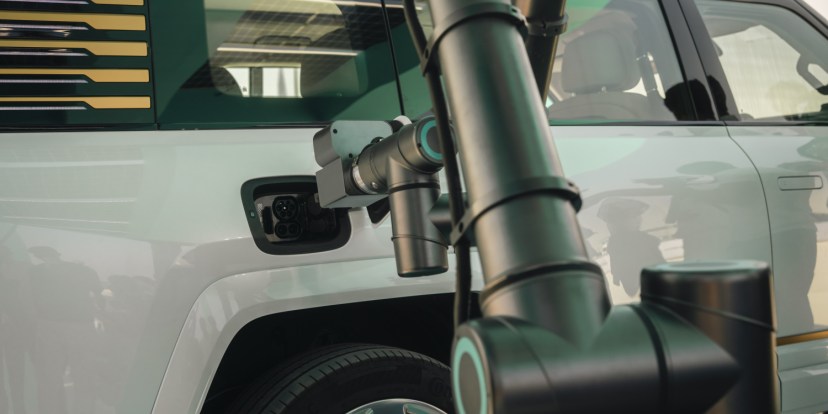
Liquid-cooled DC charging cables weigh as much as a garden hose filled with wet sand, and trying to twist one into a charge port is nobody's idea of modern luxury. We talk a lot here about battery chemistry and peak charging curves, but the physical act of plugging in a car is at best awkward. Last weekend in the Abu Dhabi desert, BYD showed off its answer to this daily irritation, and while everyone else was staring at the supercars, the real story was right next to them.
BYD flew journalists in from all over the world to watch the Yangwang U9 Xtreme hit a verified production-car record of 503.17 km/h on November 6, before revealing the Yangwang Altior ultra-luxury saloon the very next day. With a starting price of RMB 2.08 million - roughly €265,900 - and a global production run capped at 399 units, the Altior is designed to steal headlines. But tucked just off to the side of the main stage was a piece of hardware that will one day affect how normal drivers live with electric cars: an off-grid, solar-fed, 1,000 kW Flash Charging station with a robotic arm.
Watching the system work in the clips shared by BYD France marketing head Michaël Martinez, the sequence is straightforward - you tap a button to activate BYD's Automated Valet Parking, step out of the car, and let the vehicle guide itself into the bay. Once the car stops, a robotic arm uses cameras and force-feedback sensors to locate the charging flap, pop it open, and slide the heavy connector home. When the battery is full, the arm unplugs the cable and stows it away. If you are paying €265,900 for a flagship limousine, not having to scrape your knuckles on a dusty charging plug feels like basic common sense.
Of course, a robotic arm becomes a gimmick when the power delivery behind it is slow. That's where BYD's second-generation Blade Battery comes into play. First introduced in March 2026 together with a charging setup of up to 1,500 kW per connector, this LFP pack can charge from 10% to 70% in five minutes under optimal conditions, or run from 10% to 97% in nine minutes. Even during the desert demonstration, where ambient heat always forces thermal management systems to work overtime, the robotic unit delivered a verified 1,000 kW output. That brings the physical stop down to the exact time it takes to fill a tank of petrol and pay for it.
 www.arenaev.com
Liquid-cooled DC charging cables weigh as much as a garden hose filled with wet sand, and trying to twist one into a charge port is nobody's idea of modern luxury. We talk a lot here about battery chemistry and peak charging curves, but the physical act of plugging in a car is at best awkward. Last weekend in the Abu Dhabi desert, BYD showed off its answer to this daily irritation, and while everyone else was staring at the supercars, the real story was right next to them.
BYD flew journalists in from all over the world to watch the Yangwang U9 Xtreme hit a verified production-car record of 503.17 km/h on November 6, before revealing the Yangwang Altior ultra-luxury saloon the very next day. With a starting price of RMB 2.08 million - roughly €265,900 - and a global production run capped at 399 units, the Altior is designed to steal headlines. But tucked just off to the side of the main stage was a piece of hardware that will one day affect how normal drivers live with electric cars: an off-grid, solar-fed, 1,000 kW Flash Charging station with a robotic arm.
Watching the system work in the clips shared by BYD France marketing head Michaël Martinez, the sequence is straightforward - you tap a button to activate BYD's Automated Valet Parking, step out of the car, and let the vehicle guide itself into the bay. Once the car stops, a robotic arm uses cameras and force-feedback sensors to locate the charging flap, pop it open, and slide the heavy connector home. When the battery is full, the arm unplugs the cable and stows it away. If you are paying €265,900 for a flagship limousine, not having to scrape your knuckles on a dusty charging plug feels like basic common sense.
Of course, a robotic arm becomes a gimmick when the power delivery behind it is slow. That's where BYD's second-generation Blade Battery comes into play. First introduced in March 2026 together with a charging setup of up to 1,500 kW per connector, this LFP pack can charge from 10% to 70% in five minutes under optimal conditions, or run from 10% to 97% in nine minutes. Even during the desert demonstration, where ambient heat always forces thermal management systems to work overtime, the robotic unit delivered a verified 1,000 kW output. That brings the physical stop down to the exact time it takes to fill a tank of petrol and pay for it.
BYD brings robotic EV chargers to the desert
BYD’s new off-grid robotic Flash Charging system combines solar generation, battery storage, and 1,000 kW automated plug-in hardware to fix the grid bottlenecks.
www.arenaev.com
FiestaST
Honorary Master
Car TorqueX review of the Atto 8
FiestaST
Honorary Master
JLR court order forces destruction of seized BYD Ti7 files
A new JLR court order from The Hague overturns an evidence raid on BYD offices, requiring the destruction of seized Ti7 files and rejecting a €500 000 penalty.
A Dutch judge has issued a decisive JLR court order that lifts a sweeping evidence seizure against Chinese automaker BYD and blocks a €500 000 (approximately R9.2 million) penalty demand. The District Court of The Hague delivered the interim ruling on 11 November 2026 and released an amended recovery judgment on 12 November 2026. Judge H.F.R. van Heemstra ordered Jaguar Land Rover Limited to instruct bailiffs and digital custodians to destroy all seized BYD files within 24 hours of formal notice.
Background of the Defender design dispute
The legal battle centres on claims from Jaguar Land Rover that the upcoming BYD Ti7 SUV copies the design of the Land Rover Defender L663. On 14 August 2026, the British automaker secured judicial permission to raid BYD offices in the Netherlands. Bailiffs and IT specialists subsequently executed raids at BYD Europe in Schiedam and BYD Nederland in Hoofddorp on 24 August 2026.
 www.carmag.co.za
A new JLR court order from The Hague overturns an evidence raid on BYD offices, requiring the destruction of seized Ti7 files and rejecting a €500 000 penalty.
A Dutch judge has issued a decisive JLR court order that lifts a sweeping evidence seizure against Chinese automaker BYD and blocks a €500 000 (approximately R9.2 million) penalty demand. The District Court of The Hague delivered the interim ruling on 11 November 2026 and released an amended recovery judgment on 12 November 2026. Judge H.F.R. van Heemstra ordered Jaguar Land Rover Limited to instruct bailiffs and digital custodians to destroy all seized BYD files within 24 hours of formal notice.
Background of the Defender design dispute
The legal battle centres on claims from Jaguar Land Rover that the upcoming BYD Ti7 SUV copies the design of the Land Rover Defender L663. On 14 August 2026, the British automaker secured judicial permission to raid BYD offices in the Netherlands. Bailiffs and IT specialists subsequently executed raids at BYD Europe in Schiedam and BYD Nederland in Hoofddorp on 24 August 2026.
JLR court order forces destruction of seized BYD Ti7 files
A new JLR court order from The Hague overturns an evidence raid on BYD offices, requiring the destruction of seized Ti7 files.
www.carmag.co.za
FiestaST
Honorary Master
FiestaST
Honorary Master
BYD is introducing robotic charging stations to Abu Dhabi
Hate the hassle of getting out of your car to plug-in? You might like this
BYD has announced a fancy new recharging station in Abu Dhabi that could make the inconvenience of... recharging a thing of the past. The solution? Robots.
The chargers feature robotic ‘arms’, capable of locating your car’s charging port, opening the cover and plugging the cable in. And, presumably, unplugging the car once you’re fully juiced up.
The big idea is you simply rock up and jump out, before your car parks and starts charging itself. Which all means longer for you to grab a bite to eat and/or empty your bladder. Though you’ll have to be quick – the new chargers also boast ‘flash charging’, capable of rejuicing an EV from 10 to 70 per cent in five minutes and 10 to 97 per cent in nine.
Of course, that’s entirely dependent on your car’s maximum supported charge speed – flash charge power goes to 1,500kW, or 1.5 megawatts. Handy if you’ve got a Denza Z9 GT, less so if you’ve got a Fiat Grande Panda. Or, basically, 99 per cent of the EVs currently on sale.
FiestaST
Honorary Master
BYD's Fang Cheng Bao Ti 9 - SUV with unibody manners and nine-minute charging
Most three-row family haulers are a bit of a compromise - you get the cabin volume you want, sure, but you pay for it with a wide turning circle and constantly worrying about clipping the alloy wheel on a kerb. It seems BYD had that in mind while developing the Fang Cheng Bao Ti 9, which officially goes on sale in China on November 19 ahead of its public appearance at the 2026 Guangzhou Auto Show. Rather than sticking with the heavy, truck-like roots from the brand's earlier models, the engineering team switched to a road-focused unibody setup and added active rear-wheel steering to make a giant family wagon drive like something half its size.
Measuring 5,270 mm from bumper to bumper, 1,999 mm across the mirrors, and 1,850 mm tall (1,880 mm if you count the roof rails), the Ti 9 sits on a 3,130 mm wheelbase. Purely for comparison, the second-generation Li Auto L9 comes in slightly shorter at 5,255 mm long with a 3,125 mm wheelbase. The Huawei-backed Aito M9 is 5,230 mm long on a 3,110 mm wheelbase and matches the Ti 9's 1,999 mm width. Even BYD's own corporate cousin, the Denza N9, sits right in the same bracket at 5,258 mm long, 2,030 mm wide, and 1,830 mm high with a 3,125 mm wheelbase.
Fang Cheng Bao built its reputation on rugged, boxy off-roaders like the Bao 5 and Bao 8 - cars we know in export markets as the Denza B5 and B8. Those earlier rigs used BYD's DMO architecture, which bolts the body onto a traditional ladder frame so you can bash over rocks without twisting the chassis. That's great if you spend your weekends crossing riverbeds, but most buyers in this price bracket never venture off-road. The Ti 9 uses the new DMS hybrid platform with unibody construction, trading extreme rock-crawling articulation for lower floor heights, stiffer on-road cornering, and a much quieter ride at motorway speeds.
You still get serious chassis hardware - every version of the Ti 9 comes standard with the DiSus-A dual-chamber air suspension, which uses road-surface preview cameras to spot potholes and adjust the dampers before the tires actually hit the bump. Thanks to the standard iATS terrain recognition software for snow, sand, mud, and gravel, the car has plenty of all-weather grip without riding like an agricultural truck. Front six-piston brake calipers handle the stopping duties, and BYD even includes its Tire Blowout Stability Control system to keep the chassis straight if a tire lets go - even at highway speed.
 www.arenaev.com


Most three-row family haulers are a bit of a compromise - you get the cabin volume you want, sure, but you pay for it with a wide turning circle and constantly worrying about clipping the alloy wheel on a kerb. It seems BYD had that in mind while developing the Fang Cheng Bao Ti 9, which officially goes on sale in China on November 19 ahead of its public appearance at the 2026 Guangzhou Auto Show. Rather than sticking with the heavy, truck-like roots from the brand's earlier models, the engineering team switched to a road-focused unibody setup and added active rear-wheel steering to make a giant family wagon drive like something half its size.
Measuring 5,270 mm from bumper to bumper, 1,999 mm across the mirrors, and 1,850 mm tall (1,880 mm if you count the roof rails), the Ti 9 sits on a 3,130 mm wheelbase. Purely for comparison, the second-generation Li Auto L9 comes in slightly shorter at 5,255 mm long with a 3,125 mm wheelbase. The Huawei-backed Aito M9 is 5,230 mm long on a 3,110 mm wheelbase and matches the Ti 9's 1,999 mm width. Even BYD's own corporate cousin, the Denza N9, sits right in the same bracket at 5,258 mm long, 2,030 mm wide, and 1,830 mm high with a 3,125 mm wheelbase.
Fang Cheng Bao built its reputation on rugged, boxy off-roaders like the Bao 5 and Bao 8 - cars we know in export markets as the Denza B5 and B8. Those earlier rigs used BYD's DMO architecture, which bolts the body onto a traditional ladder frame so you can bash over rocks without twisting the chassis. That's great if you spend your weekends crossing riverbeds, but most buyers in this price bracket never venture off-road. The Ti 9 uses the new DMS hybrid platform with unibody construction, trading extreme rock-crawling articulation for lower floor heights, stiffer on-road cornering, and a much quieter ride at motorway speeds.
You still get serious chassis hardware - every version of the Ti 9 comes standard with the DiSus-A dual-chamber air suspension, which uses road-surface preview cameras to spot potholes and adjust the dampers before the tires actually hit the bump. Thanks to the standard iATS terrain recognition software for snow, sand, mud, and gravel, the car has plenty of all-weather grip without riding like an agricultural truck. Front six-piston brake calipers handle the stopping duties, and BYD even includes its Tire Blowout Stability Control system to keep the chassis straight if a tire lets go - even at highway speed.
BYD's Fang Cheng Bao Ti 9 - SUV with unibody manners and nine-minute charging
Fang Cheng Bao Ti 9 arrives on November 19 as a road-focused unibody six-seat plug-in hybrid SUV with 536 hp, active air suspension, and a 66.48 kWh battery that charges from 10% to 97% in nine minutes.
www.arenaev.com