


B-1
Honorary Master
- Joined
- Apr 17, 2020
- Messages
- 11,561
- Reaction score
- 14,865
South Africa’s biggest forum. Discuss, discover, and connect with thousands of members.

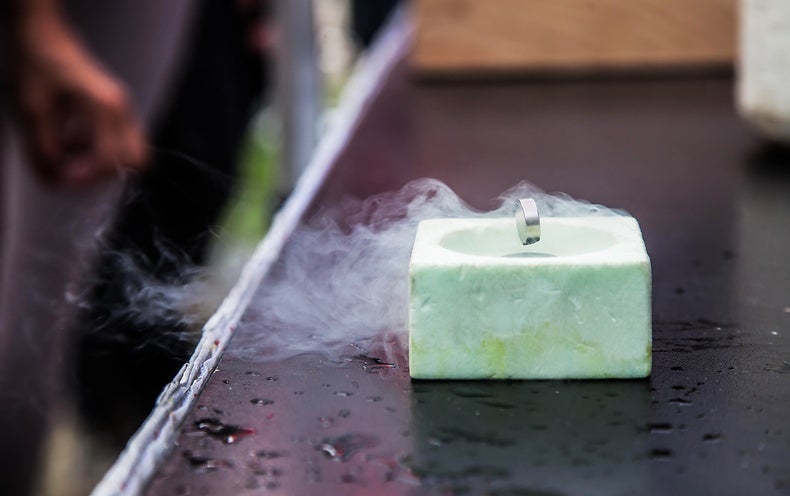
Skepticism abounds for claim that lead-based material perfectly conducts electricity at room temperature and pressure
That explains why thieves stole the whole ADSL copper backbone in SA. They did so in anticipation for the demand for copper.Now it seems that by replacing one of the elements in a proprietary lattice to copper, it changes the structure of the compound and seems to elicit quantum tunneling properties, where not only do the electrons flow in single file, exponentially reducing friction, but they seem to actually teleport through the conduit using quantum tunneling.
They reckon taxis will speedup when super-conductive?That explains why thieves stole the whole ADSL copper backbone in SA. They did so in anticipation for the demand for copper.

If LK-99 is a room-temperature ambient-pressure superconductor, there are three distinct possibilities depending on its eventual engineering properties.
Here is a straightforward explanation of each scenario and estimated total market sizes in ARR:
The two limits on superconductor performance are:
- How much current it can carry
- How much magnetic field it can withstand
If either of these limits are exceeded, superconductors stop working. The scenarios are high/low field and high/low current, but you can't really get high-field without high-current, so only three scenarios
Scenario 1: Low-field, low-current ~$1.5 trn:
LK-99 saturates at relatively low fields, like 0.3T, and relatively low current densities, of ~1 amp / mm^2. It works in delicate electronics, small packages, at high efficiencies, with extremely high sensitivity.
It revolutionizes the following industries:
- Telecom hardware $650 bn; Cellphones $450 bn; Electronic Sensors $200bn; Satellites $70bn; GPUs $40bn; CPUs $20bn; Antennas $20bn.
Scenario 2: Low-field, high-current ~ $2 trn:
LK-99 can carry large current densities, on the order of >1000 amps / mm^2, but can't stand strong magnetic fields. It gains relevance in power transmission, switches, relays, and larger electrical equipment.
It revolutionizes the following industries:
Power transmission $320 bn; Wires + cables $200bn; Switches & Relays ~$ 25 bn and many others.
Scenario 3: High-field, high-current ~ $4.5 trn:
LK-99 can operate in high fields of several Tesla and high currents of >1000 amps / mm^2. It revolutionizes fundamental industries by replacing motors, generators, transportation equipment, and unlocks new energy sources like fusion.
It revolutionizes the following industries:
Power generation $1.8 trn; Electric Motors $300 bn; Rail freight $250 bn; Energy Storage $200 bn
~~~~
Some important considerations:
- "The totals don't add up" - If something works at high field, it works at low-field, and same for current. Therefore Scenario 1 is the base-case and adds to the bottom line of both other scenarios; it places the least engineering requirements on the material. All numbers for total market sizes are estimates found online in popular market reports for ~2022.
- To incorporate this material into micro-electronics means re-thinking the extremely-mature CMOS 300mm silicon wafer fabrication process, a process that would take a decade if not more to get right.
- A final consideration is the mechanical strain the material can withstand, which also affects the current and field tolerances of existing superconductors. Bulk deformations of the crystal lattice can disrupt superconducting properties - this issue has over-time been improved upon in modern high-temperature superconductors but is still present, and may limit applications in the long-run.
- Our current generation of YCBO-based high-temperature superconductors started out as low-field, low-current, highly strain-sensitive, and over 30+ years of engineering development, these now carry >1000 amps/mm^2 in fields as high as 10T (although these numbers trade off against each other). What this means is, with time, engineering, patience, and concerted effort, if TK-99 is a superconductor then Scenario #3 is highly likely within 10-20 years.
~~~~
Conservative estimate:
Current conservative estimates by an MIT professor put the probability of LK-99 being "it" at 5%.
Assuming a long-term achievement of Scenario 3, this gives an expectation value of a $225 billion annual market.
~~~~
Caveat: LK-99 is not yet confirmed to be a superconductor but has several suggestive corroborations from other experimentalists and simulations. I am reserving judgement until results are confirmed by a Department of Energy National Lab in the USA or a similarly regarded institution.
If it wasn't clear why this is a big deal, if successful LK-99 would be a watershed moment for humanity easily on-par with invention of the transistor.
First claimed replication:
twitter.com/Andercot/statu…
First simulations supporting original authors:
twitter.com/Andercot/statu…
Here's a deeper dive into applications and the technical details: twitter.com/Andercot/statu…
For a catch-up on the original Korean paper: twitter.com/Andercot/statu…
And why I was bullish 1 month ago: twitter.com/Andercot/statu…


What's the use cases for this? Better inverter efficiency?
What's the use cases for this? Better inverter efficiency?
My post above gives quite a good breakdown of the various industries it touches depending on the characteristics.What's the use cases for this? Better inverter efficiency?


 www.scientificamerican.com

Another damning video about the perils of bad science and internet hype:


