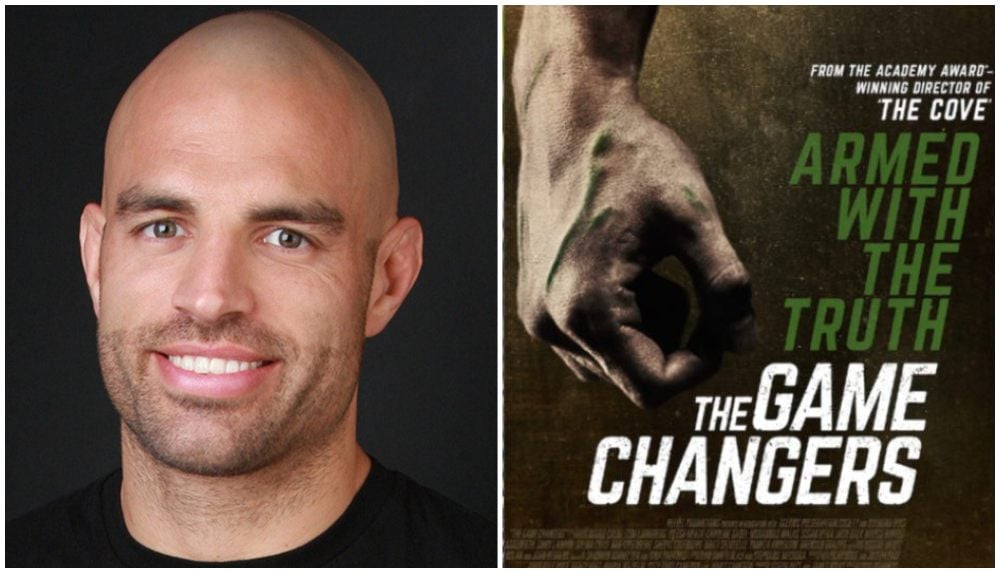
"The Game Changer" documentary

I watched this movie and I couldn't help but laugh at most of the claims they make. As you have said, plenty of people have already debunked most of the crap they spew in the movie. Here are a few examples:
It is actually quite irresponsible to promote a nutrient deficient diet like this. If you want to follow a vegan diet for ethical reasons (however misguided they might be), then so be it. But surviving on a vegan diet requires a serious amount of careful effort and supplementation to get enough nutrients to live a healthy life.

Funny how they leave out small little details like the example of the Connor McGregor vs. Nate Diaz fight. McGregor was scheduled to fight an opponent at a lower weight class and that opponent pulled out of the fight last minute. Connor was preparing for a fight in the 70kg lightweight class, but then at the last minute had to put on weight to fight Nate in the 77kg welterweight class. That is a jump of two weight classes. Conveniently, they didn’t mention that in their second fight, McGregor beat Nate at 78kg.

The kicker of course, is the fact that the Camerons are heavily invested in a fake meat company, so is Lewis Hamilton and most of the actors in the movie have some sort of commercial interest in promoting veganism.

It's telling that while watching the documentary, I realised that this kind of opinions and these kind of refutals would be all over the internet. It's sort of like the EFF attacking the Boks. No matter what the message is on any subject, there is always a group of people who will argue the opposite. And so it is.

But it has been quite pleasing to see that the number of criticisms are quite limited on the case of this documentary, and even many of the ones that argue against it, still concede the message is quite important. Namely, eat less meat and more veg. And that is for any number of reasons, not just our own personal health.

As with any science, you will of course get someone arguing the opposite. That's ANY science, but particularly food science, as we have seen with lots of these types of documentaries. Give me a Tim Noakes, I'll give you 5 scientists who say exactly the opposite. As we have with your first link, refutals of the science by a clever guy. Mind you, he's presenting and referencing studies in the same way the movie did, and I'll bet any money that some other scientist with an opposing view could come along and do to his opinion what he just did to this movie.

Personally, there is a lot of good info to be taken from any movie like this, if you want to that is. But I suppose it's down to the individual approach and knowing where to read between the lines. I just don't get why you or anyone else would be so scathing and label such stuff as "crap" and 'laughable", while at the same time choosing to believe a few other random peoples blogs? Unless you of course enter watching such a movie with a closed mind and you simply want to reinforce your world view.

And if your view is that the multi millionaires in the documentary are trying to deceive us so they can make a few bob on the side, then I'd say you already had your answers long before you watched it.
 
The big problem is it's such a misrepresentation of the science. Layne Norton does an excellent job of breaking down the issues: https://www.biolayne.com/articles/research/the-game-changers-review-a-scientific-analysis/


My biggest criticism is that actually athletes tend to be genetic freaks. Michael Phelps is a good example, I mean even Carnivore diet proponent Dr. Shawn Baker is a genetic freak, he's much taller than average at the very least. His body gives him an athletic advantage in indoor rowing (much like how strongman Brian Shaw is tall and held an unofficial indoor rowing record). They are athletes regardless of diet, instead of because of diet. Zach Bitter is an example of a very low carb ultra marathon runner, his diet may help (there's science by Dr. Stephen Phinney and Jeff Volek to support this) but he's also probably suited to this sport.

I now mostly follow a meat-based diet with few carbohydrates (mostly coming from yoghurt and milk) and practically no vegetables, I was vegetarian for 7~ years and almost vegan at points. I will say my diet was not perfect and could have been better. I realized my health wasn't good and that morally it was silly (1 Vegan saves a cow every 260~ days based on the caloric needs of the average man but it's ok to kill critters for crop farming? Silly, and the whole environmental argument is flaky). One could even argue I'm more 'vegan' now as I buy most of my meat from a local farm butchery. I started with Keto, it's actually been the first time I had energy to go to gym. No longer hangry, no longer always waking up tired, never bloated and not skinny fat anymore. Everything is even better since I cut fiber, despite what cereal boxes would have you believe (Dr. Paul Mason has some good points on fiber in his youtube talks). There are some pretty remarkable anecdotes on meatheals.com, also interesting to read about Vilhamjur Steffanson...

The vast majority of health improvements seen can be achieved by cutting sugar and inflammatory oils (canola/margarine/soybean oil) from your diet though and that's why people tend to 'feel better' on vegan diets. It's also because to some degree they are mimicking fasting by often quite a large reduction in calories. That's often the initial 'training wheels' issue new vegans have, they simply don't realize they aren't eating enough. Other issues exist such as people not being able to convert beta-carotene to Vitamin A, Lack of Vitamin B12, D3, Creatine (where studies show it has the greatest effect on vegetarians) etc.

One thing I would have liked them to show is how much more food you have to eat as a Vegan. Most vegans are vegan because of ethics/politics rather than health so it's more a cause to convert for the cause than anything else...your health doesn't matter to vegans, in fact vegans rarely often care about farm workers (such as the cashew nut workers). The vegan position on honey is ridiculous too, as it's a similar type of farming method, necessary to produce a wide range of produce including avocados.

When my daughter was about 12 she became a lacto/ove vegetarian. I guess that's the diet choice the majority of vegetarians. She was a typical kid and a fussy eater, so obviously after a good few months of arguing with my wife about what she was eating, she wasn't feeling so well. We took her to a doctor and she was deficient in iron and what else I can't remember.

Point is, my wife, also a veggie, told her she is now going to eat what she is told and within a few weeks she was up and running and back to normal. No meat or fish, only vegetarian diet and iirc, an occasional B12 spray in the mouth.

So yes, of course it's possible to eat badly, chips and pizza can be vegetarian etc, but it's also possible to live a healthy active life without meat or supplements if you eat properly.
 
I just don't get why you or anyone else would be so scathing and label such stuff as "crap" and 'laughable", while at the same time choosing to believe a few other random peoples blogs?

The whole premise of the film is a joke. All the anecdotes compare how people's health improved when switching from junk food (for instance fried chicken or burritos) to vegan, and then concluding you must eat less meat? How do you make this leap?? It boggles my mind.

There are plenty of examples of why this film is laughable, though this one jumped out at me:

“I mean, look at a gorilla. A gorilla will f... you up in two seconds. Yeah. What does a gorilla eat?”

How can you not find this laughable?

This is just as relevant as saying: "Look at a lion, I lion will f... you up. What does a lion eat?
 
When my daughter was about 12 she became a lacto/ove vegetarian. I guess that's the diet choice the majority of vegetarians. She was a typical kid and a fussy eater, so obviously after a good few months of arguing with my wife about what she was eating, she wasn't feeling so well. We took her to a doctor and she was deficient in iron and what else I can't remember.

Point is, my wife, also a veggie, told her she is now going to eat what she is told and within a few weeks she was up and running and back to normal. No meat or fish, only vegetarian diet and iirc, an occasional B12 spray in the mouth.

So yes, of course it's possible to eat badly, chips and pizza can be vegetarian etc, but it's also possible to live a healthy active life without meat or supplements if you eat properly.

I agree it's possible to live ok on a vegetarian diet, and for the most part ovo lacto won't have issues (because you're still getting a lot of animal nutrients at least occasionally) and have less of an issue with deficiencies and a lot of deficiencies which can occur can be masked for years (humans are pretty good at surviving). I used those B12 sprays and even got occasional vitamin B injections, not sure they were really necessary or just a placebo as I was still getting B12 in my diet. They help a bit. I much prefer how I'm eating now without most supplements (I use an electrolyte supplement and a pre-workout for beta-alanine and citruline malate which has a very minor effect, I probably won't buy again). I honestly don't 'need' either I've had great gym sessions without either but sometimes mentally these things make a difference.

I don't necessarily agree that it's healthy (even 'when done right') and I think that's still largely up for debate. For a large portion of my time as a vegetarian I was not eating a junk food diet, the problem is I was still eating 'junk food' in moderation and even when I wasn't I still felt constantly hungry and had to be eating by certain times or I became irritable. In short no amount of dietary tweaking (which I did) really improved things. I also remember getting constant pain in my fingers while typing, I don't have that anymore. I lived with things that just weren't necessary to live with and often pretended that I was fine, because compared to most people I was fine.

My SO can't really do any vegetarian/vegan diet as she reacts really badly to most grains and legumes (IBS). Her IBS is greatly improved by eating basically just meat, eggs and yoghurt. I probably had/have mild IBS but it wasn't diagnosed but likely since it is a common side effect from accutane.

One of the issues starting to be discussed is the effect of anti-nutrients like oxalates/goitrogens which often impair the absorption of minerals and vitamins. In the case of goitrogens people are told to avoid foods high in them if they have a thyroid issue. Lectins are another issue as well, obviously most people know about gluten intolerance and Coeliac. My opinion is maybe a lot of 'modern illness' is due to the foods we eat and eat in excess and this is exacerbated by higher sugar/fructoes content. Also so many of the plant foods weren't as available as they are now, we have year round fruit now. Maybe this isn't a good thing?

People have this illusion that spinach or insert superfood is a health food and meat is bad for your health. If you eat too much spinach you can get quite sick, if you eat too much meat you will often just become too full to eat anymore. My health is better now than it ever has been. I'm even lucky in that my cholesterol fits the standards (often people who follow low carb high fat will have high ldl but really there's no proven risk to that).

“I mean, look at a gorilla. A gorilla will f... you up in two seconds. Yeah. What does a gorilla eat?”

If you read Layne Norton's article you find that Gorillas eat more protein than the average vegan diet. They also eat a heck of a lot of food and insects.
 
It's telling that while watching the documentary, I realised that this kind of opinions and these kind of refutals would be all over the internet. It's sort of like the EFF attacking the Boks. No matter what the message is on any subject, there is always a group of people who will argue the opposite. And so it is.

But it has been quite pleasing to see that the number of criticisms are quite limited on the case of this documentary, and even many of the ones that argue against it, still concede the message is quite important. Namely, eat less meat and more veg. And that is for any number of reasons, not just our own personal health.

As with any science, you will of course get someone arguing the opposite. That's ANY science, but particularly food science, as we have seen with lots of these types of documentaries. Give me a Tim Noakes, I'll give you 5 scientists who say exactly the opposite. As we have with your first link, refutals of the science by a clever guy. Mind you, he's presenting and referencing studies in the same way the movie did, and I'll bet any money that some other scientist with an opposing view could come along and do to his opinion what he just did to this movie.

Personally, there is a lot of good info to be taken from any movie like this, if you want to that is. But I suppose it's down to the individual approach and knowing where to read between the lines. I just don't get why you or anyone else would be so scathing and label such stuff as "crap" and 'laughable", while at the same time choosing to believe a few other random peoples blogs? Unless you of course enter watching such a movie with a closed mind and you simply want to reinforce your world view.

And if your view is that the multi millionaires in the documentary are trying to deceive us so they can make a few bob on the side, then I'd say you already had your answers long before you watched it.

As I have said to many, I have no issue with anyone following any diet that they feel is best for them, I know vegans, vegetarians, pescatarians, carnivores, etc. and all have their reasons for following their specific diet. I do have issue with most of these 'documentaries' which are flaky at best in terms of proving or disproving anything, making use of flimsy 'studies', misrepresenting other studies, not disclosing all the facts, cherry picking examples, etc. I am sure the same could be said for meat eater documentaries although I honestly haven't watched any but I would also take issue if they used the same tactics. I have seen first hand how people get sucked in to drastically changing their diet after watching these types of 'documentaries', many times without any further research, thought or understanding.
 
The whole premise of the film is a joke. All the anecdotes compare how people's health improved when switching from junk food (for instance fried chicken or burritos) to vegan, and then concluding you must eat less meat? How do you make this leap?? It boggles my mind.

There are plenty of examples of why this film is laughable, though this one jumped out at me:

“I mean, look at a gorilla. A gorilla will f... you up in two seconds. Yeah. What does a gorilla eat?”

How can you not find this laughable?

This is just as relevant as saying: "Look at a lion, I lion will f... you up. What does a lion eat?

I thought it was a good and interesting watch and there are life lessons I can take from it. But then, I don't believe one side over the other as you obviously do, I read between the lines. I mean talking about laughable, it's a bit daft schitting all over the many doctors and scientists on the documentary, then producing your own set of experts, (well one doctor, 2 bloggers and one link that didn't open) and saying these ones are correct.

But sure thing bud. Seems to me you have your mind made up before the film started, and that is of course cool. Good health to you.
 
I agree it's possible to live ok on a vegetarian diet, and for the most part ovo lacto won't have issues (because you're still getting a lot of animal nutrients at least occasionally) and have less of an issue with deficiencies and a lot of deficiencies which can occur can be masked for years (humans are pretty good at surviving). I used those B12 sprays and even got occasional vitamin B injections, not sure they were really necessary or just a placebo as I was still getting B12 in my diet. They help a bit. I much prefer how I'm eating now without most supplements (I use an electrolyte supplement and a pre-workout for beta-alanine and citruline malate which has a very minor effect, I probably won't buy again). I honestly don't 'need' either I've had great gym sessions without either but sometimes mentally these things make a difference.

I don't necessarily agree that it's healthy (even 'when done right') and I think that's still largely up for debate. For a large portion of my time as a vegetarian I was not eating a junk food diet, the problem is I was still eating 'junk food' in moderation and even when I wasn't I still felt constantly hungry and had to be eating by certain times or I became irritable. In short no amount of dietary tweaking (which I did) really improved things. I also remember getting constant pain in my fingers while typing, I don't have that anymore. I lived with things that just weren't necessary to live with and often pretended that I was fine, because compared to most people I was fine.

My SO can't really do any vegetarian/vegan diet as she reacts really badly to most grains and legumes (IBS). Her IBS is greatly improved by eating basically just meat, eggs and yoghurt. I probably had/have mild IBS but it wasn't diagnosed but likely since it is a common side effect from accutane.

One of the issues starting to be discussed is the effect of anti-nutrients like oxalates/goitrogens which often impair the absorption of minerals and vitamins. In the case of goitrogens people are told to avoid foods high in them if they have a thyroid issue. Lectins are another issue as well, obviously most people know about gluten intolerance and Coeliac. My opinion is maybe a lot of 'modern illness' is due to the foods we eat and eat in excess and this is exacerbated by higher sugar/fructoes content. Also so many of the plant foods weren't as available as they are now, we have year round fruit now. Maybe this isn't a good thing?

People have this illusion that spinach or insert superfood is a health food and meat is bad for your health. If you eat too much spinach you can get quite sick, if you eat too much meat you will often just become too full to eat anymore. My health is better now than it ever has been. I'm even lucky in that my cholesterol fits the standards (often people who follow low carb high fat will have high ldl but really there's no proven risk to that).


If you read Layne Norton's article you find that Gorillas eat more protein than the average vegan diet. They also eat a heck of a lot of food and insects.

Yep, it's all about reading between the lines and I think that the approach to take is just to ensure you have a good balanced diet made up of quality produce. Eat lots of veg whether you eat meat or not, and try and cut out the processed stuff. We all have different needs, I think quality is the key.
 
Yep, it's all about reading between the lines and I think that the approach to take is just to ensure you have a good balanced diet made up of quality produce. Eat lots of veg whether you eat meat or not, and try and cut out the processed stuff. We all have different needs, I think quality is the key.

Nothing about my diet is 'balanced', except I sometimes weigh my steak to make sure I'm getting the bigger one. I eat very little veg mostly spring onion/onion when I do or I'll have sweet potato fries when out. I do 'cheat' but try to limit it, I manage at least 80:20. My day generally is 200g of Greek yoghurt, 400-700g of steak, cheese, eggs and milk as necessary, sometimes fish, sometimes eggs. Weekends tend to have bacon/pancetta/sausages.

My biggest cheat funnily is chips fried in beef fat. Chocolate is still a huge comfort food for me (78-90% dark). I'm a sugar addict too and desserts was a huge part of my culture growing up. Trying to stop my bad habits because I know these aren't good for me...Yet it's crazy how much sugar is on offer when you are actually trying to avoid it.

I agree on processed stuff. I disagree on different needs, unless you aren't human or have got yourself bit by a lonestar tick, really odd genetic issue or have some underlying deficiency. I think too often people fall for the 'balanced diet' or 'moderation' they're meaningless terms often used to justify eating pasta/bread despite how it makes people feel often.

South African meat in general is high quality even B Grade beef is often really good.
 
I thought it was a good and interesting watch and there are life lessons I can take from it. But then, I don't believe one side over the other as you obviously do, I read between the lines. I mean talking about laughable, it's a bit daft schitting all over the many doctors and scientists on the documentary, then producing your own set of experts, (well one doctor, 2 bloggers and one link that didn't open) and saying these ones are correct.

But sure thing bud. Seems to me you have your mind made up before the film started, and that is of course cool. Good health to you.

I fail to see any lessons in this movie other than people are gullible and lazy. "Hey this doctor/famous guy/scientist in his lab-coat quoted a study so it must be the truth!".

People should read the actual lines rather than in between them. It is reading between the lines and not the actual scientific data that has lead the world to the current health and obesity crisis. People need to stop trusting doctors and take the effort of doing their own research and experimentation. I am not saying that all doctors are purposely being deceitful, but unfortunately there is just too much influence from big food and pharma industry.
 
Nothing about my diet is 'balanced', except I sometimes weigh my steak to make sure I'm getting the bigger one. I eat very little veg mostly spring onion/onion when I do or I'll have sweet potato fries when out. I do 'cheat' but try to limit it, I manage at least 80:20. My day generally is 200g of Greek yoghurt, 400-700g of steak, cheese, eggs and milk as necessary, sometimes fish, sometimes eggs. Weekends tend to have bacon/pancetta/sausages.

My biggest cheat funnily is chips fried in beef fat. Chocolate is still a huge comfort food for me (78-90% dark). I'm a sugar addict too and desserts was a huge part of my culture growing up. Trying to stop my bad habits because I know these aren't good for me...Yet it's crazy how much sugar is on offer when you are actually trying to avoid it.

I agree on processed stuff. I disagree on different needs, unless you aren't human or have got yourself bit by a lonestar tick, really odd genetic issue or have some underlying deficiency. I think too often people fall for the 'balanced diet' or 'moderation' they're meaningless terms often used to justify eating pasta/bread despite how it makes people feel often.

South African meat in general is high quality even B Grade beef is often really good.

I'm not sure what you're trying to say on the "different needs" issue. Millions of people have different reactions to different foods, from mild to severe, and hence not every one can eat the same stuff. Or even wants to, your diet for example me makes me feel a bit ill thinking of all the rich food you eat.

It's all about the individual and what works for them, surely? For me, balanced diet and moderation have become key to my life as I have a lifetime of eating junk behind me, and like you, love the chocolate and chips. I still eat them and always will, but nowhere near as much as I used to. Is that not moderation?
 
Nothing about my diet is 'balanced', except I sometimes weigh my steak to make sure I'm getting the bigger one. I eat very little veg mostly spring onion/onion when I do or I'll have sweet potato fries when out. I do 'cheat' but try to limit it, I manage at least 80:20. My day generally is 200g of Greek yoghurt, 400-700g of steak, cheese, eggs and milk as necessary, sometimes fish, sometimes eggs. Weekends tend to have bacon/pancetta/sausages.

My biggest cheat funnily is chips fried in beef fat. Chocolate is still a huge comfort food for me (78-90% dark). I'm a sugar addict too and desserts was a huge part of my culture growing up. Trying to stop my bad habits because I know these aren't good for me...Yet it's crazy how much sugar is on offer when you are actually trying to avoid it.

I agree on processed stuff. I disagree on different needs, unless you aren't human or have got yourself bit by a lonestar tick, really odd genetic issue or have some underlying deficiency. I think too often people fall for the 'balanced diet' or 'moderation' they're meaningless terms often used to justify eating pasta/bread despite how it makes people feel often.

South African meat in general is high quality even B Grade beef is often really good.

Now that is a balanced diet. :thumbsup:
 
I fail to see any lessons in this movie other than people are gullible and lazy. "Hey this doctor/famous guy/scientist in his lab-coat quoted a study so it must be the truth!".

People should read the actual lines rather than in between them. It is reading between the lines and not the actual scientific data that has lead the world to the current health and obesity crisis. People need to stop trusting doctors and take the effort of doing their own research and experimentation. I am not saying that all doctors are purposely being deceitful, but unfortunately there is just too much influence from big food and pharma industry.

But yet that's exactly what you have done in believing a doctor and 2 bloggers?

Maybe if you had a different world view, you'd post these links instead? So here's some other doctors saying the opposite of what you say and it took me 2 minutes to google, cut and paste....


And here's a reply of the Mens Health article you posted...


Woohoo, this is fun...


etc
 
I'm not sure what you're trying to say on the "different needs" issue. Millions of people have different reactions to different foods, from mild to severe, and hence not every one can eat the same stuff. Or even wants to, your diet for example me makes me feel a bit ill thinking of all the rich food you eat.

It's all about the individual and what works for them, surely? For me, balanced diet and moderation have become key to my life as I have a lifetime of eating junk behind me, and like you, love the chocolate and chips. I still eat them and always will, but nowhere near as much as I used to. Is that not moderation?

Different interpretation of 'different needs'. I have an issue with chicken but pretty hard to find someone who reacts to every single animal food. We'll have to leave it there because it's hard to prove either way.

There's a big difference between eating what I'm eating and thinking about eating it. I eat very few carbohydrates which makes a big difference in how my body processes my fatty meals. Fat aversion is weird to me, fats are essential, carbohydrates are not.

My point is exactly this, you use moderation as a justification to still eat things that are bad for you...It's a tricky line and ultimately it's a personal choice. We know sugar/alcohol is bad and yes I still choose to have both occasionally (alcohol is a bit more frequent but I generally only drink small amounts). I will by choice cut off the sugar because I know, no amount of moderation is good for me.
 
Top
Sign up to the MyBroadband newsletter
X