The Great Reset Thread

Here is some of the backlash that Davos is going to face.

Introducing the 'Great Reset,' world leaders' radical plan to transform the economy

For decades, progressives have attempted to use climate change to justify liberal policy changes. But their latest attempt – a new proposal called the “Great Reset” – is the most ambitious and radical plan the world has seen in more than a generation.

At a virtual meeting earlier in June hosted by the World Economic Forum, some of the planet’s most powerful business leaders, government officials and activists announced a proposal to “reset” the global economy. Instead of traditional capitalism, the high-profile group said the world should adopt more socialistic policies, such as wealth taxes, additional regulations and massive Green New Deal-like government programs.

They just set the Green New Deal (that I am somewhat sympathetic to) back.
 
I have no idea and actually it's also quite common in the US if you look at the large corporations, the difference is that in the EU they actually mean it and in the US it tends to be more of a PR Campaign (I am probably generalising a bit).
Yeah, probably. But that lends credence to their advocacy, if anything.

No, the historical trend has been quite clear on this, people tend to prefer urban sprawl and planners tend to love densification.
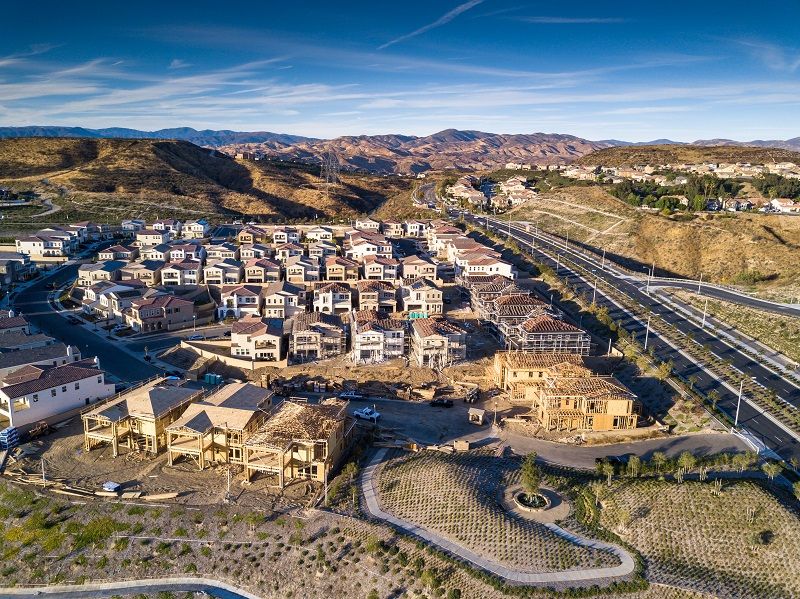
You're drawing some strange causal lines here. Sprawl is self-reinforcing - the more you sprawl - outward, low density, auto dependent, unwalkable - the more difficult it is to do anything else. It's really difficult to retrofit proper public transport infrastructure or vibrant mixed-use precincts, leading to even more sprawl as people think it's the only option.

And if it's illegal to build more densely closer to the city core and key surrounding destinations, then the only way development can happen is outward. Nothing about this points to sprawl being the 'preference'.

Not sure what this has to do with the smart cities question, though.

Cities such as Paris, London and NY are actually less dense now than they were 100 years ago and the reason is that the city expanded faster than net migration did,
That's because of sprawl's destructive nature. Many cities grew in size, even while losing people.

"Sprawl has continued apace even in places where the American population has grown little or not at all in recent decades. From 1970 to 1990, the Chicago area’s population rose by only 4 percent, but the region’s built-up land increased 46 percent. Metropolitan Cleveland’s population actually declined by 8 percent, yet 33 percent more of the area’s territory was developed."

It is not so much about what people prefer, but what they can afford, sprawling to the outside is generally cheaper than going to the sky.
It's only 'cheaper', if externalities and palmed off costs are ignored. If you look at the total cost of sprawl, it's immense.

Sprawl imposes more than $400 billion dollars in external costs and $625 billion in internal costs annually in the U.S.

many EU cities are actually on par with the US, their inner cities make up a small fraction of the actual cities.
Nope.

New York, the densest city in the US, has a third of the density of Frankfurt, Germany's 5th densest city. European suburbs are 3 times as dense as US ones.

European suburbs average a population of 6,600 per square mile, while the central cities average 18,800. There is no doubt that European suburbs are more dense than U.S. suburbs (2,700 per square mile)

yes, I know. I cannot see any other time that people hated Davos this much, most of us had only a vague idea of them before all of this started.
What do you base this on?
 
I suppose I can have an entire new thread with you, but I believe the sprawl is one of the most understood dynamics, it is not destructive and cities that allow for sprawl tend to have a more vibrant and young population.

Here is a long story one Paris.

To just illustrate my point about people move away from higher density,
1606983053645.png

Many people are shocked to see that Paris was more densely populated in 1851 and 1951 than today. I have seen comparative data for NY and London.


The most important thing to understand though is that people tend to prefer sprawl and not densification, that has been documented quite well, but city planners prefer the other way around.

In terms of the densities that you shown, its highly misleading as you need to compare the urban metropoles and inner cities to each other. A city such as NY, London and Paris has a dense inner course, but if you consider where most people live you find that it flattens quickly.

The point on Smart Cities is that Planners have had this dream since the 1950s that we all need to start living more denser, yet cities keep on sprawling and they keep on trying to limit its development. It's not true that it's more expensive to provide services etc on the outskirts, it's all about how you plan and manage it.

One of (not the only) reasons that so many young people are struggling to buy homes in the world's largest cities is because the planners have their minds dead set on limiting sprawl, a city such as Houghtson that allows for development tends to have affordable starter homes.

Smart Growth Policies includes imposing a limit on urban sprawl.

But yes, this is a discussion for an entirely new thread, I don't have much of an opinion on the data collection of walkable cities, but if they restrict land use then you can easily increase house prices.
 
Last edited:
I suppose I can have an entire new thread with you, but I believe the sprawl is one of the most understood dynamics, it is not destructive and cities that allow for sprawl tend to have a more vibrant and young population.

Here is a long story one Paris.

To just illustrate my point about people move away from higher density,
View attachment 966122

Many people are shocked to see that Paris was more densely populated in 1851 and 1951 than today. I have seen comparative data for NY and London.


The most important thing to understand though is that people tend to prefer sprawl and not densification, that has been documented quite well, but city planners prefer the other way around.
You haven't shown this anywhere, though. And making anything but sprawl illegal != preference for sprawl.

In terms of the densities that you shown, its highly misleading as you need to compare the urban metropoles and inner cities to each other. A city such as NY, London and Paris has a dense inner course, but if you consider where most people live you find that it flattens quickly.
No, I explicitly didn't do that. I showed you a suburb vs. suburb comparison, not inner city vs suburb.

The point on Smart Cities is that Planners have had this dream since the 1950s that we all need to start living more denser, yet cities keep on sprawling and they keep on trying to limit its development. It's not true that it's more expensive to provide services etc on the outskirts, it's all about how you plan and manage it.
Of course it is. Greenfield development requires creation of completely new bulk infrastructure, which costs an enormous amount of money.

The estimated infrastructure costs for the infill development case study at Bowden are shown to be approximately one third that of both greenfield and renewal areas of the Playford Alive project on the urban fringe.

One of (not the only) reasons that so many young people are struggling to buy homes in the world's largest cities is because the planners have their minds dead set on limiting sprawl, a city such as Houghtson that allows for development tends to have affordable starter homes.


Smart Growth Policies includes imposing a limit on urban sprawl.

But yes, this is a discussion for an entirely new thread, I don't have much of an opinion on the data collection of walkable cities, but if they restrict land use then you can easily increase house prices.
That's a very tenuous link. And sprawl adds significant indirect costs, to both individuals and cities overall.

But yes, getting way off topic.
 
Traditional capitalism is where almost everything is owned by the wealthy and everyone else is effectively a serf. In traditional capitalism the wealthy also own the government. They and those in government work together to make sure the peasants stay in line.
 
Google fact checks tell me that there is no 'conspiracy,

Let's try and keep this thread, despite the title, not too looney.
and yet here you are, clearly advocating the idea of a great conspiracy.
are you not going to somehow weave a bit of covid into it , you know, to give your conspiracy theory a little more meat
 
and yet here you are, clearly advocating the idea of a great conspiracy.
are you not going to somehow weave a bit of covid into it , you know, to give your conspiracy theory a little more meat


South Africa's FMF seems to take this seriously,
 
Traditional capitalism is where almost everything is owned by the wealthy and everyone else is effectively a serf. In traditional capitalism the wealthy also own the government. They and those in government work together to make sure the peasants stay in line.

I find it strange that Davos of all places is trying to tell us how to make capitalism more equal.
 

South Africa's FMF seems to take this seriously,
Click through enough of their URLs and you'll soon discover a donate button of some kind. They take it seriously to work up froth in their followers mouths that they will part with a few Randellas to help the "cause". It's a grift. You're the mark.

Ok I just checked their website before hitting the post button and yep the large red donate button is top right on their homepage. Who could have guessed...
 
Click through enough of their URLs and you'll soon discover a donate button of some kind. They take it seriously to work up froth in their followers mouths that they will part with a few Randellas to help the "cause". It's a grift. You're the mark.

Ok I just checked their website before hitting the post button and yep the large red donate button is top right on their homepage. Who could have guessed...
I trust them more with my money driving a cause of free markets and liberty than the government owning all I rent from them to survive and dictating my life.
 
Top
Sign up to the MyBroadband newsletter
X