The Mazda BT-50 Thread

NEW MODEL: Everything you need to know about the 2021 Mazda BT-50

Mazda Southern Africa has confirmed the local introduction of the all-new BT-50 bakkie. The 2021 Mazda BT-50 is fully redesigned from the ground up and is built in Thailand and it will be fully revealed on July 15th with an online reveal on the company’s social media pages on YouTube and Facebook. Here’s everything we know about it so far:

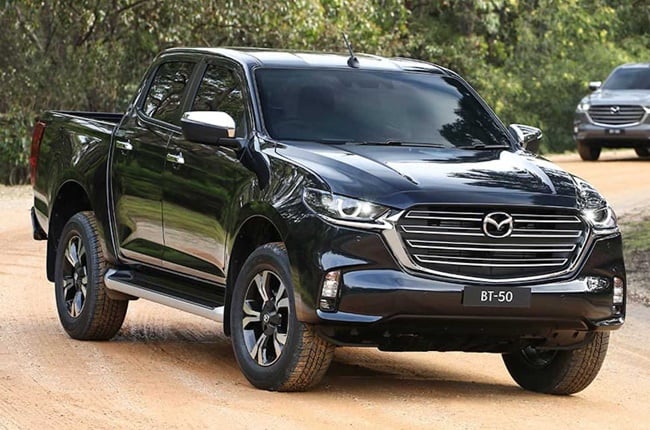
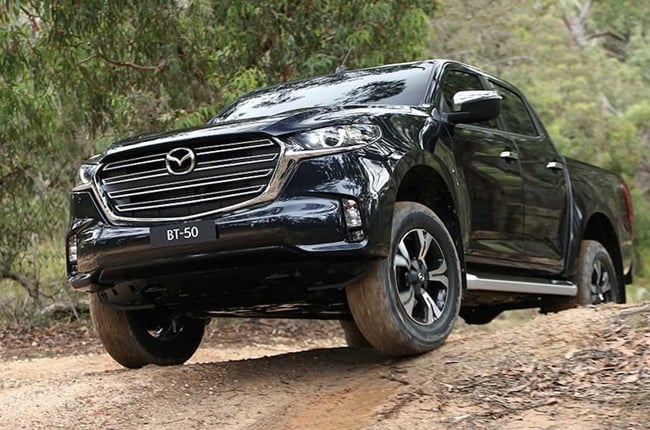
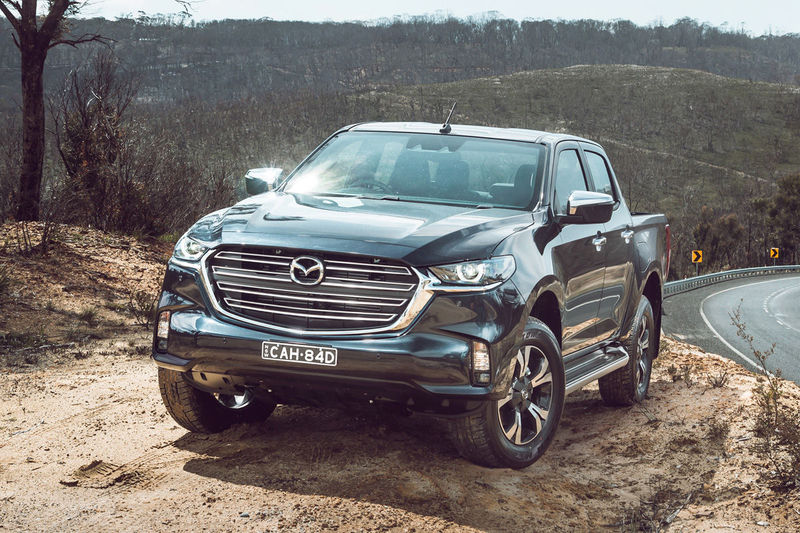
As an evolution of Mazda’s Kodo design, the new BT-50 is said to give life to a new form of elegance rooted in Japanese aesthetics. Mazda’s Kodo – Soul of Motion design language is immediately evident right from the front of the vehicle with the prominent front grille, and the 3 dimensional signature wing that extends out towards the side.

The design of the headlights is distinct and sharp, taking in cues from Mazda’s SUV range. From the first glance, the 2021 BT-50 expresses unique power, toughness and utilitarian functionality, ready for adventure and built for working purposes, while appealing to lifestyle customers with its unique design.

The new 2021 Mazda BT-50 isn't all about utility, but bold evolution, designed with the goal of being a vehicle that customers can take pride in owning, they say. This new bakkie embodies Mazda’s desire to enrich the lives of its customers with an exciting value proposition when it goes on sale in South Africa later this year.

 
Mazda's all-new BT-50 bakkie now on sale in South Africa: we have pricing and specs

• The all-new Mazda BT-50 is officially available in South Africa.

• The bakkie is powered by a choice of two engines, mated to manual and automatic transmissions.

• The new BT-50 shares an architecture with the upcoming Isuzu D-Max.

Mazda South Africa officially launched its all-new BT-50 double cab bakkie in the country. Sharing an architecture and drivetrain with the 2022 Isuzu D-Max, the Mazda looks to regain lost ground in a country where bakkies are consumers' staple food. For the new BT-50, Mazda decided on fitting a 1.9-litre and 3.0-litre diesel engine under the bonnet, with only the 3.0-litre mill available with a 4x4 system.

The South African specification BT-50 is imported from Thailand and consists of three derivatives: Active, Dynamic, and Individual. Six exterior colours are available: Gun Blue, Rock Grey, Red Volcano, Ice White, Ignot Silver and Concrete Grey.

The new Mazda BT-50 comes standard with a three-year unlimited km service plan, a three-year unlimited km Warranty, and a three-year unlimited km Roadside Assistance.

Price

• Mazda BT-50 1.9 Active MT 4x2 - R611 900

• Mazda BT-50 1.9 Active AT 4x2 - R647 900

• Mazda BT-50 3.0 Dynamic AT 4x2 - R759 400

• Mazda BT-50 3.0 Individual AT 4x4 - R794 400

https://www.news24.com/wheels/offro...uth-africa-we-have-pricing-and-specs-20210721
 
New Mazda BT-50 is here: SA pricing and specs announced

Mazda has launched its new-generation BT-50 double cab bakkie in South Africa and it’s fair to say that (compared to its predecessor) this is a completely new vehicle from the ground up, now being based on the new-generation Isuzu D-Max, which has not been launched locally as yet.

The Mazda BT-50 will be available in four variants:

1,9 Active manual – R611 900
1,9 Active AT – R647 900
3,0 Dynamic AT – R759 400
3,0 Individual 4×4 AT – R794 400

The 1,9-litre entry-level turbodiesel engine produces 110 kW and 350 N.m, and it is available with a choice between six-speed manual and six-speed automatic gearboxes, with power going to the rear wheels only in both cases.

The 3,0-litre turbodiesel model is available in 4×2 and 4×4 configurations, and this engine is good for 140 kW and 450 N.m. The bigger engine is paired exclusively with the aforementioned six-speed automatic gearbox.

In terms of spec, the 1,9 Active base model ships with a 7-inch, six-speaker infotainment system with reverse camera, as well as cruise control, manual air conditioning, six-way power adjustable driver’s seat, Hill Descent Control, Trailer Sway Mitigation, locking rear differential, seven airbags and 17-inch alloy wheels.

https://www.carmag.co.za/news/new-mazda-bt-50-is-here-sa-pricing-and-specs-announced/
 
New Mazda BT-50: pricing versus key rivals

Mazda’s new-generation BT-50, which is now based on the Isuzu D-Max, was launched in South Africa this week, and the local importer has opted for a small and focused double cab model line-up that competes at the upper end of the spectrum.

The range is priced from R611 900 to R794 400, and is available with two of Isuzu’s turbodiesel latest engines. These take the form of a new-generation 1,9-litre unit that produces 110 kW and 350 N.m, and a revised 3,0-litre that pushes 140 kW and 450 N.m. Only the bigger engine is available with four-wheel drive.

But how does Mazda’s pricing compare to the competition?

Base model vs. rivals

The entry-level 1,9 Active sells for R611 900 in manual form and R647 900 as an auto. The closest comparable Nissan Navara is the 2,5 SE Plus DC, which has a similar spec sheet, minus one or two items like the touchscreen infotainment system. The Nissan does, however, undercut its Japanese rival considerably, with a price tag of R505 000 for the manual (120 kW / 403 N.m) and R528 000 for the auto (140 kW / 450 N.m). In fact you can get the more lavishly equipped Navara LE model from R606 000.

Moving over to the nation’s best-seller, the Toyota Hilux can be bought in 2,4 GD-6 Raider form for R520 500 (manual) and R536 900 (auto), in both cases offering 110 kW and 400 N.m. Prefer a Ford Ranger? You can get a 2,2 TDCI XLS double cab manual (118 kW / 385 N.m) for R531 700 or you could opt for the 2,0 SiT XLT auto (132 kW / 420 N.m) for R604 200. Other alternatives include the Isuzu D-Max 250 X-Rider at R518 300 (manual) or R538 000 (auto), both offering 100 kW and 320 N.m, and the GWM P-Series 2,0 TD LS (120 kW / 400 N.m) at a mere R444 900 – which undercuts the Mazda by more than 150 grand. While 4×2 models were used for these comparisons, it’s worth noting that all of the rivals we mentioned are also available with mid-spec 4×4 options.

The flagship 4x4s

For the sake of easy comparison, we now look at the range-topping 4×4 models, although these vehicles are also available in slightly cheaper 4×2 format.

The Mazda BT-50 3,0 Individual 4×4 auto retails at R794 400.

Its closest rival in the Navara stable is the 2,5 LE 4×4 auto at R677 000 (140 kW / 450 N.m), although the sportier looking Pro-4X can be had for R740 000.

Alternatively, you could have a Toyota Hilux 2,8 GD-6 4×4 Legend (150 kW / 500 N.m) for R788 700, a Ford Ranger 2,0 BiT 4×4 Wildtrak (157 kW / 500 N.m) for R797 500, an Isuzu D-Max 300 4×4 LX (130 kW / 380 N.m) for R728 200 or a Volkswagen Amarok 2,0 BiTDI Highline 4Motion (132 kW / 420 N.m) for R777 300.

There are a few cheaper options, however, with the Mitsubishi Triton 2,4 DI-D 4×4 (133 kW / 430 N.m) retailing at R654 995 and the GWM P Series 2,0 TD LT 4×4 (120 kW / 400 N.m) seeming like a steal at R554 900.

 
Mazda BT-50 (2021) International Launch Review

The new Mazda BT-50 has been launched in South Africa, a year before local production of the bakkie on which it is based, the new Isuzu D-Max, will commence in Port Elizabeth. Could that be a crucial advantage for one of the market’s most underappreciated double-cabs? We drove the newcomer in Sydney.

Summary

It’s no secret Isuzu SA had to delay the launch of the next-gen D-Max until 2022. In the meantime, the Port Elizabeth-based subsidiary of the Japanese brand has conducted a development programme to tailor the new bakkie’s construction, suspension and other components for our market. Given that Isuzu will build the bakkie in several guises – for various types of customers – that stands to reason.

By virtue of arriving in Mzansi ahead of its D-Max cousin, the new BT-50 will certainly appeal to owners of older Isuzu D-Max models, who feel they can no longer delay the replacement of their current bakkies. Some prospective buyers may also be wary of buying a bakkie that will be superseded in the next year or so (Ford Ranger and Volkswagen Amarok); they might consider the Mazda strongly.

Apart from being much more handsomely styled than its predecessor, the new BT-50 offers appreciably more appeal for buyers who want the practicality and looks of a bakkie, but ultimately utilise their vehicles as family cars. A 4-door pick-up will never be able to match the sophistication of a unibody SUV, but Mazda’s newcomer demonstrates that “leisure double-cab” standards are rising rapidly.

We will soon pit the flagship Mazda BT-50 3.0TD 4×4 Individual against a number of its (also top-spec) rivals in a multi-bakkie shootout to crown South Africa’s best bakkie. Watch this space.

Price of Mazda BT-50 (2021) in South Africa

1.9 Active Manual 4×2R611 900
1.9 Active Automatic 4×2R647 900
3.0 Dynamic Automatic 4×2R759 400
3.0 Individual Automatic 4×4R794 400

Prices include a 3-year/unlimited-kilometre service plan, 3-year/unlimited-kilometre warranty and 3-year/unlimited-kilometre roadside assistance.

 
These are the features you should take note of on Mazda's new BT-50 double cab bakkie

• The new Mazda BT-50 is now available in South Africa.

• Four models are on offer, each powered by one of two engines.

• The BT-50 has a healthy list of standard specification across the entire range.

Mazda's new BT-50 is finally on sale in South Africa and is powered by a choice of two engines. The automaker went into partnership with fellow Japanese brand Isuzu, with their respective bakkies, the BT-50 and D-Max, now sharing a chassis, engines, and drivetrains.

In South Africa, the BT-50 line-up consists of four models, comprising 4x2 and 4x4 models, six-speed manual and automatic transmissions, and the two diesel engines.

Each BT-50 is sold with a three-year unlimited Kilometer service plan, three-year unlimited km warranty, and a three-year unlimited Roadside Assistance. Here's what each model offers local buyers.

 
A closer look at the all-new Mazda BT-50

Engine choices

The new BT-50 features two engine options – 1.9-litre Diesel Engine and the 3.0-litre Diesel Engine. A six-speed manual gearbox is available with the 1.9-litre variant. The manual transmission features an integrated gear shift mechanism for improved feel. The flywheel used with the manual transmission is a Dual Mass design. This allows it to absorb more of the engine's harmonic vibrations, preventing them from being transmitted through the drive-line and vehicle.

The automatic transmission uses a compact gear-train structure, the latest efficiency technologies and a high response hydraulic control system. The electronic control module is programmed to match the torque delivery characteristics of the engine by always selecting the best ratio. Whilst, control modes such as ‘Skip Gear Shift', 'Slip lock-up' and 'Slope Control’ ensure that the automatic transmission responds appropriately and intuitively to the current driving conditions.

The all-new Mazda BT-50 comes standard with a three-year/unlimited kilometre Mazda Service Plan, three-year/unlimited kilometre Mazda Warranty and a three-year/unlimited kilometre Roadside Assistance Plan.

Model line-up

Mazda BT-50 1.9-litre Active 6MT and 6AT 4x2


Max Power: 110kW at 3600 rpm
Max Torque: 350Nm at 1800rpm

Mazda BT-50 3.0-litre Dynamic 6AT 4x2

Max Power: 140kW at 3600rpm
Max Torque: 450Nm at 1600rpm

Ground clearance: Up to 240mm (model dependent)

In addition to the features in the Dynamic model, the 3.-litre Individual model includes:

4-Wheel Drive

Front Axle Disconnect

 
Mazda BT-50 SP revealed as special edition bakkie with custom trims

The Mazda BT-50 SP edition has been revealed for the Australian market as a special model that builds on the region’s current flagship offering. The special trim boasts a number of black and dark grey exterior features to enhance its sporty appeal.

Fitted as standard to the Mazda BT-50 SP is a set of dark metallic grey roof rails, black grille, gunmetal-finished signature wing, gloss black exterior mirrors and door handles, satin black 18-inch alloy wheels and dark grey side steps.

A manually-operated black roller tonneau cover, bed liner, gloss black sail-plane sport bar, front bumper lower decoration trim and gloss black wheel flares further enhances visual appeal. Within the cabin, the bakkie has been fitted with driftwood leather and black synthetic suede upholstery.

https://www.carmag.co.za/news/new-models/mazda-bt-50-sp-revealed/

Mazda 1.jpegMazda 2.jpeg
 
TESTED: Mazda BT-50 has premium vibes, but the ride lets it down

VERDICT

With its striking design, classy cabin and decent all-round performance and dynamics, the Mazda BT-50 is a bakkie we really want to like. But it’s let down by a ride quality that we didn’t find to be comfortable enough. Its price tag is also a little on the high side, at R794 400, although it’s not totally out of the bakkie ballpark spec-for-spec.

However, if you can live with the ride, the Mazda BT-50 could make for an interesting and refreshing alternative to the usual bakkie suspects.

SPECS: Mazda BT-50 3.0TD double cab 4x4 Individual

Engine: 3.0-litre, 4-cyl, turbodiesel
Transmission: 6-speed automatic
Drive: Four-wheel drive
Power: 140kW @ 3600rpm
Torque: 450Nm @ 1600-2600rpm
Fuel use (tested, highway): 8.3 l/100km
Fuel use (claimed combined): 8.0 l/100km
Warranty: 3-year/unlimited km
Service plan: 3-year/unlimited km
Price: R794 400

 
REVIEW | Is the new BT-50 a missed opportunity for Mazda to stake a claim in SA's bakkie market?

• The Mazda BT-50 was launched in South Africa earlier this year.

• The line-up is headlined by the 3.0 Individual model, priced at R794 400.

• The BT-50 could struggle to make its mark in the local market.

In summary

The Mazda BT-50 is a missed opportunity for the Japanese automaker in South Africa. And the headlining Individual model should have been far more than a glorified mid-spec model. The addition of the 4x4 drivetrain is not enough to warrant the too-high asking price, especially because Mazda has to claw back some ground against the Toyota Hilux and Ford Ranger - the two undisputed bakkie kings of South Africa.

But looking beyond the BT-50 and its shortcomings, one can only hope that the upcoming D-Max will not suffer from the same limitations as the bakkie it shares an architecture with. Sure, Mazda adjusted the D-Max chassis to fit their requirements, but the D-Max must succeed in South Africa. Build at Isuzu's plant in Port Elizabeth, it is being tested for application in the unique local bakkie market.

Perhaps this was something Mazda SA had to consider: having its BT-50 built on a locally produced D-Max platform. Oh well, no use crying over spilt milk…


Mazda 1.jpegMazda 2.jpegMazda 3.jpeg
 
Top
Sign up to the MyBroadband newsletter
X