The Renault Duster Thread

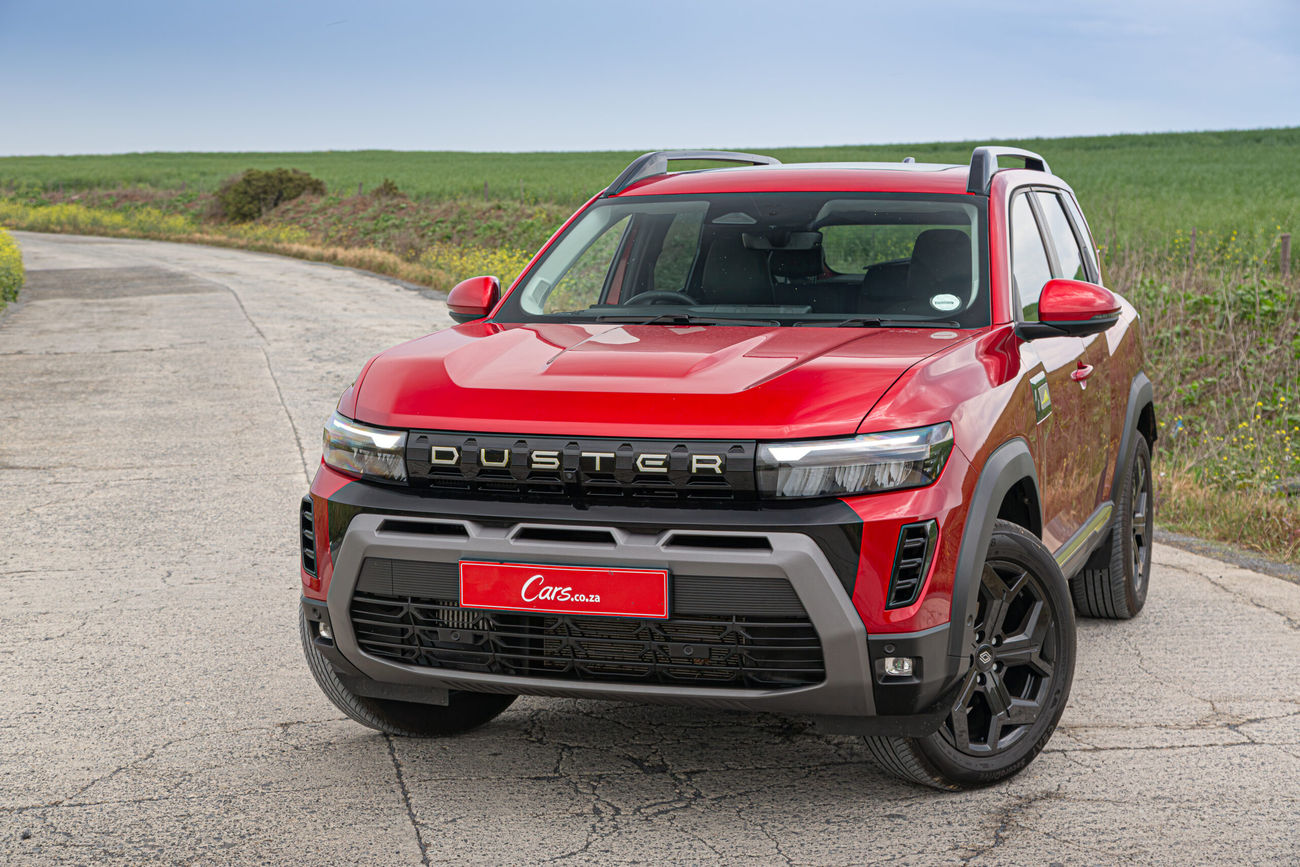
Renault Duster (2026) Review

FAST FACTS
Model: Renault Duster 1.3T ECD Iconic Launch Edition
Price: R499 999
Engine: 1.3-litre 4-cylinder turbopetrol
Transmission: 6-speed dual-clutch automatic transmission
Power/Torque: 116 kW/260 Nm
0-100 kph: 10.18 seconds (tested)
Fuel consumption: 5.4 L/100 km (claimed)
Range: 926 km (claimed)
Luggage capacity: 518–1 789 litres (claimed)

Price & After-sales support

All Duster models are backed by Renault’s 5-year/150 000 km mechanical warranty and 3-year/45 000 km service plan.

Renault Duster 1.0T 6MT Evolution R339 999
Renault Duster 1.3T 6MT Evolution R379 999
Renault Duster 1.3T EDC Techno R399 999
Renault Duster 1.3T EDC Techno+ R439 999
Renault Duster 1.3T EDC Iconic R499 999
Renault Duster 1.3T EDC Iconic Launch Edition R499 999

All pricing correct in September 2026.

Verdict

The all-new Renault Duster represents a well-considered evolution for the nameplate. While die-hard enthusiasts may mourn the departure of the turbodiesel engine, the reality is that the new Indian-sourced model delivers exactly what modern compact crossover buyers are asking for: visual appeal, a tech-heavy cabin, turbo performance and impressive practicality.

At R499 999, the flagship 1.3T EDC Iconic Launch Edition pushes the Duster into a cut-throat bracket where entry versions of the Jetour T1 and Toyota Corolla Cross compete. At this price point, buyers could justifiably start asking questions about the Renault’s comparative lack of refinement and premium interior finishes against those rivals.

While standard mod-cons such as ventilated seats, a panoramic sunroof, 360-degree cameras, keyless entry and start, and full ADAS safety tech justify that price, there’s better value to be found lower down the Duster range (we’d eye one of the Techno derivatives).

That said, the Duster stands out as one of the more complete and well-rounded family crossovers currently available in South Africa.

1790578463462.png

1790578503369.png

1790578527691.png

1790578557462.png

1790578590899.png

1790578607263.png

1790578636415.png

1790578692567.png
 

Renault Duster Strong Hybrid launched at Rs. 16.99 lakh - Team-BHP​

1792246955400.png

Renault has launched the Duster Strong Hybrid in India, with introductory prices starting at Rs. 16.99 lakh.

The Duster Strong Hybrid is the much-anticipated third powertrain option for the 2026 Renault Duster, following the launch of two turbo-petrol variants earlier this year: the 1.0L Turbo TCe 100 producing 99 BHP and 166 Nm, and the 1.3L Turbo TCe 160 producing 161 BHP and 280 Nm.

Christened the Strong Hybrid E-Tech 160, it will be powered by a 1.8L naturally aspirated 4-cylinder petrol engine producing 108 BHP and 172 Nm, running on the Atkinson cycle with a claimed thermal efficiency of 41%, paired with two electric motors: a generator and a traction motor, delivering a total system output of 158 BHP and 208 Nm, capable of a 0-100 km/h sprint in a claimed 9.61 seconds.

The hybrid system has a 1.4 kWh, 247V NMC direct refrigerant-cooled battery and a multi-mode dedicated hybrid (DHT) gearbox with 2 electric and 4 petrol gears.

Renault claims it can automatically manage the petrol engine and electric motors based on driving conditions with six auto-selected operating modes, using electric power in suitable conditions, recovering energy during deceleration and braking, and switching between electric and combustion propulsion as needed.

Renault claims the Duster Strong Hybrid can do 80% of city driving in EV mode, has a total range of up to 1,400 km and an ARAI-certified fuel efficiency of 29 km/litre.

The Duster Strong Hybrid is set to become the fourth strong hybrid option in the mid-size SUV segment, alongside Toyota's Urban Cruiser Hyryder and Maruti Suzuki's Grand Vitara and Victoris siblings.

Renault says it wants India to be a top-3 market globally and is aiming for a 7-product lineup under its 'futuREady' strategic plan to regain market share. It also plans to further develop its product engineering capabilities in India, and scale exports to €2 billion by 2030.

The Renault Duster Strong Hybrid E-Tech 160 is available in three variants: Evolution, Techno and Emotion.

Renault Duster Strong Hybrid E-Tech 160 ex-showroom prices:​

  • 1.8L Strong Hybrid E-Tech 160 Evolution - Rs. 16.99 lakh
  • 1.8L Strong Hybrid E-Tech 160 Techno - Rs. 18.99 lakh
  • 1.8L Strong Hybrid E-Tech 160 Emotion - Rs. 19.49 lakh
 
I saw one of these new Dusters on the road last week.

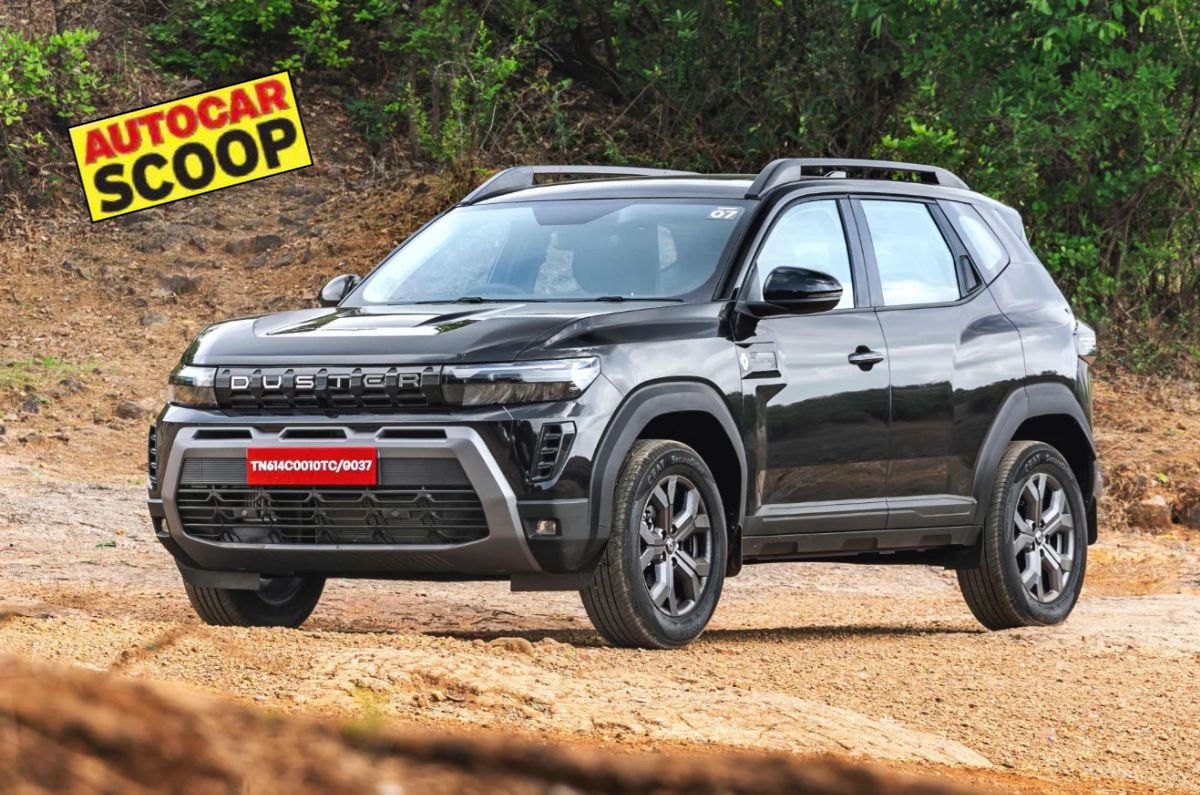
Actually a very nice looking vehicle from the outside.
 
How reliable is that 1.0 engine?

That is my concern. I got to see the Nissan version last week. It looks nice, but I don't like small turbo engines. I also thought that the giant centre console and touch screen are silly, but that's up to personal preference.
 

2026/7 Renault Duster Strong Hybrid E-Tech 160 Review - Team-BHP​

Renault Duster Strong Hybrid E-Tech 160 Pros​

• Handsome styling that’s not overdone. Conservative yet butch design is universally appealing
• Solid build quality & construction. Carries forward the robust ethos of the first-gen car
• 158 BHP and 208 Nm environment-friendly hybrid powertrain is nice to drive
• Excellent fuel efficiency (ARAI FE rating = 29 km/l). Even with redlining & lots of idling (for shooting), I got 15 km/l. In regular driving, 20+ km/l should be doable
• Multi-mode automatic transmission works seamlessly and offers smooth shifts
• Abuse-friendly suspension with FDD offers a fantastic ride and handling package. 212 mm ground clearance is a bonus
• Well laid-out cabin with good space and comfort. Massive upgrade from the previous generation and matches today’s competition
• A healthy features list with panoramic sunroof, electric tailgate, powered and ventilated front seats, wireless Android Auto & Apple CarPlay, air purifier and more
• Safety features include 6 airbags, pedestrian warning system, ESP, 3-point seatbelts for all passengers, etc.
• Pricing is bang-on for the Hybrid technology!

Renault Duster Strong Hybrid E-Tech 160 Cons​

• Not available in the top variant. Period. Feature deletions vis-à-vis the turbo-petrol include the Google-integrated infotainment, fog lamps, rain-sensing wipers, auto-dimming IRVM, multi-sense driving modes, hill descent control, 360-degree camera, ADAS, etc.
• 544-litre boot is the biggest among rivals, yet considerably smaller than the turbo-petrol (battery pack etc. eats up boot space)
• Multi-mode automatic transmission is new to India. Long-term reliability record in global markets is patchy
• While the interiors are nicely done, the cabin doesn’t feel as plush and premium as the latest Kia Seltos
• 6-speaker audio system falls behind the competition, with no subwoofer either
• Missing features: spare wheel, memory function for driver’s seat, rear sun-blinds, reclining rear seat and more
• Renault's after-sales service quality can be inconsistent

1793232999903.png

1793233023090.png

1793233036689.png

1793233094133.png

1793233117190.png

1793233136998.png

1793233151611.png

1793233163475.png

1793233189073.png

1793233206080.png

Full detailed review with MANY more exterior & interior photos at the link below:


Renault developing new cost-efficient 1.3 MPFi turbo-petrol engine for Duster - Autocar India​

Renault India is planning to expand the Duster's powertrain portfolio with a localized, port-injected derivative of its 1.3-litre direct injection turbo-petrol motor.

1794324469904.png

The Renault Duster’s return to the Indian market hasn’t quite yielded the high-volume traction the French automaker anticipated. One of the reasons for the slow start is a staggered launch strategy with the strong-hybrid variants only joining the Duster range nearly six months after the initial rollout – a gap that diluted the product's launch window impact.

A simultaneous multi-powertrain offensive at day one would have given the Duster a more robust variant line up and may have prevented early volume stagnation.

However, the rationale behind a multi-powertrain push is already being strongly validated. Early retail traction and an encouraging initial order bank for the brilliant Duster E-Tech hybrid demonstrate that Indian mid-size SUV buyers actively demand diverse mechanical choices tailored to different usages.

To capitalize on this, Renault is now aggressively course-correcting to fill a gap at the lower end of the Duster range.

Sources close to the development confirm that the carmaker is actively working on a new 1.3-litre MPFi (Multi-Point Fuel Injection) turbocharged engine destined for the Duster. Rather than serving as a direct replacement, this powertrain is being developed specifically to offer a significantly lower-cost alternative to the high-tech, expensive Gasoline Direct Injection (TGDi) variant.

By opting for this simpler fueling setup, Renault is expected to price the MPFi variants roughly Rs 1 lakh to Rs 1.5 lakh cheaper than the equivalent TGDi models, thereby substantially lowering the entry price point for the 1.3 turbo family.

Cost advantage ​

The upcoming powerplant is a direct derivative of the existing 1.3-litre HR13 four-cylinder turbo-petrol engine. The main engineering change lies in swapping out the expensive, high-pressure TGDi hardware in favour of a traditional Multi-Point Fuel Injection (MPFi) setup.

This move to MPFi offers a significant cost advantage. By deleting the high-pressure fuel rail, complex injectors, and the sophisticated dual-mass flywheel typically used with GDi engines, Renault can radically slash production costs.

And because port injection inherently produces significantly lower particulate emissions than direct injection, Renault can entirely eliminate the expensive Gasoline Particulate Filter (GPF) from the exhaust after-treatment system.

Crucially, the new MPFi engine is slated to adopt a redesigned turbocharger optimized for low-end tractability. This is a deliberate move to fix the pronounced turbo-lag that characterises the current 1.3 TGDi motor.

While the direct-injection unit boasts class-leading peak outputs and strong top-end power, its power delivery remains heavily skewed toward European highway condition, rendering it less than ideal for stop-go Indian urban traffic.

However, the shift from direct to port injection will impact peak power and torque. Though there are no official figures yet, expect the 1.3 MPFi to develop 140hp and 250Nm, down from the TGDi’s potent 163hp and 280Nm.

Read the full article at the link below:

 
Top
Sign up to the MyBroadband newsletter
X