The SA Vehicle Industry Thread

UK for context:

UK new car registrations fall 97% in April due to coronavirus lockdown

Dealership closures cause car sales to slump; Tesla Model 3 is UK's best-seller in April

New car registrations in Britain were down 97.3% year-on-year in April, due to the lockdown restrictions introduced to combat the spread of the coronavirus.

Just 4321 cars were sold last month, the lowest levels in Britain since the 1946, a year after World War Two, figures from the Society of Motor Manufacturers and Traders (SMMT) reveal. 161,064 cars were registered in April last year.

The figures were described as “no surprise” by SMMT chief executive Mike Hawes, with car dealerships forced to close throughout the month as part of measures to reduce the spread of the coronavirus. The government has begun talks to open dealers, with 11 May mooted as the earliest possible date, Autocar revealed last week.

The SMMT has said that 71.5% of those 4321 registrations were fleet orders, meaning orders would have likely come in before the lockdown. It is understood that many deliveries were to support key workers, mostly from wholesalers or direct from manufacturers via online channels. Just 871 cars were sold to private buyers in the UK during the month.

The decline in sales was reflected across most fuel types. Registrations of petrol-engined cars fell by 98.5%, diesel by 97.6%, plug-in hybrid by 95.1% and hybrid by 99.3%.

While sales of full electric vehicles only fell by 9.7%, that largely reflected the delivery – in compliance with social distancing measures – of a number of pre-ordered sales made before the lockdown. That is reflected in the Tesla Model 3 becoming April's best-selling car, with just 658 sold, ahead of the Jaguar I-Pace (367 sales). The new Vauxhall Corsa was third on the sales chart, with 264 registrations.

 
Jaguar Land Rover South Africa rolls out over-the-air software updates

Jaguar Land Rover South Africa says every one of its new vehicles offered locally is now capable of receiving over-the-air (wireless) software updates.

Billing the new function as “part of an on-going transformation in connected services capability”, the British firm’s local arm says software over-the-air capability (SOTA) now ships standard on all new models.

This allows vehicles to receive software updates without their owners having to visit a dealership. In addition, the latest Touch Pro and Touch Pro Duo infotainment systems both now feature a “Smartphone Pack” with Apple CarPlay and Android Auto functionality as standard.

Furthermore, Jaguar Land Rover SA says it's offering “complimentary” SOTA capability (plus Touch Pro and Touch Pro Duo infotainment upgrades) to existing customers in South Africa. The upgrades are compatible with “most vehicles made from the 2016 model year onwards” (subject to vehicle specifications, of course). It adds customers eligible for the upgrade have already been contacted by their dealer for the work to be carried out.


Snip.jpg
 
Covid-19 has put South Africa's car manufacturing plans in jeopardy

The expansion of South Africa's car manufacturing industry is central to government's economic development strategy but the coronavirus crisis has forced carmakers into survival mode and could push ambitious growth plans out of reach.

Industry officials say the government needs to defer some tax payments for the motor industry and relax the criteria for investment incentives and allowances, or the pandemic could deal the sector a permanent blow.

Before the crisis, the government had crafted a plan to supercharge the sector to help revive the country's struggling economy and form a beachhead for expansion within Africa.

But a five-week lockdown has brought a manufacturing and retail industry that accounts for almost 7 percent of the country's gross domestic product and 30 percent of its manufacturing output to a virtual standstill.

"Those plans will be impacted massively," said Naamsa chief executive Mike Mabasa. "Particularly for the short to medium term, that plan is completely out of the window."

South Africa has put this so-called automotive masterplan at the heart of attempts to revive growth through industrialisation after years of stagnation and to bring unemployment down from almost 30 percent.

The plan aims to boost growth and create jobs by more than doubling the industry's annual production to 1.4 million vehicles by 2035 and raising the proportion of vehicle components made locally to 60 percent from 39 percent. The new scheme will be supported by investment and tax incentives that have been in place in some form for years. They include a tax-free cash grant starting at 20 percent of the value of qualifying investments, rising to 25 percent for component makers, and a tax perk related to vehicle production, known as the vehicle assembly allowance.

 
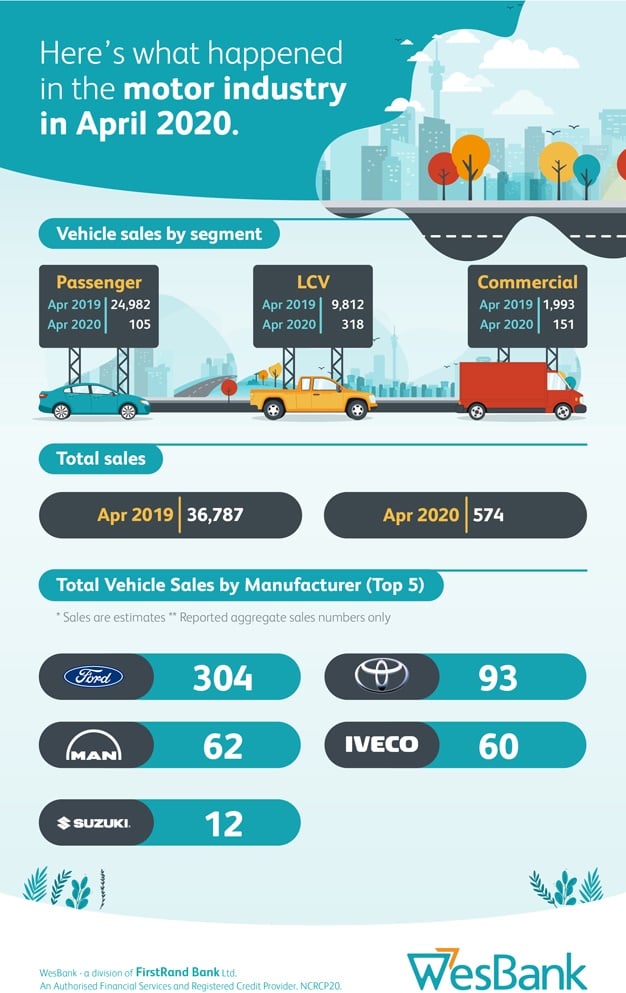
OPINION | Can SA's new car market recover from April's sales bloodbath?

Will we recover?

Earlier this year, during its state of the motor industry address, Toyota South Africa predicted that we would sell around 515 000 new vehicles in SA this year. And while Toyota drew their conclusions from various sources and predictions, Covid-19 was not something they predicted.

No one could have predicted the situation we're in right now.

But can South Africa's new car market recover from the sales slump experienced since February this year? A downturn that will, by all predictions, continue into June, July, maybe even August? The answer is two-fold.

When Covid-19 passes and interest rates are low, and banks are vying for your business, the new car market will pick up again. We will see specials and huge discounts on new vehicles, to secure financial salvation before the fiscal year ends. In that regard, regular business will resume.

But on the other hand, we will not meet Toyota's predicted total of 515 000 new vehicles sold in 2020. Try as we might, the economy has taken a massive hit, and buyers will be wary not to splurge too much. Some households have been intensely affected by the lockdown, and some are without income. Even those with partial income will reassess their situation before making a purchase.

South Africa, and the world, has been dealt a devastating blow by Covid-19, and we can only hope that our economy and new car market will recover from this.

The battle may be won, but this war is far from over.

 
BMW South Africa's factory in Rosslyn to resume production on 18 May

BMW Group South Africa has confirmed it plans to resume production of the X3 at Plant Rosslyn on 18 May 2020.

The Munich-based firm’s local arm began its shutdown of the Rosslyn factory in mid-March amid the COVID-19 pandemic, before South Africa headed into lockdown.

Oliver Zipse, chairman of the board of management of BMW AG, said some of the group's German plants, along with Oxford (United Kingdom), San Luis Potosí (Mexico) and Rosslyn here in South Africa, would re-open on “18 May at the earliest”.

A BMW Group SA communications official confirmed to CARmag.co.za the firm planned to resume production on 18 May, adding preparations were already underway.

 
Jaguar Land Rover South Africa rolls out ‘cabin air ionisation’ option

Jaguar Land Rover South Africa says all of its new vehicles are now available with the option of a cabin air ionisation system.

In addition, the British firm’s local arm says it will add a PM2.5 filter to the system for some of its models “by the end of 2020”, with the upgraded system available on all vehicles by the beginning of 2021.

According to Jaguar Land Rover, the optional cabin air ionisation system has been designed to improve air quality by reducing “allergens, airborne bacteria and associated odours”.

The setup employs a condenser and functions with the climate control system to electrically charge and ionise air particles, removing “pollutants and other harmful particles”.

Jaguar Land Rover says it will soon take the technology “a step further” with the introduction of a new cabin air ionisation with PM2.5 filter system. This features an “even stronger filtration system” to help prevent particulate matter measuring less than 2,5 micrometres from entering the cabin.


Snip.jpg
 
Which brand has the best salespeople?

In today's ultra-competitive, cut-throat car sales environment, which brands have the best salespeople? We dig into our annual Ownership Satisfaction Survey, conducted in partnership with Lightstone Consumer, to find out.

Since 2015 Cars.co.za have conducted surveys with car owners measuring the Purchasing Experience, After-sales Experience and Overall Ownership Experience. One output from these surveys is the prestigious Cars.co.za Consumer Awards – Powered by Wesbank with 50% of the category scores coming from the survey and the much-prized Brand of the Year Award being entirely based on market data, including this survey. Over the past 5 years almost 30 000 cars owners have completed the Cars.co.za survey; over 10 000 of these in 2019.

The survey also measures and tracks a wide range of issues of importance to the South Africa car owner and much of this information is shared with manufacturers through an online dashboard that is regularly updated. For the purposes of this analysis on the sales process; and for more representative results, we only included brands where at least 150 owners had answered the sales experience questions during 2019.

The top five ranked brands in terms of the sales process are;

1. Isuzu
2. Mazda
3. Toyota
4. Suzuki
5. Ford


Where are South Africa's cars made? Top 10 countries of origin for 2019

Despite its robust vehicle-manufacturing (and export) industry, South Africa imports more than half of the new cars sold here each year. So, which were the 10 top countries of origin in 2019?

Well, thanks to fresh figures from the National Association of Automobile Manufacturers of South Africa (Naamsa), we now know. Of course, 2020 may well turn out to be a completely different picture thanks to the COVID-19 pandemic.

First, some background. In 2019, some 290 624 new passenger cars and light commercial vehicles were imported into South Africa, from 25 countries. Imports of light vehicles declined by 1 573 units or 0,5 percent compared with 2018, but increased to 57,1 percent of the total light vehicle sales in 2019.

In pure volume terms, the top country of origin for passenger cars and light commercial vehicles imported into South Africa in 2019 was India, with a whopping 106 199 vehicles. India thus accounted for 36,5 percent of the total light vehicles brought into the country during the year. The majority of these vehicles were small, budget vehicles (vehicles such as the Renault Kwid, Hyundai Grand i10, Datsun Go, Suzuki Swift, Toyota Etios, Ford Figo and Honda Amaze, to name but a few).


List.png
 
Here's how much South Africa's new-vehicle exports were worth in 2019

The National Association of Automobile Manufacturers of South Africa (Naamsa) has released fresh details about the country’s new-vehicle export market in 2019.

While 2019 was a record export year for SA, 2020 is unlikely to be nearly as successful. Indeed, April 2020 exports figures were down nearly 98 percent (year on year) thanks to the COVID-19 global pandemic and the country’s hard lockdown.

Still it's worth having a look back at 2019. So, how many locally built vehicles were shipped from South Africa in 2019? Well, a record 387 125 units were exported to 151 countries, with a total value of R148-billion. In addition, says Naamsa, automotive components worth R53,7-billion left our shores during the year.

The domestic automotive industry’s top export markets for 2019 in value terms were Germany (accounting for a whopping R75,5-billion), followed by Belgium, the United Kingdom and the United States. The UK, however, was the top destination in pure numbers terms, with 101 401 units delivered to that market.

 
It's official: SA's car sales can resume under these strict conditions...

South Africa’s government has officially permitted the sale of new and used cars under Level 4 of the COVID-19 lockdown, under strict conditions.

Trade, industry and competition minister Ebrahim Patel shared the new rules, which were published in the government gazette.

Under Level 4, the trade in new and used cars; the wholesale trade of new and used cars by OEMs and importers; the export and import of all category of cars through national ports of entry “under strict guidelines”; and trade-in purchases, car lease scheme returns and wholesale trading of used cars, is again permitted.

Various “administrative and other functionaries”, such as roadworthy assessment and testing centres, and other testing stations, are also allowed to be operational.

 
Car Sales To Resume Under Level 4


Screenshot_20200513_095627.jpg
 
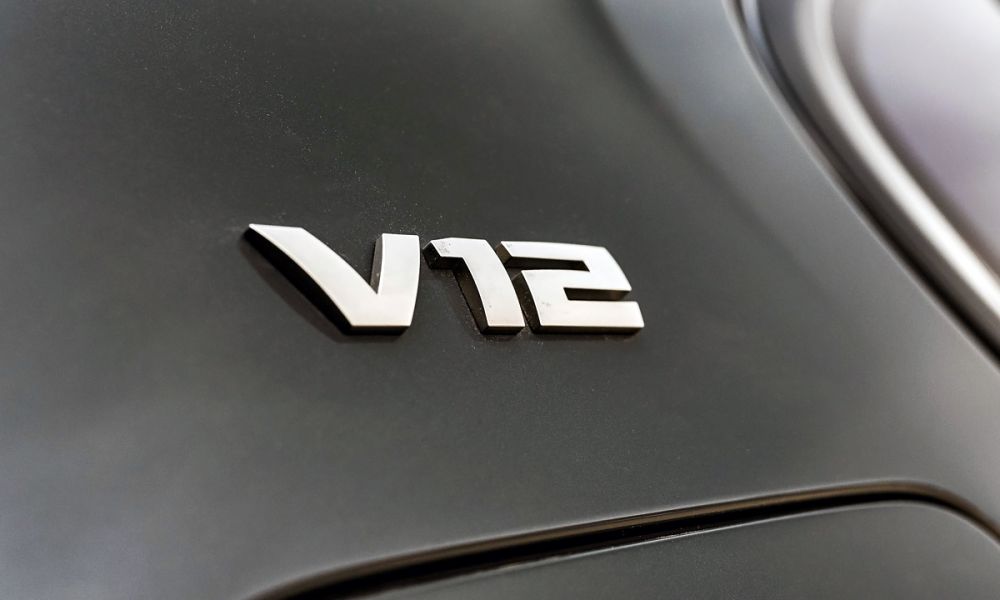
The V12 engines left on South Africa’s new vehicle market (for now)

BMW will reportedly put the V12-powered M760Li out to pasture later in 2020. And that had us thinking: how many V12 engines are left on South Africa’s new vehicle market?

Well, there are a handful of V12 examples left on the market here in SA (along with even fewer W12 derivatives), as automakers continue to turn to downsizing in a bid to meet increasingly stringent emissions regulations in some parts of the world.

Let’s have a look at the remaining V12s offered locally…

1. Aston Martin's 5,9-litre and 5,2-litre V12s

2. BMW and Roll-Royce's 6,6-litre and 6,8-litre V12s

3. Ferrari's 6,3-litre and 6,5-litre V12s

4. Lamborghini's 6,5-litre V12

5. Mercedes-Benz's 6,0-litre V12

 
Most Fuel Efficient Budget Cars in SA

We list the most fuel-efficient, budget-friendly cars currently available in South Africa!

Fuel prices in South Africa have reduced drastically as a result of the effect of the COVID-19 pandemic and the resultant global lockdowns and crash in demand.

As lockdown restrictions are gradually eased, more South African motorists will be back on the road but household budgets, however, remain under huge pressure. One way of saving money is to reduce the cost of motoring, which means streamlining the cost your car incurs on your pocket. By choosing to drive a more fuel-efficient car, you can cut your fuel costs and save money.

We recently reported that now may be the best time to buy a new car (if you have the means to do so) as new car prices are expected to rise sharply in the coming months. In an effort to cut cost, you would be wise to prioritise fuel economy in your purchase so that you can save money over time.

We have created a fuel efficiency list that’s not only more relevant but also more diverse. Considering that most people can’t afford expensive cars, we decided to list the most fuel-efficient cars with an asking price under R300 000.

Note that claimed manufacturer fuel consumption figures are used here and that real-world consumption figures will differ depending on a number of factors such as driving style, road conditions and so forth.

Pricing is accurate as of May 2020.

There’s something for everyone on this list...

3.7 L/100 km - Fiat Tipo 1.3 Multijet Easy

3.8 L/100 km – Fiat 500

4.2 L/100 km – Fiat Panda 0.9 TwinAir Easy/Lounge

4.3 L/100 km – Toyota Aygo

4.3 L/100 km – Ford Fiesta 1.0T Trend

4.3 L/100km - Peugeot 108 Active

4.3 L/100 km – Peugeot 208 1.2 Active

4.3 L/100 km – Mahindra KUV100 Nxt 1.2 D75 K6+/K8

4.4 L/100 km – Renault Kwid Automatic

4.5 L/100km - Volkswagen Polo 1.0TSI Trendline/Comfortline Hatch


How to sell your car direct to the motor trade (and make money)

Covid-19 has hit everyone hard, not only from a health and safety perspective, but also from a financial one. You might find yourself in a challenging position that requires the sale of your current vehicle, but you might not be sure of whether you are getting a good deal when trading it in right now. To assist consumers in ensuring they get the best possible deal, TradeSpeed is enabling the listing of vehicles for sale direct to the motor trade.

Presently during lockdown vehicle owners are speculating what their vehicles are worth as they contemplate either trading up or down, or in fact just selling their car outright. These are uncertain times and this is a good opportunity to trade in a way that you can benefit.


WesBank says rumours of 45 000 vehicle repossessions are ‘unfounded’

WesBank has released a statement saying online rumours it planned to repossess 45 000 vehicles across South Africa were “false and unfounded”.

The vehicle finance company said the rumour that emerged on Twitter on Monday was untrue.

“Repossessions are always the very last resort for WesBank. The bank would rather consult with its customers to make new arrangements for payment, than repossess a vehicle,” Lebogang Gaoaketse, WesBank’s head of marketing and communication, said.

“During these challenging times it remains a priority of ours to assist our customers where possible. As such, a payment relief option has been made available to those negatively affected by the COVID-19 pandemic,” Gaoaketse added.

 
Most Fuel Efficient Budget Cars in SA

We list the most fuel-efficient, budget-friendly cars currently available in South Africa!

Fuel prices in South Africa have reduced drastically as a result of the effect of the COVID-19 pandemic and the resultant global lockdowns and crash in demand.

As lockdown restrictions are gradually eased, more South African motorists will be back on the road but household budgets, however, remain under huge pressure. One way of saving money is to reduce the cost of motoring, which means streamlining the cost your car incurs on your pocket. By choosing to drive a more fuel-efficient car, you can cut your fuel costs and save money.

We recently reported that now may be the best time to buy a new car (if you have the means to do so) as new car prices are expected to rise sharply in the coming months. In an effort to cut cost, you would be wise to prioritise fuel economy in your purchase so that you can save money over time.

We have created a fuel efficiency list that’s not only more relevant but also more diverse. Considering that most people can’t afford expensive cars, we decided to list the most fuel-efficient cars with an asking price under R300 000.

Note that claimed manufacturer fuel consumption figures are used here and that real-world consumption figures will differ depending on a number of factors such as driving style, road conditions and so forth.

Pricing is accurate as of May 2020.

There’s something for everyone on this list...

3.7 L/100 km - Fiat Tipo 1.3 Multijet Easy

3.8 L/100 km – Fiat 500

4.2 L/100 km – Fiat Panda 0.9 TwinAir Easy/Lounge

4.3 L/100 km – Toyota Aygo

4.3 L/100 km – Ford Fiesta 1.0T Trend

4.3 L/100km - Peugeot 108 Active

4.3 L/100 km – Peugeot 208 1.2 Active

4.3 L/100 km – Mahindra KUV100 Nxt 1.2 D75 K6+/K8

4.4 L/100 km – Renault Kwid Automatic

4.5 L/100km - Volkswagen Polo 1.0TSI Trendline/Comfortline Hatch


Wonder how many new car buyers will have fuel efficiency top of their minds now that the oil prices are low and might take a long time before they recover.
 
Top
Sign up to the MyBroadband newsletter
X