The SA Vehicle Industry Thread

These were South Africa’s 50 best-selling vehicles in October 2022

As the new vehicle market continues to grow at a steady pace, with October seeing an 11.4% year-on-year growth for the industry as a whole, Toyota is clearly taking no prisoners.

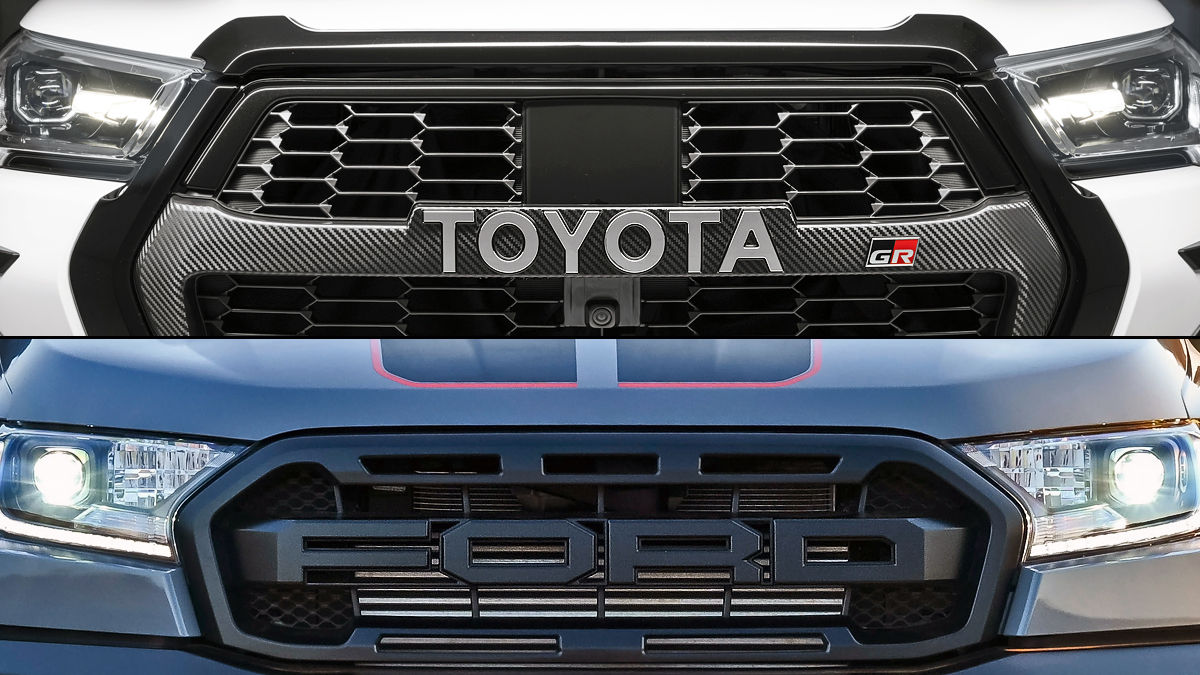
Fully back on track after re-opening its local Prospecton plant in mid-August, following the devastating KZN floods that closed it for four months, Toyota enjoyed a clean sweep of the podium last month. The Hilux found 3 336 new homes last month, followed by its locally-produced Corolla Cross counterpart (2 014), and the Indian-built Urban Cruiser (1 820).

Next up it was a close tussle between the current Ford Ranger (remember there’s a new and potentially game-changing model coming soon) and the Isuzu D-Max, which both saw a volume of just over 1 800 units. In the compact hatchback race, the Suzuki Swift, with its volume of 1 693 units, edged out the evergreen Volkswagen Polo Vivo (1 583).

SA’S 50 TOP SELLING VEHICLES: OCTOBER 2022

  • 1. Toyota Hilux - 3 336
  • 2. Toyota Corolla Cross - 2 014
  • 3. Toyota Urban Cruiser - 1 820
  • 4. Ford Ranger - 1 807
  • 5. Isuzu D-Max - 1 802
  • 6. Suzuki Swift - 1 693
  • 7. Volkswagen Polo Vivo - 1 583
  • 8. Toyota Hi-Ace - 1 239
  • 9. Nissan NP200 - 1 096
  • 10. Haval H6 - 956
  • 11. Haval Jolion - 867
  • 12. Toyota Fortuner - 847
  • 13. Toyota Starlet - 839
  • 14. Volkswagen Polo - 809
  • 15. Hyundai Grand i10 - 806
  • 16. Suzuki Vitara Brezza - 750
  • 17. Nissan Magnite - 735
  • 18. Renault Triber - 706
  • 19. Chery Tiggo 4 Pro - 695
  • 20. Renault Kwid - 655
  • 21. Volkswagen T-Cross - 643
  • 22. Mahindra Scorpio Pik-Up - 624
  • 23. Nissan Almera - 561
  • 24. Renault Kiger - 552
  • 25. Nissan Navara - 507
  • 26. Ford EcoSport - 487
  • 27. Toyota Corolla Quest - 459
  • 28. Hyundai Venue - 431
  • 29. GWM P-Series - 426
  • 30. Hyundai i20 - 403
  • 31. Kia Picanto - 401
  • 32. Toyota Agya - 395
  • 33. Chery Tiggo 7 Pro - 369
  • 34. Kia Sonet - 363
  • 35. GWM Steed - 349
  • 36. Hyundai Atos - 339
  • 37. Volkswagen Polo Sedan - 290
  • 38. Toyota Land Cruiser PU - 285
  • 39. Volkswagen T-Roc - 283
  • 40. Suzuki Celerio - 274
  • 41. Suzuki Ertiga - 269
  • 42. Kia Rio - 258
  • 43. Suzuki Baleno - 233
  • 44. Toyota Rumion - 230
  • 45. Suzuki Dzire - 225
  • 46. Suzuki Jimny - 216
  • 47. Mahindra XUV300 - 211
  • 48. Suzuki S-Presso - 206
  • 49. Volkswagen Tiguan - 203
  • 50. Toyota Prado - 200

 
Amazing bang for buck, but are those Haval's going to make it further than their 5yr warranty? I have also seen horror stories of Haval's parked at bodyshops for months and months while waiting for parts to enter the country....
 
10 best-selling bakkies in South Africa: October 2022

Let’s take a closer look at the list of South Africa’s 10 best-selling bakkies for October 2022, as well the best of the rest and the export winners…

October 2022 saw South Africa’s new-vehicle market grow 11.4% year on year to 45 966 units. The industry’s light-commercial vehicle segment (which includes bakkies) showed year-on-year gains of 14.3% to reach 12 738 registrations.

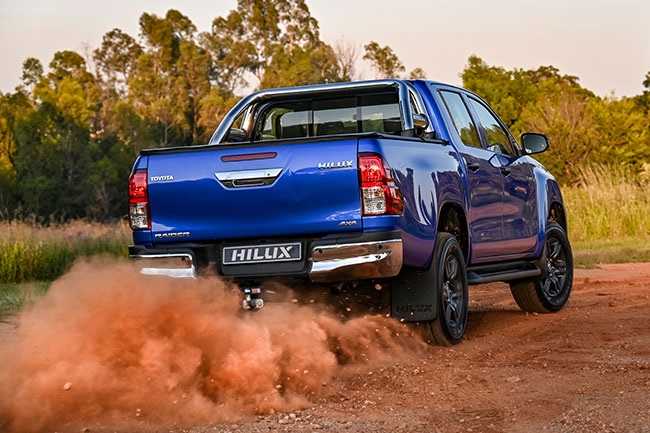
As you might have already guessed, the resurgent Toyota Hilux was responsible for a fair chunk of those sales (3 336 units, to be exact), retaining its title as South Africa’s best-selling bakkie in October 2022. Production of the Japanese firm’s bakkie range is seemingly fully back online in KwaZulu-Natal and was recently bolstered by the arrival of the 165 kW Hilux GR-Sport derivative.

The outgoing Ford Ranger, meanwhile, returned to second spot after having to settle for third in September, with 1 807 units registered across the country. However, Blue Oval brand’s the Silverton-produced model was a mere five registrations ahead of the Struandale-built Isuzu D-Max (1 802 units), which consequently fell one to third.

10 best-selling bakkies in South Africa for October 2022

1. Toyota Hilux – 3 336 units

2. Ford Ranger – 1 807 units

3. Isuzu D-Max – 1 802 units

4. Nissan NP200 – 1 096 units

5. Mahindra Pik Up – 624 units

6. Nissan Navara – 507 units

7. GWM P-Series – 426 units

8. GWM Steed – 349 units

9. Toyota Land Cruiser 79 – 285 units

10. Volkswagen Amarok – 164 units

 
Janine Van der Post | 'Made in China' car brands soaring with SA buyers

Remember a time when we looked at an item's label, and it read 'Made in China'? Whether it was toys, clothing or anything, we judged its quality as flimsy and cheap. Or you thought it wouldn't last very long and broke before you could even take the said item home.

Fast forward a couple of decades, and some of the world's largest technology companies and automakers hail from the land of the Great Wall. Around my area, the local Chinese shops have been upgraded; they're bigger and more sophisticated, product quality has improved, and they're all the rave. 'Made in China' now means quality is their A-game. The same applies to their cars.

Month by month, Haval and Chery have been consistent in their excellent sales numbers. South Africans are clearly choosing Chinese brands over more established ones. I've said this before earlier this year - but with Europe's focus on electric mobility and no longer producing diesel-driven cars, it's opening a vast gateway for Chinese automakers this side of the globe.

https://www.news24.com/wheels/opini...na-car-brands-soaring-with-sa-buyers-20221103
 
Is South Africa’s used car market bubble about to burst?

The pandemic has changed the world in many ways, and its effects have reverberated right through the motor industry too, where a shortage of new cars has caused the used car market to flourish in recent years.

If we compare data for the first three quarters of 2022 to the same period in 2021, it becomes clear that the market continues to thrive, according to AutoTrader. Of course, demand for used cars has driven up prices. The average list price of used cars for sale has increased by 10%, from R386 682 in 2021 to R427 290, in 2022.

Off the back of strong year-on-year growth, search and advert views for the period have grown by 5.64%. Searches are an indicator of popularity, with advert views showing the level of interest in a particular car and enquiries indicating which cars the consumers are most likely to buy.

But most notably, supply has not kept pace with demand. While the seven cars that sellers get the most enquiries for has remained unchanged, stock levels of the mostly locally built cars have changed dramatically.

Supply of the country’s best-selling used passenger car, the Volkswagen Polo Vivo, has halved, while the second biggest drop in supply in used cars has been the BMW 3 series (33%) followed by the Mercedes-Benz C-Class (17%), Volkswagen Polo (16%), and imported VW Golf (11%).

In contrast, supply of used bakkies has increased. The Toyota Hilux (the car that receives the most enquiries) increased in supply by 18% and the Ford Ranger by 3%.

 
Amazing bang for buck, but are those Haval's going to make it further than their 5yr warranty? I have also seen horror stories of Haval's parked at bodyshops for months and months while waiting for parts to enter the country....
Fun fact, the first Havals were launched here in 2017, I recently saw an H6C, still in mint condition, fortunately there are owners here on the forum, we can get first hand experience.
 
Toyota top charts in October while load shedding threatens industry

 
VW Set to Build Mystery ‘SUV-ish’ Model in SA

Volkswagen looks poised to start producing a third model at its Kariega facility, with the mystery newcomer set to feature an “SUV-ish” body style…

Volkswagen South Africa has revealed it has plans to build a third product – alongside the Polo hatchback and the Polo Vivo – at its Kariega plant in the Eastern Cape.

Martina Biene, freshly appointed as chairperson and managing director of Volkswagen Group SA, shared the news at a media briefing, with Thomas Schäfer, CEO of the Volkswagen Passenger Cars Brand, sitting alongside her. Schäfer was back in the country to reflect on his first 100 days as global CEO.

“We’re looking at a third product to add. It’s a product which is very much shaped for the A0 segment and for South Africa and Africa. It would be a third product to be added and not a replacement for the Polo now or even in three years’ time,” Biene said, suggesting the new model would (unlike the Polo) not be exported to European markets.

The as-yet-unidentified small crossover will be based on the VW Group’s ubiquitous MQB-A0 platform, which Schäfer – who occupied Biene’s current role from 2015 to 2020 – described as “super versatile”. These underpinnings are currently employed by the likes of the Polo, T-Cross and Taigo, as well as the Audi A1 Sportback and various Seat and Škoda models.

 
Volkswagen wants to build a new compact SUV model in South Africa

Volkswagen South Africa is strongly considering a new compact SUV-type model for local production at its Kariega plant in the Eastern Cape.

The announcement was made by Volkswagen Passenger Cars global CEO Thomas Schaefer, who has a special connection with South Africa as he headed the local operation until late 2020. He was introducing VWSA’s new managing director Martina Biene at a press conference this week.

It’s likely that a decision would be made in the coming weeks to build a new compact car in the country, which would have an SUV-like body style. The vehicle has yet to be revealed, but it appears that the newcomer will be underpinned by the MQB-AO platform that also forms the basis of the current Polo and other Volkswagen Group B segment vehicles.

The new model will not replace the local production of the Polo or Polo Vivo hatchbacks, which Bienne said would continue beyond 2025. The company would not need to add further capacity to its Kariega factory as the plant currently has an annual capacity of 160 000 units.

Unlike the Polo models, the newcomer won’t have its sights on European exports, but instead would serve as something of a regional model tailored to South African and other African markets, where it would likely be exported to.

 
How the VW Polo slipped down the list of SA’s best sellers

The unthinkable has happened: Volkswagen’s Polo hatchback failed to make the list of SA’s 10 best-selling vehicles in October 2022. So, what’s behind this apparent fall from grace and what’s next for the locally built hatch?

In many ways, October 2022 was a fairly routine month for South Africa’s new-vehicle market. Total industry sales grew year on year, with Toyota dominating proceedings and the list of the country’s best-selling vehicles speckled with the usual array of locally built bakkies. Pretty run-of-the-mill stuff, right? Well, there was one particularly interesting detail we immediately noticed.

That’s right, the Volkswagen Polo hatchback was nowhere to be seen. The Kariega-produced mainstay failed to crack the list of South Africa’s 10 best-selling vehicles, instead languishing in a lowly 15th place. That’s not something you see very often, is it?

Though an exceptionally uncommon occurrence considering the Polo’s long-standing popularity in SA, the last time this happened was actually fairly recently. Yes, the Polo missed out on the top 10 in December 2021, too, though that was clearly owing to the nameplate’s switchover to the facelifted model. But what’s behind this latest dip in sales?

 
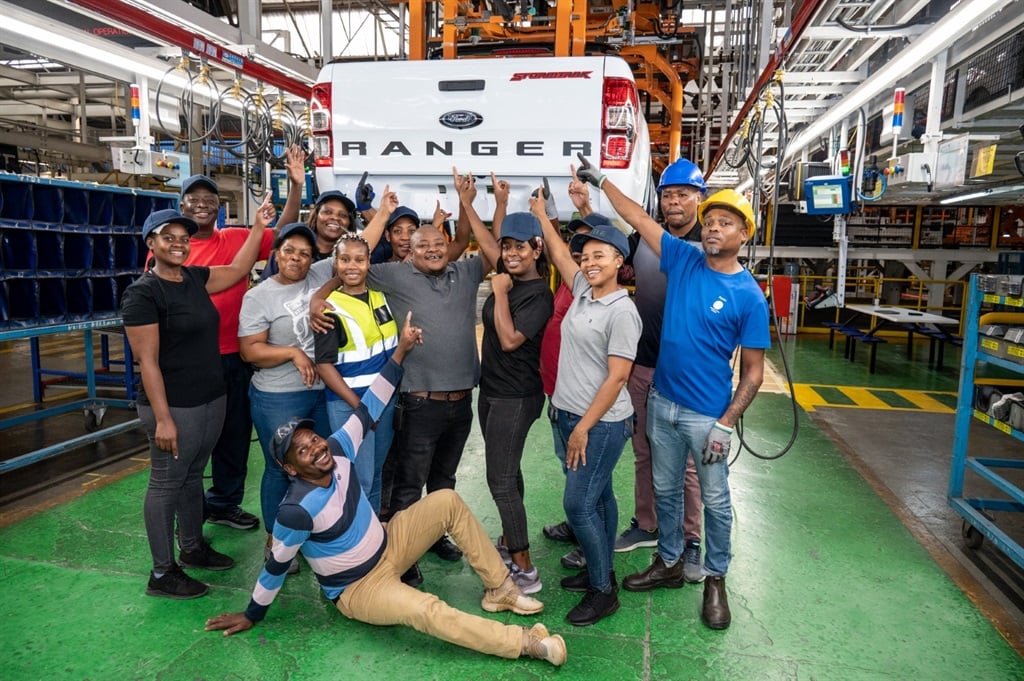
WATCH: Last outgoing Ford Ranger rolls off of Silverton Assembly line


7 Cheapest Cars in South Africa

Looking to buy a new car on a budget? Here are the 7 cheapest cars in South Africa you can buy in 2022. Whether you’re looking for a small city car or a larger family vehicle, there’s something on this list to suit your needs. So, if you’re looking to save money on your next new car purchase, read on!

Check out our list of the Cheapest New Cars in South Africa

1. Suzuki S-Presso – R156 900

2. Mahindra KUV100 – R167 999

3. Renault Kwid – R174 400

4. Suzuki Celerio – R174 990

5. Mahindra Bolero 2,5Di Single Cab – R187 990

6. Suzuki Dzire – R189 900

7. Hyundai Atos – R190 900

 
Cars will become more affordable in the coming years, says WesBank CEO

With the global automotive market currently crippled by shortages, vehicle prices have risen as the supply-demand pendulum swung in favour of manufacturers.

But the vehicle affordability outlook for South Africa is looking set to improve in the next few years as global economies recover from the effects of the pandemic, says WesBank CEO Ghana Msibi.

“As the South African GDP continues to take strain and our inflationary forecast sees two interest rate increases within the next six months, we believe the situation in the local economy will begin to improve with decreases in the repo rate and that the economy will normalise in 2024,” Msibi said.

“We also expect the supply shortage of certain automotive components such as semiconductors to improve in the medium term and for the current logistical turmoil in the world to ease, together with lower shipping costs. These developments will help world economies, including South Africa, by cutting operating costs.”

Another big milestone, Msibi adds, will be when China starts firing on all cylinders again. China’s zero Covid-19 policy has led to numerous plant shut downs, but once these are a thing of the past, component availability for the entire global vehicle market is expected to improve significantly.

 
EV and hybrid sales in SA: first three quarters of 2022

Are sales of electric vehicles and hybrids picking up in South Africa? Let’s take a closer look at the official registration figures for the first three quarters of 2022…

Wondering exactly how many electric vehicles (EVs), traditional hybrids and plug-in hybrids have been sold in South Africa over the first three quarter of 2022? Well, wonder no more.

In its quarterly review of business conditions for the South African automotive industry, Naamsa has again listed some fascinating sales figures regarding so-called “new energy vehicles” (electric, plug-in hybrid and traditional hybrid).

Of course, it’s worth noting the local market is still without a truly affordable electric car, with the least expensive option currently being the 3-door Mini Cooper SE Hatch, which retails for a lofty R723 000. No other full-size, battery-powered vehicle comes in at less than R1-million.

According to Naamsa, 350 electric vehicles were registered in South Africa over the first nine months of 2022 (so, around 39 units a month), translating to just 0.09% of the September 2022 year-to-date industry total of 391 936 units. That figure rises slightly to 0.13% if we consider EV sales as a percentage of total passenger-car registrations instead (271 173 units over the first three quarters of 2022).

Interestingly, the third quarter of the year saw the most EV sales, with 143 units registered across July, August and September. For the sake of comparison, 218 electric cars were sold in South Africa in 2021.

 
Beijing X55 To Be Built In SA in 2023

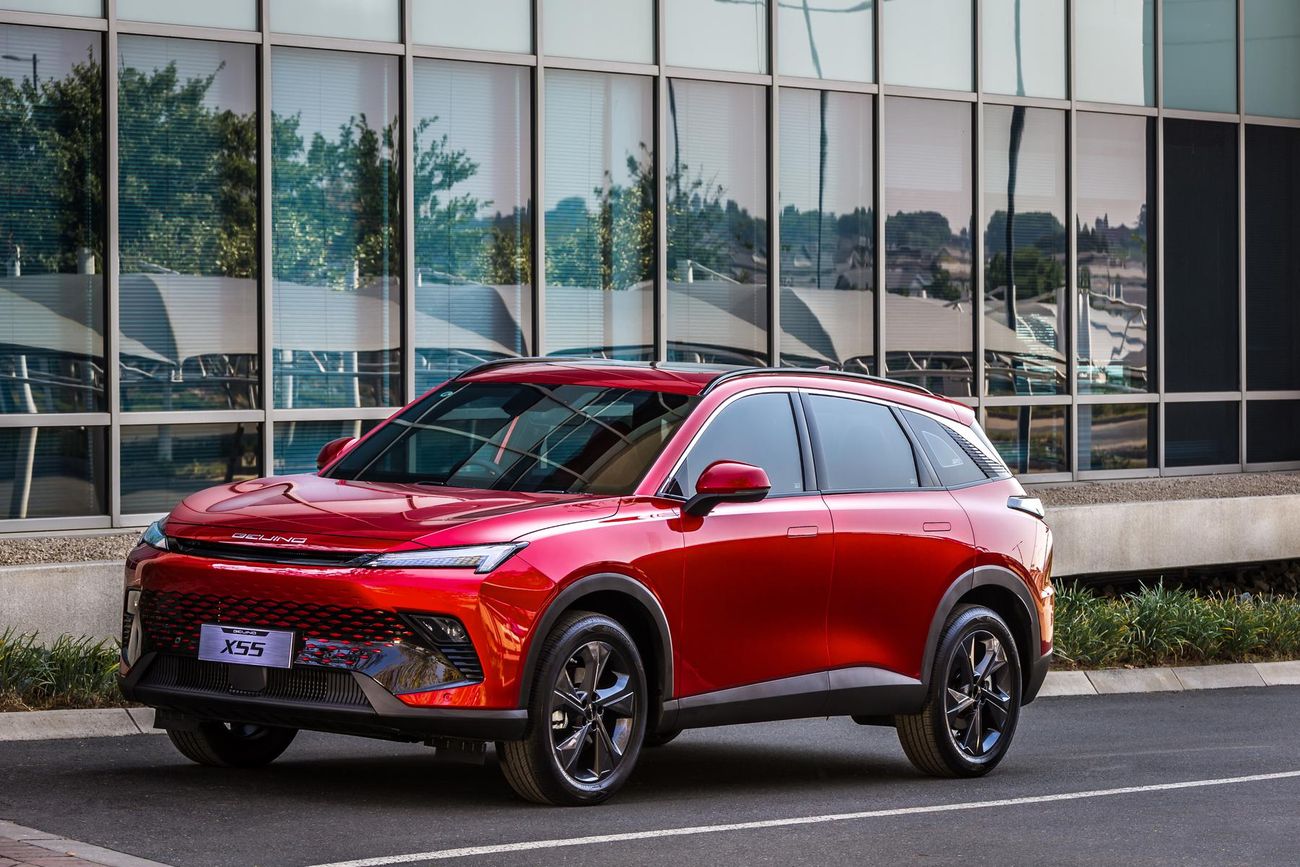
The recently-launched Beijing X55 impressed us when we drove it in the middle of November 2022, but we understand the stylish newcomer will now be assembled right here in South Africa from 2023

We use the word ‘assembled’ loosely as we understand the Coega plant in the Eastern Cape will run complete knockdown (CKD) production of the cool-looking X55 SUV. Right now, this plant currently makes the BAIC D20 and BAIC X25, which have run their course. BAIC’s facility in Coega a fascinating setup as one of the shareholders is none other than the Industrial Development Corporation (IDC) who are trying to get a manufacturing hub estabilished in the Coega Special Economic Zone.

Dealerfloor reported that the facility is currently being upgraded to accommodate production of the newer model and its scheduled to begin production in the second quarter of 2023. Up until then, all Beijing X55 units will be imported directly from China. We understand that electrification is also on the cards.

Beijing Automotive Group Co (BAIC) is the 6th biggest Chinese carmaker and has partnered with Daimler, as well as acquiring almost 10% stake in Mercedes-Benz. As a reminder, for a non-Chinese car maker to assemble and sell vehicles in China, it has to partner with a local company.

 
Another sector our government will screw up.


South Africa needs to adopt electric vehicles more aggressively — not just to protect the environment but also for the survival of the automotive sector. However, the government has been slow to put in place policies to make this happen.

The country risks being left behind by the global economy if it doesn’t make the shift, according to the head of Audi South Africa Sascha Sauer.

“A lot of jobs are at risk and a major contribution to the GDP and tax payments is at risk … All industry players, including the government authorities, need to make that major transition and make that transformation a success,” Sauer told the Mail & Guardian.

He said the government had dragged its feet in putting in place, policies that would fast track the move to electric vehicles (EVs).
 
Top
Sign up to the MyBroadband newsletter
X