The SA Vehicle Industry Thread

Car sales continue to defy the odds: these were the top 10 brands in November 2022

For the 11th month in a row, the South African new vehicle market has registered growth.

According to Automotive Business Council Naamsa, a total of 49 413 vehicles were sold in November 2022, representing an impressive 18.2% growth versus the same month last year.

As with last month, the light commercial vehicles and bakkies led the way here with a 20.8% year-on-year gain, versus 16.9% for the passenger vehicle sector. The latter was strongly supported by the rental industry in November, accounting for 20% of car sales. Medium and heavy commercial vehicle sales increased by 17.5% and 22.6% respectively.

According to Naamsa, 81% of new vehicle sales last month took place through the dealer channels, while 14.7% went to rental fleets, 2.3% to government and 2.0% to corporate fleets.

There was positive news on the export front too, with 34 310 vehicles shipped off, representing a year-on-year rise of 64.7%, keeping in mind that November 2021 was affected by a fourth Covid-19 wave in Europe. Year-to-date, however, export sales are still 17.9% ahead of last year.

Volkswagen was the top exporter with a volume of 9 790, followed by Mercedes-Benz (8 691) and Toyota (5 590). On the domestic sales charts, Toyota was the top performer by quite a margin, with 13 903 sales, compared to Volkswagen’s 6 406 and Suzuki’s 4 287.

10 top-selling brands: November 2022

1. Toyota – 13 903
2. Volkswagen – 6 406
3. Suzuki – 4 287
4. Nissan – 3 167
5. Hyundai – 3 002
6. Ford – 2 347
7. Haval – 2 220
8. Isuzu – 2 027
9. Kia – 1 892
10. Renault – 1 801

 
These were South Africa’s 50 best-selling vehicles in November 2022

SA’S 50 TOP SELLING VEHICLES: NOVEMBER 2022

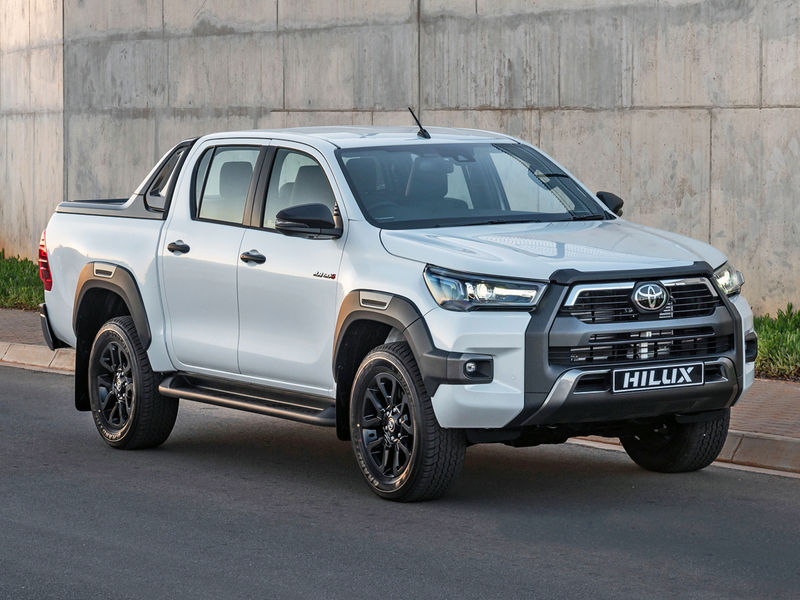
1. Toyota Hilux - 3 048
2. Toyota Corolla Cross - 2 109
3. Ford Ranger - 1 979
4. Toyota Hi-Ace - 1 944
5. Suzuki Swift - 1 751
6. Volkswagen Polo Vivo - 1 741
7. Volkswagen Polo - 1 724
8. Isuzu D-Max - 1 578
9. Toyota Urban Cruiser - 1 334
10. Toyota Starlet - 1 322
11. Nissan NP200 - 1 164
12. Volkswagen T-Cross - 1 046
13. Hyundai Grand i10 - 971
14. Toyota Fortuner - 937
15. Nissan Magnite - 888
16. Haval Jolion - 860
17. Chery Tiggo 4 Pro - 836
18. Toyota Corolla Quest - 764
19. Mahindra Scorpio Pik-Up - 697
20. Renault Kwid - 662
21. Renault Triber - 648
22. Suzuki Vitara Brezza - 598
23. Toyota Agya - 585
24. Suzuki Dzire - 563
25. Nissan Navara - 562
26. Haval H6 - 555
27. Kia Picanto - 495
28. Hyundai Venue - 446
29. GWM P-Series - 437
30. Hyundai i20 - 430
31. Nissan Almera - 388
32. GWM Steed - 368
33. Chery Tiggo 7 Pro - 354
34. Volkswagen Tiguan - 332
35. Toyota Rumion - 326
36. Chery Tiggo 8 Pro - 312
37. Ford EcoSport - 295
38. Renault Kiger - 290
39. Kia Sonet - 281
40. Toyota Land Cruiser PU - 277
41. Volkswagen T-Roc - 276
42. Suzuki Baleno - 272
43. Kia Rio - 267
44. Suzuki Jimny - 261
45. Suzuki Ertiga - 257
46. Hyundai Atos - 256
47. Kia Pegas - 244
48. Volkswagen Polo Sedan - 243
49. Hyundai Creta - 236
50 . Toyota Land Cruiser 300 - 209

 
Chery celebrates 10 000 units sold in SA within a year

As part of a massive sales onslaught, Chery has managed an impressive milestone of 10 000 units sold in South Africa within a single year.

After its first year back in South Africa after a hiatus following an initial stint in our market, Chery has achieved a major sales milestone. The brand first achieved a Top 10 sales position in South Africa and has now surpassed 10 000 units sold on our shores over an 11-month period.

“You can measure a brand’s success with many different metrics, but none are more rewarding than the number of units sold. For us, each customer who signs an offer to purchase on a new Tiggo Pro is a vote of confidence in our brand and we are very thankful for that,” says Tony Liu, Executive Deputy General Manager of Chery South Africa.

Such a major milestone is rarely achieved by any brand in one year, let alone by a brand in its first year of operation. This has solidified Chery as a household name and has helped usher in a new perception for Chinese automakers in South Africa.

 
10 best-selling bakkies in South Africa: November 2022

Time to examine November 2022’s sales figures and identify South Africa’s best-selling bakkies as well as those models that didn’t prove quite so popular with local buyers…

In November 2022, South Africa’s total new-vehicle market grew 18.2% to 49 413 units, while the light-commercial vehicle segment (which includes bakkies) ended the month on 13 477 registrations, representing even healthier year-on-year growth of 20.8%. That light-commercial figure is furthermore nearly 6% higher than October’s tally.

So, what impact has this had on the list of South Africa’s best-selling bakkies? Fascinatingly, very little at all – in terms of the overall standings, anyway. Yes, the order of the models in the top 10 is completely unchanged compared to the previous month.

Export winners in November 2022

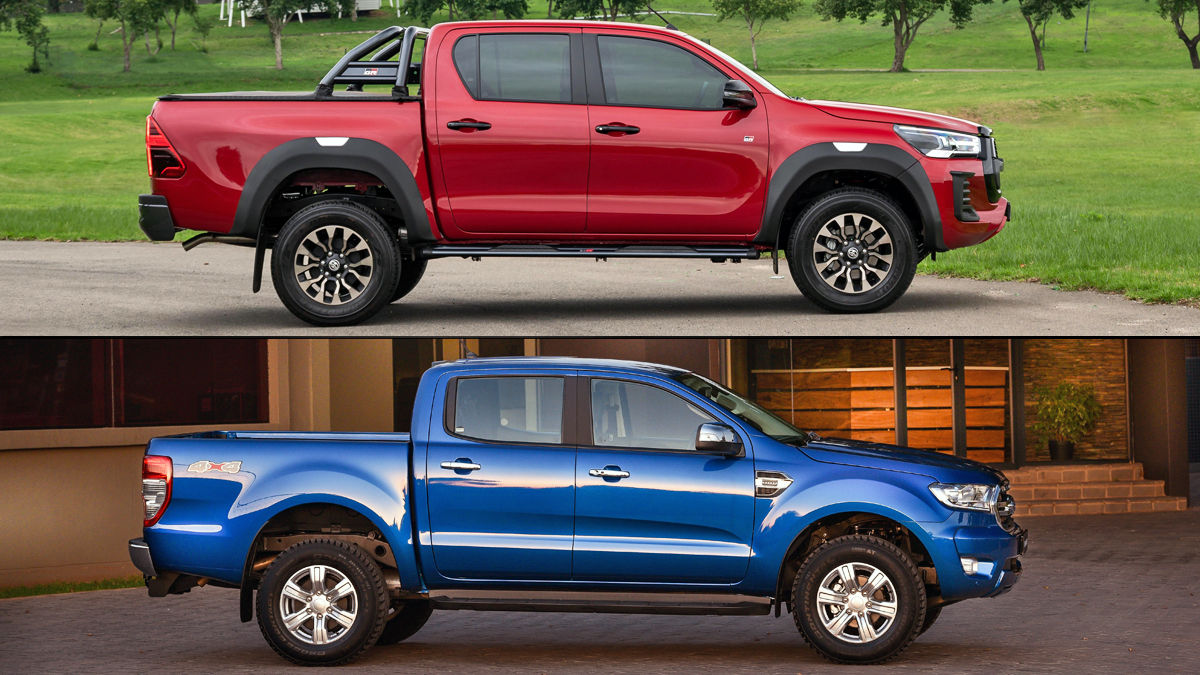
While the standings on the domestic front were unchanged, there was at least a little movement on the export charts. With 5 466 units shipped from Toyota’s KwaZulu-Natal plant, the Hilux moved up to the top, forcing the Ranger (4 299 units) down to second.

Next came the D-Max (396 units) and Navara (334 units), followed by the NP200 (172 units). Interestingly, Naamsa’s official figures show 34 units of the imported Triton were also exported in November, along with 8 units of the Chinese-built P-Series.

10 best-selling bakkies in South Africa for November 2022

1. Toyota Hilux – 3 048 units

2. Ford Ranger – 1 979 units

3. Isuzu D-Max – 1 578 units

4. Nissan NP200 – 1 164 units

5. Mahindra Pik Up – 697 units

6. Nissan Navara – 562 units

7. GWM P-Series – 437 units

8. GWM Steed – 368 units

9. Toyota Land Cruiser 79 – 277 units

10. Volkswagen Amarok – 154 units

 
Naamsa Top 10 best-selling brands

Top 10 best-selling brands: November 2022


  • Toyota – 13 903
  • Volkswagen Group – 6 406
  • Suzuki – 4 287
  • Nissan – 3 167
  • Hyundai – 3 002
  • Ford – 2 347
  • Haval – 2 220
  • Isuzu – 2 027
  • Kia – 1 892
  • Renault – 1 801
 
New and used vehicle prices continue to surge, vehicle pricing index shows

The prices of both new and used vehicles continued to surge in the third quarter of 2022, according to TransUnion’s latest quarterly Vehicle Pricing Index (VPI).

The information specialist’s latest VPI report showed that new vehicle price inflation rose sharply year-on-year, from 3.8% in the third quarter of 2021 to 6.8% in Q3 2022. However, this was still below South Africa’s overall inflation rate of 7.6% in August.

Used vehicles, however, saw a sharper price increase, surging to 9.0% in Q3 2022, from 6.8% in the same period last year.

TransUnion’s VPI index uses sales data from across the industry to measure the relationship between the increase in vehicle pricing for new and used vehicles from a basket of passenger vehicles from the top 15 manufacturers.

It also appears that South Africans are buying more expensive cars, with TransUnion having noted a clear move from under R200 000 into the over R300 000 bracket. This, it says, is partly due to the dwindling supply of quality used vehicles available for under R200 000.

 
Toyota SA Rolls Out Free Anti-Theft Updates for Certain Vehicles

In response to new modus operandi from local vehicle-theft syndicates, Toyota SA says it has developed a range of vehicle security systems enhancements…

Toyota South Africa Motors says it has developed various “enhancements” for the security systems of certain of its popular vehicles, with these updates available for free at dealerships around the country.

The Japanese firm’s local division says the move is in response to “new modus operandi on the part of criminals and syndicates”, including the use of “sophisticated technology” to target vehicles featuring keyless or smart-entry systems.

The vehicles eligible for the enhancements include all Hilux Legend models from 2019 and all Fortuner models from 2016, along with all VX and VXL derivatives of the Land Cruiser Prado from 2017, all Land Cruiser 200 models with smart entry and all Land Cruiser 300 units. Finally, all Lexus RX and LX models registered from 2015 also qualify.

All new vehicles as well as those arriving at dealers for routine servicing will automatically receive the enhancements. Though the company opted not to detail the updates, it claims to have developed “several measures to mitigate possible theft of Toyota- and Lexus-branded vehicles in the country”.

These measures have been shared with the Toyota dealer network as well as reviewed and evaluated by VSS Administration, which the brand describes as an “independent South African organisation that specialises in vehicle security and automotive systems”.

 
VW says South Africa must end coal dependence for electric cars to make sense

South Africa must wean itself off coal if locally produced electric vehicles - a key element of the government's decarbonisation plan - are to be climate friendly, the country head of Volkswagen said on Wednesday.

Wealthy nations have already committed $8.5 billion (R148bn) to help the country cut its emissions. The South African government is seeking roughly 10 times that amount, including R128 billion to fund a transition to EVs.

Introducing EVs onto the domestic market makes little sense, however, while South Africa remains dependent upon fossil fuels for power generation, Martina Biene, VWSA's managing director, told Reuters.

"The fundamental thing is that finally the source of power can't be coal in the long-term for us to make EVs a thing which is not only an emission-free vehicle but also helps to save the climate," she said.

South Africa produces nearly 90% of its total energy supply from coal and has struggled to implement plans for new renewables capacity.

Speaking on the sidelines of a conference in Johannesburg, Biene said Volkswagen was counting on progress towards decarbonising the power sector to help it reach its own emissions-reduction targets.

"We want to be carbon neutral as a manufacturer, global manufacturer, by 2050 is the ultimate goal ... It only makes sense with renewable energy," she said.

Three-quarters of cars produced by South Africa's motor industry, which accounts for 5% of gross domestic product and over 100 000 jobs, are exported, mostly to European countries.

 
Lack of EV production may leave 100 000 South Africans jobless

With the majority of foreign automotive markets South Africa exports to gravitating towards electrification, it is crucial that local provisions are implemented to prevent 100 000 South Africans from becoming jobless.

In a nutshell, Europe is South Africa’s largest importer of vehicles. The European Union has since issued a mandate that no Internal Combustion Engined (ICE) vehicles will be allowed to be sold from 2030 onwards and will only allow for zero-emissions vehicles to enter the economic region.

With Volkswagen, Mercedes-Benz and BMW producing several vehicles at their respective facilities, many are destined for sale in European countries. This is a significant contributor to the South African economy worth billions of rands. Mondli Gungubele, Minister in the Presidency of South Africa has issued a stern warning that the automotive industry needs to adjust to realign itself with the ever-changing global climate and demands of the mobility sector. In addition, he has warned that over 100 000 jobs both directly linked to the industry, as well as supplementary sectors may be in jeopardy.

 
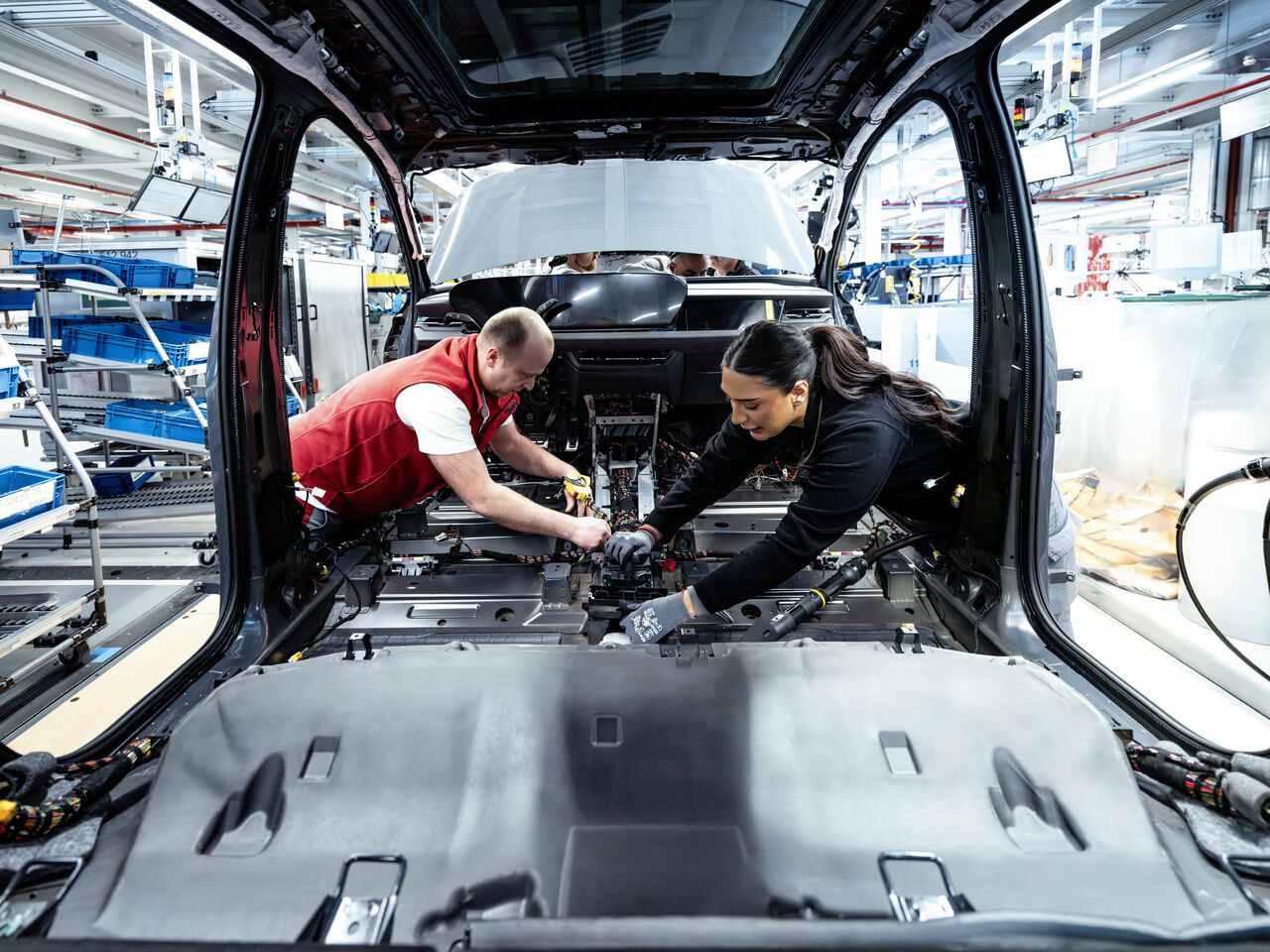
Audi steps up its EV goals - only electric cars from 2026

Audi is accelerating its transition to electric-only automaker with ambitious plans for all of its global factories making EVs by 2026. But it is 2026 that marks the end of new ICE-powered cars - it will be the last year Audi plans to introduce a new non-electric car. From that year onwards all new models will be electric only and the company will phase out the production of non-electric cars by 2023.

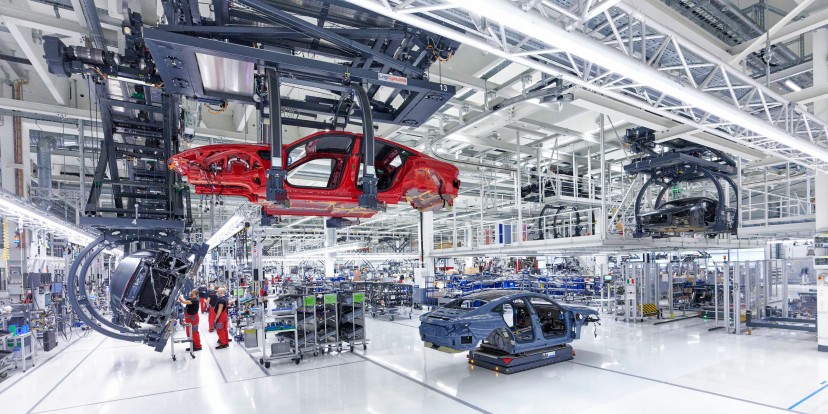
Rather than investing into building new factories, Audi has embarked on a giant undertaking of converting all of its manufacturing sites to not only produce electric cars but to become carbon neutral at the same time. The company is pushing its sustainability agenda with emphasis on economical, ecological and social aspects.

Audi’s response to the current global changes and rising demand for electric cars and the push for a zero-emissions future is what the company calls 360factory. Powered by renewable energy, with zero-emissions and carbon neutrality as a main focus, the factories of the future will offer the best working environment for employees and not only have no impact on their environment but will support local development on many different levels.

The company is contributing €500 million to retrain all of its employees to work in new high-tech factories. Audi’s factories in Brussels and Böllinger Höfe already are manufacturing EVs, next year the famous Ingolstadt will begin production of the upcoming Audi Q6 e-tron. By 2029 all of its global factories will be making electric cars - at least one model each.

Audi is following Tesla actually with its vertical integration and production simplification. The company is putting a lot of effort into simplifying the design and production processes of its cars and it looks like it will join the “giga-press” party with streamlined vehicle design touted as a solution. Audi wants to cut its global manufacturing costs in half by 2033 which is a huge target.


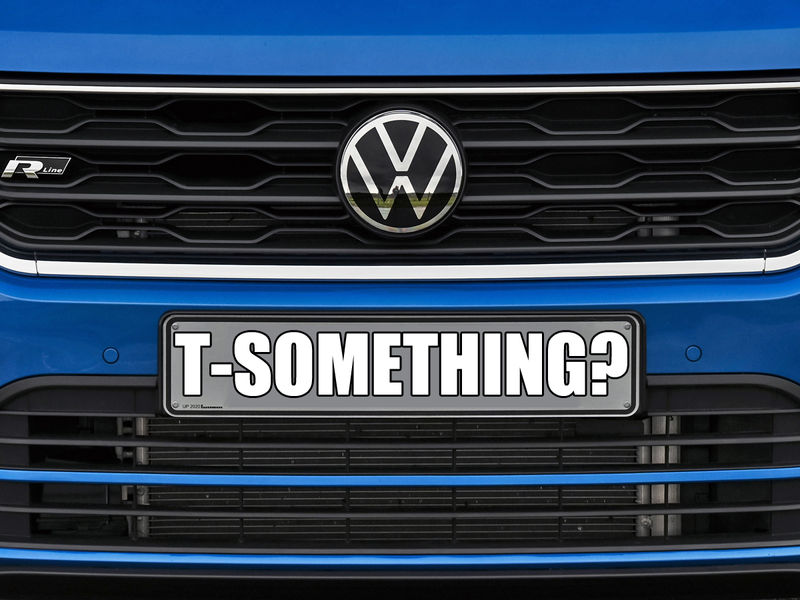
VW’s Pending ‘Made-in-SA’ Mystery Model: What We Know So Far…

Though Volkswagen SA has confirmed it hopes to start building a 3rd model in Kariega, there’s an air of mystery surrounding the newcomer. Here’s what we know so far…

At the start of November 2022, Volkswagen South Africa announced plans to build a 3rd product – alongside the Polo hatchback and the Polo Vivo – at its Kariega plant in the Eastern Cape. Martina Biene, Volkswagen Group SA chairperson and managing director, said the mystery model would feature an “SUV-ish” body style, before adding it was not yet in production anywhere in the world.

That, in turn, means the vehicle in question has yet to be revealed, so its identity remains unknown. So, what do we know so far? Well, let’s attempt to answer a few key questions in order to shed a little more light on the topic.

 
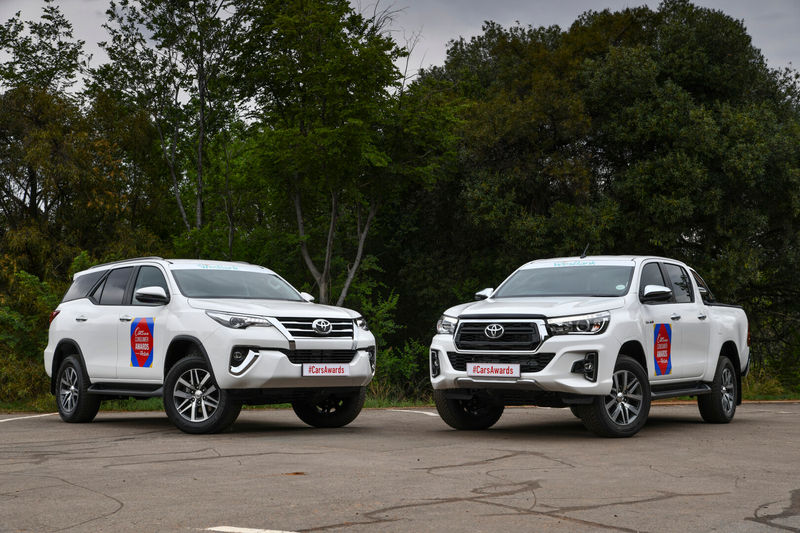
Best Used Car Buys for South Africa

We have put together a comprehensive list of the best used car buys, taking into consideration fuel economy, ownership satisfaction and more.

South Africa’s leading automotive platform Cars.co.za has announced its inaugural Best Used Car Buys. It’s based on the test team’s vast experience with cars, SUVs and bakkies in the new- and used-vehicle markets, as well as model and pricing data collected on an ongoing basis.

“We prefer to position this as a Buyer’s Guide rather than an awards programme,” explains Consumer Experience Manager, Hannes Oosthuizen, “because there are so many variables at play when it comes to choosing a used vehicle. Given the current economic climate, we have placed emphasis on value for money, durability, good after-sales service and fuel efficiency.”

“We are in the fortunate position to have a lot of data from our previous Cars.co.za Consumer Awards programme that is still very valid, but of course, there are nuances that need to be considered when looking at the marketplace with a ‘used-car lens’,” he says.

“For example, a solid product that wasn’t priced quite right when new, or which, for whatever reason, didn’t garner many sales in the new-car market, may subsequently have suffered significant depreciation. In light of that, it may make a lot more sense as a used-car buy.

“The opposite of that is when an award-winning vehicle goes on to be in high demand in the used-car market. When the asking prices of such a model become too inflated compared with other models in its segment, it becomes less appealing as a used-car buy,” Oosthuizen adds.

“In these tough economic times, where household budgets are tight, careful consideration should be given to which car you buy, and it is our hope that this Buyer’s Guide, which will be updated annually, will become a solid starting point for people on their car-purchasing journey.”

 
Top
Sign up to the MyBroadband newsletter
X