


-
- News
-
Categories
- 5G
- ADSL
- AI
- Banking
- Black Friday
- Broadband
- Broadcasting
- Business
- Business Telecoms
- Cellular
- Cloud and Hosting
- Columns
- Cryptocurrency
- Energy
- Enterprise
- Fibre
- Gadgets
- Gaming
- Government
- Hardware
- Industry News
- Internet
- Internet of Things
- Investing
- IT Services
- Motoring
- Reviews
- Science
- Security
- Smartphones
- Software
- Technology
- Telecoms
- Trending
- Wireless
- Press Office
- Forum
- Industry News
- What's Next
- Company hub
- Speed Test
- About us
- Advertise with us
- Contact
- Careers
-
Join the MyBroadband community
South Africa’s biggest forum. Discuss, discover, and connect with thousands of members.
-
Question of the Day: Do you get motion sick?
- Forums
- General discussions
- Motoring and Transportation: Cars, Bikes and Plane
- General Motoring News and Reviews
You are using an out of date browser. It may not display this or other websites correctly.
You should upgrade or use an alternative browser.
You should upgrade or use an alternative browser.
The Xiaomi EV Thread
- Thread starter FiestaST
- Start date
FiestaST
Honorary Master
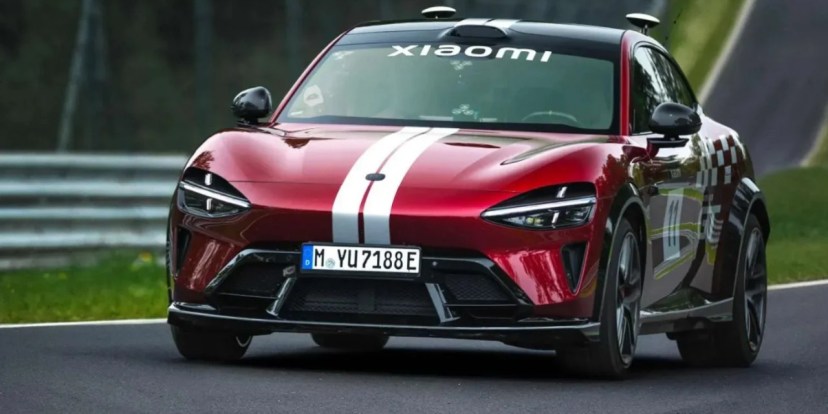
Xiaomi YU7 GT sets first driverless lap record at the Nurburgring
The Nurburgring Nordschleife circuit in Germany is famous for testing human skill and vehicle endurance. But the times are changing, and the track hosted an unusual record attempt that required no human skill at all. Xiaomi announced that its YU7 GT electric SUV completed the first automated lap at the circuit without a driver.
The autonomous YU7 GT recorded a lap time of 10 minutes and 29.483 seconds. For a racetrack that stretches 20.8 km and has more than 70 corners, navigating the entire course safely is a difficult task for a person, let alone for a computer. The track is a dynamic environment where artificial intelligence must handle rapid weight transfers, tire slip angles, and precise braking decisions in milliseconds.
To understand the meaning of this lap time, we must look at the results through two different lenses. For an experienced track amateur or a hobbyist driving mid-tier sports cars, a ten-minute lap is quite relaxed. These drivers generally look to break the nine-minute barrier, with the more ambitious ones targeting eight minutes. So for now, human racers do not need to worry about losing their track privileges to robots just yet.
Cautious first-time drivers taking their daily commuter cars out for a safe lap during public days at Nurburgring, typically finish in around 11 minutes. The AI managed to match this pace perfectly. It completed the lap safely, proving that autonomous software can handle basic high-speed vehicle dynamics, even if it drives like a nervous sightseer.
 www.arenaev.com

The Nurburgring Nordschleife circuit in Germany is famous for testing human skill and vehicle endurance. But the times are changing, and the track hosted an unusual record attempt that required no human skill at all. Xiaomi announced that its YU7 GT electric SUV completed the first automated lap at the circuit without a driver.
The autonomous YU7 GT recorded a lap time of 10 minutes and 29.483 seconds. For a racetrack that stretches 20.8 km and has more than 70 corners, navigating the entire course safely is a difficult task for a person, let alone for a computer. The track is a dynamic environment where artificial intelligence must handle rapid weight transfers, tire slip angles, and precise braking decisions in milliseconds.
To understand the meaning of this lap time, we must look at the results through two different lenses. For an experienced track amateur or a hobbyist driving mid-tier sports cars, a ten-minute lap is quite relaxed. These drivers generally look to break the nine-minute barrier, with the more ambitious ones targeting eight minutes. So for now, human racers do not need to worry about losing their track privileges to robots just yet.
Cautious first-time drivers taking their daily commuter cars out for a safe lap during public days at Nurburgring, typically finish in around 11 minutes. The AI managed to match this pace perfectly. It completed the lap safely, proving that autonomous software can handle basic high-speed vehicle dynamics, even if it drives like a nervous sightseer.
Xiaomi YU7 GT sets first driverless lap record at the Nurburgring
The autonomous Xiaomi YU7 GT has completed the world's first driverless lap at the Nurburgring circuit, matching the pace of a casual human driver.
www.arenaev.com
FiestaST
Honorary Master
Investigating the INSANE World of Chinese Electric Cars - Cars with Miles
FiestaST
Honorary Master
FiestaST
Honorary Master
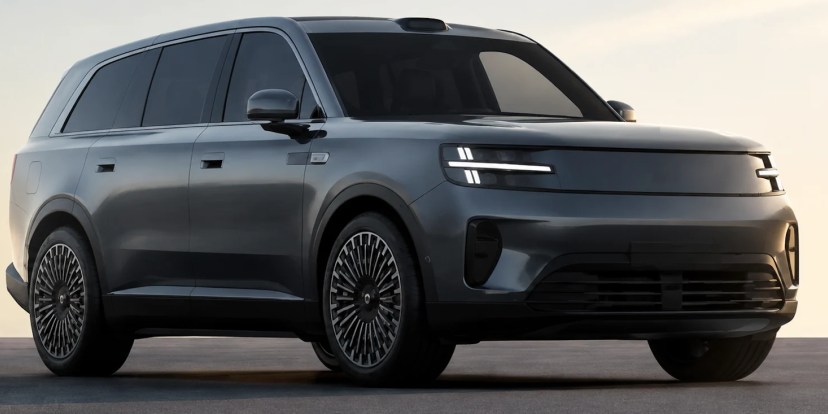
Xiaomi Sky Nomad N90 moves from a teaser to a real family SUV in twenty-four hours
Yesterday, the auto industry was trying to figure out what Xiaomi meant when it teased a new product name called Sky Nomad. Today, the Chinese smartphone maker removed all the mystery by revealing the final look at its first full-size SUV, the Sky Nomad N90. The quick twenty-four-hour sequence marks a completely new chapter for a company that only started building passenger vehicles a short time ago. Instead of sticking with the low, aerodynamic body styles that defined its early EVs, Xiaomi is now chasing the profitable family-hauler market. That’s a sharp one-eighty in design, packaging, and mechanical philosophy.
The biggest shift involves how this vehicle gets its power. Xiaomi previously focused entirely on pure battery-powered electric cars, but the Sky Nomad N90 is an extended-range electric vehicle, or EREV. It relies on two electric motors to spin the wheels, but it also has a 1.5-liter turbocharged gasoline engine under the hood. That engine operates only as an on-board generator to keep the battery charged. Many Chinese drivers prefer these types of EVs because they offer zero-emission city driving without the fear of running out of power on remote highways.
Xiaomi sources the battery packs for the Sky Nomad N90 from domestic suppliers Sunwoda and CALB. The pack holds more than 70 kWh of energy, and provides an electric-only driving range between 400 km and 500 km. When the gasoline generator automatically activates to provide extra electricity, the total combined range of the vehicle exceeds 1,500 km.
The design of the Sky Nomad N90 abandons the athletic shapes of Xiaomi’s previous electric cars. Designers opted for a very upright, boxy profile that prioritizes inner room over aerodynamics. Up front, the blocky headlights look like a rugged evolution of the company's older "waterdrop" styling elements. Around the back, the looped-lightbar taillights look similar to those found on the premium Zeekr 9X. A prominent pod sits on top of the front windshield, holding an advanced LiDAR sensor that feeds data into the vehicle's automated driving systems.
 www.arenaev.com
Yesterday, the auto industry was trying to figure out what Xiaomi meant when it teased a new product name called Sky Nomad. Today, the Chinese smartphone maker removed all the mystery by revealing the final look at its first full-size SUV, the Sky Nomad N90. The quick twenty-four-hour sequence marks a completely new chapter for a company that only started building passenger vehicles a short time ago. Instead of sticking with the low, aerodynamic body styles that defined its early EVs, Xiaomi is now chasing the profitable family-hauler market. That’s a sharp one-eighty in design, packaging, and mechanical philosophy.
The biggest shift involves how this vehicle gets its power. Xiaomi previously focused entirely on pure battery-powered electric cars, but the Sky Nomad N90 is an extended-range electric vehicle, or EREV. It relies on two electric motors to spin the wheels, but it also has a 1.5-liter turbocharged gasoline engine under the hood. That engine operates only as an on-board generator to keep the battery charged. Many Chinese drivers prefer these types of EVs because they offer zero-emission city driving without the fear of running out of power on remote highways.
Xiaomi sources the battery packs for the Sky Nomad N90 from domestic suppliers Sunwoda and CALB. The pack holds more than 70 kWh of energy, and provides an electric-only driving range between 400 km and 500 km. When the gasoline generator automatically activates to provide extra electricity, the total combined range of the vehicle exceeds 1,500 km.
The design of the Sky Nomad N90 abandons the athletic shapes of Xiaomi’s previous electric cars. Designers opted for a very upright, boxy profile that prioritizes inner room over aerodynamics. Up front, the blocky headlights look like a rugged evolution of the company's older "waterdrop" styling elements. Around the back, the looped-lightbar taillights look similar to those found on the premium Zeekr 9X. A prominent pod sits on top of the front windshield, holding an advanced LiDAR sensor that feeds data into the vehicle's automated driving systems.
Xiaomi Sky Nomad N90 moves from a teaser to a real family SUV in twenty-four hours
The newly unveiled Xiaomi Sky Nomad N90 is a large, range-extended family SUV with a clever interior and front seats that can rotate a full 180 degrees.
www.arenaev.com
FiestaST
Honorary Master
FiestaST
Honorary Master
FiestaST
Honorary Master
FiestaST
Honorary Master
FiestaST
Honorary Master
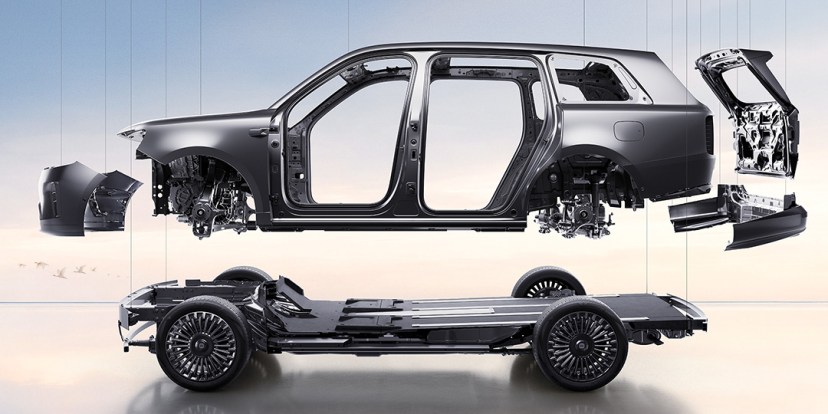
Watch the Xiaomi Skynomad announcement live
After several months of leaks and teasers, Xiaomi is finally set to unveil its all-new Skynomad Extended-Range Electric Vehicle (EREV) lineup today. The launch keynote will be livestreamed on YouTube and is set to kick off at 7PM Beijing time (11AM UTC). Xiaomi founder and CEO Lei Jun will be taking the stage, which means this will likely be a long talk.
 www.arenaev.com
After several months of leaks and teasers, Xiaomi is finally set to unveil its all-new Skynomad Extended-Range Electric Vehicle (EREV) lineup today. The launch keynote will be livestreamed on YouTube and is set to kick off at 7PM Beijing time (11AM UTC). Xiaomi founder and CEO Lei Jun will be taking the stage, which means this will likely be a long talk.
Watch the Xiaomi Skynomad announcement live
Xiaomi's premium EREV lineup is set to go official today.
www.arenaev.com
FiestaST
Honorary Master
Everything Electric APAC first look at the SkyNomad N70 & N90
FiestaST
Honorary Master
FiestaST
Honorary Master
FiestaST
Honorary Master
FiestaST
Honorary Master
Xiaomi has already sold 500,000 SU7 units
Xiaomi launched the SU7, its first EV (which was also its first car), on March 28, 2024, and deliveries started on April 3. It's been 28.5 months since then, and the company is today celebrating selling more than 500,000 of them.
This would be a huge milestone for any carmaker, but it's even more impressive for Xiaomi, which made such a big splash with its debut in the car business.
In fact, the SU7 may very well be the fastest Chinese EV priced above CNY 200,000 (approximately $30,000) to reach 500,000 sales. To celebrate the milestone, Xiaomi is giving away 10,000 SU7 1:43 scale model cars to those who book a test drive, on a first-come, first-served basis.
 www.arenaev.com

Xiaomi launched the SU7, its first EV (which was also its first car), on March 28, 2024, and deliveries started on April 3. It's been 28.5 months since then, and the company is today celebrating selling more than 500,000 of them.
This would be a huge milestone for any carmaker, but it's even more impressive for Xiaomi, which made such a big splash with its debut in the car business.
In fact, the SU7 may very well be the fastest Chinese EV priced above CNY 200,000 (approximately $30,000) to reach 500,000 sales. To celebrate the milestone, Xiaomi is giving away 10,000 SU7 1:43 scale model cars to those who book a test drive, on a first-come, first-served basis.
Xiaomi has already sold 500,000 SU7 units
It's a record pace for a car in its price range.
www.arenaev.com
FiestaST
Honorary Master
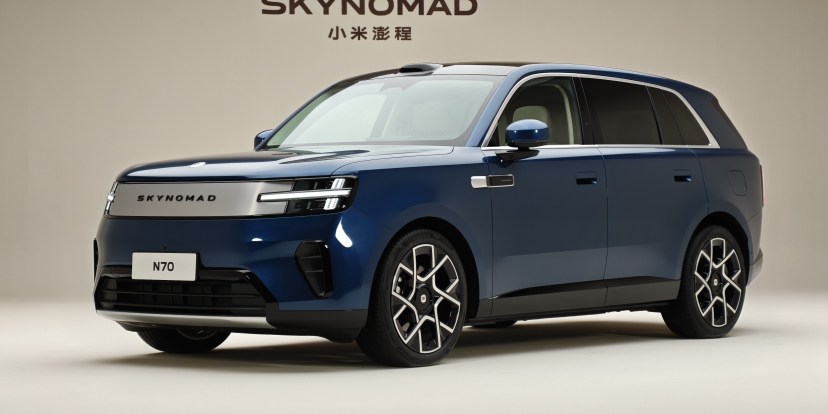
Xiaomi SkyNomad N70 interior revealed: Here is how we liked it in person
Some time ago, we were invited to preview Xiaomi’s new SkyNomad N70 and N90, and we can now finally share everything we learned. Until now, the interior of the smaller N70 had remained under wraps, but after spending some time inside, we can reveal how it compares with its larger sibling.
We have already covered the exterior of the SkyNomad N70, which essentially takes the N90’s styling and shrinks it into a slightly smaller package. Much the same applies inside, where the two models look remarkably similar, with only a handful of meaningful differences.
Both use the same 1.5-liter engine as a range extender and offer the same battery options. Naturally, the smaller and lighter N70 is more efficient and manages up to 505 km of pure electric range. The N90 counters with a larger fuel tank, allowing it to cover greater distances once the range extender comes into play.
The biggest difference is their seating layout. The N70 is a five-seater aimed at personal use and chauffeur-driven executive travel, while the seven-seat N90 is better suited to larger families and groups.
That makes the rear bench of the N70 particularly important. It slides forwards and backwards along rails spanning 1.55 m, allowing owners to trade enormous amounts of rear legroom for equally impressive cargo capacity. Push the seats back and even the tallest passengers should struggle to complain about space.
 www.arenaev.com


Some time ago, we were invited to preview Xiaomi’s new SkyNomad N70 and N90, and we can now finally share everything we learned. Until now, the interior of the smaller N70 had remained under wraps, but after spending some time inside, we can reveal how it compares with its larger sibling.
We have already covered the exterior of the SkyNomad N70, which essentially takes the N90’s styling and shrinks it into a slightly smaller package. Much the same applies inside, where the two models look remarkably similar, with only a handful of meaningful differences.
Both use the same 1.5-liter engine as a range extender and offer the same battery options. Naturally, the smaller and lighter N70 is more efficient and manages up to 505 km of pure electric range. The N90 counters with a larger fuel tank, allowing it to cover greater distances once the range extender comes into play.
The biggest difference is their seating layout. The N70 is a five-seater aimed at personal use and chauffeur-driven executive travel, while the seven-seat N90 is better suited to larger families and groups.
That makes the rear bench of the N70 particularly important. It slides forwards and backwards along rails spanning 1.55 m, allowing owners to trade enormous amounts of rear legroom for equally impressive cargo capacity. Push the seats back and even the tallest passengers should struggle to complain about space.
Xiaomi SkyNomad N70 interior revealed: Here is how we liked it in person
We experienced the Xiaomi SkyNomad N70 in person and can now reveal how the interior feels!
www.arenaev.com
FiestaST
Honorary Master
Xiaomi Auto launches international website ahead of its global expansion
Since its debut as a car maker a few years ago with the SU7, Xiaomi has only been selling its vehicles in China. That, however, will change in 2027, when the company has repeatedly promised to launch in Europe. The most recent promise came from Xiaomi President William Lu, who said we should expect the launch to happen in the second half of next year.
Ahead of that, Xiaomi Auto has now launched the international version of its website, which you can visit here. It has information about the latest Xiaomi Auto news, as well as a section detailing how Xiaomi went from a smartphone company to a car maker.
You can also find out about the company’s global R&D facilities, its factory, and its various innovative technologies like Hyper Die-Casting, the HyperEngine, the High-Voltage platform, as well as the HyperOS-powered Smart Cabin and the Hyper Assisted Driving system.
Keep in mind that Xiaomi has not yet announced which of its cars will be sold outside of China, so the models you see on the global website may not be the ones that make it to Europe (or any other markets).
 www.arenaev.com
 www.xiaomiauto.com

Since its debut as a car maker a few years ago with the SU7, Xiaomi has only been selling its vehicles in China. That, however, will change in 2027, when the company has repeatedly promised to launch in Europe. The most recent promise came from Xiaomi President William Lu, who said we should expect the launch to happen in the second half of next year.
Ahead of that, Xiaomi Auto has now launched the international version of its website, which you can visit here. It has information about the latest Xiaomi Auto news, as well as a section detailing how Xiaomi went from a smartphone company to a car maker.
You can also find out about the company’s global R&D facilities, its factory, and its various innovative technologies like Hyper Die-Casting, the HyperEngine, the High-Voltage platform, as well as the HyperOS-powered Smart Cabin and the Hyper Assisted Driving system.
Keep in mind that Xiaomi has not yet announced which of its cars will be sold outside of China, so the models you see on the global website may not be the ones that make it to Europe (or any other markets).
Xiaomi Auto launches international website ahead of its global expansion
There's also an official global Xiaomi Auto X account.
www.arenaev.com
Xiaomi Auto
www.xiaomiauto.com
FiestaST
Honorary Master
FiestaST
Honorary Master
Xiaomi Auto prepares to storm Europe in 2027
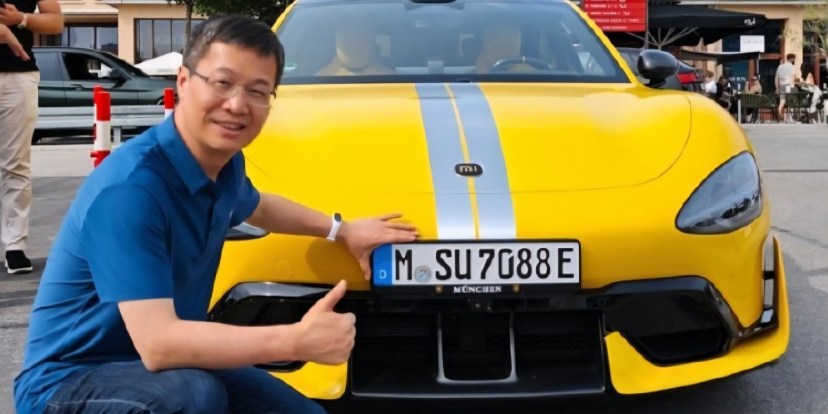
At IFA Berlin 2026, under the sterile white exhibition lighting usually reserved for curved televisions and robotic vacuum cleaners, Xiaomi Auto dropped a sledgehammer right into the heartland of European motoring. With an official European market launch locked in for 2027, the Beijing tech giant isn't even trying to test the waters - it is setting up camp in Germany's front garden.
What caught my eye wasn't some wild keynote about software ecosystems, but pragmatism of how they intend to do it. Rather than stumbling into the direct-sales trap that left many ambitious EV startups drowning in logistics nightmares and alienated buyers, Xiaomi signed MoUs with eight of Germany's largest automotive dealer groups.
When you sign distribution and service agreements with the likes of Emil Frey, Autohaus Dinnebier, LUEG Mobility, and Penske-Jacobs, you bypass years of mistakes. German drivers are very protective of their domestic badges, and they demand established workshops when things go sideways. Handing the keys to veteran retail dynasties hands Xiaomi instant legitimacy.
This confidence comes on the back of a ramp-up that borderlines on the absurd. When Lei Jun announced Xiaomi's vehicle venture in 2021, plenty of seasoned petrolheads - myself included - doubted the idea. We have seen plenty of consumer electronics firms promise four-wheeled miracles, only to retreat when the grim realities of auto manufacturing set in.
 www.arenaev.com
www.xiaomiauto.com
At IFA Berlin 2026, under the sterile white exhibition lighting usually reserved for curved televisions and robotic vacuum cleaners, Xiaomi Auto dropped a sledgehammer right into the heartland of European motoring. With an official European market launch locked in for 2027, the Beijing tech giant isn't even trying to test the waters - it is setting up camp in Germany's front garden.
What caught my eye wasn't some wild keynote about software ecosystems, but pragmatism of how they intend to do it. Rather than stumbling into the direct-sales trap that left many ambitious EV startups drowning in logistics nightmares and alienated buyers, Xiaomi signed MoUs with eight of Germany's largest automotive dealer groups.
When you sign distribution and service agreements with the likes of Emil Frey, Autohaus Dinnebier, LUEG Mobility, and Penske-Jacobs, you bypass years of mistakes. German drivers are very protective of their domestic badges, and they demand established workshops when things go sideways. Handing the keys to veteran retail dynasties hands Xiaomi instant legitimacy.
This confidence comes on the back of a ramp-up that borderlines on the absurd. When Lei Jun announced Xiaomi's vehicle venture in 2021, plenty of seasoned petrolheads - myself included - doubted the idea. We have seen plenty of consumer electronics firms promise four-wheeled miracles, only to retreat when the grim realities of auto manufacturing set in.
Xiaomi Auto prepares to storm Europe in 2027
Xiaomi Auto has officially confirmed a 2027 European launch, partnering with eight premier German dealer groups at IFA Berlin to bring its SU7 saloon and YU7 SUV right into the backyard of the continental auto establishment.
www.arenaev.com
Newsroom
www.xiaomiauto.com