


That makes me both depressed and furious. Totally unnecessary suffering.Snip
-
- News
-
Categories
- 5G
- ADSL
- AI
- Banking
- Black Friday
- Broadband
- Broadcasting
- Business
- Business Telecoms
- Cellular
- Cloud and Hosting
- Columns
- Cryptocurrency
- Energy
- Enterprise
- Fibre
- Gadgets
- Gaming
- Government
- Hardware
- Industry News
- Internet
- Internet of Things
- Investing
- IT Services
- Motoring
- Reviews
- Science
- Security
- Smartphones
- Software
- Technology
- Telecoms
- Trending
- Wireless
- Press Office
- Forum
- Industry News
- What's Next
- Company hub
- Speed Test
- About us
- Advertise with us
- Contact
- Careers
-
Join the MyBroadband community
South Africa’s biggest forum. Discuss, discover, and connect with thousands of members.
-
Question of the Day: Have you had a bad taxi / ride hailing experience in South Africa?
You are using an out of date browser. It may not display this or other websites correctly.
You should upgrade or use an alternative browser.
You should upgrade or use an alternative browser.
This is why Cape Town smells
- Thread starter Currantly
- Start date

Sapphiron
Honorary Master
The issue is the slaughterhouses in Brazil do not pay religious taxes to some certification body, so they can't export it as Halaal.Can't they just slaughter the animals in an halal manner and then transport it? Can't imagine wanting to eat these poor creatures that are probably half dead already. Is it even food safe?
It would be so much better for the slaugtering to happen close to the farm and for the cold chain to start as soon as possible.
This is how you get things like global foot and mouth epidemics.

Fulcrum29
Honorary Master
the bribes are massive here, I bet if they tried to stop somewhere like Spain, or the UK or the US the port authorities wouldn't let them dock.
I would say that the rules are strict, and that where the shippers are within the framework that it doesn't mean that bribes are involved. These livestock ships are equipped with a veterinarian facility, or at least in accordance with the rule. There have been a lot of concerns in the past about livestock not being fed or given water, and the possibility of disease spreading. History gives these concerns credence.
Europe indeed exports livestock. Just look at Spain, and Romania, for example:

How a Spanish tourist spot became a global hub for live animal export
Millions of sheep and cattle are being shipped from Cartagena to the Middle East in a trade branded cruel and unnecessary
 www.theguardian.com
How a Spanish tourist spot became a global hub for live animal export
This article is more than 1 year old
Millions of sheep and cattle are being shipped from Cartagena to the Middle East in a trade branded ‘cruel and unnecessary’
It is 7am in the port of Cartagena, and the Jouri, a livestock carrier, is getting ready for loading. Dozens of trucks full of noisy cattle line up, waiting for their animals to be weighed before they are transferred to the vessel.
The tourists who visit its Roman ruins and nearby beaches might never guess that this region has quietly become one of the biggest players in the global trade of live animals.
The past month has seen a peak in exports, driven by demand for animals to slaughter for Eid al-Adha, the festival of sacrifice, which took place in July this year, and is celebrated throughout the Muslim world.
A boom in exports from Spain over the past decade has seen it now establish itself as the largest exporter of cattle by sea in Europe, and second largest exporter of sheep after Romania.
More than three million farm animals have been sent out on ships from Cartagena’s port in the past five years, mostly to the Middle East and north Africa, in a trade worth almost £500m to Spain in 2020.
The Middle East and North Africa, aren't the only markets, but they are markets which need to be reached by method of transport by sea.
there is a very good reason there aren't many of these ships around, and the few are actively hiding from the animal right people
There are a good number of these ships. They are just normal cargo ships converted for the transportation of livestock. I don't think that there are many large vessels, but there is enough to meet demand. As I highlighted, neglect is an issue. A ship filled with livestock was recently held up in Australia because it couldn't reach its final destination due to the Houthi situation. That also caused a stink. The cost of going around Africa was too risky, and too high. That I can say most definitely contributed to the suffering of the livestock.
I mean I know were a sh1th0le country, but even the Japanese who still do whaling don't stop here with their ships marked "research"
Are other livestock exporters also shitholes? Just like the Norwegians, Icelanders, and Danes are also not criticized for whaling to the same extent as the Japanese. I mean, Norway's last intake dwarfed the Japanese, no 'research' needed. Just as much as it goes for the Americans and Russians because of native rights for whaling, not to ignore the Faroe Islands.
I don't condone the practice, but there isn't an easy way around it. Either meat gets exported or it doesn't. Livestock lovers are already upset with livestock transport by land by means of road and rail.
What I do very much dislike is fattening. Though I can understand it in some cases, in most I don't.

ShaunSA
Derailment Squad
Came here looking for the cause of the stink and found virtue signalers
Fulcrum29
Honorary Master
Came here looking for the cause of the stink and found virtue signalers
I would say that there are valid cases to be upset. I can't speak to this shipping company and their standards, but there have been horror stories. I don't even want to know how much dead is being discarded at sea. There are cases where these shipments are only a disease at sea. That is an atrocity.
In this chain, many problems begin at the start.

Gordon_R
Honorary Master
Story made BBC front page:
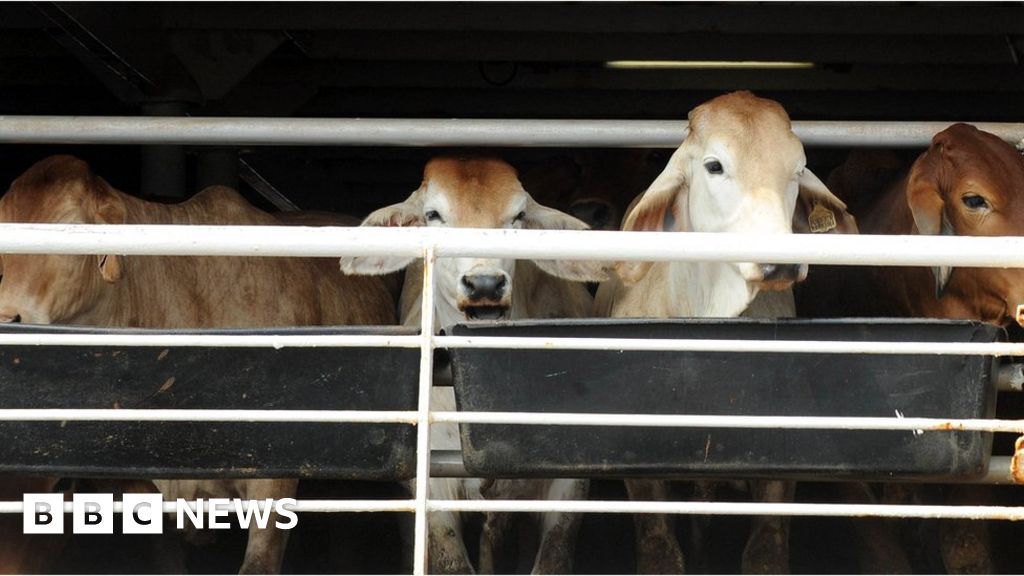
Cape Town smell blamed on cattle ship docked in South African city
A "nauseating" stench engulfing the South African city comes from a ship carrying 19,000 cows, officials say.
www.bbc.com
I love hamburgers, what is your vegan problem today?So @UB40 thinks it's a huge joke ( can't post photos on this thread). Says a lot about a person how they treat the elderly and animals.

Velskoen
Expert Member
So do I. Wors, chops and steak too. I don't have to mistreat the animals prior to them being slaughtered though. Your "vegan" label is way misplaced.I love hamburgers, what is your vegan problem today?
Please put me on your Ignore listSo do I. Wors, chops and steak too. I don't have to mistreat the animals prior to them being slaughtered though. Your "vegan" label is way misplaced.

Jet-Fighter7700
Honorary Master
animals made to suffer for Human enjoyment, people throw hissy fits with bears in circus,
or made to jump through hoops, or do any of the unnatural things a Circus does to its perform with its animals. elephants made to move Circus tents,
so much so that the last time I saw a Mclaren circus come near were I live, there were more animal rights people than the circus, to the point they were chased out.
now this, Animals herded onto a ship, made to stand for hours on end, on cold steel decks, tossed around in bad weather, covered in other Animals shxt
starved, dehydrated, and generally made to suffer for weeks at sea, only to get slaughtered when they get to their destination.
inhumane and unnecessary, and I dont get why some people think its totally acceptable, the entire point of Kohser and halal is to end an animals life peacefully, quickly without making the animal suffer. and then carefully inspecting the meat for signs of it being tainted. and throwing it away if it shows signs of suffering.
this to me sounds like the opposite, making animals stand on a pitching deck, covered in shxt, trampled by others, made to suffer for weeks,
do agree with @Velskoen many better ways of exporting meat, more humanly
I think different about people herding animals onto a 747 cargo plane and taking a direct route to Arab states, where they fly the animals and make them suffer less, but I think the economics dont work, especially with the amount of Cattle on these ships.
or made to jump through hoops, or do any of the unnatural things a Circus does to its perform with its animals. elephants made to move Circus tents,
so much so that the last time I saw a Mclaren circus come near were I live, there were more animal rights people than the circus, to the point they were chased out.
now this, Animals herded onto a ship, made to stand for hours on end, on cold steel decks, tossed around in bad weather, covered in other Animals shxt
starved, dehydrated, and generally made to suffer for weeks at sea, only to get slaughtered when they get to their destination.
inhumane and unnecessary, and I dont get why some people think its totally acceptable, the entire point of Kohser and halal is to end an animals life peacefully, quickly without making the animal suffer. and then carefully inspecting the meat for signs of it being tainted. and throwing it away if it shows signs of suffering.
this to me sounds like the opposite, making animals stand on a pitching deck, covered in shxt, trampled by others, made to suffer for weeks,
do agree with @Velskoen many better ways of exporting meat, more humanly
I think different about people herding animals onto a 747 cargo plane and taking a direct route to Arab states, where they fly the animals and make them suffer less, but I think the economics dont work, especially with the amount of Cattle on these ships.
Velskoen
Expert Member
The framework is faulty. There is a lot of money at stake here and where that is the case, a lot of corruption takes place. Guaranteed.I would say that the rules are strict, and that where the shippers are within the framework that it doesn't mean that bribes are involved. These livestock ships are equipped with a veterinarian facility, or at least in accordance with the rule. There have been a lot of concerns in the past about livestock not being fed or given water, and the possibility of disease spreading. History gives these concerns credence.
I don't condone the practice, but there isn't an easy way around it. Either meat gets exported or it doesn't. Livestock lovers are already upset with livestock transport by land by means of road and rail.
What I do very much dislike is fattening. Though I can understand it in some cases, in most I don't.
The South African company based in East Londen that is (was?) involved in live animal exports by sea, was rumored to have registered a company in Mauritius some years ago to circumvent local legislation.
The easy way to solve the problem is to radically improve the legislation and standards governing this practice, implement and police them. The issue is that this will increase prices and reduce profits. So, of course, the weakest link is animal welfare and that's where the corners are cut.
After all it's just hamburger right.
Last edited:

Hansolo
Senior Member
- Joined
- Aug 7, 2006
- Messages
- 889
- Reaction score
- 297
I'm not in CT but last week one guy stopped with his car in the street in front of my house and pissed on the pavement.
Oh, sorry that was me, I was just trying to obscure the smell coming from the chumps mouth.
Jet-Fighter7700
Honorary Master
this, I like meat, and believe Human beings require it for their health.So do I. Wors, chops and steak too. I don't have to mistreat the animals prior to them being slaughtered though. Your "vegan" label is way misplaced.
what we dont need is to make the animals suffer unnecessarily,
there is an art to slaughtering Cattle in Judasim, the entire point is to end an animals life quickly with as little suffering and pain as possible,
the windpipe has to be cut in a very specific motion, where a trainee spends years learning the craft, and made to practice it hundreds of times to be efficient with it.
and then immediately the blood needs to be drained as quickly as possible from the Carcass, so quickly that not a single drop of blood remains inside the flesh.
then its sent for inspection, and if a drop of blood is found, the carcass is thrown away, and not Kosher anymore.
Halal is very similar rules, and all these rules are the very first "health" codes in existence, as animals were slaughtered in the most barbaric fashions by the people back then.
to me export like this is a return to those barbaric conditions of back when the Romans were around.
Velskoen
Expert Member
I export live breeding animals globally, that's my business. In 16 years I have never had a mortality, not one. They travel by air, in plastic-lined crates filled with wood shavings. They have space to lie down.I think different about people herding animals onto a 747 cargo plane and taking a direct route to Arab states, where they fly the animals and make them suffer less, but I think the economics dont work, especially with the amount of Cattle on these ships.
It's expensive yes and impractical for large-scale slaughter stock exports as you say. Shipping by sea is the only way but improved standards, implementation and strict policing is urgently needed. Currently that industry is like the breakdown towing business: A free for all with no rules.
Jet-Fighter7700
Honorary Master
always wondered how animals deal with the reduced oxygen content in a cargo plane, but Im sure they fly with plenty of humans to feed them, look after them and clean their shxt constantly so the Jet does not smell like a farm when it lands.I export live breeding animals globally, that's my business. In 16 years I have never had a mortality, not one. They travel by air, in plastic-lined crates filled with wood shavings. They have space to lie down.
It's expensive yes and impractical for large-scale slaughter stock exports as you say. Shipping by sea is the only way but improved standards, implementation and strict policing is urgently needed. Currently that industry is like the breakdown towing business: A free for all with no rules.
that to me sounds like a more humane solution air-export one or 2 cattle, to an arab country, that has enough money to practically build them a Air conditioned farm with grass and space and let them breed peacefully IN the country, instead of exporting them on gigantic cages on the Open seas.
why cant they do that? I mean if they can afford all the other wasteful nonsense like Ski resorts and water parks , they can definitely build air conditioned and gigantic farms for their cattle to breed on, out of the sun and sand outside.
Fulcrum29
Honorary Master
The framework is faulty. There is a lot of money at stake here and where that is the case, a lot of corruption takes place. Guaranteed.
That depends, corruption isn't in every nook and cranny. I do think that religious lobby groups have way too much sway though... I mentioned the recent Australian case, but within that same window they approved a livestock vessel with ~60 000 sheep was approved to leave and make way through the Red Sea. Yes, lobby groups do exchange something. In my view such a shipment should be cancelled, but you can't return the livestock since 1) it can't be held and 2) there is not enough demand to consume the surplus. Reexporting will have its issues too. I doubt anyone would approve the livestock to be dumped, because you know. There needs to be a domestic contingency plan.
The South African company based in East Londen that is (was?) involved in live animal exports by sea, was rumored to have registered a company in Mauritius some years ago to circumvent local legislation.
I won't know.
The easy way to solve the problem is to radically improve the legislation and standards governing this proactive, implement and police them. The issue is that this will increase prices and reduce profits. So, of course, the weakest link is animal welfare and that's where the corners are cut.
What needs to change is the chain. There are numerous chains involved here. We need to stop livestock exports, and move towards exporting meat. The same standards can be met. For areas with religious demand, exploring domestic breeding could be a viable solution, despite the potential compromises involved due to the locations... this is not good either, since most livestock will be kept and remain in pens. All in all, the costs having livestock slaughtered, packaged and shipped needs to be drastically brought down. Cold-chain shipping is bloody expensive, and strict ongoing standards apply there too.
One thing which makes Karoo meat good, again depending on its location, is that it is pastoral in nature. There are people who are against the livestock being moved by truck to new grazing locations. These same people should go and live in the droughts. I know it well.
After all it's just hamburger right.
Depends on whether it is sustainable
 As I hinted in a previous post, when it comes to these large export markets the livestock numbers at the starting point are being raced. Agriculture is simply a hard business, you can easily become indebted. Farmers will push surpluses where possible to participate in the export economy.
In the end, even though this is livestock, conservation remains important. It is these ecosystems which need to be better regulated.


Nobody Important
Executive Member
How much?the bribes are massive here...

airborne
Honorary Master
- Joined
- Jul 13, 2007
- Messages
- 29,753
- Reaction score
- 16,101
What animals are those, prize breeding sheep?I export live breeding animals globally, that's my business. In 16 years I have never had a mortality, not one. They travel by air, in plastic-lined crates filled with wood shavings. They have space to lie down.
It's expensive yes and impractical for large-scale slaughter stock exports as you say. Shipping by sea is the only way but improved standards, implementation and strict policing is urgently needed. Currently that industry is like the breakdown towing business: A free for all with no rules.
airborne
Honorary Master
- Joined
- Jul 13, 2007
- Messages
- 29,753
- Reaction score
- 16,101
How the fk can the smell be so bad from one ship that it fills the whole citywide Cbd with the most awful gag inducing stench, imagine how bad it must be for crew on the actual ship?!
Those poor animals must also be significantly worse for the experience by the time they arrive at the destination, the meat must be spoiled to a degree by then, cooped up in those conditions and not getting fed or watered properly for 2 weeks. Barbaric
Those poor animals must also be significantly worse for the experience by the time they arrive at the destination, the meat must be spoiled to a degree by then, cooped up in those conditions and not getting fed or watered properly for 2 weeks. Barbaric