The Senate Intelligence Committee found that officials who drafted and prepared the 2017 Intelligence Community Assessment of
Russian interference in the last presidential election “were under no political pressure” to reach “specific conclusions” and praised the “strong tradecraft” applied in creating the document, a new report released by the committee's Republicans and Democrats revealed.
The panel on Tuesday released the fourth volume of its five-part report on the committee’s yearlong bipartisan investigation into
Russian interference in the last presidential election, focusing on the Intelligence Community Assessment (ICA).
The committee found that the ICA presented a “coherent and well-constructed intelligence basis for the case that Russia engaged in an attempt to interfere with the 2016 U.S. presidential election.”
The committee said that all analytic lines were supported with all-source intelligence and that the ICA “reflects proper analytic tradecraft.”
“Additionally, interviews with those who drafted and prepared the ICA affirmed that analysts were under no political pressure to reach specific conclusions,” the committee found.
The committee also said the ICA reflected a proper representation of the intelligence collected, but noted that the document did not include information provided by ex-British intelligence officer and author of the infamous Trump dossier Christopher Steele. The ICA, instead, included a summary of Steele’s reporting in an annex “largely at the insistence of FBI’s senior leadership.”
The back-and-forth over Steele’s reporting being included in the final ICA prepared for then-President Barack Obama was between former FBI Deputy Director Andrew McCabe, who, despite the inaccuracies and uncorroborated nature of Steele’s report, said he wanted to include that information.
McCabe told the Justice Department inspector general’s office he believed the Steele reporting needed to be included in that ICA because "President Obama had requested 'everything you have relevant to this topic of Russian influence.’"
But, CIA officials pushed back, arguing that Steele's reporting was simply "internet rumor," and merited inclusion only as an appendix in the final report. McCabe argued that including it as an appendix was simply "tacking it on" in a way that "would minimize" the information and prevent it from being properly considered—despite Comey's assertion that Steele's reporting was "not ripe enough, mature enough, to be a finished intelligence product.”
Ultimately, as the Senate Intelligence Committee report noted, "the FBI's view did not prevail," and the final ICA report included Steele's reporting only as a short summary in an appendix.
Meanwhile, the committee also found that the ICA made a clear argument that the “manner and aggressiveness of Russia’s election interference was unprecedented.”
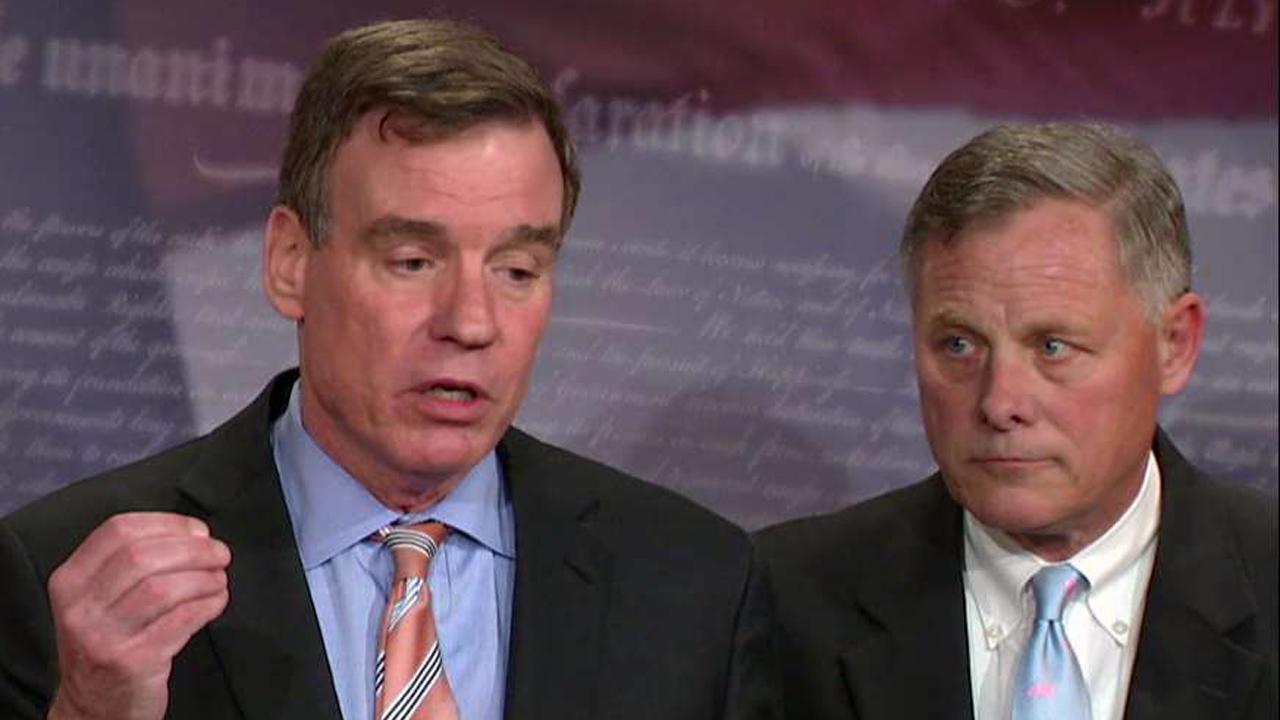
Committee Chairman Richard Burr, R-N.C., said in a statement Tuesday that the ICA “reflects strong tradecraft, sound analytical reasoning, and proper justification of disagreement in the one analytical line where it occurred.”
“The Committee found no reason to dispute the Intelligence Community’s conclusions,” Burr said, adding that one of the ICA’s “most important conclusions” was Russia’s “aggressive interference efforts should be considered ‘the new normal.’”
“That warning has been borne out by the events of the last three years, as Russia and its imitators increasingly use information warfare to sow societal chaos and discord,” Burr said. “With the 2020 presidential election approaching, it’s more important than ever that we remain vigilant against the threat of interference from hostile foreign actors.”
Ranking Member Mark Warner, D-Va., also praised the ICA, saying it represented “the kind of unbiased and professional work we expect and require from the Intelligence Community.”
“The ICA correctly found the Russians interfered in our 2016 election to hurt Secretary Clinton and help the candidacy of Donald Trump. Our review of the highly classified ICA and underlying intelligence found that this and other conclusions were well-supported,” he said. “There is certainly no reason to doubt that the Russians’ success in 2016 is leading them to try again in 2020, and we must not be caught unprepared.”


Hydroxychloroquine says what?