


JerryMungo
Honorary Master
- Joined
- Jul 18, 2008
- Messages
- 37,528
- Reaction score
- 6,290
.
Last edited:
South Africa’s biggest forum. Discuss, discover, and connect with thousands of members.
CPUs are more flexible than GPUs in their instruction sets and capabilities. GPUs are dedicated to specific tasks, CPUs can do a lot more types of work.At every other turn I'm hearing about how GPUs have overtaken CPUs massively as far as processing power, number of cores, etc. goes.
So why do we need CPUs exactly? Why not just two NVidia or AMD chips?
Is this all driven by legacy instruction sets in the OS?


GPUS are like a Formula 1 car. It will absolutely blow everything else out of the water for a very specific task. However if an F1 car would be absolutely useless for going shopping with your family.At every other turn I'm hearing about how GPUs have overtaken CPUs massively as far as processing power, number of cores, etc. goes.
So why do we need CPUs exactly? Why not just two NVidia or AMD chips?
Is this all driven by legacy instruction sets in the OS?

Parallel vs serial processing, instruction sets, almost everything we use today has its origins firmly set because of IBM's work done in the 80's to develop the "PC" - couple that with the likes of Microsoft & Intel under Wintel systems, almost everything today is because of that fine fine x86 wine.

You don't get a mathematician to do your dental work,or build your houseAt every other turn I'm hearing about how GPUs have overtaken CPUs massively as far as processing power, number of cores, etc. goes.
So why do we need CPUs exactly? Why not just two NVidia or AMD chips?
Is this all driven by legacy instruction sets in the OS?
NVIDIA Tegra, Jetson and other families are that. GPU married to an ARM CPU. I run Ubuntu on the CPU and load NVIDIA's proprietary blobs for the GPU to work as it should.Parallel vs serial processing, instruction sets, almost everything we use today has its origins firmly set because of IBM's work done in the 80's to develop the "PC" - couple that with the likes of Microsoft & Intel under Wintel systems, almost everything today is because of that fine fine x86 wine.
Rather think of a GPU as a co-processor, designed to do certain jobs really well, as far as maths goes, matrix multiplication.
The closest you'll get to a GPU running an operating system would probably be the likes of the Nvidia A30X or A100X cards, but those are technically still running the OS/networking/etc functions on an ARM CPU.
Basically Bluefield2 glued to a GPU.
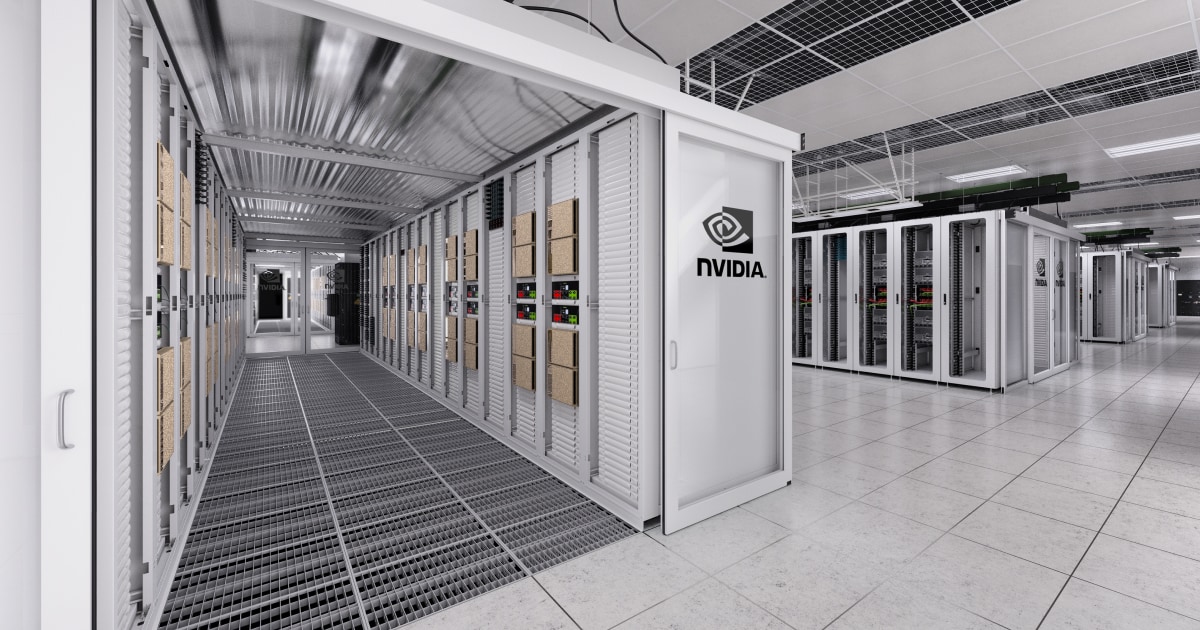
NVIDIA Data Centers for the Era of AI Reasoning
Accelerate and deploy full-stack infrastructure purpose-built for high-performance data centers.www.nvidia.com
The AI datacenter of the future is just gonna be chassis providing power to cards like these, and a lot of networking.

Afreed. We don't need our fpu eitherAt every other turn I'm hearing about how GPUs have overtaken CPUs massively as far as processing power, number of cores, etc. goes.
So why do we need CPUs exactly? Why not just two NVidia or AMD chips?
Is this all driven by legacy instruction sets in the OS?

Well,you get the ATI APUs that combine "GPU" and "CPU" on DieI do wonder how optimized systems are given these roles and if a major architecture overhaul is in our near future... not talking quantum or anything. I guess it all boils down to cost vs benefit.

The FPU was integrated into the CPU in the x86 architecture from the 80486 onwards...Afreed. We don't need our fpu either
ag oulik. is jy niet so fokken slim..The FPU was integrated into the CPU in the x86 architecture from the 80486 onwards...
The x86 architecture is inefficient both from a processing and power point of view. This is why the world is going the ARM route, Apple took the first step.
WTF is that supposed to mean?ag oulik. is jy niet so fokken slim..
/toffee


WTF is that supposed to mean?

GPUs are 10-100x slower at running a single series of dependent instructions than a CPU. This is because the clocks are slower, the instruction latency is much longer, the cache latency is much longer, the caches are much smaller (per core). They also have relatively immature support for things such as out of order execution, branch prediction and speculative execution. Their cores also always execute a “warp” (instruction running on 16-64 data elements) regardless of how many threads are actually being used, which makes it power inefficient for single instruction single data logic.At every other turn I'm hearing about how GPUs have overtaken CPUs massively as far as processing power, number of cores, etc. goes.
So why do we need CPUs exactly? Why not just two NVidia or AMD chips?
Is this all driven by legacy instruction sets in the OS?
GPUs can do far more than that. They’ve been doing general compute for the last 16 years or so.The GPU in the system excels at a limited set of tasks. These tasks are:
* Video compression / decompression
* 3D graphics rendering, manipulation and calculations required
The system's processor is far more flexible and designed to host a wide variety of operating systems.
GPU has not overtaken the CPU massively. Rather, processing intensive tasks have been implemented in hardware in the GPU and offloaded to the GPU.
An APU is just a GPU and a CPU on the same die. That’s a bit like saying, why do we still need trucks when we have SUVs.I haven't read all the responses, but I feel like the question is the wrong way around. Why do we still need GPU's? Well, basically with APU's we don't. Even when it comes to graphic rendering a lot of technologies make use of CPU. GPU's are good at a single task, CPU's are good at multi tasks. I do think there is of course a place for both. But if need be, we don't neet GPU's. I am not as clever as you folks, but that is how I understand it. Would hate to run a system only of a GPU, no matter how strong it is. I won't be surprised if GPU's start coming with CPU's.
Anyways, that'd too much for my brain today.


