Heres my next attempt to power my Pi during load shedding. I got a 5V3A DC to USB converter from PiShop. Connected it up to my alarm battery. Doesn't boot up at all. I can charge my phone from it and I can power my google mini so the wiring is correct.
I watched this today and he seems to get it right. (Apologies if it has been posted before) It doesn't seem like he has done anything different to what we are trying to do.
I finally managed to find the fault. It was the USB cable I used
Initially I thought it was my SSD that was increasing the demand so that my Pi cannot power itself and the SSD. I was going to copy my home assistant to as SD card tomorrow but luckily I did troubleshooting this evening
I saw in the video you posted that guy used a short cable so I found a short power bank USB cable I had in a box somewhere and tested that rather than my phone charging cable and it worked with the DC to USB buck converter
At the battery its drawing 12V 0.4A, on boot it went up to 0.63A.
James A. Chambers' article on booting a Raspberry Pi 4 using an SSD contains an awesome amount of researched information on most everything Pi-related, including PSU's, SSD's, adapters. It's well worth a read.
I got a Argon Neo case this weekend, I wasnt expecting such a drop in temp with only passive cooling (no fans)
I was averaging 64 degrees with the old official Pi case. Now it averages 45 degrees.
I got a Argon Neo case this weekend, I wasnt expecting such a drop in temp with only passive cooling (no fans)
I was averaging 64 degrees with the old official Pi case. Now it averages 45 degrees.
I got a Argon Neo case this weekend, I wasnt expecting such a drop in temp with only passive cooling (no fans)
I was averaging 64 degrees with the old official Pi case. Now it averages 45 degrees.
Interesting, but BS on the stats. 99% of malware? More than likely 99% of the small sample it's trained to test for. So much malware behaves like any other piece of software, and malware is a very general term for a host of different kinds of software including non-automated software. Cool link though.
*EDIT* after reading the abstract:
"In our experiments, we were able to predict three generic malware types (and one benign class) with an accuracy of 99.82%."
Seems that went over the journo's head
Read the Gizmodo and the Tom's article it links to and they both sound like bull... Can these people put any less information in their articles? I know they don't wanna go over people's heads, but these are tech publications ffs. I mean how does one piece of software cause different EM waves than another? Wouldn't that be an obvious thing to include?
P.S. I'll never complain about MyBB clickbait articles again. (OK, that's not true
My point being why dumb it down? You're a tech publication, your audience should expect some complicated topics sometimes.
(That said I'm not really surprised, Tech sites like Gizmodo are as useless as the rest of MSM these days. More interested in clickbait than providing information).
like BarOn said. Pi is a low power Computer. Got drives, OS and all the shiny things that goes along with that.
It has a 40 Pin IO that Computers do not have . You can communicate, switch things and so very basically on them.
Now Arduino/ ESP is a Micro controller. They have very limited Processing power. 16Mhz on Arduino and up to 240 MHz on ESP. With ram and Rom that would make you blush and ask how do you store anything on that....
But what a Micro controller can do and a PI can't is count extremely accurate. Like Microsecond intervals. this makes controlling Servo's and motors extremely precise. Where Pi's just stutter or forget to move a motor for a while. Micro controllers can do it repetitively with 0 error. Depending or you skill set in programming them. They love tight Loops.
Also arduino is a 5V controller where ESP and PI is 3.3V
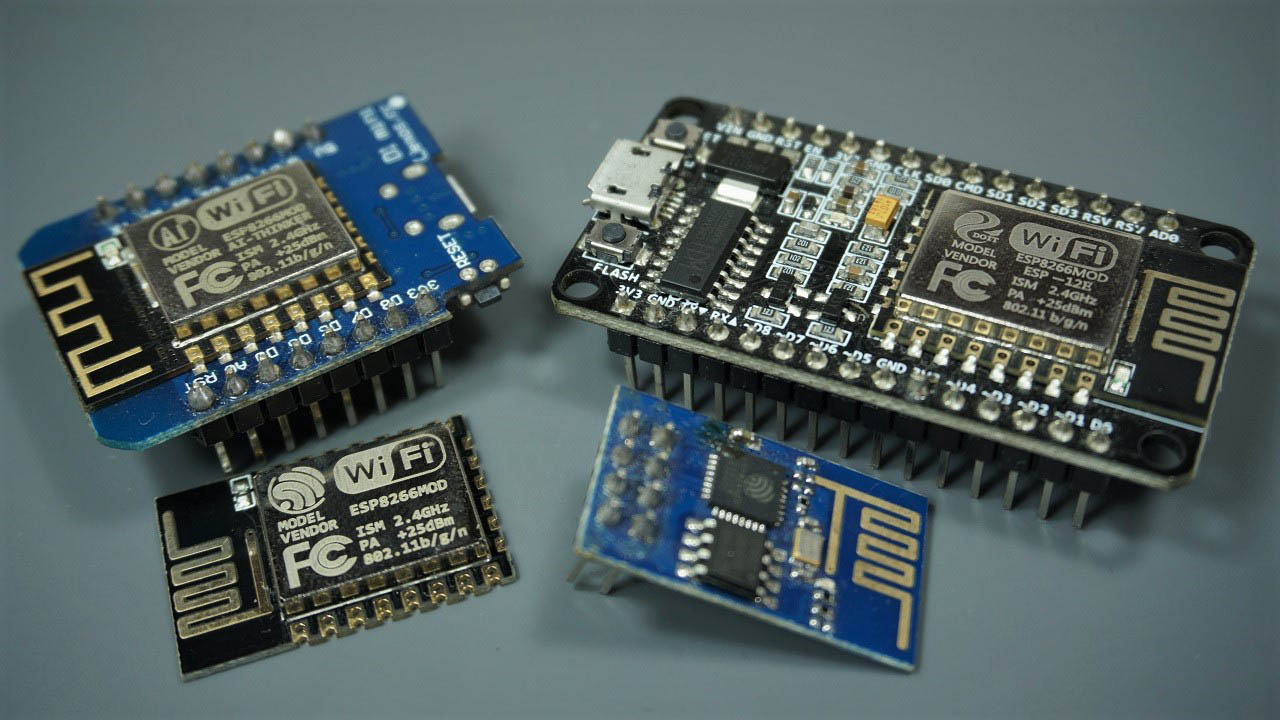
Not Raspberry PI, but rather ESP8266,
Finished my Wall clock 3d Printed project based off of DIY Machines YT Channel. Modified the code for my own use, to convert to 24h clock and add wifi.
Phone camera ruin's the pic a bit by trying to compensate for dark spots, looks much better irl.
Not Raspberry PI, but rather ESP8266,
Finished my Wall clock 3d Printed project based off of DIY Machines YT Channel. Modified the code for my own use, to convert to 24h clock and add wifi.
Phone camera ruin's the pic a bit by trying to compensate for dark spots, looks much better irl.