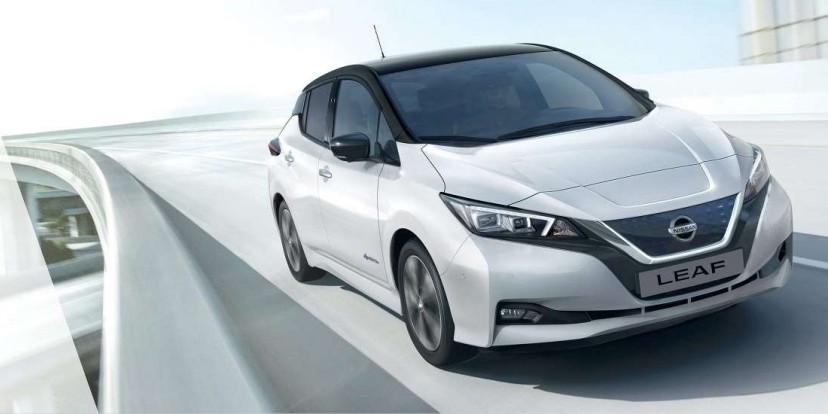
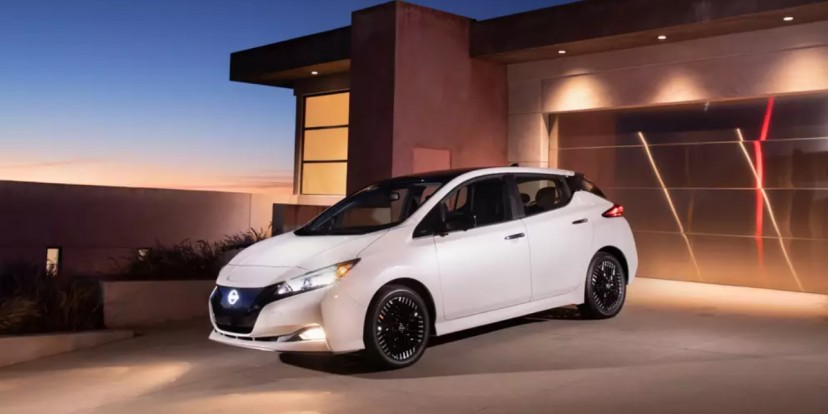
2018 Nissan Leaf (2nd Generation)

Nissan announces the 2023 Leaf for the US market

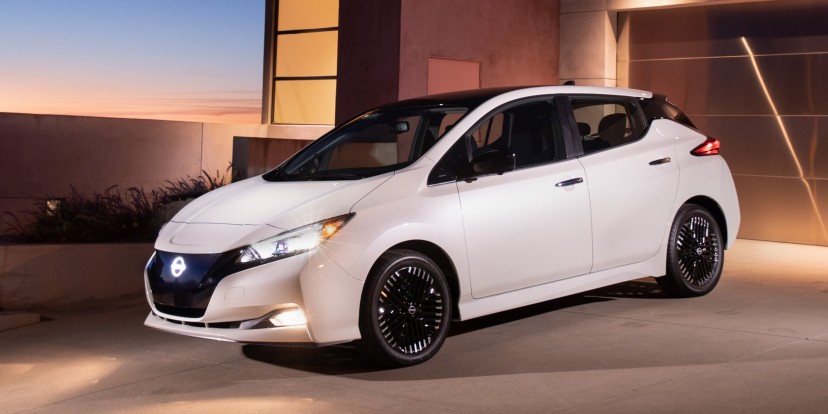
Nissan has a new Leaf for you in the US, the 2023 Leaf that is. Today the company has unveiled the new car, which is far from entirely new - basically just a minor refresh of an already popular EV.

The most welcome news about it definitely has to do with the newly simplified trim levels: there are now just two of them, Leaf S, and Leaf SV Plus. The Leaf S has a 40 kWh battery and maximum power output of 110 kW or 147 hp, with 236 lb-ft of torque.

The SV Plus, on the other hand, sports a 60 kWh battery and can output 160 kW or 214 hp, with 250 lb-ft of torque. Range hasn't been certified by the EPA yet for either model, but Nissan expects the numbers to be similar to the 2022 Leaf.
 
What’s the best electric car for keeping it simple?

The original Nissan Leaf is a glorious bridge between the analogue and digital ages

In this brave new age of smartphone dependence we’ve probably all found ourselves having sunk several weeks of our lives into a time dump of a game that sucks your attention into it and gives nothing back. Like the most recent obsession, a strategy thing where you send trucks back and forth between places carrying stuff. No more sophisticated or interesting than that, but boy was it addictive.

Until it was updated, presumably by someone who never opened the app before, let alone played it. One eight-second download and suddenly the game was rendered unplayable and useless. Sure, it enjoyed a smart new look, some spiffy graphics and a bit of jaunty new in-game music, but the very basic functions had been changed in a blink and it was impossible to work out how to do them. So… deleted.

But what happens when they do that to your car? Manufacturers are cock-a-hoop about over-the-air updates and the boundless potential of what they can do. Polestar recently did an update that made its cars drive longer distances, Volkswagen did one that meant they could charge harder for longer.

That’s all very nice, but the time will come when they get it completely wrong and forget to put the heated seats button back in, or decide that now you’ll have to pay extra to move your wing mirrors. Maybe you’ll get three free radio station changes a month and then you’ll have to watch an advert. Some design supremo could proclaim that Comic Sans is now officially cool and change all the fonts in your infotainment to the hateful typeface. And we’ll long for the days that they actually finished building a car before they sold it to us.

 
Report: Nissan is ditching the Leaf for a new entry-level EV

A new report citing inside sources says that Nissan will drop the Leaf model name from its lineup, and come out with a new model with a new name.

And while it may sound strange given the tremendous interest in the Leaf at the moment, it seems the change has been in motion before the current economic situation made entry-level EVs more desirable.

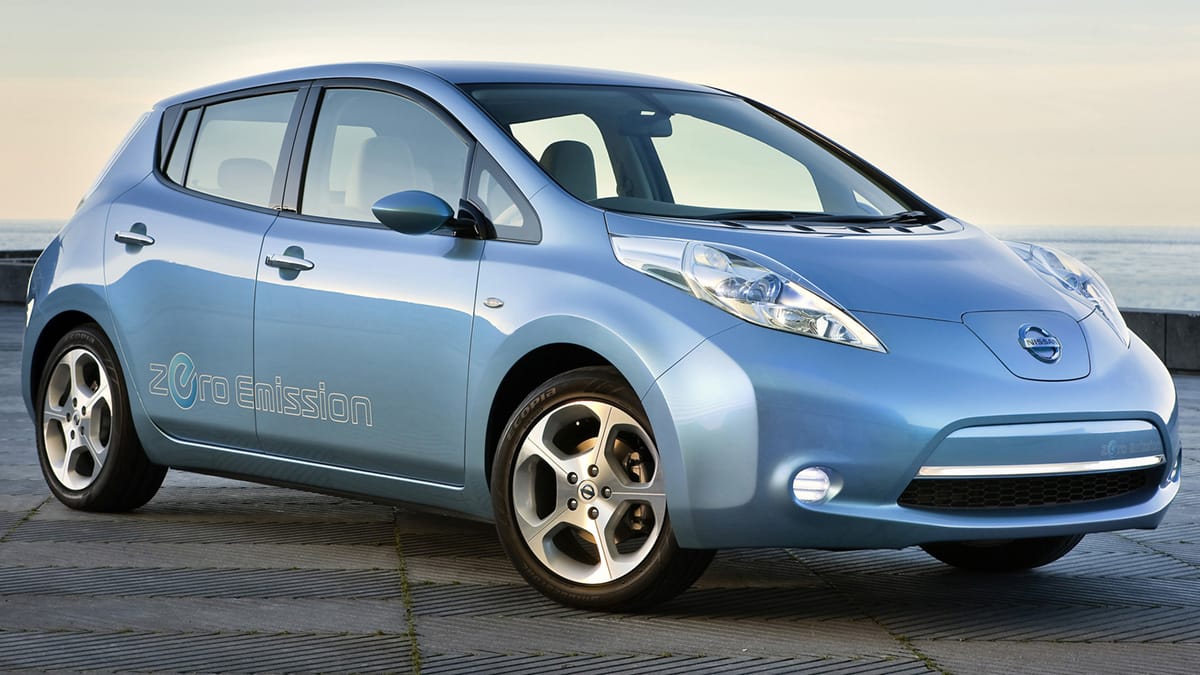
The Nissan Leaf was among the first mass-sold EVs on the road. But it's using old technology without the modern battery-protecting cooling tech, and small 24kWh and 30kWh batteries.

The newer generation Nissan Leaf brought a refreshed design, 40kWh and 62kWh batteries, and a more powerful motor, but was fundamentally very similar to its aging predecessor.

 
A new Leaf of life? Meet the coachbuilt Nissan Leaf electric hearse

The all-electric hearse can accommodate a driver, funeral conductor and seven-foot coffin

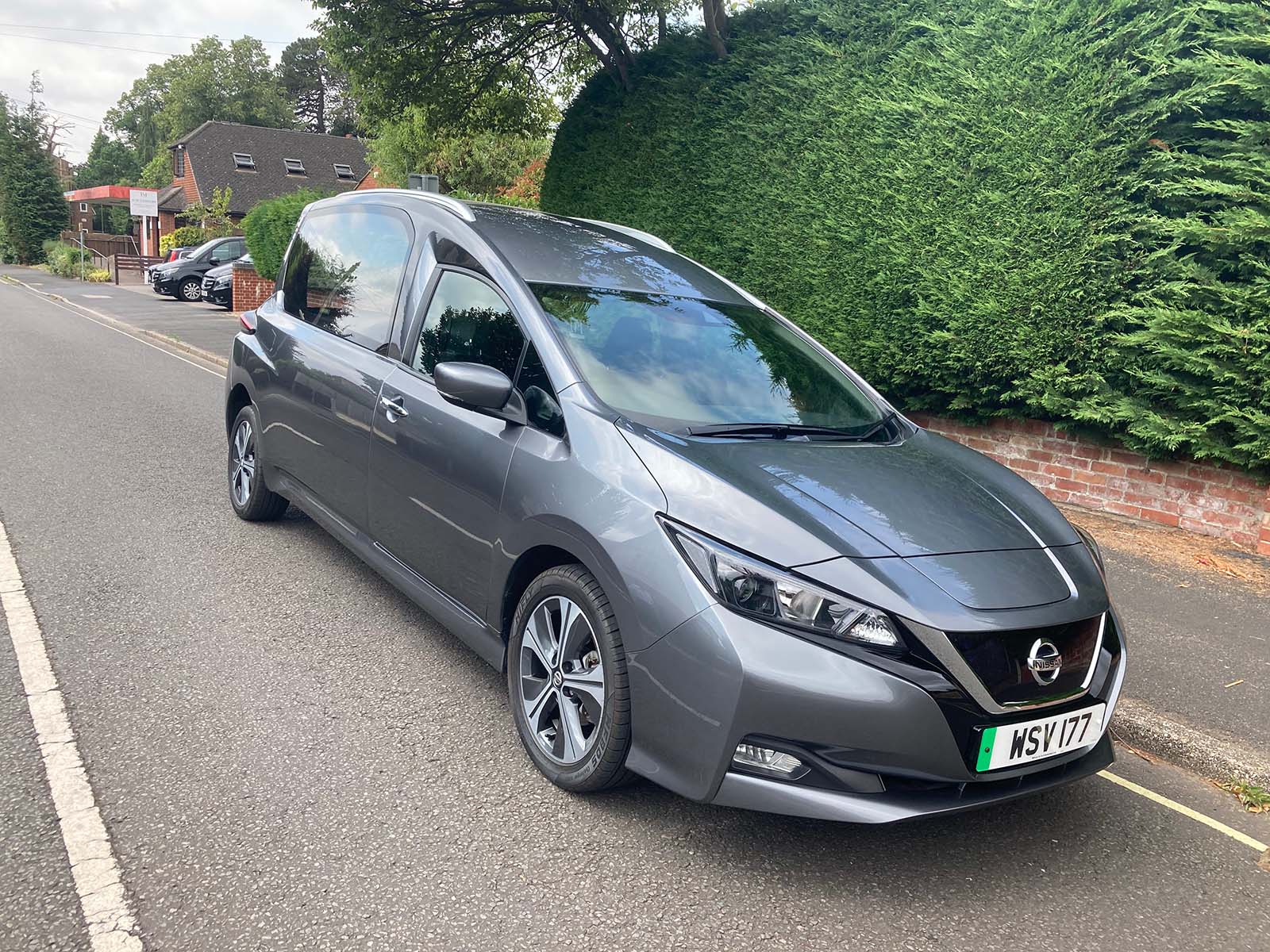
After more than 10 years on sale, Nissan's electric family hatchback has turned over a new Leaf – as a hearse.

Based on a 62kWh Nissan Leaf, the conversion is the work of Wilcox Limousines, the British-based coachbuilders of funeral vehicles and limousines.

The electric hearse can accommodate a driver and funeral 'conductor' in the front with capacity for a payload of up to 230kg, including a seven-foot coffin, behind.

To construct the model, engineers removed the original Leaf's roof and pillars and replaced them with recycled carbon-fibre, styled by a specialist designer. The body was cut and extended by 80cm, the battery pack moved rearwards to optimise weight distribution and the vehicle's rear section stiffened and braced.

Despite these modifications and being taller and longer, the Leaf hearse is only 3% heavier than the standard Leaf hatchback thanks, in large part, to the removal of the original car's two rear doors and rear seat. This puts the new model at odds with conventional hearses which have five doors and four seats for additional funeral staff.


A70F7CD3-5B30-4E7E-A324-0D29BB18805B.jpegA9CE8075-65EC-4596-AB73-98ECD932CBA5.jpegE537088B-50B9-44C3-AF94-4A5B2AA18347.jpegD80C4A58-5E3E-420E-B161-5619D266455D.jpeg
 
Nissan has built a self-driving Leaf that *worked* in city traffic. Here's how

But does it foreshadow a dystopian future vision of gridlock?

Cars that'll drive themselves down a motorway are on sale in many countries. Sure they're moving fast, but the maths is straightforward. There are no pedestrians or cyclists or roadworks or fly-parked delivery vans. No junctions or roundabouts or unpredictable blind corners. Throw that lot into the mix and you've got South London at 11am.

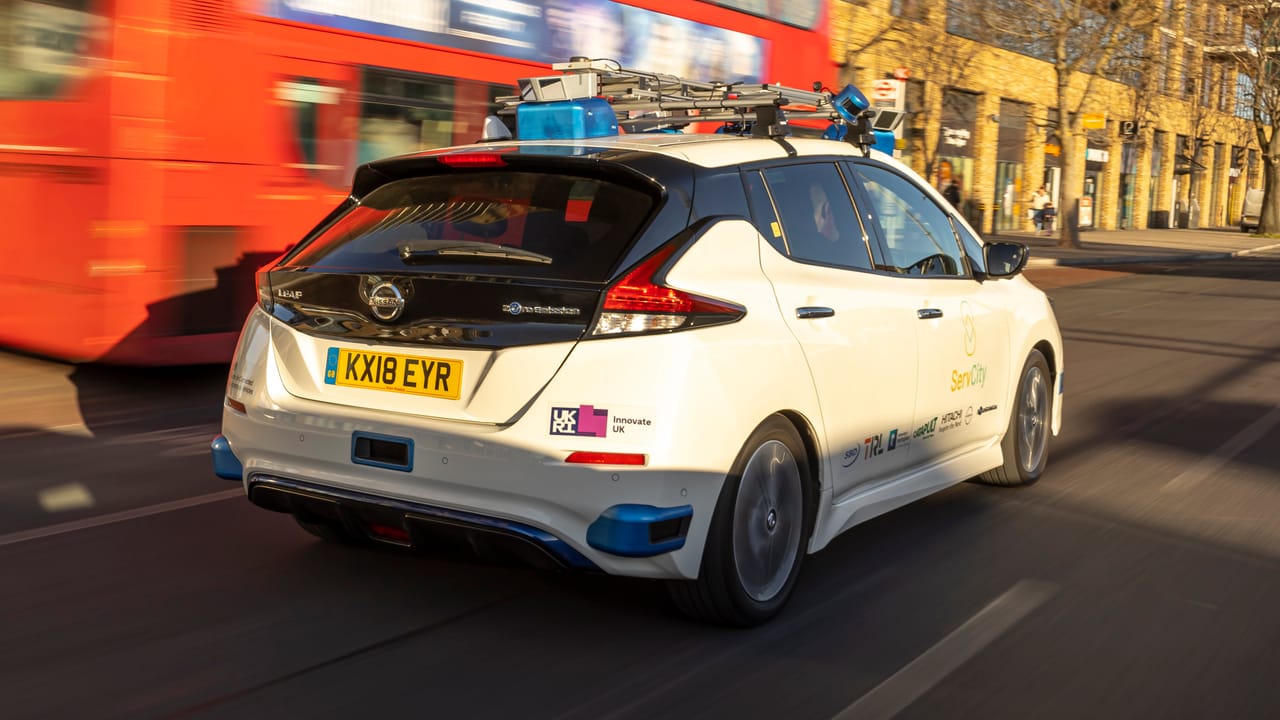
That's where I've just been a passenger in a self-driving Nissan Leaf. It managed perfectly well.
The Leaf uses nine cameras to spot and identify objects all around, plus four lidar scanners to measure their distance and trajectory. It also has high-res maps, and an ability to geolocate itself to within 1cm.
The entire boot is taken up with powerful PCs. But then, say the engineers, the current task is to get a car that can do the driving. They haven't started on the miniaturisation and cost-reduction yet.


FCA5A416-AB80-4D28-AED5-5E3F96C110F1.jpegBB95F994-0733-4A2F-BFA8-E35E4C2EF0E4.jpeg0C2F3EAE-8522-4822-A1F9-79216716A569.jpeg1F368B92-9354-4E6E-91CF-C37742C48EA2.jpeg
 
Nissan Leaf EVs will provide emergency power to towns in Japan

Japan is a country frequently hit by natural disasters. At the same time it is one of the best prepared countries for such situations, it has earthquake-proof buildings, it has early warning systems in place, it has quick response emergency services and people are more aware of dangers and are better prepared to deal with disasters when they strike.

Japan has one of the most extensive disaster prevention systems in place with a dedicated budget to support new and existing programs. And now Nissan has just joined one of those programs and signed a partnership agreement with Kotohira Town to offer its electric cars as power sources in emergency situations.

This world’s first such contract, recognizes the Nissan Leaf EVs as “driving storage batteries” and as such, when the need arises, the vehicles will be used to provide electricity to evacuation centers and other vital facilities in the town.
The vehicles will be lent by Nissan dealerships free of charge to provide emissions-free electricity to those who will need it the most. This is a first such agreement and Nissan will want to expand this idea to other towns across the country.

It is a great realization of the electric car potential. Many companies offer the V2L (vehicle-to-load) capacity that allows users to simply plug appliances into the car and use them as normal. But the fact that EVs can be used as an emergency power source is still not comprehended by the majority of the public.

Sure, electric cars are there to provide transport from A to B without emissions, that’s their primary objective. But EVs can do so much more and emergency power supply is just one of those things. Our dependence on grid power is a serious weak point that’s amplified during natural disasters. With electricity out we have no communications and no life support and that’s where electric cars can make a real difference.


17B440B5-DC6A-4B3E-B165-12D4065DB7B5.jpeg07EFE6B8-30D8-480C-BA35-E596336DD364.jpeg
 
A new Nissan Leaf trim has reminded us the Leaf still exists

The original EV trailblazer has been largely forgotten about. Cue a new £28k entry price to jog a few memories

It’s easy to forget that - until the Tesla Model 3 pinched its crown - the Nissan Leaf was for many years the best-selling electric car of all time. So easy in fact, that, um… we did basically forget about it. Oops.

Until today, because Nissan has announced that it’s introducing a new entry-level version: Shiro trim is based on the existing N-Connecta spec, but throws in the company's ProPilot assisted driving suite and a synthetic leather interior. All for £28,495.

As the base car you only get the option of a 39kWh battery and its 168 miles of range; the 239-mile-capable 59kWh e+ car carries a £5k premium.

Arctic White paint is standard (Shiro means white in Japanese, incidentally) but you can spec a two-tone finish if you prefer. You can also tick the box for a spare wheel pack. Yeah, not exactly Christmas, is it?

 
Nissan Leaf Shiro is the new, cheapest electric Nissan

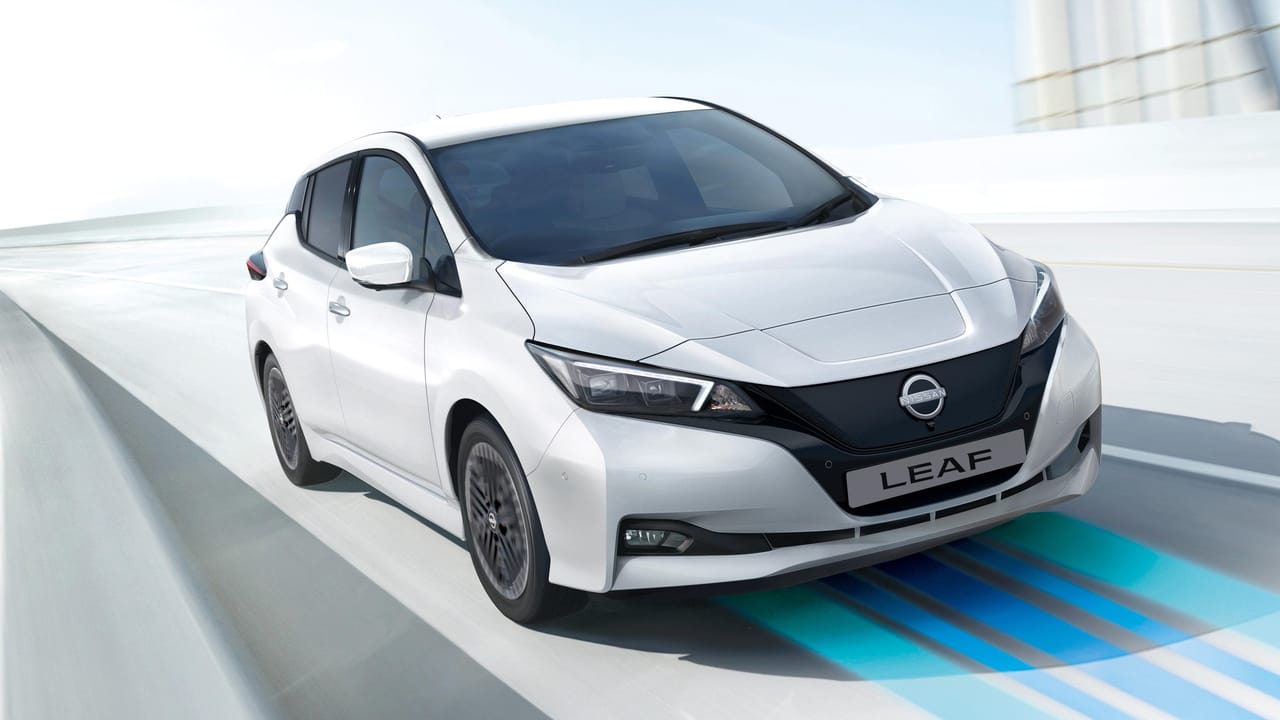
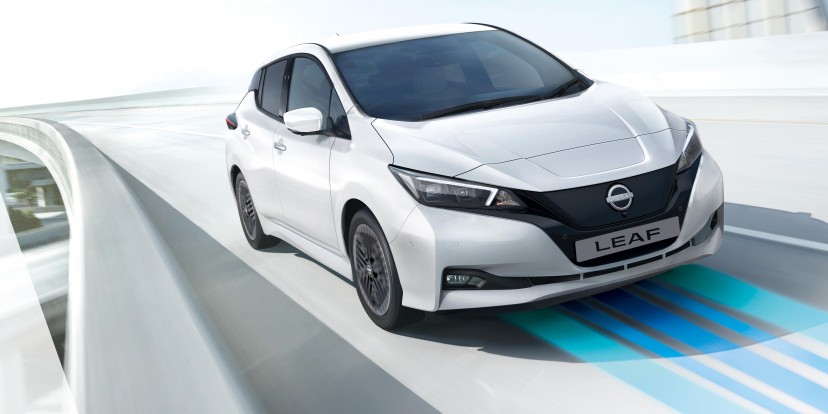
Nissan Leaf is one of the longest-serving EVs on the market, the first generation of the Leaf came out 13 years ago. The current model, in its 2nd generation, has been around since 2018 and Nissan decided that it’s about time to treat the Leaf to a bucket of new paint and some trinkets. And that’s literally what they did.

Nissan Leaf Shiro is a former Nissan Leaf N-Connecta with the ProPILOT Assist as standard. That package offers lane keeping, traffic jam assistance, and automatic parking brake. The seats are wrapped in synthetic leather with fabric inserts, and there is even an option for a Spare Wheel Pack - a fancy name for a steel spare wheel and tools for replacing it.

The new model is only available with the smaller 39 kWh battery pack - it offers a WLTP rating of 270 km and an even lower EPA rating of 243 km. The 110 kW (150 hp) electric motor powers the front wheels and actually makes a decent job of it - 0 to 100 km/h takes 7.9 seconds, which 10 years ago was a hot-hatch territory. The Leaf Shiro runs out of puff at 143 km/h, and it supports a 50 kW DC charging - a 40-minute stop every 200 km or so is not a good idea for a family car.

The truth is, the Nissan Leaf is getting old. It was a great EV 13 years ago, it was OK 5 years ago, and now it is still on sale because there’s not that much choice in this price bracket. Speaking of which - Leaf Shiro retails for €32,782, which is €2,300 less than Leaf N-Connecta with the same battery.

 
Next-gen Nissan Leaf will get stylish SUV makeover

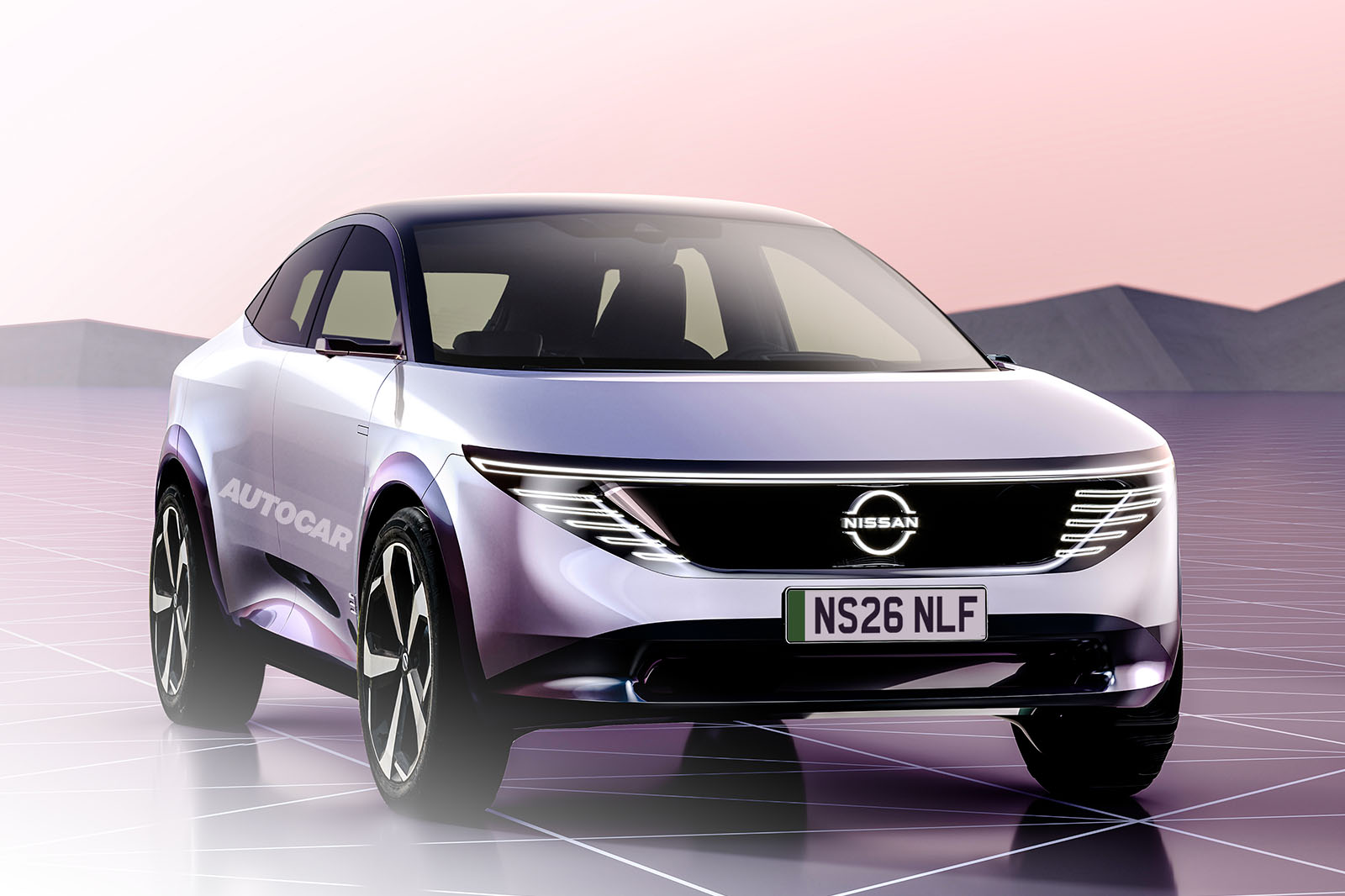
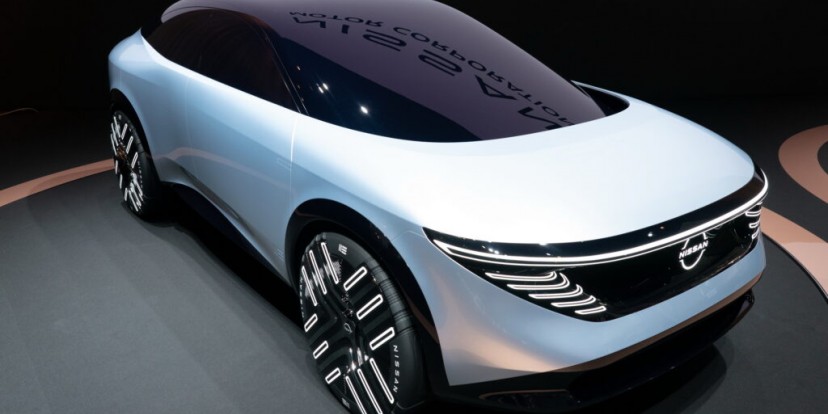
The third-generation Nissan Leaf is on the horizon, and it seems it won’t be just another run-of-the-mill EV. Set to go into development at the end of the upcoming year, this vehicle will undergo a remarkable metamorphosis, transforming into a high-riding crossover with a dash of concept styling. What's more, it's rolling out from the same British factory that will also be responsible for producing the next-gen electric Qashqai and electric Juke.

According to an insider source within the automaker, the forthcoming Leaf will bid farewell to its hatchback roots with hand-me-down parts and adopt a lower, sleeker profile compared to its siblings, the Qashqai and Juke. The design muse for this transformation? None other than Nissan's own Ariya and the eye-catching Chill-Out Concept unveiled in 2021. Gone are the days when Leaf's aesthetic left a lot to be desired.

 
Top
Sign up to the MyBroadband newsletter
X