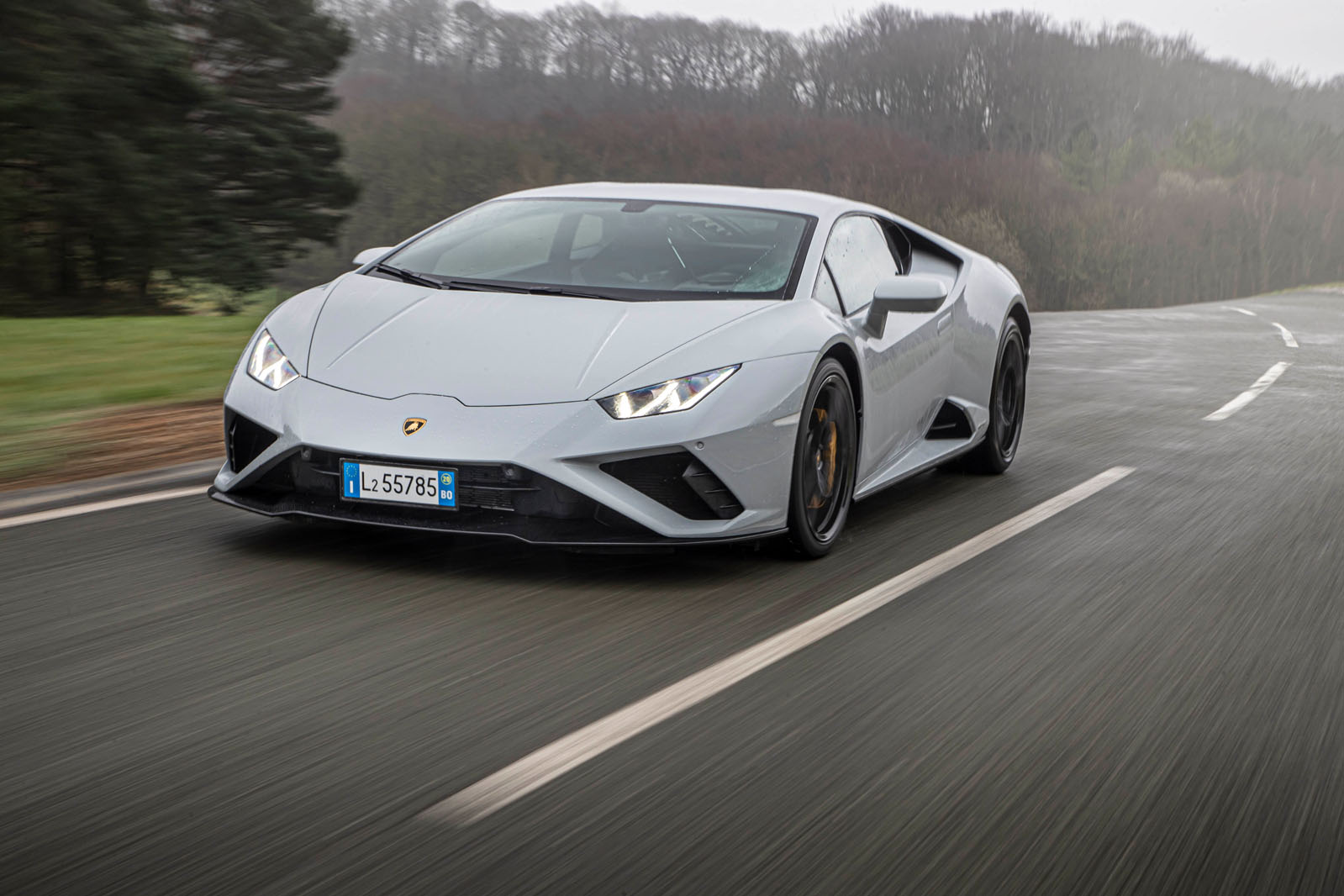
2019 Lamborghini Huracan Evo

Lamborghini Huracan STO 2020 review

Should I buy one?

If you’re looking for the ultimate Huracán – and have more than a quarter of a million to spend on it – then the STO is the one. But while many will be attracted to it as the range-topper, potential buyers should consider how they will use it. Anyone not planning for regular circuit work will end up with a car that will feel compromised and raw in the real world.

Comparison with the all-wheel-drive Performante is inevitable and gives a clear indication of where the STO’s priorities lie. Lamborghini hasn’t confirmed whether it plans to try and match the Performante’s achievement of a Nürburgring Nordschleife production car record with the STO, but it does say the new car is substantially faster on track than its predecessor. We’re told that around the Daytona International Speedway, the STO’s 1min 48.9sec lap time is nearly three seconds quicker than the Performante's and only 2.5sec off the pace of Lamborghini’s GT3 Evo racer.

'Race car for the road' is an overused phrase, but it seems entirely justified with the STO.

STO 1.jpgSTO 2.jpg
 
New Lamborghini Huracán STO is an extreme rear-driven ode to the V10

The new Lamborghini Huracán STO has been revealed as a road-legal, rear-wheel drive ode to the howling V10 engine.

The Italian firm says the new STO (which stands for “Super Trofeo Omologata”) was inspired by both the Huracán Super Trofeo Evo and Huracán GT3 Evo racing cars.

Like the all-paw Huracán Evo, the STO employs a naturally aspirated V10 engine worth 470 kW, though peak torque is 35 units lower than the Evo’s at 565 N.m. With a seven-speed dual-clutch transmission fitted as standard, Lamborghini says that’s enough for a sprint from zero to 100 km/h in 3,0 seconds (just one-tenth of a second down on the AWD model) and a top speed of 310 km/h.

The newcomer furthermore debuts three fresh driving modes: STO, Trofeo and Pioggia. The default STO setting is for road driving, while Trofeo sees all systems “optimised” for dry tarmac and the “fastest lap times” on track. Pioggia, meanwhile, is reserved for rainy conditions, priming traction control, torque vectoring, rear-wheel steering and ABS appropriately.


Lambo 1.jpgLambo 2.jpgLambo 3.jpgLambo 4.jpg
 
Check Out This Wild Lamborghini Huracán EVO RWD Aperta

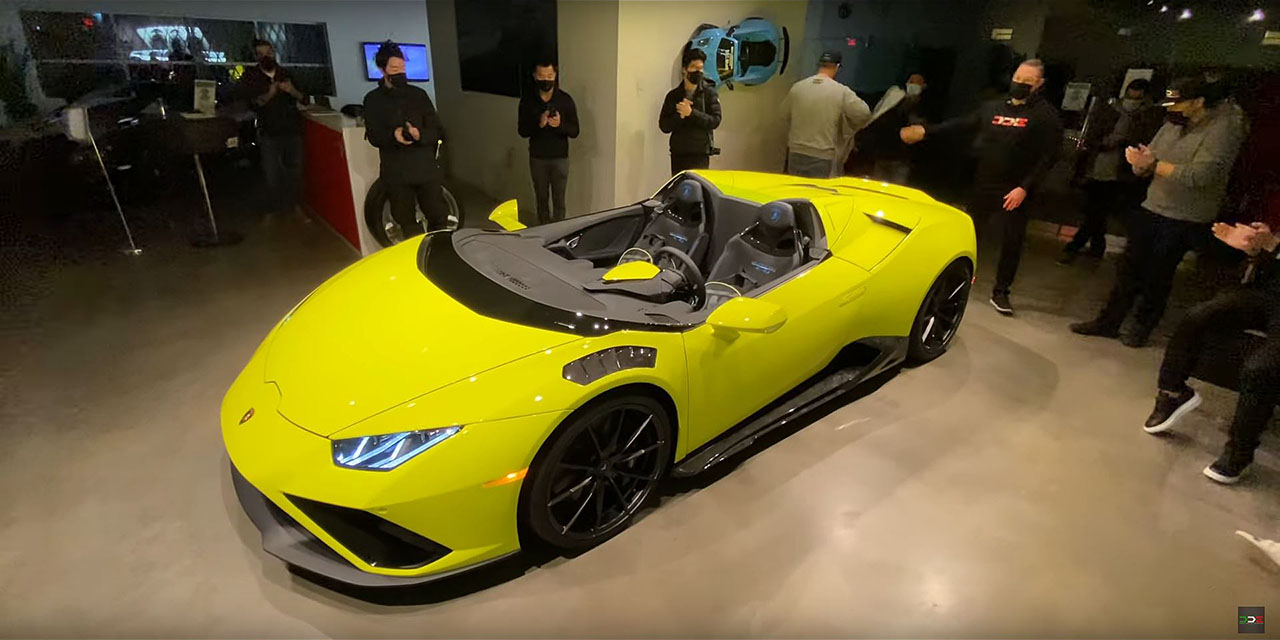
Ever seen DDE on YouTube? Well, it is a hugely successful and popular channel coming from the States and the latest creation comes in the form of the only Lamborghini Huracán EVO RWD Aperta in the world.

Dubbed the Huracan EVO Aperta, meaning ‘open’ in Italian, Damon (owner of the channel) says he took the inspiration from some of the great open-air cars produced by other manufactures such as the Mercedes SLR McLaren Sterling Moss edition, Ferrari Monza, and the Aston Martin V12 Speedster. Since Lamborghini never really produced an open-aired supercar like this, he decided to make it on his own, choosing the Huracán EVO RWD as the starting point.

As you can tell, this was not a simple case of chopping off the roof and removing the windscreen. Giving the Aperta a much more menacing look is a new body kit made of carbon fibre by Vorsteiner which is clad in vibrant yellow 3M vinyl.


Lambo 1.jpg
 
5 fastest-accelerating vehicles CAR magazine tested in 2020

Which were the fastest-accelerating vehicles of the 60 we tested in 2020? Below we look at the cars that stunned us when it came to accelerating off the line. Note this list is based on test figures we gathered during our standard, rigorous road-test procedure (rather than simply times claimed by the respective manufacturer)...

5. BMW M850i xDrive Gran Coupe Steptronic – 4,15 seconds

4. Alfa Romeo Stelvio Quadrifoglio – 4,13 seconds

3. Lamborghini Urus – 3,64 seconds

2. Porsche 911 GT3 RS PDK – 3,55 seconds

1. Lamborghini Huracán Evo LP640-4 – 2,94 seconds


10 fastest-braking vehicles CAR magazine tested in 2020

Here at CAR magazine, we take every new vehicle we road test to our test strip to gather data. Sometimes, we see some pretty impressive results.

Below we have listed the best average 100-0 km/h times we collected in 2020 (each vehicle goes through a punishing ten-stop procedure, allowing us to calculate its average braking time). To determine which car places higher in the event of a tie, we went back to the test results and looked at the best single braking time achieved by the vehicles in question.

10. Audi A7 Sportback 55 TFSI Quattro S Tronic – 2,72 seconds

9. Volkswagen Golf GTI TCR – 2,71 seconds

8. Audi A6 40 TDI S Tronic – 2,69 seconds

7. BMW 330d Steptronic – 2,69 seconds

6. Hyundai i30 N – 2,68 seconds

5. Audi Q8 45 TDI Quattro Tiptronic – 2,68 seconds

4. BMW X6 M50d xDrive Steptronic – 2,68 seconds

3. Lamborghini Urus – 2,66 seconds

2. Audi S6 TFSI Quattro Tiptronic – 2,64 seconds

1. Lamborghini Huracán Evo LP640-4 – 2,59 seconds

 
Here's how much the new Lamborghini Huracán STO costs in South Africa

Wondering how much the new Lamborghini Huracán STO will cost you in South Africa? Well, wonder no more because we have local pricing.

Thanks to our eagle-eyed friends over at duoporta.com, we can confirm the new Huracán STO is priced from a cool R8 230 000 (or R8 430 000 should you opt to upgrade the standard three-year driveplan to five years). A few jabs at your calculator will tell you the rear-wheel-drive STO thus commands a healthy R2 140 000 premium over the Huracán Evo.

Like the all-paw Huracán Evo, the STO employs a naturally aspirated V10 engine generating 470 kW (at 8 000 r/min), though peak torque is 35 units lower than the Evo's at 565 N.m (at 6 500 r/min). With a seven-speed dual-clutch transmission fitted as standard, Lamborghini says that’s enough for a sprint from zero to 100 km/h in 3,0 seconds flat(just one-tenth down on the AWD model) and a top speed of 310 km/h. The STO furthermore gains three fresh driving modes: STO, Trofeo and Pioggia.

 
Handling (not 0-100 km/h times) now top priority, says Lamborghini exec

A Lamborghini executive has suggested handling has overtaken acceleration and top speed as the Italian firm’s “number one priority”.

Francesco Scardaoni, who heads up Lamborghini’s Asia Pacific division, told CarAdvice.com.au out-and-out acceleration was no longer “that important”.

“If you go back to 10 years ago, probably when we were asked the parameters to measure a car with we would say top speed, acceleration and handling. Then top speed became a secondary measure; acceleration the first one.

“Now, basically, acceleration is no more that important. Because it’s quite easy for those kind of power units to have amazing results in acceleration,” he said, making reference to the motors in fully electric models such as the Tesla Model S.


Lambo.JPG
 
World’s Quickest Lamborghini Huracán Runs Ridiculous 7.33 Quarter-Mile

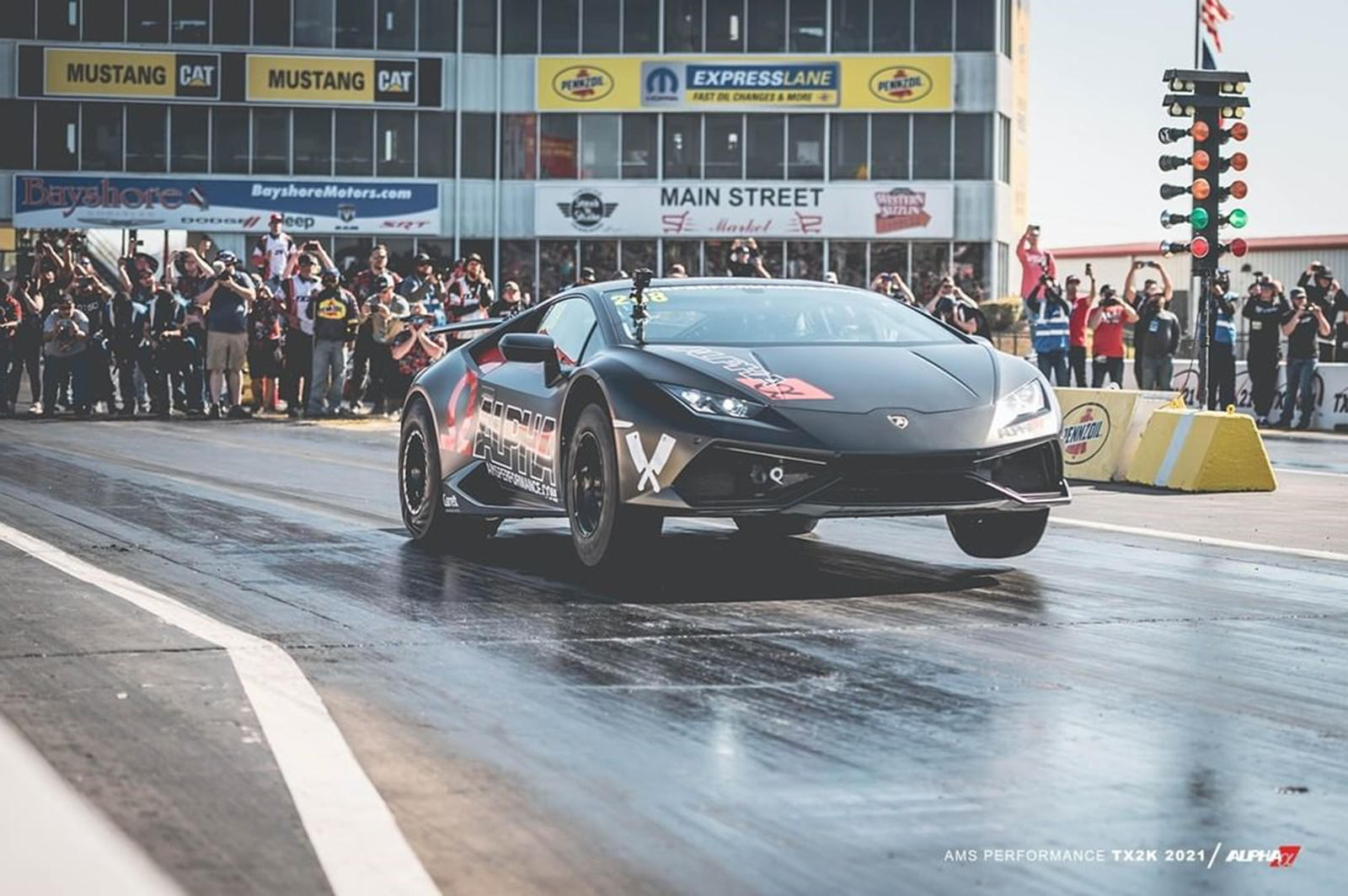
World records being set at drag racing events is nothing new especially when talking about the likes of AMS Performance and the Lamborghini Huracán.

Last month they smashed the quarter-mile record for a Lamborghini Huracán with the Alpha Omega Drag Huracan and now they have gone even quicker setting a 7.33 at 194 mph (312 km/h).

The Alpha Omega is a twin-turbo Huracán capable of producing over 3,000 horsepower, but while the engine can handle that sort of output after being attended to by AMS Performance, putting that power down to the asphalt is near impossible and most runs see the car run in a detuned state.


Drag.jpg
 
Is The Lambo Huracán STO Gunning For The Nürburgring Record

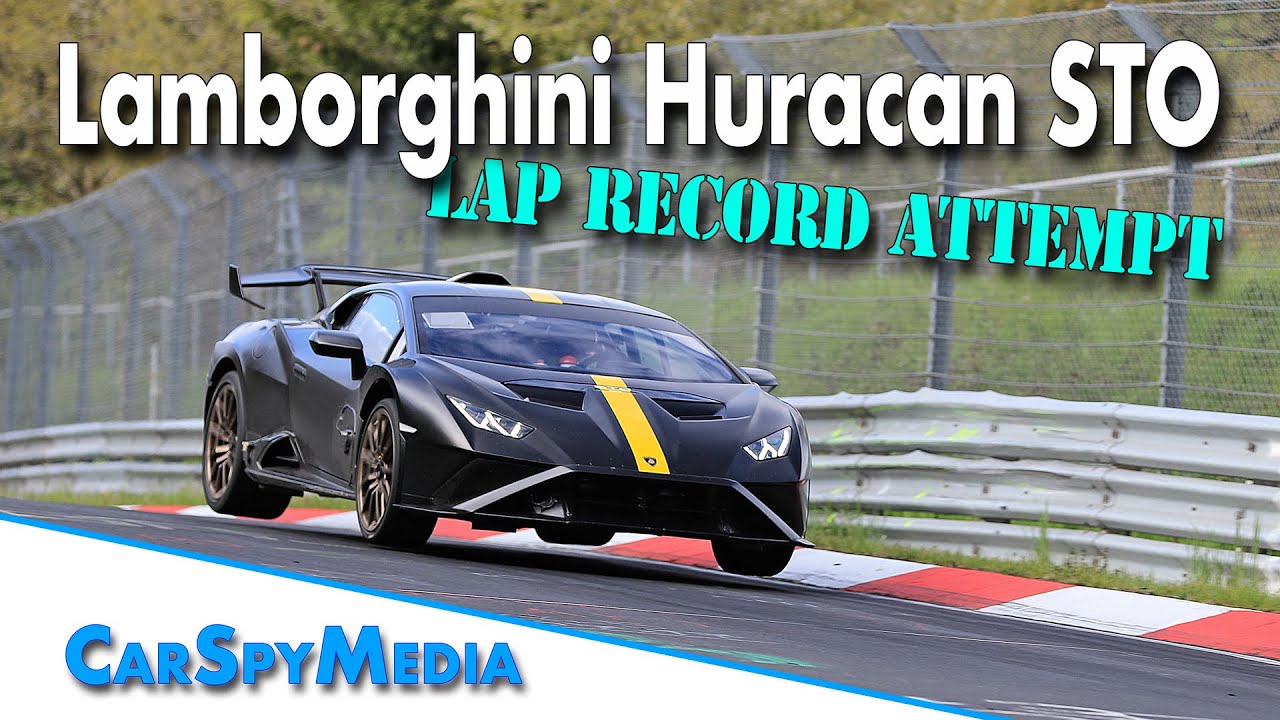
Lamborghini revealed the Huracán STO towards the end of last year, and since then, we have been wondering if they would have a go at the Nürburgring lap record.

Currently, the fastest production car to complete a lap of the infamous circuit is the Mercedes-AMG GT Black Series but could this motorsport-focused V10 Bull grab that spot back?

A prototype of the Huracan STO was spotted this week giving it horns. Sure, the high-speed action is exciting to watch (and listen to) but at the beginning of the video clip, you can see the team preparing the mid-engined V10 supercar for the run, and we’ve noticed an interesting detail. They seem to be filling it up with “special gasoline” as the gas can is labelled “Benzina Speciale”.


Lamborghini has sold almost all of its stock for 2021

As the COVID-19 pandemic eases up in key markets, Lamborghini reports that it has almost sold-out all of its stock for 2021. With this, the brand looks to translate a strong growth this year with 10 months of its production capacity already being dedicated to customers.

As Automotive News Europe reports, Lamborghini CEO Officer Stephan Winkelmann announced this in an interview at the Milano Monza auto show where the Huracan STO was on display at an open-air walk not too far from the global fashion hub’s Duomo cathedral.

“Despite a two-month shutdown due to the pandemic, Lamborghini ended 2020 as its second-best year ever,” Winkelmann confirmed. Lamborghini deliveries have surged by almost 25 per cent which has resulted in record sales for its first quarter.

While the now aging Aventador is still popular among consumers, the brand is transitioning to electrifying its line-up with a planned expenditure of €1,5 billion (approximately R25 million). This capital is being put towards the development of plug-in hybrid versions of each model by 2024 and a fully EV variant by the second half of this decade.

 
Bologna Airport now has a Lamborghini Huracán Evo

The airport’s previous ‘Follow Me’ car was a standard Huracán. Now much improved

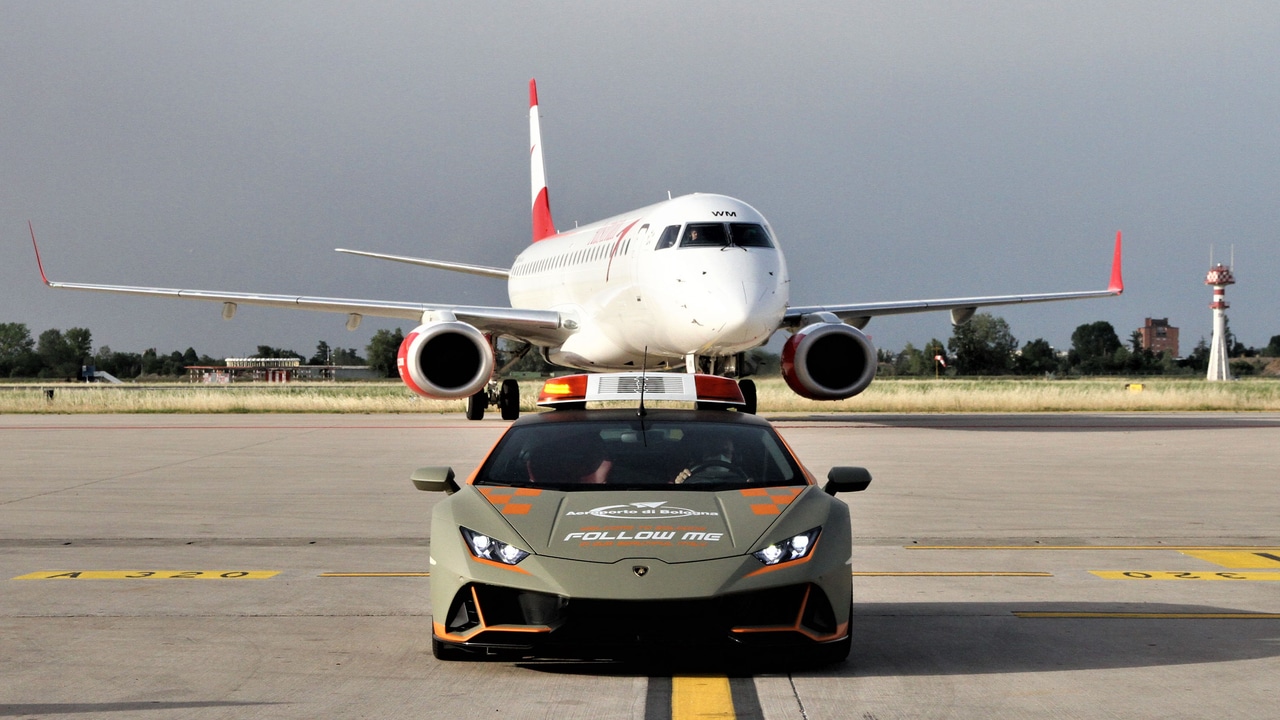
You may already be aware that Bologna Airport has a rather special relationship with Lamborghini. Back in 2019, for example, Lambo gifted the airport a Huracán to act as a ‘Follow Me’ car guiding in passenger planes from the runway.

In fact, that was actually the sixth car that Lambo had lent for the role, so naturally it’s back with yet another. And of course, the only way to replace a Huracán is with a Huracán Evo…

Yep, the lucky so-and-sos that work at the airport will upgrade from their ‘standard’ 572bhp rear-wheel drive Huracán to the current (and much more powerful) four-wheel drive Evo. Much better for wet days on the runway.

The Evo uses the same naturally-aspirated 5.2-litre V10 as before, but it now produces 631bhp and 442lb ft of torque for an improved 0-62mph time of 2.9 seconds. Much better for racing planes.


Lambo 1.jpegLambo 2.jpegLambo 3.jpegLambo 4.jpegLambo 5.jpeg
 
Top
Sign up to the MyBroadband newsletter
X