Naks
Honorary Master
- Joined
- Jun 3, 2009
- Messages
- 10,135
- Reaction score
- 6,102
New Volkswagen Tiguan prototype review: https://www.autoexpress.co.uk/volkswagen/tiguan/360409/new-volkswagen-tiguan-prototype-review
"... The new Tiguan is 32mm longer and 5mm higher than the current generation, sharing its width and wheelbase. This, combined with the more streamlined dashboard design, helps increase the sense of interior space. Like all modern VW products, digital interfaces take precedence over physical controls, but on the assurance that Volkswagen’s glitchy and convoluted systems introduced on the Golf and ID.3 have seen significantly upgraded. We’re promised more resilient hardware and software that will significantly improve the user experience.
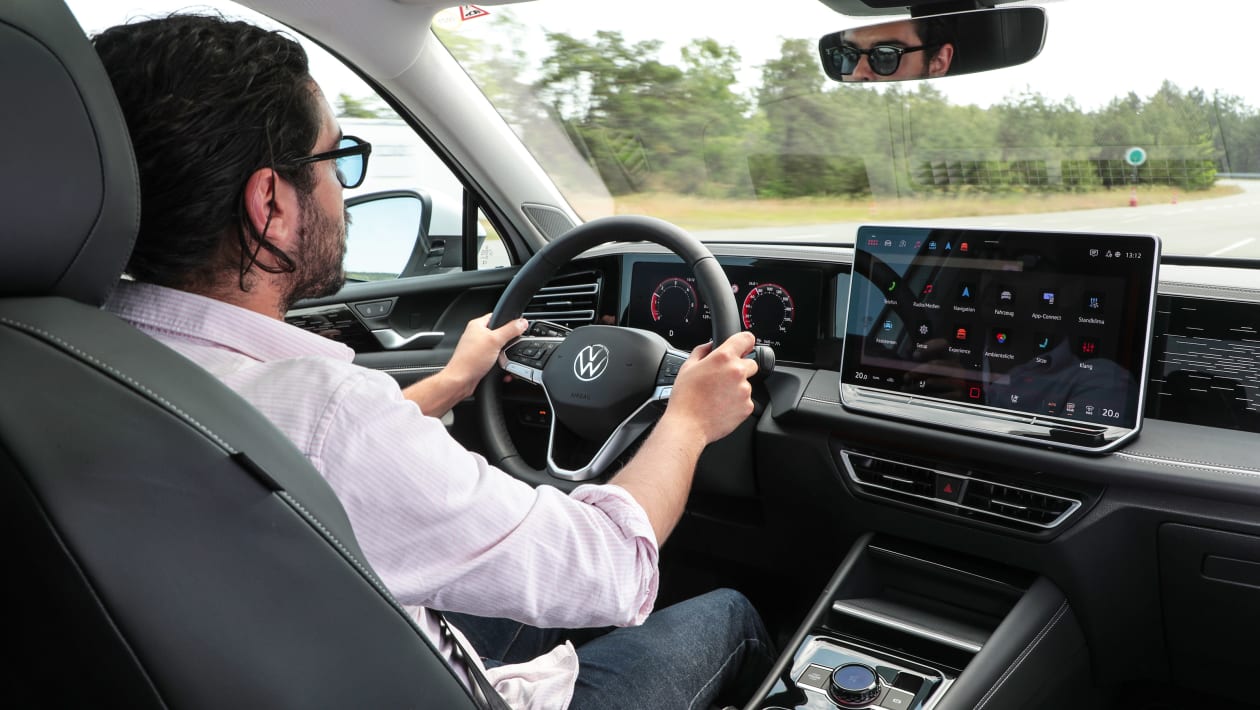
All Tiguans will utilise a 10.25-inch display ahead of the driver, paired with one of two touchscreens in either a 12.3- or new 15-inch size. The digital controls have been completely redesigned, sharing the same software found in the ID.7 that’s been fashioned according to feedback from customers. VW hasn’t retreated on its controversial sliders, but these are now back-lit and work with static icons on the screen for the heating and ventilation functions. The eagle-eyed among you will see that VW has listened to consumers, though, as the steering wheel now returns to the use of physical controls, and there’s even a volume knob with multi-use functionality that can also control the Tiguan’s driver modes and ambient lighting.
One of the Tiguan’s strongest assets, especially in its second generation, was how car-like it felt on the road while still offering the practical advantages of a modern SUV. This was due to its close connection to the Golf hatchback, and that link continues today with the new car’s evolved MQB platform. Yet the proportional differences between these two popular VW models are more pronounced than ever, with the Tiguan now feeling more substantial than any Golf, or indeed previous generation of Tiguan. The steering is a touch heavier, the drivetrains smoother and more refined than before, giving it more of a big car feel.
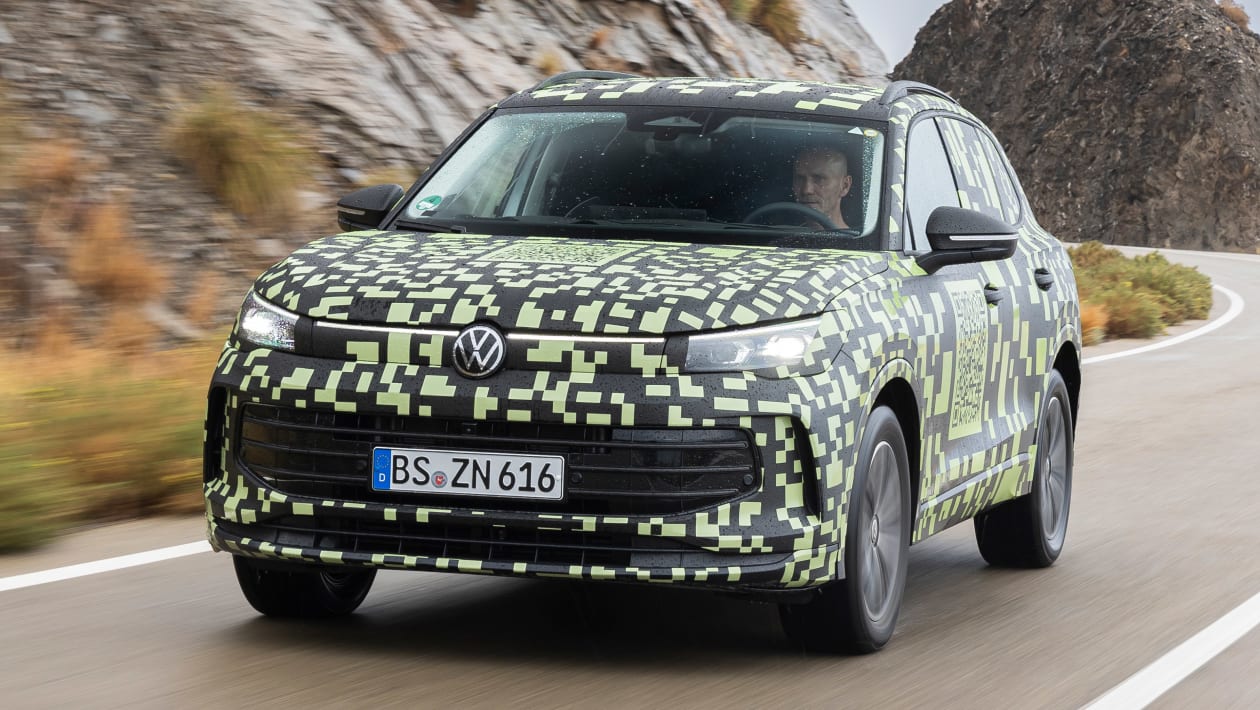
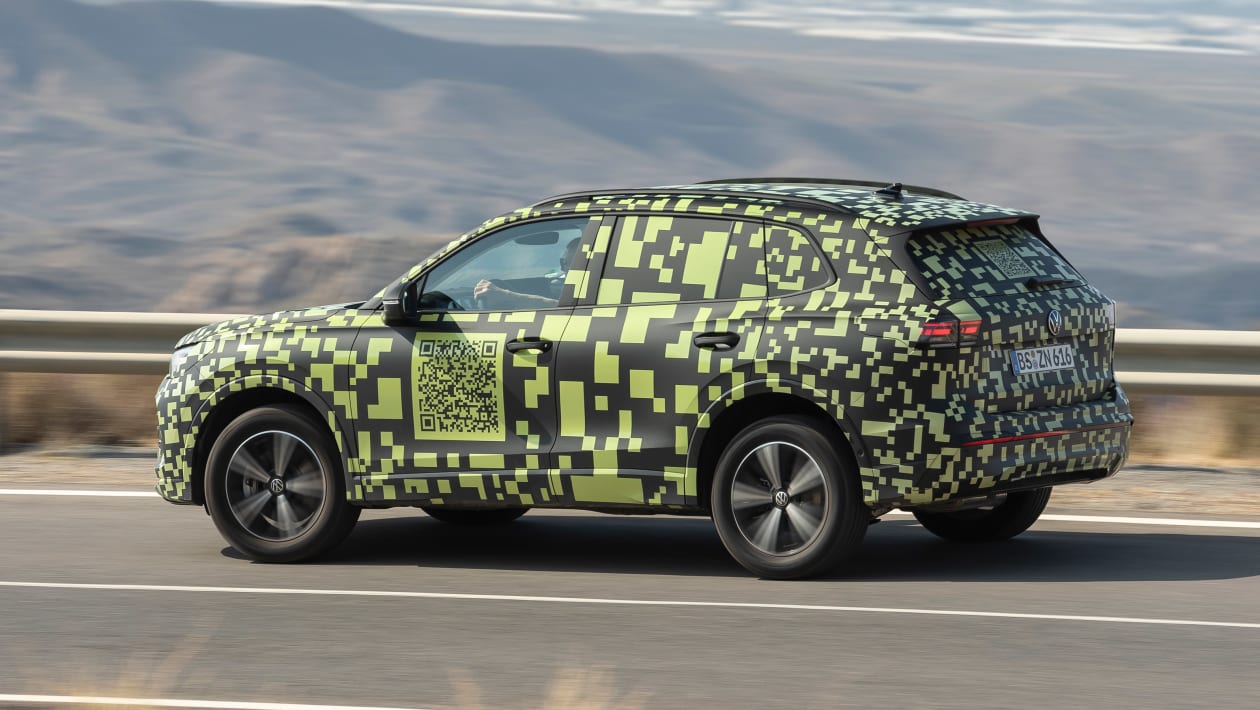
The new Tiguan’s design language has also evolved, moving away from the precise and edgy aesthetic of the current model in favour of a design that’s more curvaceous, referencing the all-electric ID models. VW’s now trademark light bars at the front are present, and expect plenty of aero-dynamically driven details around the wheels, front bumper and rear spoiler to keep that all-important MPG figure as low as possible. ..."
"... The new Tiguan is 32mm longer and 5mm higher than the current generation, sharing its width and wheelbase. This, combined with the more streamlined dashboard design, helps increase the sense of interior space. Like all modern VW products, digital interfaces take precedence over physical controls, but on the assurance that Volkswagen’s glitchy and convoluted systems introduced on the Golf and ID.3 have seen significantly upgraded. We’re promised more resilient hardware and software that will significantly improve the user experience.
All Tiguans will utilise a 10.25-inch display ahead of the driver, paired with one of two touchscreens in either a 12.3- or new 15-inch size. The digital controls have been completely redesigned, sharing the same software found in the ID.7 that’s been fashioned according to feedback from customers. VW hasn’t retreated on its controversial sliders, but these are now back-lit and work with static icons on the screen for the heating and ventilation functions. The eagle-eyed among you will see that VW has listened to consumers, though, as the steering wheel now returns to the use of physical controls, and there’s even a volume knob with multi-use functionality that can also control the Tiguan’s driver modes and ambient lighting.
One of the Tiguan’s strongest assets, especially in its second generation, was how car-like it felt on the road while still offering the practical advantages of a modern SUV. This was due to its close connection to the Golf hatchback, and that link continues today with the new car’s evolved MQB platform. Yet the proportional differences between these two popular VW models are more pronounced than ever, with the Tiguan now feeling more substantial than any Golf, or indeed previous generation of Tiguan. The steering is a touch heavier, the drivetrains smoother and more refined than before, giving it more of a big car feel.
The new Tiguan’s design language has also evolved, moving away from the precise and edgy aesthetic of the current model in favour of a design that’s more curvaceous, referencing the all-electric ID models. VW’s now trademark light bars at the front are present, and expect plenty of aero-dynamically driven details around the wheels, front bumper and rear spoiler to keep that all-important MPG figure as low as possible. ..."