


Nerfherder
Honorary Master
This is a great video clearing up some of the uncertainty :
South Africa’s biggest forum. Discuss, discover, and connect with thousands of members.

In early October, the third interstellar object (ISO) to visit our Solar System (3I/ATLAS) made its closest flyby to Mars, coming within 30 million km (18.6 million mi) of the Red Planet. This placed it within view of several missions currently operating there, which are operated by three space agencies: NASA, the European Space Agency (ESA), and the China National Space Agency (CNSA). While the ESA released images taken by the Mars Express* and *ExoMars Trace Gas Orbiter (TGO), and China released images taken by the Tianwen-1 orbiter, NASA was unable to release any data due to the government shutdown
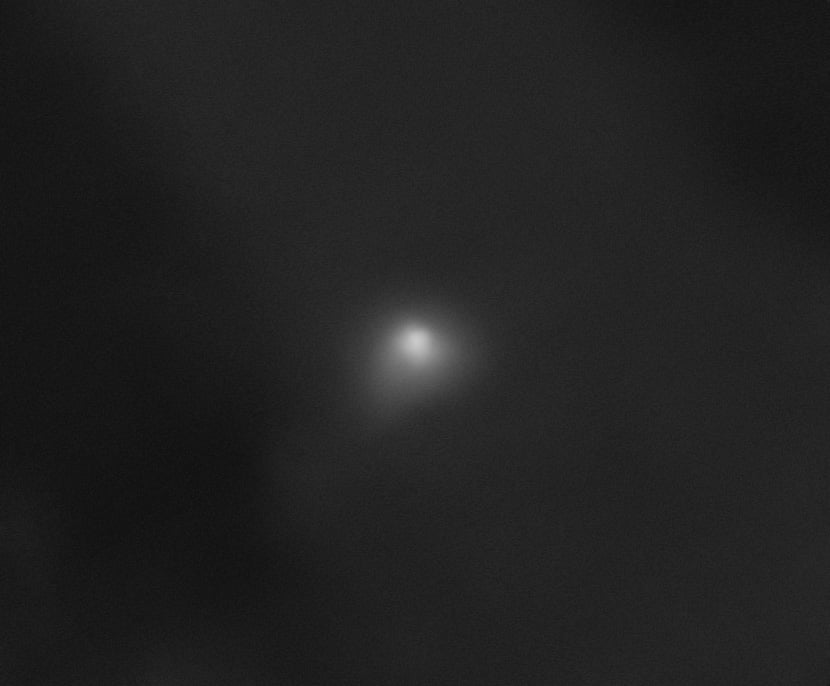

NASA Finally Releases Images of 3I/ATLAS Taken by Its Missions at Mars
NASA Finally Releases Images of 3I/ATLAS Taken by Its Missions at Mars
Two orbiters and a rover captured images of the interstellar object — from the closest location any of the agency’s spacecraft may get — that could reveal new details.www.universetoday.com

Is this a joke?View attachment 1866047
Looks like they have censored / blurred the image of the UAP - same as was done to scope magazines

Is this a joke?
The truth is out there, jingles


Jings knows scope magazinesIs this a joke?

The image ?Is this a joke?

The image ?
No, its just really zoomed in
All the blocks mean stuff so its more a data representation of what information they have.

View attachment 1866047
Looks like they have censored / blurred the image of the UAP - same as was done to scope magazines

I warned you guys killadoob's Nibbukanniza planet was going to come and kill us all one day!
Maar nee okes like @porchrat continued to drink the toilet duck
On September 21st last year two Russian astronomers, Vitali Nevski and Artyom Novichonok discovered a new comet that's creating a buzz of anticipation around the world. It may turn out to be the most spectacular comet to grace our skies in centuries. Nevertheless, astronomers are pulling in the reins on the world’s excitement, as Comet ISON may also break apart before putting on an amazing show. Luckily we don't have to wait too long to find out, as we should be able to see it with the naked eye by October.
There are...
Here is an mage taken from the Hubble on 30 November.
Space fans hoping that the intruder from beyond the solar system known as Comet 3I/ATLAS is actually an alien spacecraft may be disappointed by new research that could close the book on this speculation once and for all.
Astronomers used the Green Bank Telescope, employed in the Breakthrough Listen extraterrestrial signal-hunting astronomy project, to search 3I/ATLAS for measurable signs of technology from extraterrestrial civilizations, or "technosignatures."
Though this hunt came up empty, the fact that 3I/ATLAS is only the third known object found in the solar system after entering from interstellar space (the others being 1I/'Oumuamua, seen in 2017, and 2I/Borisov, detected in 2019) means that it is still an object of great fascination, albeit a natural one.
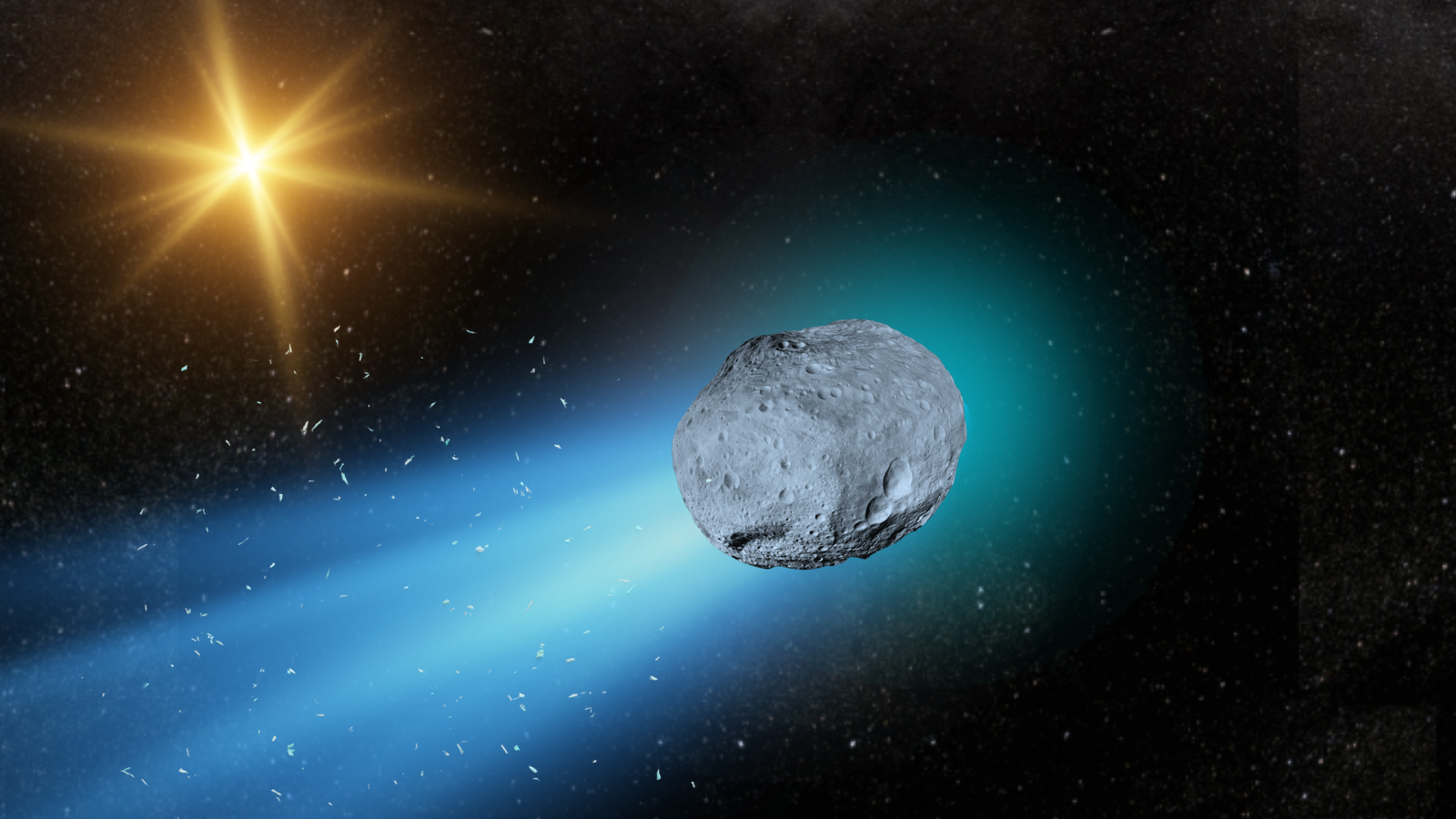
There’s been plenty in the news about 3I/ATLAS over the course of the past 8 months. Our third confirmed interstellar visitor went behind the Sun during its closest approach, but reemerged in December with plenty of eyes watching it. Papers describing what it looks like following its closest brush with the power of a star in probably billions of years are starting to come out, including a new one available in pre-print on arXiv from Carey Lisse of Johns Hopkins University and his co-authors, which shows how much the comet - and it is definitely a comet - has changed in the matter of only a few months.
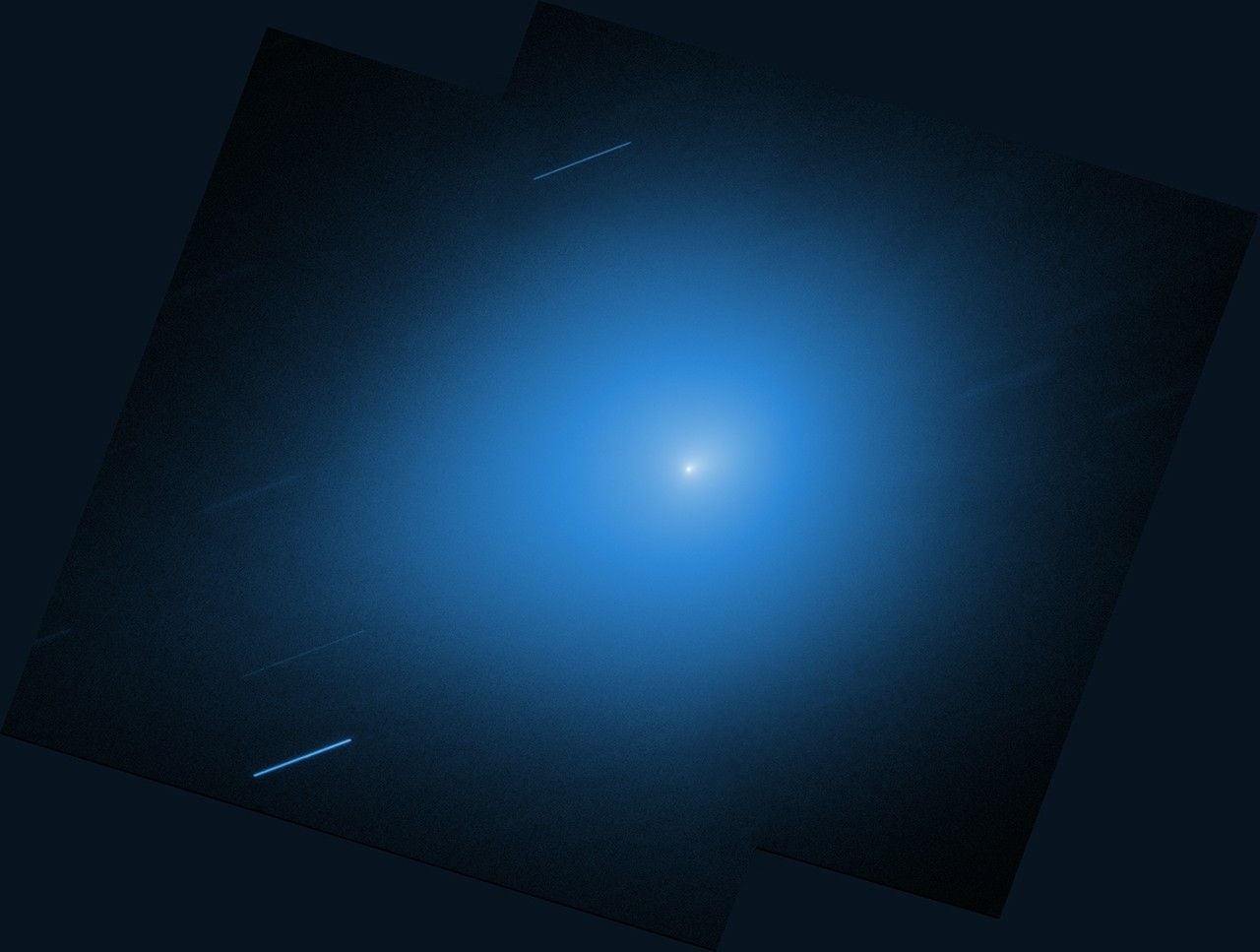
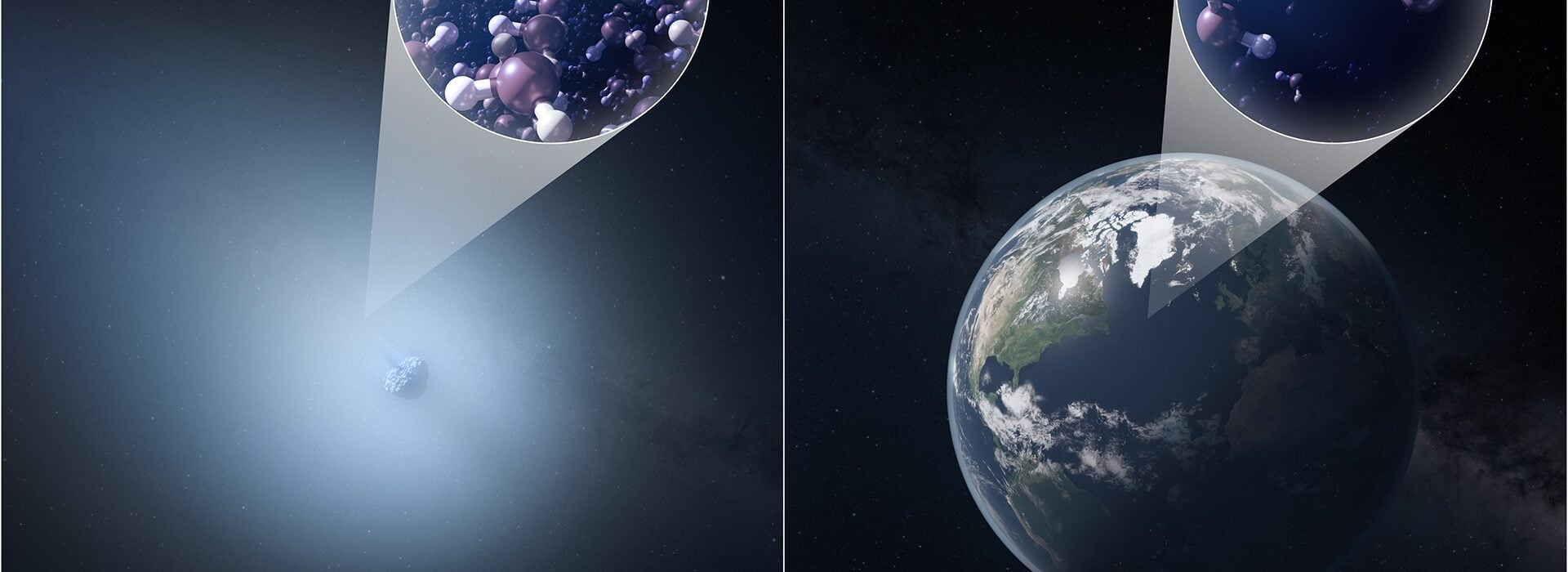
3I/ATLAS created quite the buzz as it flew through our Solar System. As just the third interstellar object (ISO) ever detected, what our instruments observed as it approached our Sun and began heading back to deep space provided tantalizing clues about the star system in which it formed. In particular, new observations from the Atacama Large Millimeter/submillimeter Array (ALMA) have yielded the first-ever measurement of deuterated water (or "semi-heavy water") in an ISO. The discovery provides a chemical window into the cold conditions that characterize its home star system.
On Jan. 7th, 2026, the Subaru Telescope joined many of the world's observatories and space telescopes in observing the 3I/ATLAS, the third interstellar object (ISO) detected in our Solar System. This interstellar comet had just completed its closest approach to the Sun, which produced more intense outgassing. By observing the light from 3I/ATLAS' coma, astronomers were able to examine the chemical composition of the comet's interior and produce estimates of the ratio of carbon dioxide to water.
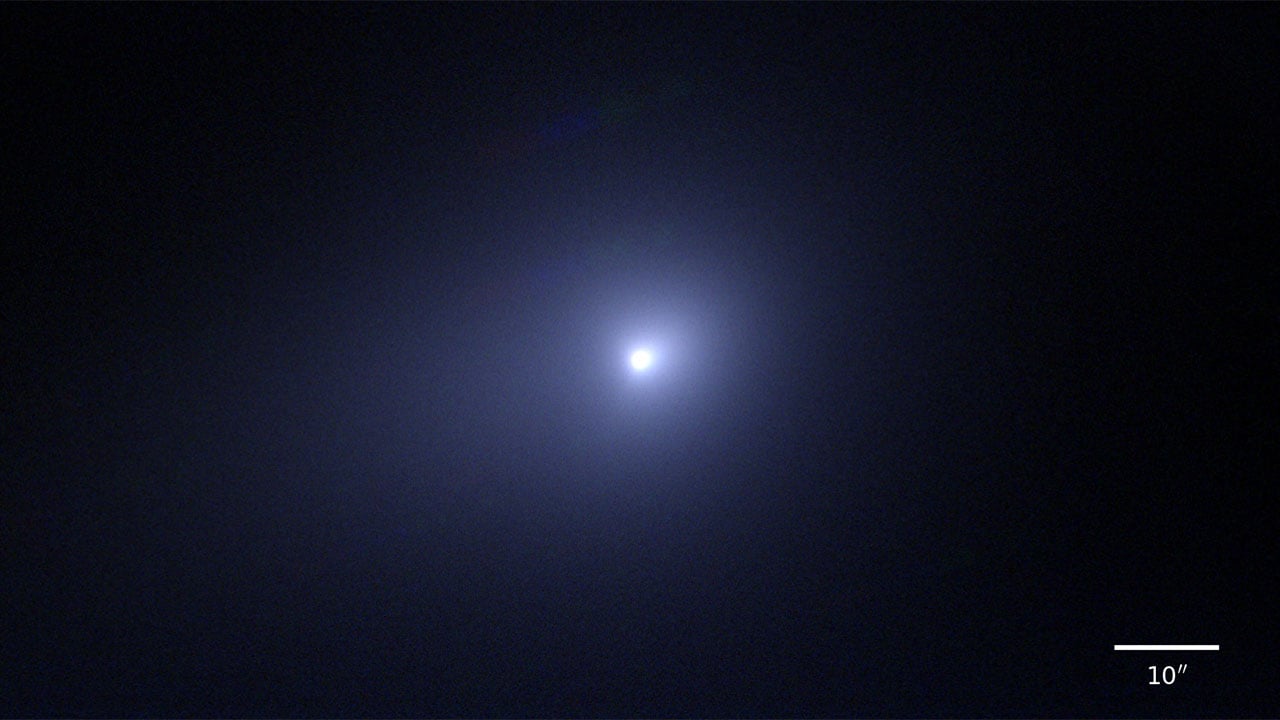
It has now been just over a year since the comet 3I/ATLAS first captured the world's attention as the third known object to fly through our solar system from beyond. Astronomers are still learning new things about where exactly it came from.
For the first time ever, they've been able to study charged particles in the tail of the interstellar comet. This has told them that 3I/ATLAS contains more nitrogen than the typical comet from our own solar system — revealing a tantalizing clue about how the strange comet formed.
