Advice on shielded cat 5e installation

Well, it is technical. A shield adds electrical capacitance to the wires - it is a large conducting surface in a close proximity to the wires. It gives negative effect on the signal (signal loss), but grounding isolate wires from the external noise, so shielding generally improve signal in the final effect.

Ungrounded (floating) shield acts as an antenna, in both directions. It means that noise goes in, noise goes out as usual in UTP, but it is multipled by the antenna gain (in simple terms). So, you have a bigger noise introduced to the wires, combined with higher signal loss by the capacitance of the shield.

+1
 
What brand and model is your mixer and stage box, Soundcraft, Digico, Yamaha? I'm in the sound industry so know quite a bit about this.
Knowing what mixer you use will also tell me what protocall it's using, MADI, dante etc.
Do you have space for a second Ethernet cable running to the stage box for redundancy? If so, best to do a second cable run while you are at it.

In general it's best to use STP yes, and the connectors are very important,, they must also be properly shielded and grounded point to point. I never did a installation threw switches, Ethernet wall boxes etc so will have to find out about that, but best you also get high quality ethercon connectors.
 
What brand and model is your mixer and stage box, Soundcraft, Digico, Yamaha? I'm in the sound industry so know quite a bit about this.
Knowing what mixer you use will also tell me what protocall it's using, MADI, dante etc.
Do you have space for a second Ethernet cable running to the stage box for redundancy? If so, best to do a second cable run while you are at it.

In general it's best to use STP yes, and the connectors are very important,, they must also be properly shielded and grounded point to point. I never did a installation threw switches, Ethernet wall boxes etc so will have to find out about that, but best you also get high quality ethercon connectors.
Behringer X32 Producer and SD16 stage box, using AES50.
 
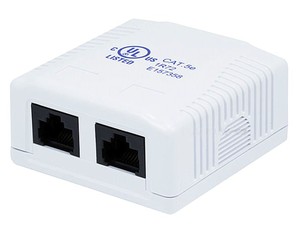
Shielded box:
CAT6_Krone_type_wall_box_dual.jpg


Unshielded box:

s-l300.jpg


Shielded plug
CN-CAT5E-8P8C-SH-2013_Detailed.jpg


Unshielded plug
images
 
Last edited:
Well, it is technical. A shield adds electrical capacitance to the wires - it is a large conducting surface in a close proximity to the wires. It gives negative effect on the signal (signal loss), but grounding isolate wires from the external noise, so shielding generally improve signal in the final effect.

Ungrounded (floating) shield acts as an antenna, in both directions. It means that noise goes in, noise goes out as usual in UTP, but it is multipled by the antenna gain (in simple terms). So, you have a bigger noise introduced to the wires, combined with higher signal loss by the capacitance of the shield.

I have my doubts about any issues with shielded cable not being grounded.
https://www.siemon.com/us/standards/Screened_and_Shielded_Guide_7_Antenna_Myth.asp
http://www.cablinginstall.com/artic...d-realities-of-shielded-screened-cabling.html
 
Any idea where one can get a shielded box like that?

Any reputable cable supplier will have them. I can get them in East London from our local supplier. If you can't get them immediately, order online and in the mean time just terminate the end with a shielded plug. You will need shielded flyleads when the box arrives. I'll post links if I can find online.

These guys will have:
http://www.cablerite.co.za/networking-accessories
 
Last edited:
Any idea where one can get a shielded box like that?
Shielded keystone jacks here (at least sometimes (stock levels)). And then you get FTP (foil twisted pair) in overall- or pair-wrapped versions; maybe the latter is more what you're after? Then, of course, you want to make sure you terminate so as to get that shielding to get continuity all the way through. Question: are the sockets on the equipment metal-faced (a la that shielded pic up there)?
 
Last edited:
I have done exactly the same as the OP. I took a single cable from the UTP shield and attached it to the earth (ground) connector on the pre-amp. All noise disappeared

I used regular RJ45 plugs
 
Shielded keystone jacks here (at least sometimes (stock levels)). And then you get FTP (foil twisted pair) in overall- or pair-wrapped versions; maybe the latter is more what you're after? Then, of course, you want to make sure you terminate so as to get that shielding to get continuity all the way through. Question: are the sockets on the equipment metal-faced (a la that shielded pic up there)?
Thanks for that. I've seen the keystone jacks before, but can't figure out how one would mount that to a wall? Is there maybe some enclosure of some sorts designed for that?

EDIT: I see they advertise housings for this on their site. Should work out much cheaper than the readymade boxes from RS (in post above).
 
Last edited:
I looked briefly @ and I am not convinced by these guys. It is difficult to comment on the result as testing metodology is not given. From the second article is seems they are meassuring allien crosstalk between two balanced UTP or a two balanced FTP cables and compare results. They talk about injecting a noise to the floating shield, but they don't say about source impedance of these injectors. When the impedance is low, they are effectively grounding this shield. ^check^

It seems this 'paper' was made a while ago, but no-one was trying to verify. Since then a Gigabit Ethernet started to use digital signal processing (DSP), a technology which effectively eliminate crosstalk between pairs in the same cable, but it also makes more strict requirements for a noise and group propagation consistency, but the myth about the Antenna Myth is being resurected by manicminer .LOL.

In my opinion, the guys remember sweet times when seling IBM type 1 cable was very profitable and now they see the same opportunity with 1GB/10GB Ethernet, but unfortunately IEEE is very strict on the grounding requirements.
 
In my opinion, the guys remember sweet times when seling IBM type 1 cable was very profitable and now they see the same opportunity with 1GB/10GB Ethernet, but unfortunately IEEE is very strict on the grounding requirements.

What are you talking about? If you want to talk about proof, then provide your own
sajunky said:
Read, I wrote: devastating effect, trust me.
Broken shield in STP cable is worse than no shield at all.

https://www.bicsi.org/pdf/conferenc...ed Cabling - Herb Congdon and Brian Davis.pdf

https://electronics.stackexchange.com/questions/323496/ungrounded-chassis-shielding
 
Last edited:
A lot of re-inventing the wheel here. The OP's requirement is so simple, yet these complicated suggestions abound
 
A lot of re-inventing the wheel here. The OP's requirement is so simple, yet these complicated suggestions abound
I agree. Follow manufacturer's instruction. All we know is a few things. They do recommend shielded (while UTP is allowed), but then it must be terminated on both sides end-to-end. Secondly, all 8 wires must have a good contact. One lose wire will cause devices not syncing. They do recommend special connectors for use in harsh environment on a stage, but in a church the standard shielded connectors should work well.

As for the member manicminer spoiling this thread, it can be ignored. This is not Ethernet, it a completely different system using the same cable. The same poster is doing well in other areas, see https://mybroadband.co.za/vb/showth...ing-XPOL-6-10M-antenna-not-designed-for-LTE-A. I had been asked PM to look at his/her problem, so I assisted as much I could, so I don't really understand what problem is here.
 
Last edited:
As for the member manicminer spoiling this thread, it can be ignored. This is not Ethernet, it a completely different system using the same cable. The same poster is doing well in other areas, see https://mybroadband.co.za/vb/showth...ing-XPOL-6-10M-antenna-not-designed-for-LTE-A. I had been asked PM to look at his/her problem, so I assisted as much I could, so I don't really understand what problem is here.

The problem here from my point of view is you're getting offended at someone else's input. I expressed my opinion as an opinion and you took offence and assumed I was having a go at you. The OP has what he needs. You and I were debating the merits of your opinion vs mine - nothing else. How can debate or expressing an opinion be considered spoiling a thread?
 
I'm running shielded CAT7 in my apartment and used STP keystone jack. Got continuity on the ground all the way from the switch to the keystone in every room. If you use STP cable, the ground continues all the way to the device, if not, it is shielded up to the STP jack.

Don't understand why it needs to be more complex than that. I didn't run any additional ground cables, I simply made sure that I connected the wiring in a sane way (IE> ground continuity).
 
I'm running shielded CAT7 in my apartment and used STP keystone jack. Got continuity on the ground all the way from the switch to the keystone in every room. If you use STP cable, the ground continues all the way to the device, if not, it is shielded up to the STP jack.

Don't understand why it needs to be more complex than that. I didn't run any additional ground cables, I simply made sure that I connected the wiring in a sane way (IE> ground continuity).
A keystone jack is overpriced. If you don't have many, it is worth to pay more (and forget).

As for your installation, it is fine as long you have ground termination at the switch (which you do), it is sufficient in most of cases. IEEE requires termination on both sides, but it is losely followed, as is inpractical. Termination to the power earth terminal at the socket would be a mistake in my opinion, it is better to leave it open on one side. Many laptops do not have ground pin or grounded Ethernet sockets anyway. Situation may change when upgrading to 10Gbit Ethernet, but I think that fiber will start picking up fast before it happen.

The alternative without a grounding issues is Cat6A UTP cable, the best choice in home environment at the moment. Shielded cable is good for multiple long run cables in the same duct (like in the office), as shield is a panacea for allien crosstalk. Another off topic comment, it do not aply to the OP.
 
Top
Sign up to the MyBroadband newsletter
X