Aircon Automation

At static temp it will just blow air indefinitely at the temp you set. Sensors will guide when cooling starts and ends. Other function is min-max set temp that you're referring to (auto).
Seems like a misconception you have.

The aircon can't actually blow air at the exact temperature you set. It either blows hot or cold or just circulate the air, not a specific temp. The temp setting really does what your second part of that post say, guides the aircon when the cool starts and ends.
 
Seems like a misconception you have.

The aircon can't actually blow air at the exact temperature you set. It either blows hot or cold or just circulate the air, not a specific temp. The temp setting really does what your second part of that post say, guides the aircon when the cool starts and ends.

I just had it set at 20 degrees all night with auto mode disabled. It just blew that air indefinitely until I turned it off in the morning.
 
Seems like a misconception you have.

The aircon can't actually blow air at the exact temperature you set. It either blows hot or cold or just circulate the air, not a specific temp. The temp setting really does what your second part of that post say, guides the aircon when the cool starts and ends.

I was under the impression the whole reason inverter units are more energy efficient is because they do actually change the temperature coming out of the compressor and therefore also the reason they simply stay on and don't just blast one temperature into the place and then turn off when they reach equilibrium like non-inverters do.

It has certainly been my experience at a mate's place with inverter units that it's not just murdering me with cold air like my own do.

Obviously it varies that output temperature based on sensors, but the whole sales pitch for inverter is that they can do this while non-inverters only have a static cold or hot output value and then turn on and off entirely.
 
I was under the impression the whole reason inverter units are more energy efficient is because they do actually change the temperature coming out of the compressor and therefore also the reason they simply stay on and don't just blast one temperature into the place and then turn off when they reach equilibrium like non-inverters do.

It has certainly been my experience at a mate's place with inverter units that it's not just murdering me with cold air like my own do.
They don't change temperature, they change the speed at which the motor run. Variable speed. It may feel like it changes the temperature, but in effect it still just cool or heat but run different speeds really.

Either way, still sounds like his aircon is broken in some way.
 
They don't change temperature, they change the speed at which the motor run. Variable speed. It may feel like it changes the temperature, but in effect it still just cool or heat but run different speeds really.

Either way, still sounds like his aircon is broken in some way.
Which in turn makes it hotter or colder in output yes.

But ultimately inverters are pretty much designed to just "stay on" and the compressor lowers the input accordingly.

I'm no expert but this has been my experience with them and one of the reasons I would like to make the switch as my non-inverters have a very loud relay click that wakes me up at night hence I tend not to use the aircon.

When I've stayed at places with inverter units they just stay on all night long.
 
I can't help you get your aircon into Home Assistant (hopefully you've got that covered).

But as to your automation plan, check out this HACS integration: Versatile Thermostat. It does exactly what you want - you set the "underlying" device (which will be your aircon), and you can set an external thermostat (you can create an "average" thermostat based on your 3/4 thermostats just like you planned).

The integration will then control your thermostat and adjust temperatures up and down to keep the external thermostat at the temperature you require. It does it all in the background so the dashboard looks like a normal aircon dashboard, but underneath it's doing all those calculations and adjustments for you. It also has adjustments for how fast you want it to adjust to temperature changes and whether to take outside temperature into account.

I use it quite successfully (although my thermostat is very close to the floor so the temperature fluctuations are quite wild because cold air drops much faster than you think).
Awesome find.
 
From LG's website.

For several reasons, inverter air conditioners are considered more energy efficient than non-inverter air conditioners. Inverter-controlled compressors are more efficient and consume less energy because the speed of the compressor can be adjusted. By adjusting the compressor’s speed, the heating or cooling output is controlled, and it is possible to create a low-speed operating range for the compressor based on the difference between the set temperature and the current room temperature. This results in energy savings compared to a fixed-speed air conditioner. Some inverter air conditioners also have energy monitoring features that allow you to track your energy consumption and modify your settings accordingly.

And that's been the way I've experienced it. If I put an inverter unit on 18-degrees it pumps out colder air than if I set it to say 24-degrees.

Whereas my own non-inverter unit just outputs freezing.
 
Which in turn makes it hotter or colder in output yes.

But ultimately inverters are pretty much designed to just "stay on" and the compressor lowers the input accordingly.

I'm no expert but this has been my experience with them and one of the reasons I would like to make the switch as my non-inverters have a very loud relay click that wakes me up at night hence I tend not to use the aircon.

When I've stayed at places with inverter units they just stay on all night long.
Technically they don't always stay on. If the room temp goes further than what you have it set in cool or heat mode, they do turn off. The difference is, they have a soft start so you won't notice it while you sleep.
 
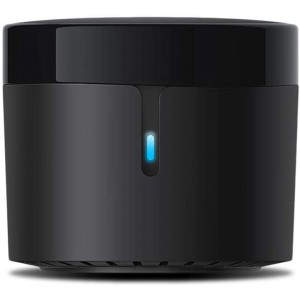
I use these little guys to remotely control the aircons and to setup timers, they work well and are cheap. They are also compatible with Google Home.

 
So then the aircon temp sensor is broken or the room didn't cool down to that temperature

I can confirm from Samsung. The behaviour you are mentioning is correct. It should've turned off when it reached the target temp. I had the Wind Free mode on so the fan was off. Felt the subtle breeze while I was working until 04:30 this morning then I went to bed, came back in because I forgot to turn it off. It may have actually cycled many times in between 04:30-08:00. Wind Free is also not as effective as the general function with fan enabled, so that probably contributed as well.
 
I can confirm from Samsung. The behaviour you are mentioning is correct. It should've turned off when it reached the target temp. I had the Wind Free mode on so the fan was off. Felt the subtle breeze while I was working until 04:30 this morning then I went to bed, came back in because I forgot to turn it off. It may have actually cycled many times in between 04:30-08:00. Wind Free is also not as effective as the general function with fan enabled, so that probably contributed as well.
So what you probably should do, is to get a temp sensor where you can see the temperature history. Or the 3 sensors for each zone. So that you can graph the temperature during the night and see what happen. At least then you have validation whether there is an issue or not.
 
So what you probably should do, is to get a temp sensor where you can see the temperature history. Or the 3 sensors for each zone. So that you can graph the temperature during the night and see what happen. At least then you have validation whether there is an issue or not.

Yes, this is what I said to @AfricanTech I intend to dial in specifically where the issues are and account for with automation.
 
I should mention, if you don't have a draft circulating the cold air around, you will struggle to cool down all zones in a big room.
 
I use these little guys to remotely control the aircons and to setup timers, they work well and are cheap. They are also compatible with Google Home.


I did quite a bit of researching on these IR modules particularly this Broadlink RM4. Seems they do not support the proprietary functions directly. I had hoped they would allow for custom signals to be mapped like for example with Postman you could intercept traffic from an EcoFlow app if for example you turn the LED on and off 20 times and then check which function repeats 20 times in Postman and then read the switch data then you know what the function needs to look like for ON vs OFF. Because of this limitation with the RM4 I need to go with the Cielo Breez line.
 
Sounds like a planning issue.

You need another unit positioned properly.
 
After reading this thread, I went and re-read my Samsung manual. Those digital inverter aircons are pretty amazing and efficient.
 
Top
Sign up to the MyBroadband newsletter
X